
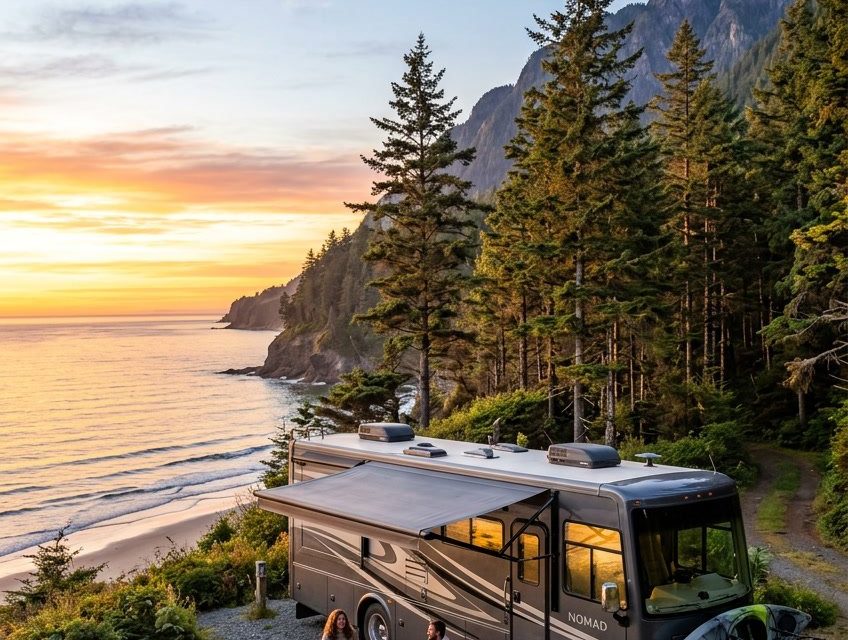
Making the leap to full-time RV living is one of the most transformative decisions you can make, but it’s not all Instagram-worthy sunsets and endless freedom. Before you sell your house and hit the road, it’s crucial to understand both the incredible advantages and the challenging realities that experienced RVers rarely discuss openly. This honest guide breaks down 16 key pros and cons that will help you make an informed decision about whether the RV lifestyle aligns with your expectations and goals. From the financial implications to the emotional adjustments, we’re covering the real talk that goes beyond the glossy travel blogs. Whether you’re dreaming of retirement on wheels or seeking adventure with your family, these insights will prepare you for what’s actually ahead on the open road.
1. PRO: Ultimate Freedom and Flexibility
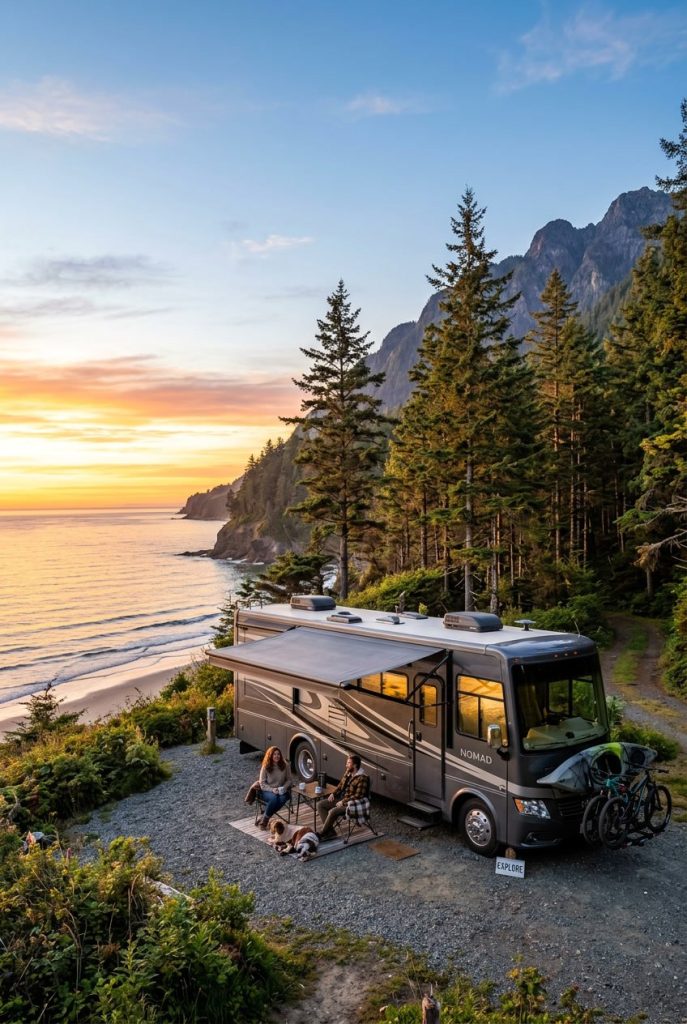
The freedom to wake up anywhere is the primary draw for most full-time RVers. One week you’re watching the sunrise over the ocean, the next you’re nestled in mountain pine forests. This lifestyle eliminates the constraints of a fixed address and lets you chase perfect weather year-round. You can extend stays in places you love and quickly move on from locations that don’t meet your expectations. The ability to change your backyard whenever you want creates an unparalleled sense of adventure and discovery.
This flexibility extends beyond location to your daily schedule and lifestyle choices. Without the anchor of a traditional home, you’re free to design each day exactly as you wish. Many full-timers report feeling more alive and present because every day brings new possibilities. The nomadic lifestyle encourages spontaneity and helps break the monotony that can creep into conventional living arrangements.
PRO TIP: Create a rough travel plan for 3-6 months ahead, but leave room for spontaneity. Some of the best experiences come from unexpected detours and last-minute changes. Keep a running list of places you want to visit so you always have options when it’s time to move on.
2. CON: Limited Living Space Creates Challenges
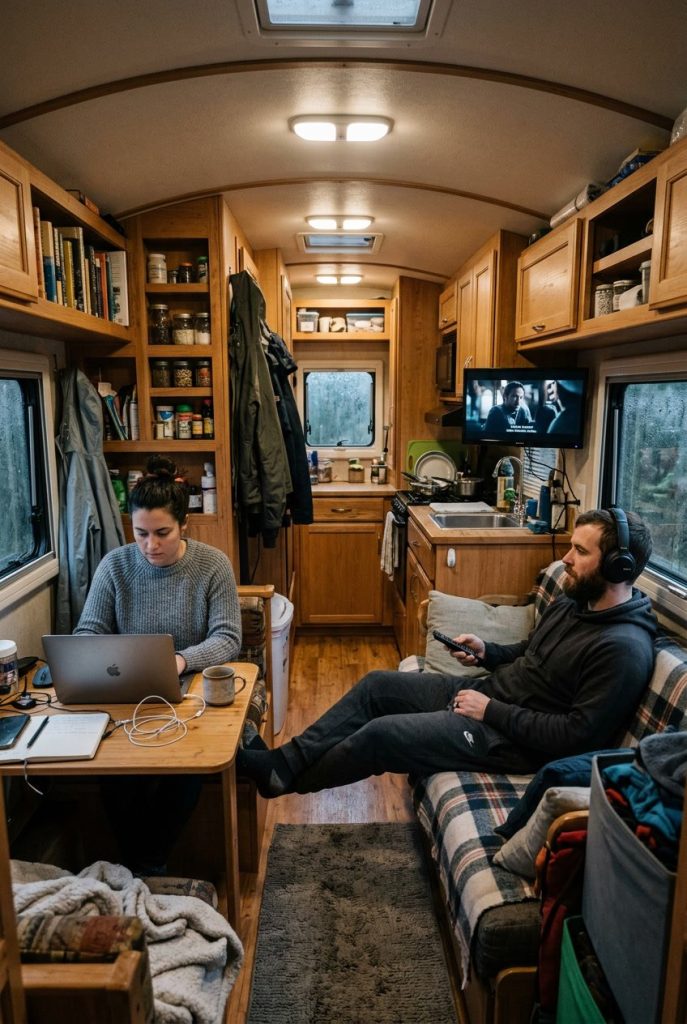
Living in 200-400 square feet requires significant lifestyle adjustments that many people underestimate. Every item you own must serve multiple purposes or earn its place, and finding storage solutions becomes a daily puzzle. The compact quarters can feel suffocating during bad weather when you’re stuck inside for extended periods. Couples often struggle with the lack of personal space, especially when one person needs quiet while the other wants to watch TV or take a phone call.
The spatial limitations also affect entertaining, as hosting more than 2-3 guests becomes logistically challenging. Simple tasks like cooking elaborate meals or working on hobbies requiring spread-out materials become complicated. Over time, the confined space can trigger feelings of claustrophobia, particularly for people accustomed to larger homes. You’ll need to be honest about your space requirements and whether you can genuinely thrive in such tight quarters.
PRO TIP: Before committing to full-time RV living, rent an RV for a month-long trial period. Live in it exactly as you would full-time, including working, cooking all meals, and experiencing bad weather days. This realistic preview helps you understand if you can truly handle the space constraints long-term.
3. PRO: Lower Cost of Living Potential
Many full-time RVers reduce their monthly expenses significantly compared to traditional homeownership. Without mortgage payments, property taxes, homeowners insurance, and utility bills, you can potentially save thousands of dollars annually. Campground fees typically range from free (boondocking) to $30-60 per night at full-hookup sites, often totaling less than rent or mortgage payments. The ability to relocate based on cost of living means you can stretch your budget further by avoiding expensive regions.
Additional savings come from downsizing possessions, reduced shopping impulses, and lower energy costs. Many RVers find they spend less on entertainment because nature provides free recreation opportunities. Without a garage full of stuff, you’ll spend less on storage, insurance for belongings, and home maintenance services. For retirees or remote workers on fixed incomes, these savings can mean earlier retirement or financial freedom.
PRO TIP: Create a detailed RV living budget before making the transition. Track your actual spending for the first 6 months to see where money really goes. Many new RVers underestimate fuel costs, campground fees, and eating out expenses. Apps like RV Trip Wizard and Campendium help plan routes to minimize costs while maximizing experiences.
4. CON: Unexpected Maintenance and Repair Costs
RVs are complex vehicles that combine automotive systems with home appliances, meaning things break frequently and often expensively. A single major repair like transmission work, roof replacement, or slide-out mechanism failure can cost $3,000-$10,000 or more. Unlike a house that stays stationary, your RV endures constant road vibration, weather exposure, and wear that accelerates deterioration. The learning curve for RV systems is steep, and mistakes in maintenance can lead to catastrophic damage like water intrusion or electrical fires.
Finding qualified repair technicians in remote areas proves challenging, and many RV service centers have wait times of weeks or months. You’ll need an emergency fund of at least $5,000-$10,000 for unexpected repairs, which many new RVers don’t anticipate. Regular preventive maintenance is essential but time-consuming and costly. Tires, batteries, seals, and other components wear out faster than in traditional vehicles, creating ongoing expenses that quickly add up.
PRO TIP: Invest in a comprehensive RV maintenance course or guidebook before hitting the road. Learning to handle basic repairs yourself can save thousands annually. Join RV forums and Facebook groups where experienced full-timers share repair tips and mechanic recommendations. Always get multiple quotes for major repairs and consider mobile RV technicians who come to your location.
5. PRO: Perfect for Remote Work and Digital Nomads
The rise of remote work has made full-time RV living more feasible than ever. With a reliable internet setup, you can maintain your career while exploring the country. Many RVers work from stunning locations that would cost a fortune to vacation in otherwise. The lifestyle allows you to attend conferences, meet clients, or visit company headquarters while maintaining your wanderlust. Productivity often increases because you’re happier and more inspired by constantly changing surroundings.
Digital nomad culture has grown tremendously, creating coworking spaces and RV parks specifically designed for remote workers. Many full-timers report better work-life balance because they can take lunch breaks hiking or kayaking. The ability to relocate near family for extended visits while keeping your job provides flexibility that traditional arrangements can’t match. Time zone challenges become opportunities to structure work hours around your preferred schedule and exploration plans.
PRO TI