
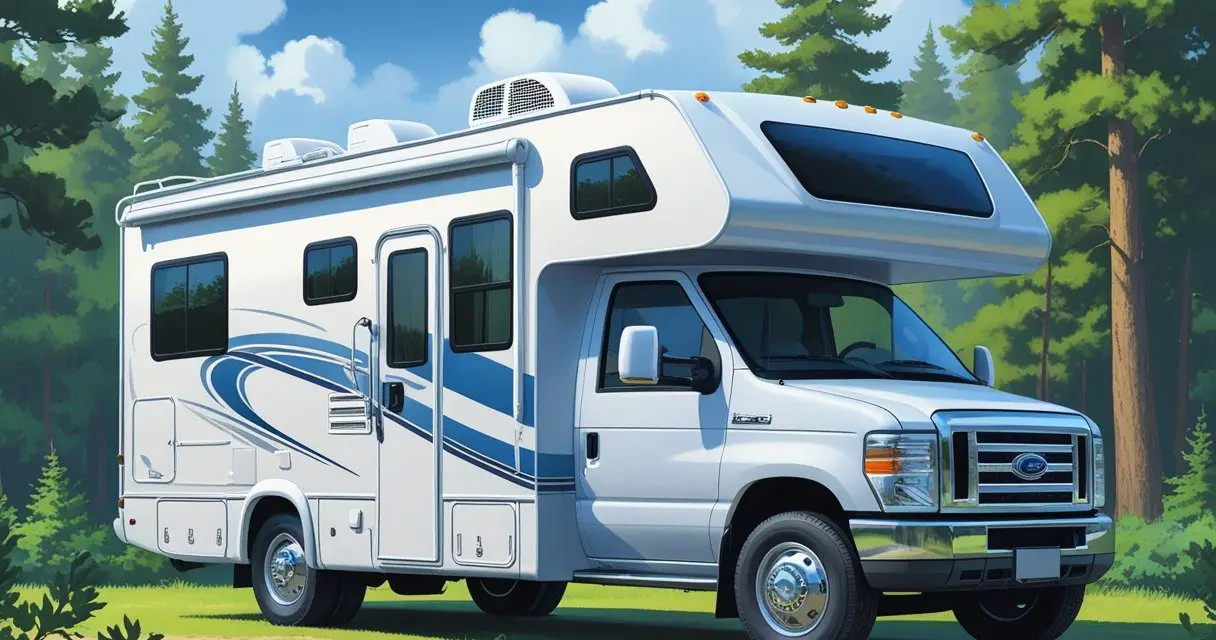
Driving a Class C motorhome can feel tricky at first. You might worry about turning too tightly, missing a blind spot, or judging your stopping distance wrong. Many people face the same problems the first time they take their RV on a road trip.
These RVs are much larger and heavier than regular cars. That means you need to adjust how you drive for better safety and control. This guide will share simple tips on handling turns, using mirrors, checking your height, keeping up with maintenance, and driving safely in all kinds of weather.
You will learn what to watch out for and how small changes in habits can lead to smoother travels. Stick around for easy-to-follow advice that makes each mile less stressful!
Size and Handling Awareness
Driving a Class C RV is different from a regular car. You’ll need to be aware of its size and how it handles on the road.
Wider Turns
Cutting corners in a Class C RV can cause costly mistakes. Your vehicle’s rear wheels do not follow the same line as the front wheels during a turn. This is called “trailing” or “off-tracking.” Taking too sharp of a turn puts your rig at risk for hitting curbs, stop signs, bollards, and even gas pumps.
These accidents are common at gas stations where aisle width is much tighter.
Always swing out wider than you would with a car to give enough clearance for your longer vehicle dimensions. Bigger rigs need more space to navigate, especially around tight corners and crowded parking lots.
Traffic safety experts warn that taking turns too tightly increases collision risk with obstacles on the inside of your path.
Class C RVs must make wider turns to avoid running over curbs or striking fixed objects, says SafeTrek Training Group.
Slowing down before cornering gives you more control and time to judge how close you come to other vehicles or structures.
Increased Stopping Distance
Bigger RVs like your Class C need more space to stop. The weight and size raise your braking distance a lot compared to a car or SUV. Your stopping power depends not just on the brakes but also on how much you are carrying and how that weight is spread out in your vehicle.
Heavy loads plus full tanks mean even longer stopping times.
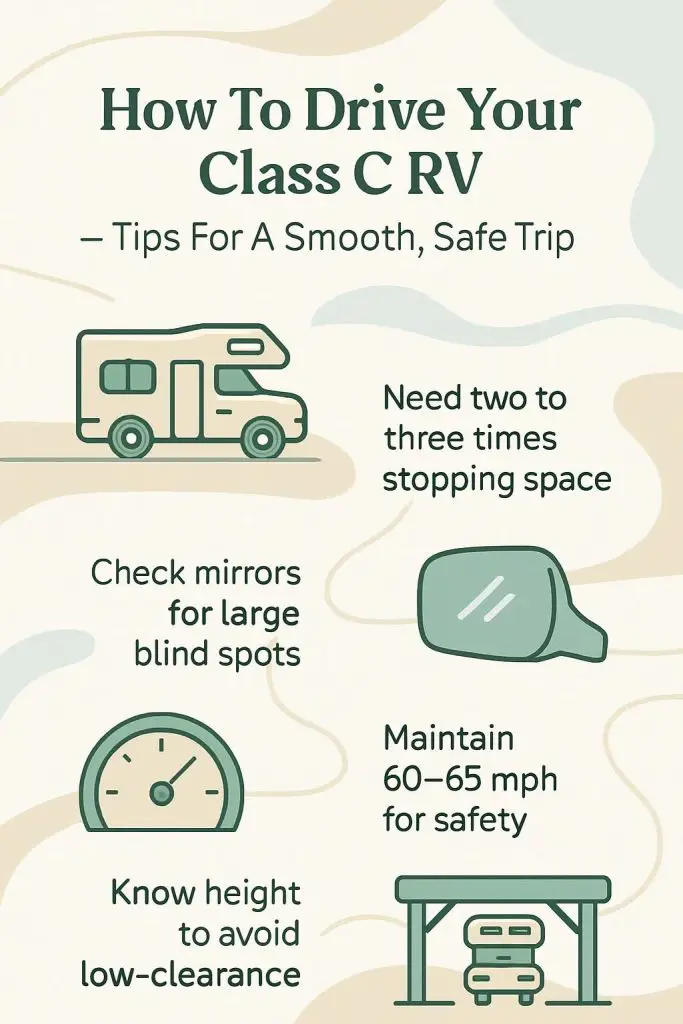
You must leave extra safety distance between you and traffic ahead, especially at highway speeds. It takes several seconds more for a loaded Class C RV to come to a complete stop from 55 mph than it does for most cars—sometimes two or three times as long.
Watch out for sudden slowdowns, keep alert, and always plan extra reaction time so you can avoid collisions before they happen.
Wider turns pose another big challenge after learning about stopping distances…
Longer Acceleration Time
A Class C RV needs more time to pick up speed than a regular car. The motorhome weighs much more, so the powertrain works harder during acceleration. Even with a strong engine, your RV is not built for racing or quick moves at lights and onramps.
Towing a trailer adds extra weight, making it even slower.
Do not expect to go faster than 65-70 miles per hour; going above this can cause poor handling and more wear on the engine and parts. Give yourself extra space when merging onto highways or passing other vehicles.
Watch your speed limit and plan each move carefully for better vehicle control and road safety. Taking it slow keeps you steady and protects both you and everyone else around you.
Larger Blind Spots
Longer acceleration time means you need to be extra careful. Larger blind spots can make driving trickier. Your RV has limited visibility to the sides and back, which increases the chances of missing vehicles or obstacles nearby.
Proper adjustment and use of side mirrors are key for better visibility. Always scan your mirrors while driving, especially in busy areas. This helps you stay aware of surrounding traffic and avoid accidents.
Keeping an eye on blind spots will boost your safety as you drive your Class C RV.
“Awareness is the key to safe driving.”
Driving Techniques
Driving your Class C RV can feel different. Keep speeds moderate to stay in control. Increase your following distance — this gives you more time to react. Practice U-turns in safe spaces before hitting the road.
Be aware of height limits, too; low bridges can surprise you. Want more tips? There’s plenty to discover!