Nearly 40% of RVers say their biggest camping headache isn’t the drive, it’s discovering, pedestal in hand, that the “full hookup” site they booked online doesn’t actually fit their rig or match what the listing promised [1]. That gap between what a map app shows and what’s waiting at the end of the gravel road is exactly why learning how to find campsites near you with full hookups takes more than typing a search term and hitting the first result.
This guide breaks down the real workflow: the search filters that actually matter, the rig measurements you need before you ever open an app, and the booking red flags that separate a smooth trip from a frustrating one.
Key Takeaways
- 🔑 Always filter by rig length, hookup type, and season, not just “full hookups available.”
- 📏 Measure your entire rig (bumper to bumper, including tow vehicle or towed car) before searching.
- 🚩 Treat vague listings, no cancellation policy, and unanswered calls as booking red flags.
- 📞 Follow up every online booking with a phone call to confirm site specifics.
- 🏕️ Private RV parks are often the safer bet when full hookups are non-negotiable.
Understanding Full Hookups Before You Search
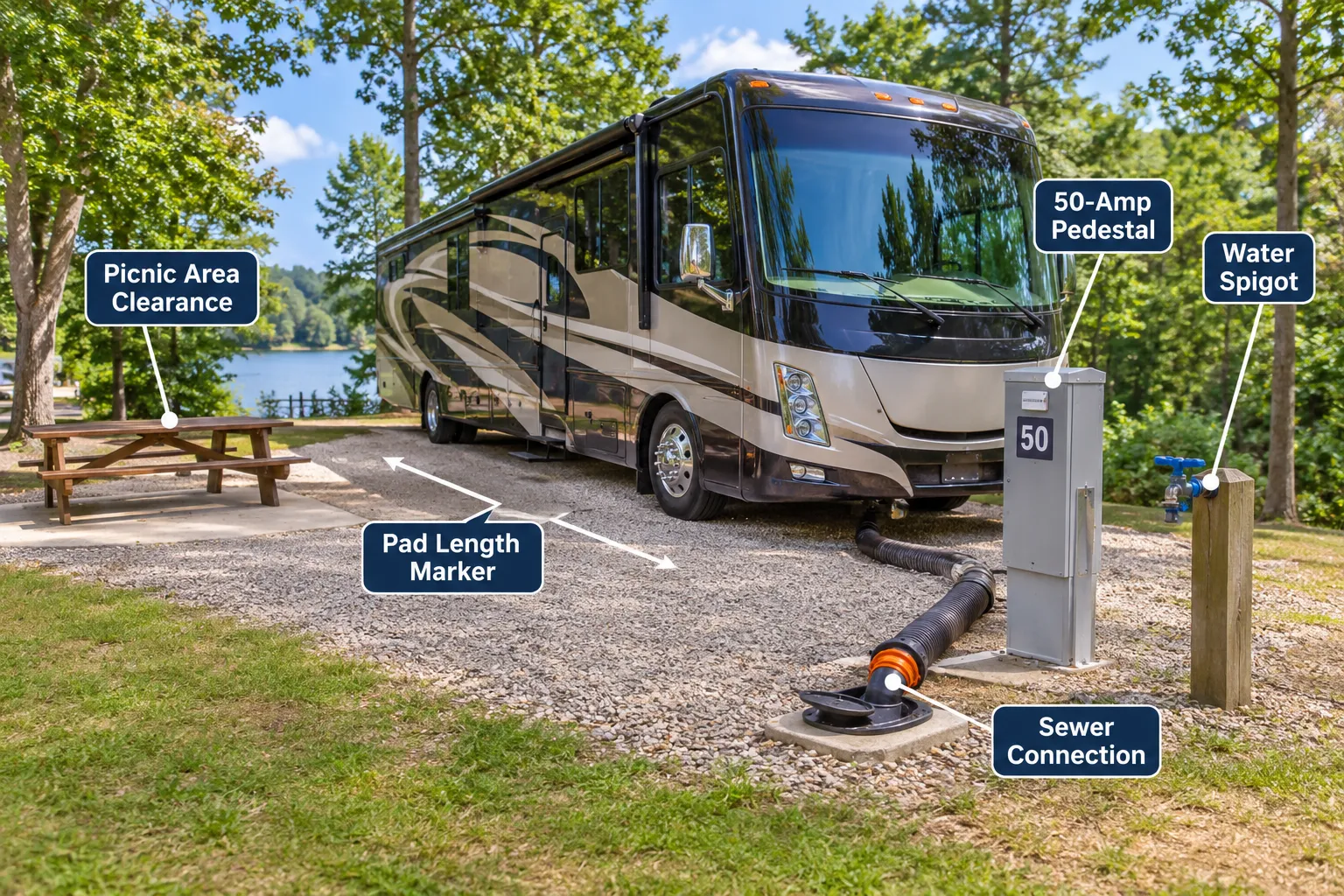
A “full hookup” site sounds simple, but the definition can shift depending on the campground. By late 2026 standards, most campgrounds define full hookups as water, sewer, and electric, typically 30-amp or 50-amp service [2]. Some parks also toss in cable or Wi-Fi, but those extras aren’t guaranteed just because a listing says “full hookup.”
Here’s the breakdown worth knowing before you filter any search:
| Hookup Type | What It Includes | Common Gotcha |
|---|---|---|
| Water | Potable water spigot at the site | Low pressure or non-potable warnings |
| Sewer | Direct sewer connection at the pad | Angled or distant connections requiring extra RV sewer hose length |
| Electric | 30-amp or 50-amp pedestal | Older parks may only offer 20-amp or 30-amp, not 50 |
Because terminology varies, don’t rely on a single badge or icon in an app. Click into the site description every time. This matters even more for electrical safety, mismatched amperage or a worn pedestal can be a real fire hazard, something RV owners have learned the hard way, as seen in stories like the tragic RV explosion case. A surge protector is cheap insurance against unpredictable park wiring.
Search Filters That Actually Matter for How to Find Campsites Near You With Full Hookups
Most booking apps and campground directories bury the filters that matter most under generic categories. When you’re figuring out how to find campsites near you with full hookups, prioritize these filters in this order:
- Hookup type, full hookups specifically, not “partial” or “electric only.”
- Rig length, the single biggest source of booking disappointment.
- Season and availability window, many popular parks book out months ahead.
- Pet policy, especially relevant for pet friendly camping trips.
- Price range, set a realistic ceiling so you’re not scrolling sites you’ll never book.
Modern search tools increasingly prioritize these three filters, hookups, rig length, and season, because they’re the top reasons bookings fall through after the fact [3]. Don’t skip the “big rig friendly” filter if your app offers one; it often pre-screens for wider pads and better turning radius, something explained well in guides on how to tell if a campground is big rig friendly [4].
If you’re new to this lifestyle, pairing smart search habits with general road prep makes a big difference, check out safety tips for RV road trips for a broader checklist.
Rig-Length Checks: Measure Before You Search, Not After You Book
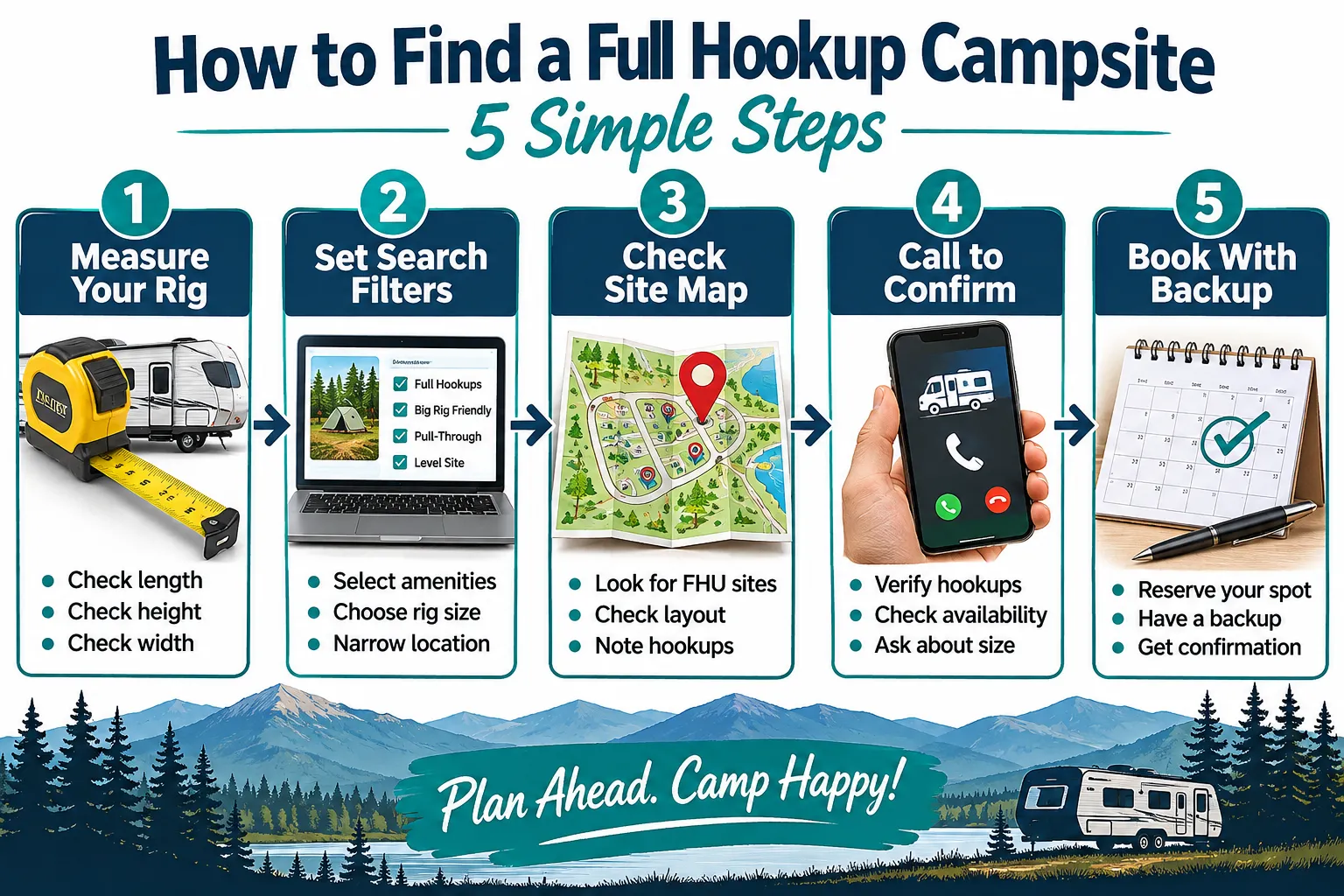
This is the step most first-timers skip, and it’s one of the most common mistakes new RVers make [5]. Before touching a search filter, grab a tape measure or your owner’s manual and record: