
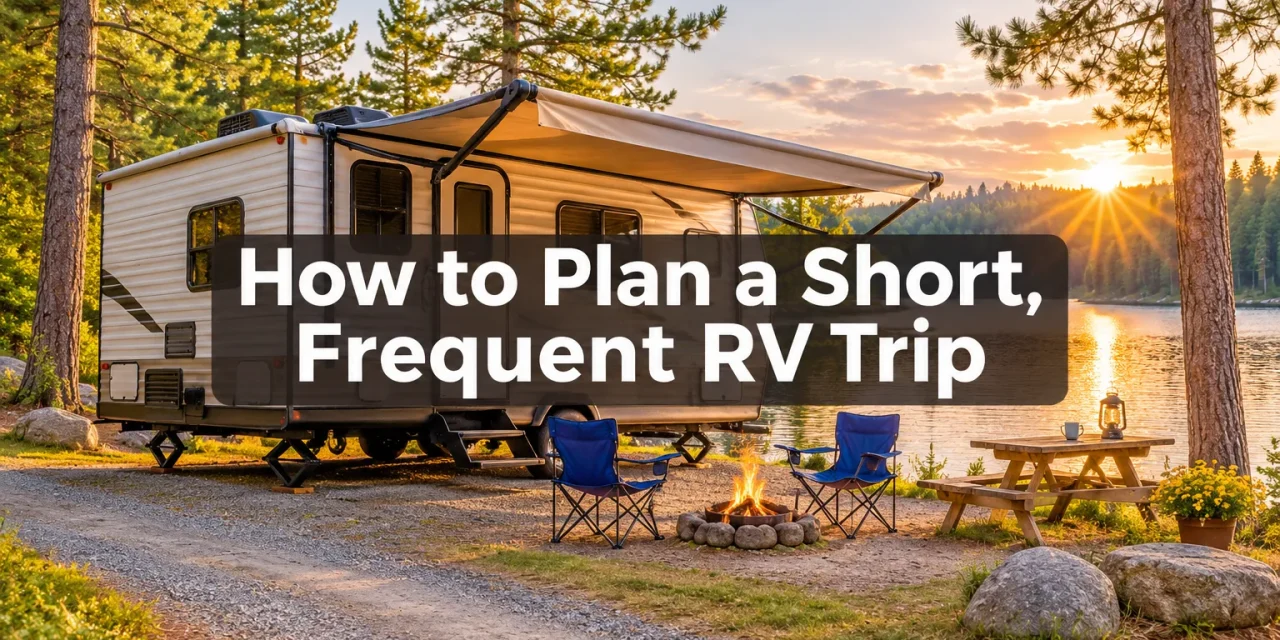
A growing share of RV owners are skipping the two-week epic road trip entirely. Younger travelers, in particular, are trading long annual vacations for shorter, more frequent getaways that fit into a normal weekend [1]. If that sounds appealing but logistically confusing, this guide breaks down exactly how to plan a short, frequent RV trip: weekend routes, packing systems, and low-stress campground choices, so you can turn a Friday afternoon into an actual outdoor escape instead of a scramble.
The shift makes sense. Weeklong trips require serious time off, meal planning for days, and a mountain of gear. Weekend trips need a system, a repeatable one you can run almost every month without burning out.
Key Takeaways
- 🗺️ Keep weekend routes close, most experts recommend staying within 3-7 hours of home, with 4 hours being the low-stress sweet spot [2][3].
- 📦 Build a packing system, not a packing list, pre-staged totes for kitchen, hookups, and bedding save hours every trip.
- 🏕️ Pick quiet, verified campgrounds, proximity and clear rules matter more than amenities for short stays [4][5].
- 📅 Reserve early and precisely, popular weekend sites can book out six months ahead, often at a specific release time [5][6].
- ✅ Never skip the safety walk-around, a two-minute check prevents most of the common on-road headaches [7].
Choosing Weekend Routes for a Short, Frequent RV Trip
The whole point of a short, frequent RV trip is less time driving and more time outside. That starts with picking the right radius from home.
Most RV trip planning guides suggest a range of 3 to 7 hours one-way for a weekend getaway, with many recommending closer to 4 hours as the ideal ceiling for low stress [2][3][8]. Push much past that and you lose a chunk of your Saturday just getting there and back, which defeats the purpose of a quick trip.
Why the 4-Hour Rule Works
A roughly 4-hour drive gives you:
- Enough time to leave after work on a Friday and still set up camp before dark
- A buffer for fuel stops, bathroom breaks, and the occasional detour
- Minimal fatigue, since short RV drives are far less tiring than cross-country hauls [7]
If you’re new to measuring driving fatigue on shorter hops, it’s worth reviewing general safety tips for RV road trips before locking in a route.
Building a Repeatable Route Map
Instead of researching a brand-new destination every time, create a rotating list of 5-8 go-to weekend spots within your radius. This is the industry’s emerging model for low-stress getaways: a small set of known, two-night itineraries you can book quickly without reinventing the plan each time [9].
Good candidates include:
- State parks within 2-4 hours
- Small towns with character, check out ideas like small town RV travel for inspiration
- National-park-adjacent campgrounds, which are popular for short trips but require early booking and rule awareness [8]
- Historic routes, such as the US National Historic Trails worth visiting on your next RV trip
RV-Aware Route Planning Matters More Than You Think
Even on a short drive, standard GPS apps can route you under a low bridge or down a road your rig can’t handle. RV-specific route planning, one that accounts for your height, weight, and length, is central to avoiding stress and hazards, even on familiar nearby routes [8][10]. Before every trip, confirm:
- Your rig’s exact height, length, and weight
- Any low clearances or weight-restricted bridges on the route
- Fuel stop availability for your rig size
Packing Systems That Make a Short, Frequent RV Trip Easy
The biggest reason weekend trips feel exhausting isn’t the drive, it’s the packing. If you’re repacking from scratch every time, you’ll burn out fast. The fix is a reusable, “essentials-first” packing system [4][8].
Build Pre-Staged Totes
Instead of one giant pile of gear, break everything into labeled totes that stay packed between trips:
- Kitchen tote, non-perishable staples, paper plates, coffee setup
- Hookup tote, water hose, surge protector, sewer hose, gloves
- Bedding/comfort tote, sheets, pillows, extra blanket
- Tools & safety tote, tire gauge, flashlight, basic repair kit
- Personal bag, clothing, toiletries, packed fresh each trip
Pre-staging hookup gear specifically is one of the most repeated tips in short-trip planning content, because it’s the gear most likely to get forgotten mid-rush [8].
Essentials-First Thinking
Pack in this order of priority: safety gear, hookup equipment, food and water, then comfort items. If you run short on time, the essentials are already loaded and you only need to grab clothes and food.
For meal planning on a quick trip, keep it simple. Browse