Half of all RV dealer inventory in the U.S. sat on lots for more than 90 days heading into 2026. That single number tells you almost everything you need to know about who holds the leverage right now, and it’s not the dealer. Whether Is Now the Best Time to Buy an RV? 2026 Pricing, Inventory Shifts, and Camping Market Outlook is a question you’ve been chewing on for months or one you just started googling last night, the short answer is: it depends on what you’re shopping for, but the math is tilting toward buyers in specific corners of the market.
This guide breaks down what’s actually happening with pricing, inventory, and camping demand this year, so you walk into a dealership (or a private sale) with real leverage instead of guesswork.
Key Takeaways
- Aged inventory is your friend. Roughly half of dealer lots carried units older than 90 days entering 2026, giving buyers real negotiating power on prior-year models.
- Fresh releases aren’t as flexible. Dealers are practicing “pricing discipline” on new arrivals, meaning big discounts are concentrated on slower-moving stock, not the latest floor plans.
- Camping demand is climbing, not shrinking. The camping and caravanning industry is projected to grow at a strong pace through the early 2030s, which supports long-term resale value and a healthy travel ecosystem.
- Campervans and compact motorhomes are expanding fast, giving buyers more choices and more competitive pricing across the segment.
- Renting is rising alongside buying. Nearly half of campers say they’re open to renting instead of owning, which could actually work in your favor if you plan to offset ownership costs.
Understanding the 2026 RV Inventory Shift
Walk onto almost any RV lot right now and you’ll notice something: a lot of the same units have been sitting there since spring. That’s not an accident, it’s the defining story of the RV market this year. Dealers overbought during the post-pandemic boom years, and now they’re working through a backlog that’s aging faster than they’d like.
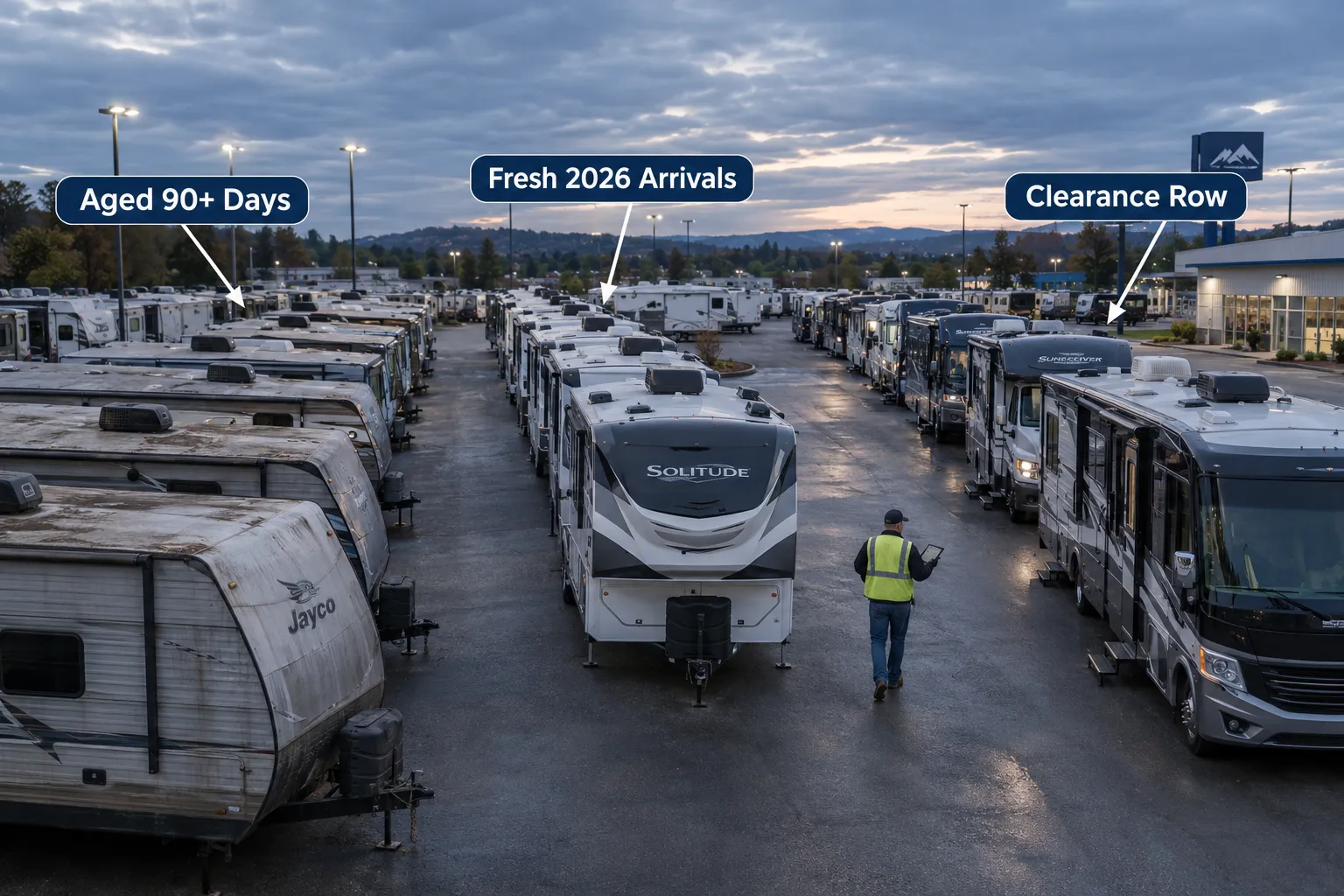
Industry commentary heading into 2026 points to “inventory aging, pricing discipline, and dealer profit” as the three forces shaping how RVs get priced and sold this year. That combination creates a split market:
- Older, slower-moving units, think prior-year travel trailers, leftover fifth wheels, or floor plans that didn’t sell as fast as expected, are where dealers are motivated to cut deals. They’d rather move that unit at a thinner margin than keep paying floor-plan interest on it.
- Fresh, newly released models carry firmer pricing. Dealers know these units will eventually sell without steep discounts, so they’re not giving them away just because the overall market feels soft.
For buyers, this means the old advice of “just wait for a sale” is too simplistic. The smarter move is figuring out which units on the lot are aging out their welcome. Ask the salesperson directly how long a specific unit has been in inventory. Most dealers will tell you, especially if you’re clearly comparing multiple units. A unit sitting for 120+ days is a very different negotiation than one that arrived three weeks ago.
If you’re also shopping for a tow vehicle to pair with your new rig, it’s worth checking whether now is a good time to buy a truck for your RV trailer, truck pricing cycles don’t always move in sync with RV pricing cycles, so timing both purchases separately can save you real money.
Is Now the Best Time to Buy an RV? Breaking Down 2026 Pricing Trends
Here’s where the rubber meets the road. Is Now the Best Time to Buy an RV? 2026 Pricing, Inventory Shifts, and Camping Market Outlook really comes down to a simple truth: pricing isn’t uniform across the industry, and it hasn’t been for a while.
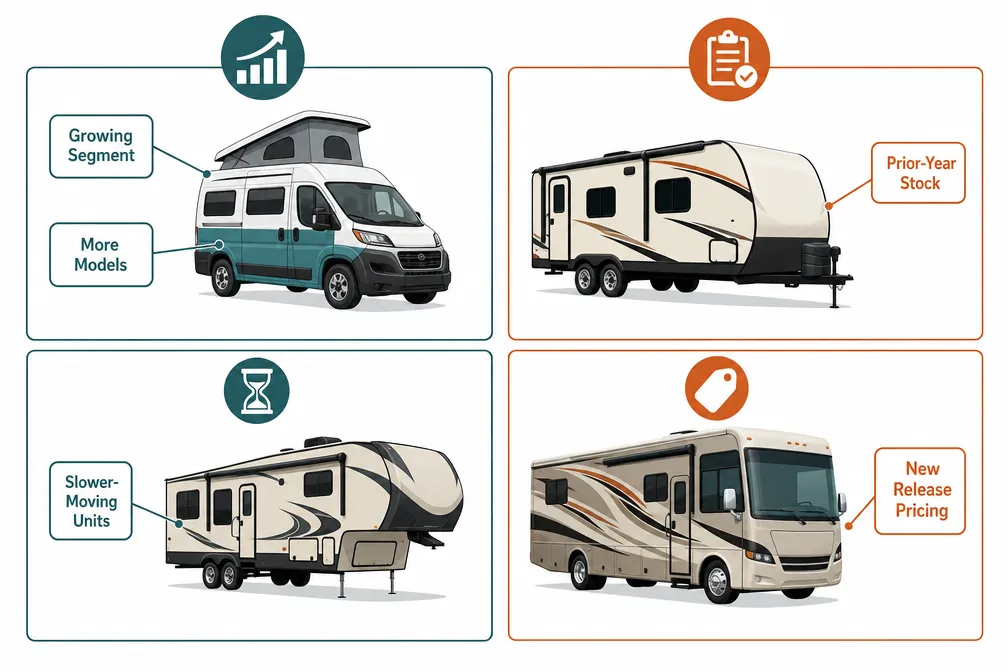
Dealers are under real pressure to move older stock, but they’re also protecting margins on anything fresh off the assembly line. That creates pockets of opportunity rather than one big industry-wide sale. Here’s how that typically breaks down by category:
| RV Type | Pricing Flexibility in 2026 | Why |
|---|---|---|
| Prior-year travel trailers | High | Dealers want floor space and cash flow |
| Leftover fifth wheels | High | Higher carrying costs make these priority clearance items |
| New Class A/C motorhomes | Low-Moderate | Manufacturers control allocation and dealer margins closely |
| Campervans / compact motorhomes | Moderate | Rapidly growing segment with more competition among brands [10] |
| Certified pre-owned units | Moderate-High | Dealers price aggressively to compete with private-party listings |
A few practical tips for squeezing out the best deal this year:
- Ask for the build date, not just the model year. A “2026” model built in late 2025 has been sitting longer than one built more recently, even if the model year matches.
- Shop end-of-month and end-of-quarter. Sales managers still have quotas, and aged units help them hit numbers.
- Compare at least three dealerships on the same floor plan. Inventory levels vary wildly by region and dealer group.
- Don’t ignore certified pre-owned. With more owners upgrading or downsizing, quality used units are hitting the market at prices that undercut new inventory significantly.
- Negotiate the whole package, not just sticker price, freight fees, dealer prep, and add-on warranties are often where real savings hide.
It’s also worth remembering that a lower purchase price only matters if the unit holds its value. Before you sign, think about which RV upgrades give you the best return on investment down the road, some floor plans and features simply resell better than others.
The Camping Market Outlook for 2026 and Beyond
Here’s the part that should give buyers real confidence: even though dealer lots are crowded right now, the underlying demand for camping and RV travel isn’t slowing down. If anything, it’s accelerating.
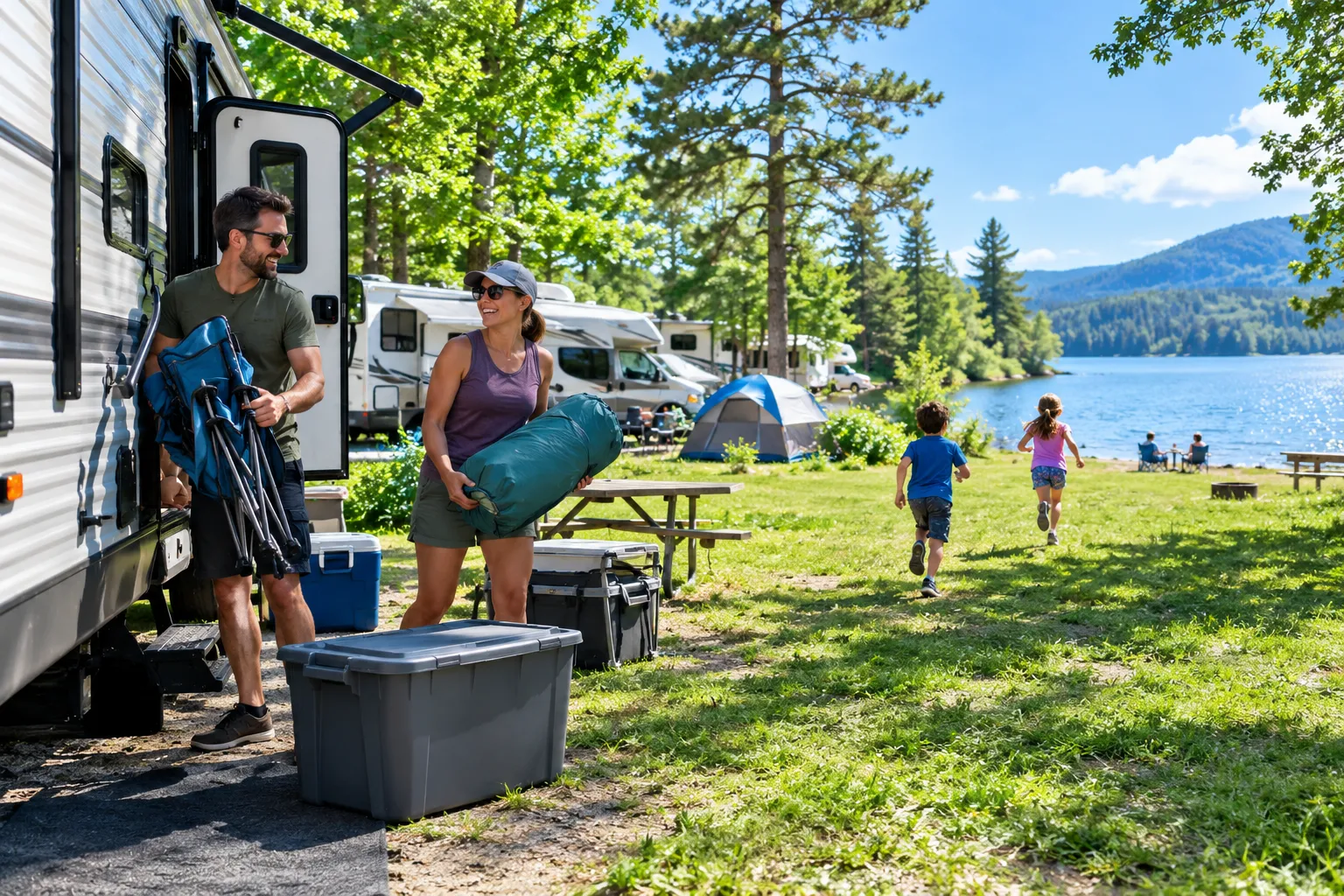
The global camping equipment market is projected to grow from roughly $21.1 billion in 2025 to $39.4 billion by 2035, driven largely by North American demand [2][3][5]. The camping tent market alone, often a leading indicator of outdoor participation, is expected to climb from about $4.4 billion in 2025 to $8.8 billion by 2035, with 2026 revenues already estimated near $4.7 billion [4][8]. Portable camping furniture is following a similar trajectory, projected to land somewhere between $120.9 million and $336.8 million in 2026 alone [1].
Why does this matter if you’re shopping for an RV, not a tent? Because all of it points to the same underlying trend: more people are choosing outdoor, experience-driven travel, and that demand supports the entire ecosystem your RV depends on, campgrounds, RV parks, roadside services, and gear retailers.
Trend forecasts specifically call out campervans and compact motorhomes as one of the fastest-growing segments heading into 2026, with manufacturers expected to release more models “across the price spectrum” to meet demand [10]. That’s good news for buyers because more competition among manufacturers historically leads to better pricing and more financing incentives.
There’s also a shift worth watching: a growing share of campers say they’re just as likely to rent an RV as buy one, especially younger travelers. This “rental renaissance” doesn’t mean fewer people are camping, it means more flexible paths into the lifestyle. If ownership costs are on your mind, some owners are turning their RV into part-time rental income when they’re not using it, which can meaningfully offset a purchase.
For those weighing whether an RV fits their broader lifestyle, including using it for holiday hosting, seasonal travel, or full-time living, it helps to look at how established players in the space have scaled successfully. The story of how David Garvin built an RV empire with Camping World offers useful context on how dealer networks and market cycles actually operate behind the scenes.
How to Negotiate Like a Pro in Today’s Market
Knowing the market is one thing. Using that knowledge at the negotiating table is another. Here’s a simple framework:
Step 1: Do your homework before you walk in. Look up the same floor plan at three or more dealers. Note the differences in price, included features, and how long each has been listed online (most sites show “days on lot” if you dig into the listing history).
Step 2: Lead with the age of the unit, not the price. Instead of saying “can you go lower,” try: “I noticed this unit has been on your lot since spring, is there flexibility given how long it’s been sitting?” This reframes the conversation around the dealer’s own incentive to move it, not just your budget.
Step 3: Separate the RV price from financing and add-ons. Dealers sometimes make up margin on financing terms or extended warranties even after discounting the sticker price. Negotiate each piece separately.
Step 4: Get the walk-through and inspection non-negotiable. A good deal on an aged unit isn’t a good deal if seals have dried out or systems weren’t winterized properly while it sat unsold. Always request a full walkthrough, and don’t skip checking the water systems, roof seams, and battery health.
Step 5: Time your visit strategically. Late fall and early winter, outside of peak buying season, tend to favor buyers because foot traffic slows down and dealers get more motivated. Spring rushes tend to favor sellers.
Once you’ve got the unit, protecting your investment matters just as much as the deal itself. Simple upgrades, like tackling the best RV bathroom upgrade you’ll ever make, can improve daily comfort without denting the value you just locked in.
Buy Now or Wait? Weighing Your Long-Term Camping Plans
There’s no universal answer here, but there is a useful way to think about it. Ask yourself these three questions:
- Do you have a specific floor plan or brand in mind, or are you flexible? Flexible buyers benefit the most from the current aged-inventory environment because they can chase whatever deal appears.
- How soon do you actually plan to camp? If you’re buying for a specific trip six months out, waiting for a “perfect” deal on the exact unit you want might cost you more in missed travel time than you’d save in dollars.
- Are you comfortable with a certified pre-owned unit? If so, you’re shopping in the segment with arguably the best value right now, since private owners upgrading to newer floor plans are creating a steady supply of well-maintained used RVs.
It’s also smart to think beyond the RV itself. If towing is part of your plan, reviewing the best vehicles to flat tow behind an RV now, rather than after you’ve already bought, can shape which motorhome or trailer setup actually makes sense for your travel style.
Pull Quote:
“The best time to buy isn’t a date on a calendar, it’s the moment you find a unit that’s been sitting long enough for the dealer to want it gone.”
Conclusion: What to Do Next
The data paints a clear picture. Dealers are sitting on aged inventory they want to move, camping demand is climbing steadily through the early 2030s, and the RV market is diversifying with more campervan and compact motorhome options than ever [2][3][10]. That’s a rare combination, buyer leverage on price, paired with strong long-term demand supporting the value of what you buy.
So, is now the best time to buy an RV? For shoppers willing to consider prior-year models, certified pre-owned units, or slower-moving floor plans, 2026 is shaping up to be one of the more buyer-friendly windows in recent years. For those chasing the newest release with the latest tech, expect firmer pricing and less room to negotiate.
Your next steps:
- Identify two or three floor plans that fit your travel style and budget.
- Call at least three dealers and ask directly how long specific units have been in stock.
- Get pre-approved for financing so you can move quickly when you find real value.
- Budget for a professional pre-purchase inspection, especially on aged or used units.
- Start planning your first trips now, with camping demand rising, popular campgrounds are booking up earlier every season.
Whatever you decide, buy with intention, not urgency. The right deal is out there, it just might not be the shiniest unit on the lot.
References
[1] Portable Camping Furniture Market Poised For Growth Through 2031 As Outdoor Recreation Lightweight Designs And Sustainable Materials Fuel Demand – https://www.globenewswire.com/news-release/2026/09/23/3367285/28124/en/portable-camping-furniture-market-poised-for-growth-through-2031-as-outdoor-recreation-lightweight-designs-and-sustainable-materials-fuel-demand.html [2] Camping Equipment Market Outlook 2026 100200266 – https://finance.yahoo.com/markets/articles/camping-equipment-market-outlook-2026-100200266.html [3] Camping Equipment Market – https://www.gminsights.com/industry-analysis/camping-equipment-market [4] Camping Tent Market Outlook 2026 081200724 – https://finance.yahoo.com/markets/articles/camping-tent-market-outlook-2026-081200724.html [5] Camping Equipment Market 104508 – https://www.fortunebusinessinsights.com/camping-equipment-market-104508 [8] Camping Tent Market – https://www.gminsights.com/industry-analysis/camping-tent-market [10] Camping Trend Predictions 2026 – https://www.campingandcaravanningclub.co.uk/media-centre/press-releases/2025/camping-trend-predictions-2026/
rv buying guide, 2026 RV market, RV inventory, camping trends 2026, RV pricing, travel trailer deals, RV negotiation tips, campervan market, RV dealer inventory, outdoor recreation trends, RV ownership, camping industry outlook