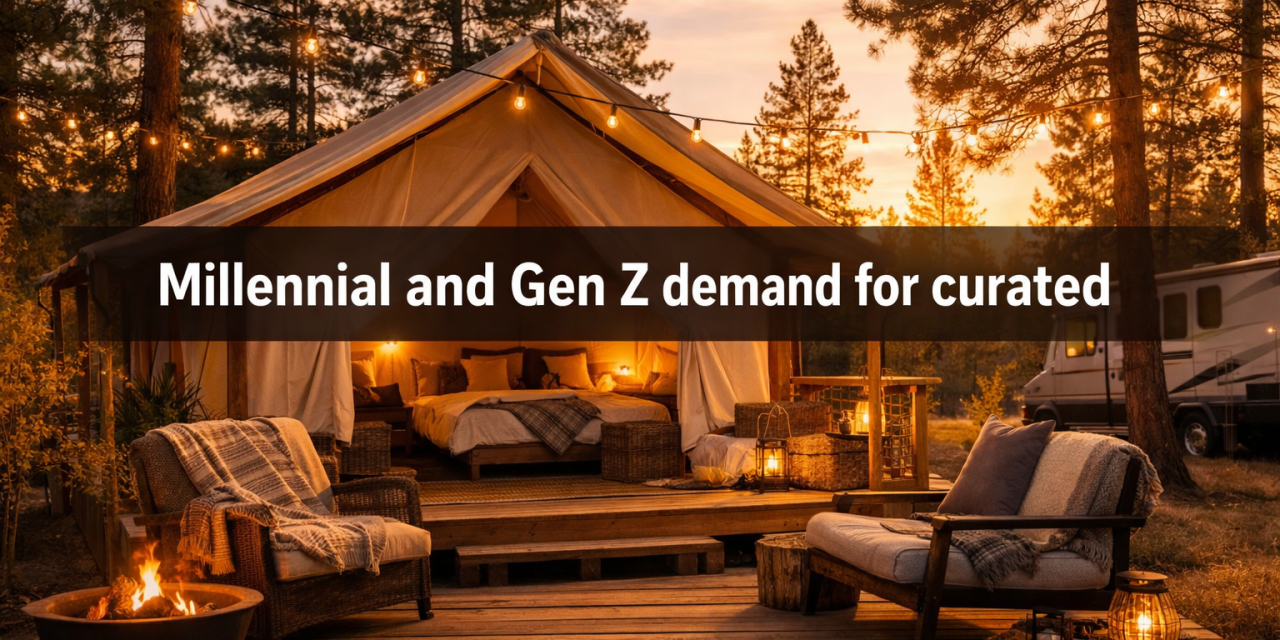
Campground operators across North America are tearing up old site maps. Gravel pads with a picnic table and a power box just aren’t cutting it anymore for the campers filling up booking calendars right now. The driving force? Millennial and Gen Z demand for curated, nature-immersive RV stays and glamping experiences is pushing parks to act more like boutique outdoor resorts than roadside pit stops.
This isn’t a passing trend. Younger travelers are now the fastest-growing segment of campers and glampers in the country, and they’re spending differently than their parents did. They want wellness decks, Instagram-worthy views, and amenities that feel personal, not just a spot to park overnight.
Key Takeaways
- Younger generations are driving new growth in camping and glamping, reshaping what RV parks offer guests [1][2].
- Curated, amenity-rich stays are outpacing traditional bare-bones RV pads in popularity among Millennial and Gen Z travelers [3][4].
- Glamping market expansion through 2033 is explicitly tied to the desire for luxury-meets-nature experiences [2].
- Digital booking platforms and online discovery are accelerating demand for polished, “curated” outdoor stays [5].
- Campground operators are reimagining RV parks as mixed-use outdoor hospitality destinations to keep pace [6].
Why Millennial and Gen Z Demand for Curated, Nature-Immersive RV Stays and Glamping Experiences Is Growing So Fast
Younger campers didn’t grow up dreaming about hookup specs and holding-tank capacity. They grew up scrolling travel content, craving experiences they can feel good about and show off a little. That mindset is now showing up in camping data.
Recent industry reporting shows camper and glamper growth is increasingly led by Millennials and Gen Z, not Boomers or Gen X like in years past [3][4]. These younger travelers bring real spending power, and they’re willing to pay more for comfort, design, and a sense of escape [1].
“It’s not about roughing it anymore, it’s about feeling restored.”
That shift matters because it changes what “camping” even means. A tent in the woods is no longer the default. Cabins, yurts, and high-comfort glamping structures are taking over the market share that basic tent sites used to hold [2][7].
The Numbers Behind the Shift
- North America’s glamping market is expanding specifically because Millennials and Gen Z want immersive travel that blends luxury and nature [2].
- Camping industry reports point to continued growth in outdoor hospitality spending even during uncertain economic periods, with affordability and flexible options still central [8].
- Campsite booking platforms are seeing rising demand for curated experiences that can be discovered and reserved digitally in minutes [5].
For RV owners thinking about upgrading their own rig’s look and feel to match this trend, check out these RV interior decorating ideas for glamping in style.
What “Curated and Nature-Immersive” Actually Means to Younger Campers
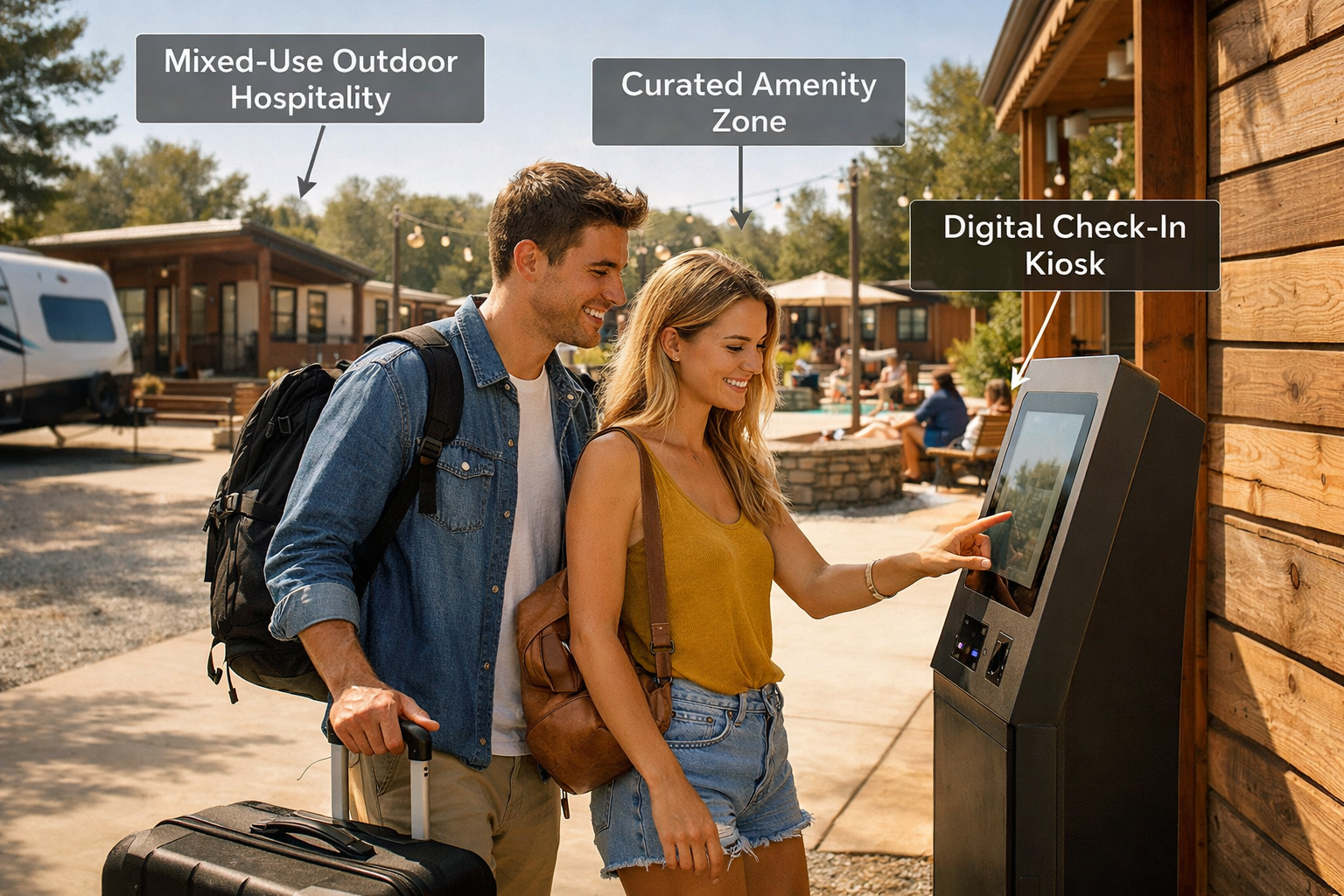
“Curated” sounds like a buzzword, but for younger travelers it has a specific meaning. It’s the difference between a random gravel lot and a stay that feels planned, intentional, and personal.
Here’s what tends to define a curated, nature-immersive stay:
- Thoughtful design, Cabins, canvas tents, or RV pads arranged to maximize privacy and views, not just site count.
- Wellness features, Fire pits, hammocks, soaking tubs, yoga decks, or quiet nature trails built into the layout.
- Sustainability signals, Solar power, local materials, and low-impact site design that nod to environmental values [2].
- Instagram-ready moments, Scenic overlooks, unique architecture, or themed decor that photograph well.