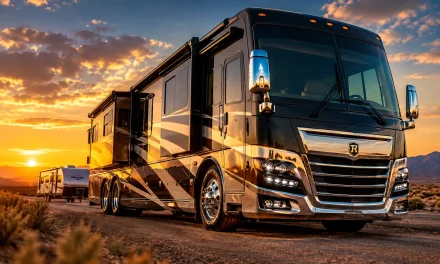
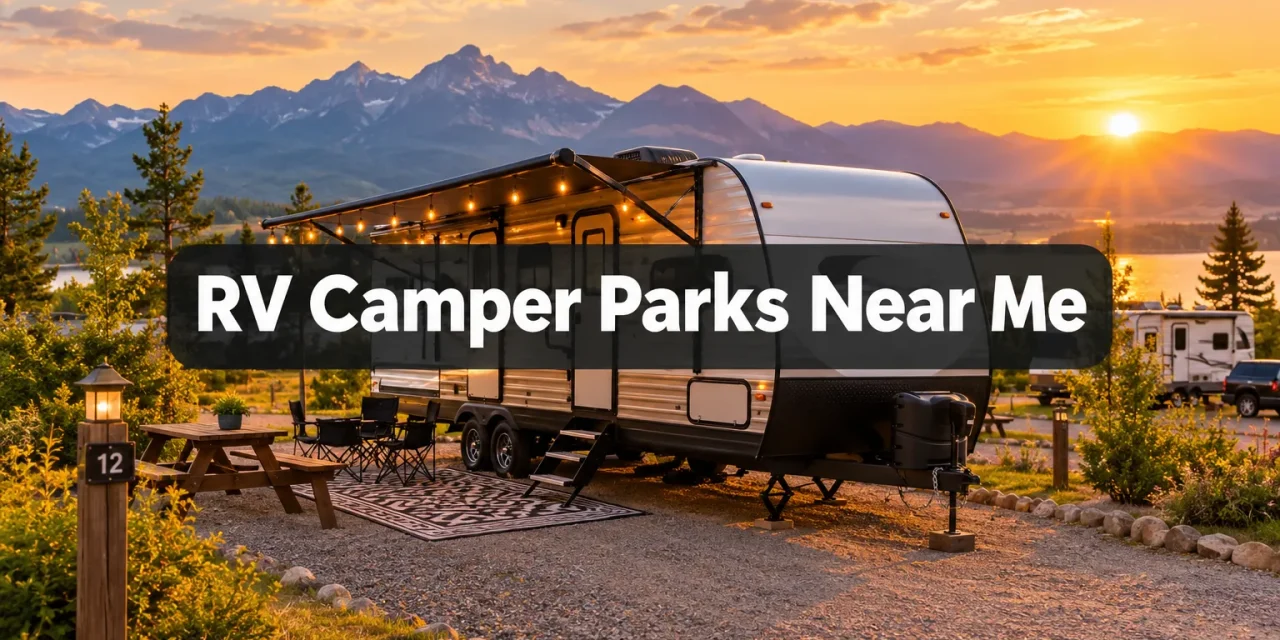
Forty-five minutes before sunset with no reservation and a 32-foot trailer behind you is not the time to start guessing. Yet that’s exactly the spot thousands of RVers find themselves in every week. Searching “RV camper parks near me” at the last minute doesn’t have to be stressful, it just requires knowing which tools actually work and what to check before you pull in.
This guide breaks down the fastest, safest ways to find RV camper parks near me while you’re already on the road, plus how to vet a spot in under two minutes so you’re not stuck guessing in the dark.
Key Takeaways
- Apps have replaced guesswork as the go-to way to find RV camper parks near me, with The Dyrt, Park4Night, and Roadtrippers leading the pack [1].
- Recreation.gov is still the best source for federal campgrounds, while KOA’s app offers fast booking at private parks nationwide.
- Hipcamp and the newly acquired Harvest Hosts network open up private-land stays beyond traditional campgrounds [2].
- Always confirm rig length limits, hookup type, and arrival hours before committing to any site.
- Late arrivals require extra prep, quiet driving, a backup plan, and a flashlight check of your spot.
The Best Apps for Finding RV Camper Parks Near Me
Road trip planning has shifted almost entirely to mobile apps. Pulling off at a random exit and hoping for the best is risky, and honestly, unnecessary now. Industry coverage consistently points to apps as the primary way RVers discover “near me” overnight options [1][3].
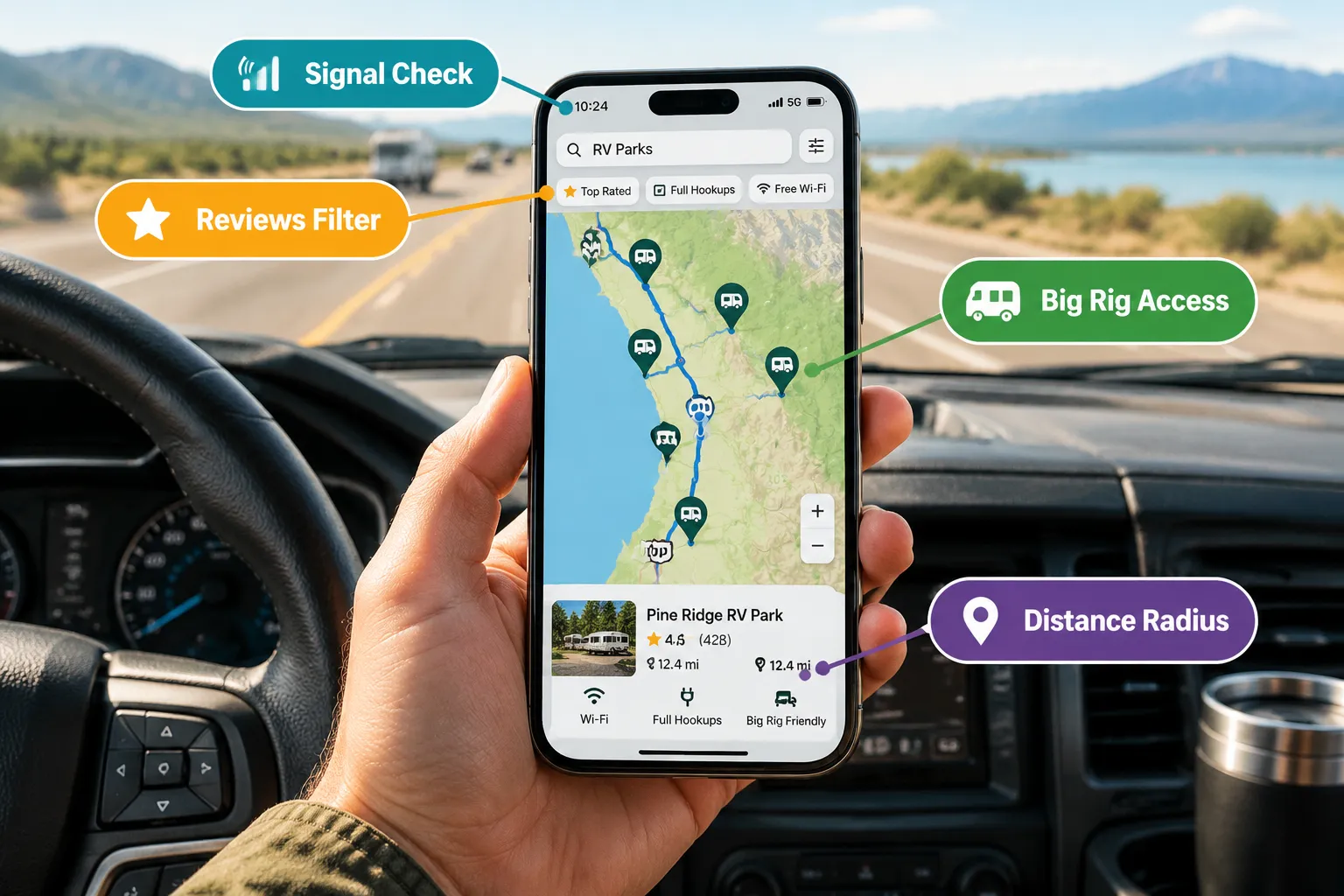
Here’s a rundown of the tools worth having loaded before you leave the driveway.
The Dyrt
The Dyrt is one of the most trusted apps for crowdsourced campground reviews. Real RVers post photos, site conditions, cell signal strength, and whether a park actually fits big rigs. If you’re trying to avoid a park that photographs better than it performs, this is where to check first.
Park4Night
Park4Night is a global favorite for both free and paid RV parking spots, including Walmart lots, rest areas, and small private campgrounds that don’t show up on bigger platforms. It’s especially handy overseas, but U.S. RVers lean on it heavily for off-the-beaten-path overnight stops.
Roadtrippers
Roadtrippers is built for route planning, and more RVers are using it to map entire trips around safe overnight stops rather than just tourist attractions. You can plug in your route and see camper parks clustered along the way, which saves a ton of backtracking.
Recreation.gov
For federal campgrounds, national forests, Army Corps lakes, BLM land, Recreation.gov remains the authoritative booking platform. It’s less flashy than the apps above, but it’s the official source, and that matters when you need accurate site specs and availability.
KOA App
KOA’s app supports fast booking across its large network of private RV parks. If you want predictable amenities, full hookups, laundry, a camp store, KOA is often the quickest “near me” option with same-day availability.
Hipcamp and Harvest Hosts
Hipcamp opened the door to nontraditional overnight sites on private land, from farms to vineyards. And in 2026, Choice Hotels’ acquisition of Harvest Hosts signaled a bigger shift: hotel-style booking convenience is merging with RV overnight stays, giving travelers even more integrated options [2][4]. For general trip inspiration before you lock in a stop, check out this breakdown of taking an RV trip across multiple states.
“The best overnight stop isn’t the fanciest one, it’s the one that’s actually safe, legal, and big enough for your rig.”
How to Vet an RV Camper Park Before You Commit
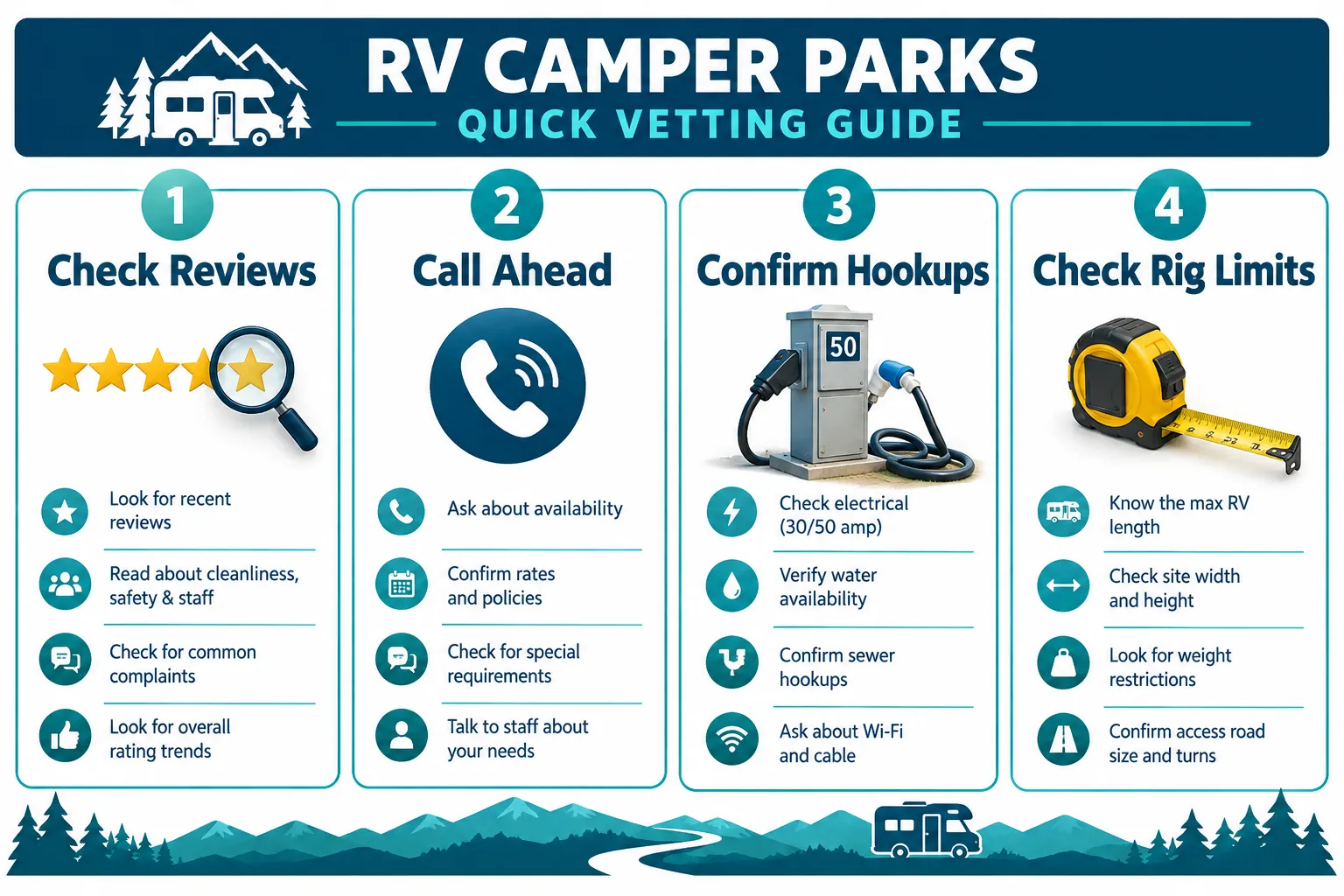
Finding a pin on a map is step one. Knowing it’s actually a good fit is step two, and skipping it is how RVers end up wedged in a site that’s six feet too short.
Run through this quick checklist before you turn off the highway:
- Check rig length limits. Many smaller parks cap sites at 30 or 35 feet. Don’t assume, confirm.
- Verify hookup type. Full hookup, water/electric only, or dry camping? Know what you’re getting.
- Read recent reviews, not just star ratings. A 4.5-star park from three years ago may have changed ownership or condition since.
- Call ahead if it’s late in the day. A two-minute phone call can confirm availability and save you a wasted detour.
- Confirm check-in hours. Some private parks lock gates after a certain time.
Industry reports describe a growing “quiet questing” trend, RVers prioritizing low-stress, well-matched overnight stops over flashy destinations [1]. That mindset is exactly the right one when vetting a park on the fly.
If electrical hookups are part of your plan, it’s also worth brushing up on RV electrical safety basics before plugging in at an unfamiliar site, especially older private parks with aging pedestals.
Finding RV Camper Parks Near Me for Late Arrivals and One-Night Stays
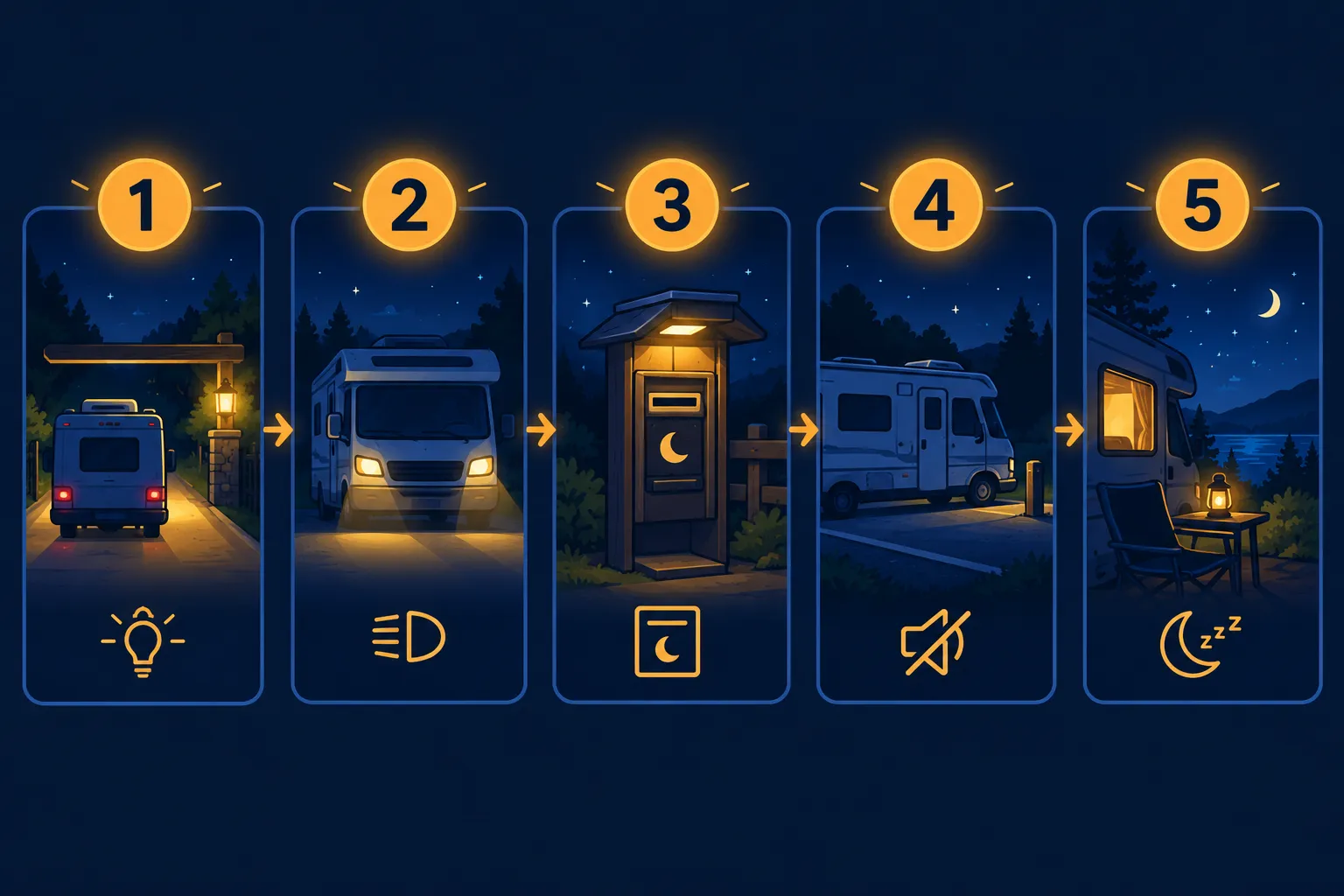
Late arrivals are where most overnight stop mistakes happen. Driving tired, in the dark, looking for a spot you’ve never seen, it’s a recipe for a rough night. Here’s how to handle it better.
Build a backup list before you need it. When searching RV camper parks near me for a one-night stop, pull up three options along your route by early afternoon, not at dusk. Apps like The Dyrt and Park4Night let you bookmark spots so you’re not re-searching under pressure.
Call or book same-day when possible. Many private parks and KOA locations hold same-day reservations, and a quick call confirms there’s actually room for your rig.
Scope the entrance before committing in the dark. If the driveway looks tight or unlit, it’s okay to keep driving to the next option on your list.
Keep noise and lights low on arrival. Other campers are often asleep. Back in quietly, skip the leveling jacks’ loud clunks if you can wait until morning, and save full hookup setup for daylight.
Have a legal fallback. Truck stops, some Walmart lots, and rest areas can work in a pinch, but always confirm current policy, since rules change often and vary by location and city ordinance.
For longer trips where you’re hopping between multiple overnight stops, it helps to plan a loose route in advance. Reviewing RV trip planning resources ahead of time means fewer scrambles later.
Free vs. Paid Overnight Stops: Quick Comparison
Not every night needs a full-hookup resort site. Here’s how the main options stack up:
| Stop Type | Typical Cost | Amenities | Best For |
|---|---|---|---|
| Federal campground (Recreation.gov) | Low to moderate | Basic, scenic | Nature lovers, advance planners |
| Private RV park (KOA) | Moderate to higher | Full hookups, showers, store | Families, comfort seekers |
| Hipcamp / Harvest Hosts | Free to low | Minimal, unique settings | Boondockers, adventure seekers |
| Overnight parking (Park4Night listed) | Usually free | None to minimal | One-night highway stops |
If boondocking-style stops are part of your route, it’s worth reviewing how other RVers stay safe while boondocking before settling into an unfamiliar free site.
Why the RV Travel Landscape Is Changing Right Now
A few bigger shifts are reshaping how people find overnight stops. Manufacturers and marketers are working to normalize RV travel for mainstream audiences, with large-scale activations drawing crowds, one Go RVing tailgate event alone pulled in 1,300 tours, and another activation brought over 700 consumers out to see RVs in person [5][6]. That kind of exposure is pushing more first-time travelers onto the road, which means more demand for reliable overnight stops.
At the same time, industry shipment forecasts point toward a tighter but more quality-focused RV market [1][7]. Translation: fewer units, but better-built ones, and RV parks are adjusting their amenities to match a more discerning traveler.
New digital platforms and power solutions are also making overnight stays more comfortable and safer, from improved app-based booking to better off-grid power setups [1][2]. If your travels include long historic routes, pairing your overnight stop search with a look at U.S. National Historic Trails worth visiting can turn a simple overnight stop into part of the adventure.
For travelers considering longer-term stays, it’s also worth understanding whether an RV park can be used as a permanent address, especially for full-timers blending short stops with extended stays.
Making the Most of Short Overnight Stops
A one-night stop doesn’t have to feel rushed. A few small habits make overnight stays smoother:
- Prep food ahead of time. A simple overnight oats recipe with seasonal fruit means breakfast is ready before you even hit the road again.
- Scout nearby small-town dining. Some of the best meals happen at small town food stops just off the highway.
- Consider alternatives to crowded parks. If national park campgrounds are full, looking into national park alternatives can save a lot of frustration.
Frequently Asked Questions
How do I find RV camper parks near me without a reservation? Use The Dyrt, Park4Night, or the KOA app to filter by current availability, then call ahead to confirm same-day space.
Are free overnight RV spots safe? Many are, but check recent reviews and avoid isolated spots with poor lighting or no cell signal, especially when arriving at night.
What’s the fastest way to check if a park fits my rig? Filter by rig length directly in the app listing, or call the park office, site specs posted online aren’t always current.
Conclusion
Finding RV camper parks near me doesn’t have to mean rolling the dice at dusk. With the right apps loaded, a quick vetting checklist, and a backup plan for late arrivals, overnight stops become a non-issue instead of a nightly stress test. Download two or three of the apps above before the next trip, build a habit of checking availability by early afternoon, and keep a short list of backup spots along any route. That small bit of prep turns every overnight stop into just another easy part of the journey.
References
- Industry Trends. rvnews.com.
- Acquisitions Expansions. rvnews.com.
- News. rvnews.com.
- rvnews.com.
- Go Rving Tailgate Draws 1300 Tours. rvnews.com.
- Go Rving Activation Brings Over 700 Consumers to Tour Rvs. rvnews.com.
- Top of News. rvbusiness.com.