
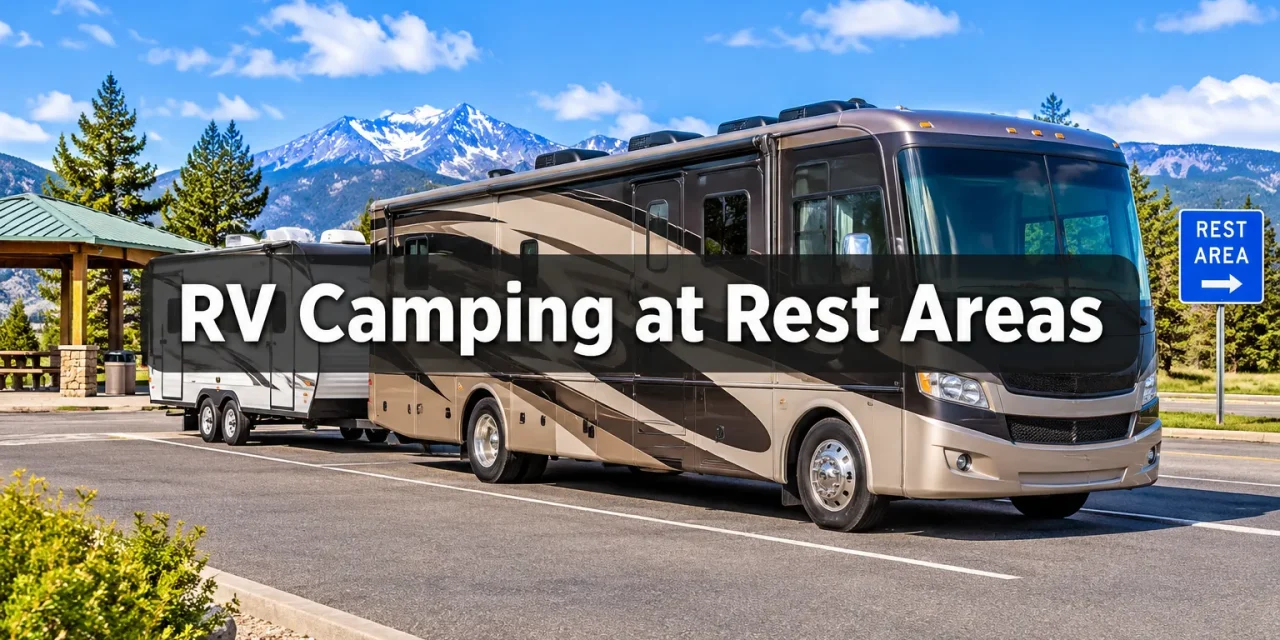
Roughly 1 in 3 long-haul RV trips includes at least one overnight stop at a highway rest area, yet most states don’t actually call that “camping.” They call it parking. That distinction matters more than most travelers realize, and it’s the key to understanding RV camping at rest areas: overnight rules, safety checks, dump stations, and state-by-state planning before your next road trip.
Rest areas are built for short breaks, not extended stays. Confusing the two can get you a knock on the window from a state trooper at 2 a.m. The good news? With a little homework, rest areas can still be a safe, legal, and genuinely useful tool for breaking up a long drive.
Key Takeaways
- Parking ≠ camping. Most states allow short overnight parking at rest areas but prohibit setting up camp (awnings, chairs, grills, slide-outs in some cases).
- Time limits are real and enforced. Montana caps rest area stays at 12 hours and bans camping outright .
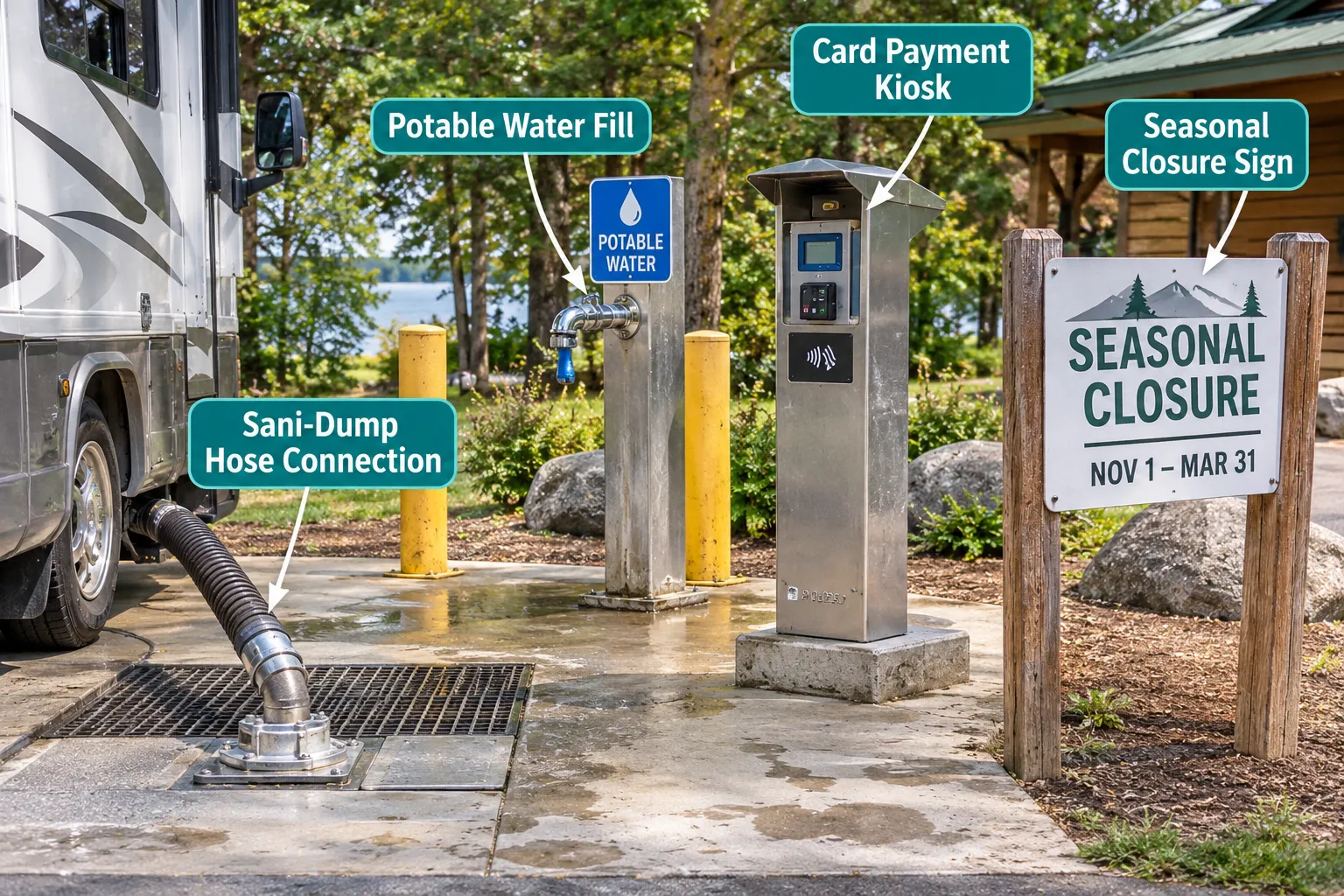
- Dump stations are disappearing at some rest areas. Iowa removed RV dump stations from its highway rest stops entirely .
- Seasonal closures hit dump stations hard, from Colorado to Alberta, Canada, often shutting down for months at a time [1][2].
- Rules vary wildly by state, so checking before you cross a border saves headaches and tickets.
Understanding RV Camping at Rest Areas: Overnight Rules, Safety Checks, Dump Stations, and State-by-State Planning
The core confusion behind RV camping at rest areas: overnight rules, safety checks, dump stations, and state-by-state planning comes down to one word: camping. Pulling over to sleep for a few hours in your rig is generally treated differently than “camping,” which implies setting up gear, staying for days, or using the site like a campground.
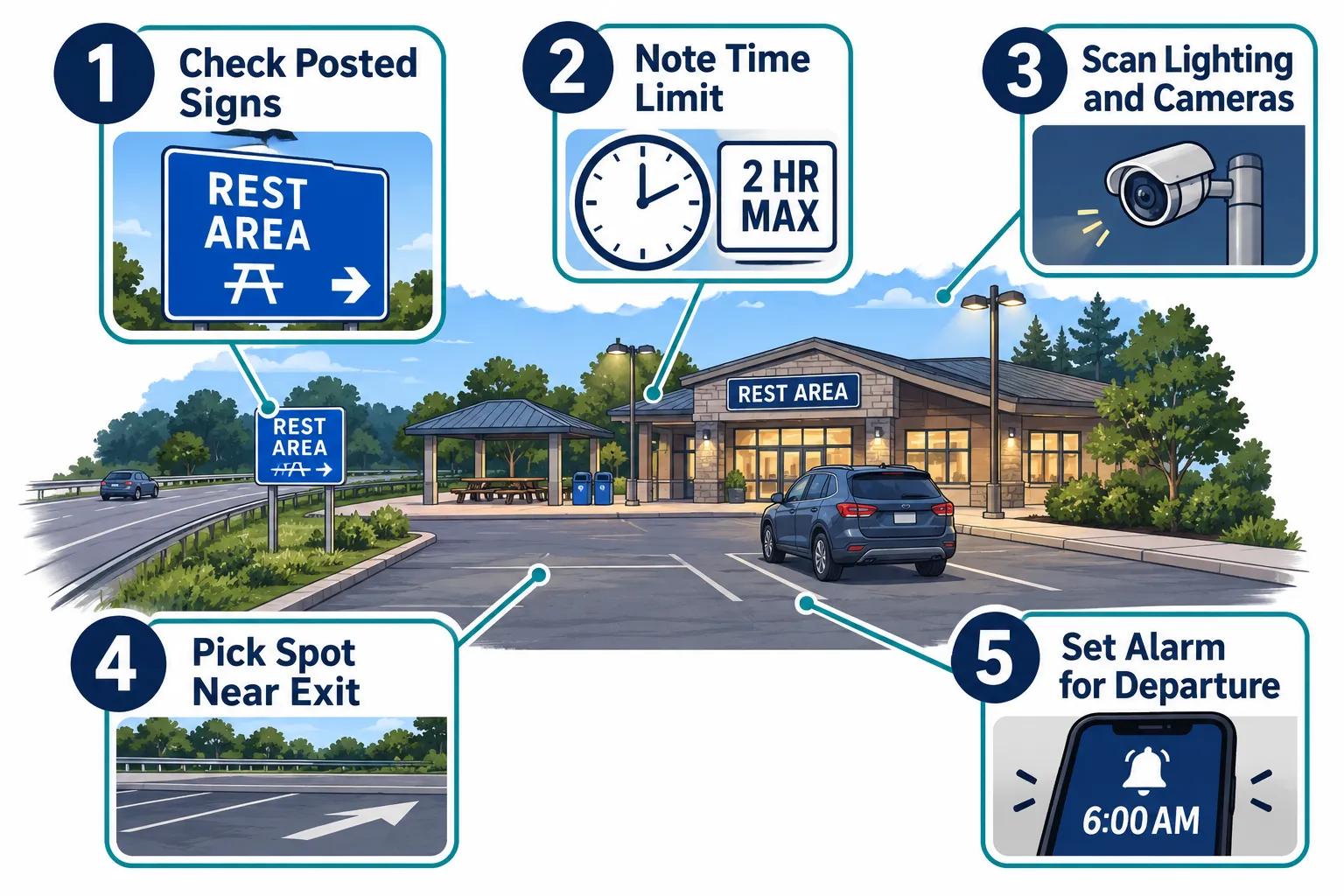
Take Montana. Its rest areas explicitly allow overnight parking, but only one space per vehicle, and only for a maximum of 12 hours. Camping itself is formally prohibited . That means you can nap, sleep, and move on, but you can’t pop out the awning, set up a grill, or treat the lot like a weekend basecamp.
Minnesota takes a similar but slightly more amenity-forward approach. Its Safety Rest Areas are open 24 hours a day with flush toilets, drinking fountains, lighted walkways, and dedicated lighted parking for cars, RVs, and commercial trucks [3]. These spaces are designed with driver safety in mind, not as a substitute for a campground.
So what’s the practical takeaway? Treat rest areas as a safety valve for drowsy driving, not a free campground alternative. If you want full hookups, fire pits, or multi-night stays, you’re looking for a different kind of site entirely, check out our tips on quiet hours and overnight camping etiquette for more on where that line gets drawn.
“A rest area is a pit stop, not a destination. Treat it that way and you’ll never have a problem.”, a sentiment echoed by state DOT policies nationwide.
Why the Distinction Matters for Your Trip
Here’s a simple way to think about it:
| Situation | Typically Allowed? | Why |
|---|---|---|
| Sleeping in your RV for a few hours overnight | ✅ Usually yes | Treated as rest, not camping |
| Setting up chairs, awning, or grill | ❌ Usually no | Crosses into “camping” |
| Staying multiple nights in a row | ❌ Almost never | Exceeds posted time limits |
| Using the lot as a base for sightseeing | ❌ No | Not the intended purpose |
Safety Checks Before You Settle In for the Night
Before shutting off the engine for the night, run through a quick mental checklist. This is where RV camping at rest areas: overnight rules, safety checks, dump stations, and state-by-state planning really earns its keep, a few minutes of caution prevents a much worse night.
1. Read every posted sign.