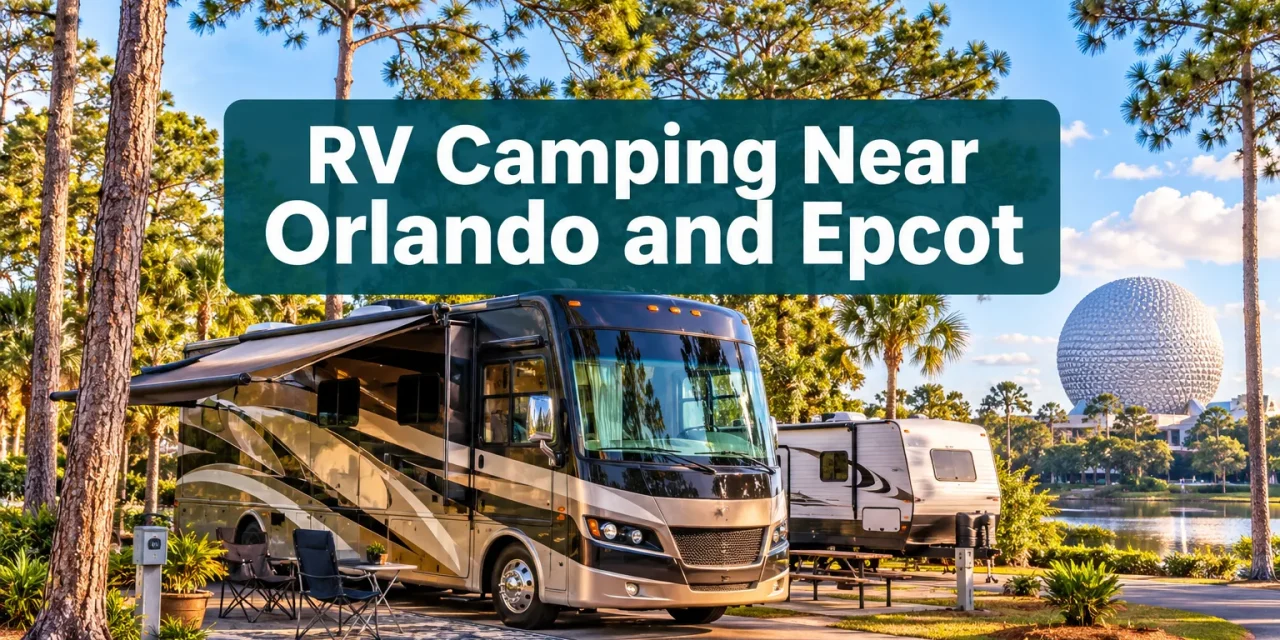
Only one RV campground in the world lets you park within walking distance of a Disney monorail. That single fact shapes almost every decision RVers face when planning a trip to Central Florida. Picking the right base camp for RV camping near Orlando and Epcot: campground bases, transportation, costs, and park-day strategy can make or break how much fun, and how much money, a Disney trip ends up costing.
Whether towing a fifth wheel from out of state or renting a motorhome for a quick fly-in vacation, the choice between staying on Disney property or basing off-site changes everything: daily costs, commute times, heat exposure, and how many park days actually feel relaxing instead of exhausting.
Key Takeaways
- Fort Wilderness Resort is still the only on-site RV campground at Walt Disney World, and a 2026 occupancy update changes how many guests can stay per site[1][2].
- Off-site RV parks within 20-45 minutes of Epcot can save money but add real commute and heat-management challenges[3][4].
- Transportation options from Fort Wilderness, buses, boats, and internal shuttles, directly shape the best park-day strategy[1][5].
- RV rental delivery services now bring rigs straight into Fort Wilderness, making fly-in RV trips realistic[5].
- Comparing costs between on-site and off-site RV bases requires looking beyond the nightly rate to transportation time and convenience[3][6].
Fort Wilderness Resort: The Only On-Site RV Base at Disney
Fort Wilderness Resort & Campground sits on Walt Disney World property, tucked among pines and cypress near the Seven Seas Lagoon. It remains the only RV campground inside Disney’s gates, which makes it a magnet for RV owners who want the full Disney bubble experience without leaving their rig behind[1].
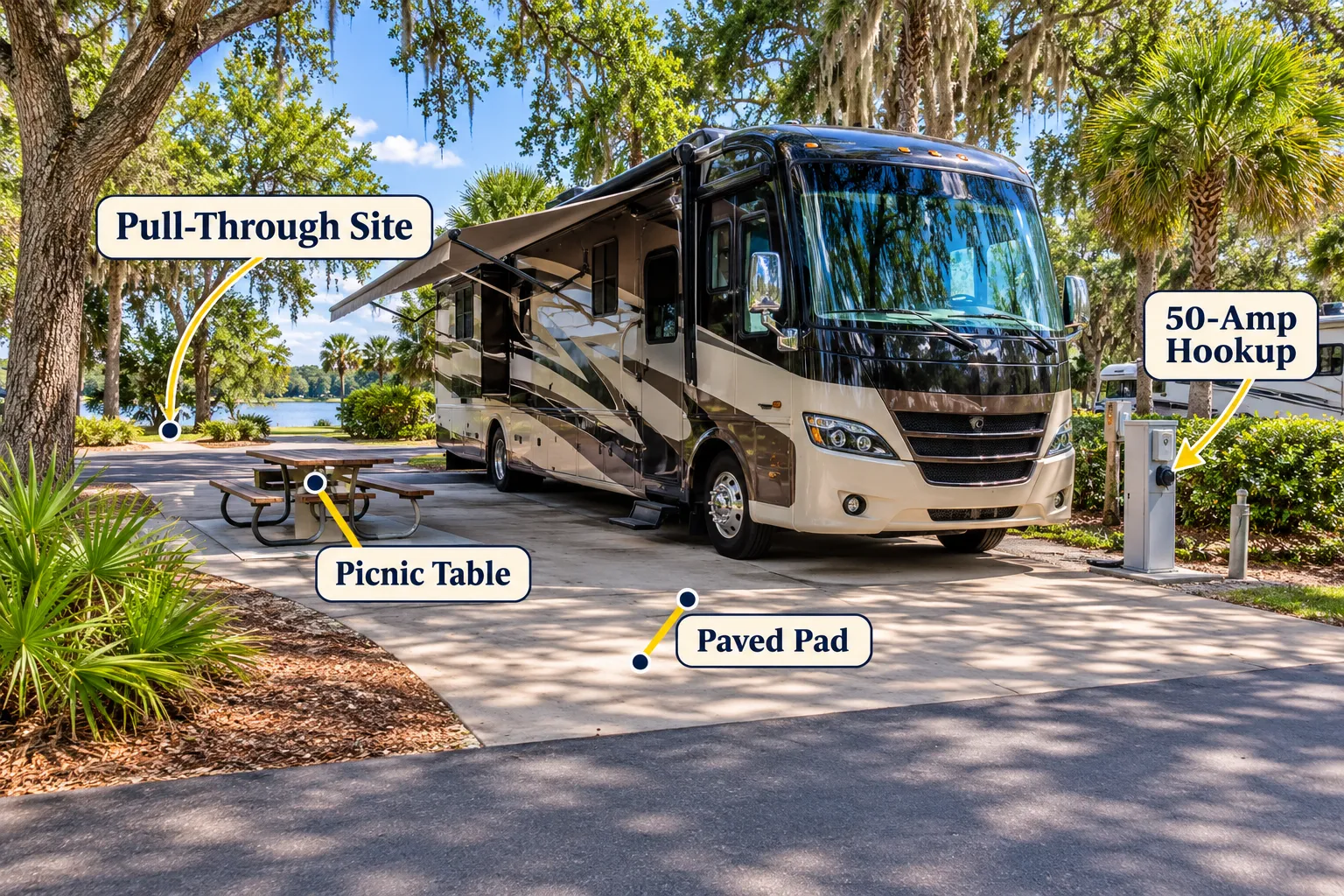
For 2026, Disney updated occupancy rules at Fort Wilderness, affecting how many guests can be assigned to a single site. That matters for families traveling with grandparents or teens, since exceeding the new occupancy limit may require booking a second site[1][2]. Always confirm current occupancy caps before locking in dates.
Campsite Types and Hookups
Fort Wilderness offers several site categories, and knowing the differences helps RVers avoid a cramped or mismatched stay:
- Premium sites, larger pads, closer to amenities, full hookups
- Preferred and full-hookup sites, standard 30/50-amp power, water, and sewer
- Partial-hookup sites, fewer amenities, typically lower rates
Most sites can accommodate big rigs, but anyone towing a longer fifth wheel or a dually-pulled trailer should double-check length limits when booking[1][2]. Compared to many commercial campgrounds, Fort Wilderness pads are wooded and private, closer in feel to the kind of setting found at scenic campground loops than a typical parking-lot RV park.
What It Costs in Late 2026
Nightly rates at Fort Wilderness vary by site type and season, with premium and full-hookup sites commanding the highest prices during peak holiday weeks[6]. Off-peak value season rates run noticeably lower. Because Disney periodically adjusts rates, checking the official rates page before booking is the smartest move[6].
It’s worth remembering that the price covers more than a campsite, it includes access to Disney transportation, resort pools, and the overall convenience of staying inside the “bubble.” For budget-focused travelers, that convenience premium is the real trade-off to weigh.
Transportation From Fort Wilderness to Epcot and Other Parks
Fort Wilderness doesn’t sit directly next to Epcot, so transportation planning matters for anyone building a RV camping near Orlando and Epcot: campground bases, transportation, costs, and park-day strategy itinerary around this resort.
Guests typically reach other parks using a combination of:
- Internal bus loops connecting campsites to central bus stops
- Buses to Magic Kingdom, Animal Kingdom, and Disney Springs
- Boat launches crossing the Seven Seas Lagoon toward the Magic Kingdom area
- Transfers required to reach Epcot and Hollywood Studios, since Fort Wilderness doesn’t have a direct Epcot bus route in most seasons[1][5]
That transfer step is the biggest planning wrinkle. A trip to Epcot from Fort Wilderness usually means riding an internal bus to a central hub, then connecting to an Epcot-bound bus. Building in an extra 20-30 minutes of buffer time avoids frustration on park-opening mornings[1].
Families who prefer flexibility sometimes bring a tow vehicle or rent a car for direct Epcot access, bypassing the bus transfer entirely. That hybrid approach, camp at Fort Wilderness, drive to Epcot, is increasingly common among RVers who value predictability over cost savings.