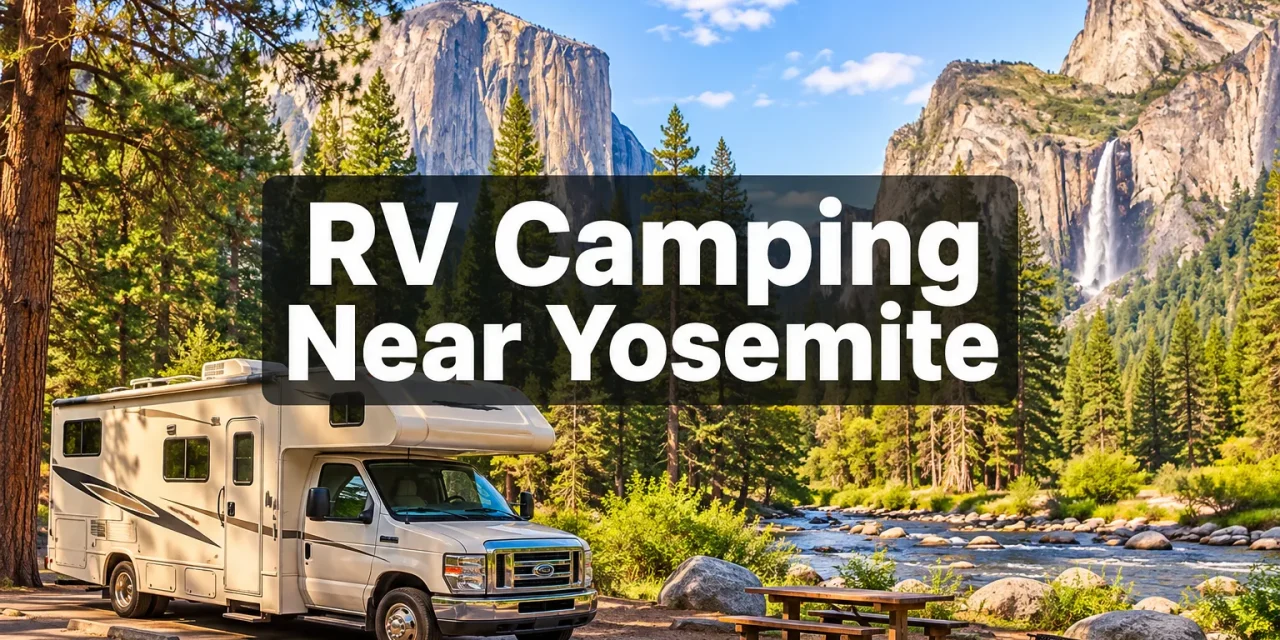
Only seven campgrounds inside Yosemite National Park accept RVs at all, and most of those cap rig length well under 40 feet. That single fact shapes almost everything about planning an RV trip to this park. If an RV traveler doesn’t understand the reservation calendar, the vehicle reservation system, and the shuttle network before locking in dates, the trip can fall apart fast.
This guide breaks down RV camping near Yosemite: best gateway campgrounds, reservation timing, shuttle logistics, and driving limits so travelers can build a realistic, stress-free itinerary. Whether staying inside the park or basing out of a gateway town, the right plan starts weeks, sometimes months, before the wheels start rolling.
Key Takeaways
- Only a handful of in-park campgrounds take RVs, and most have strict length limits (often 35 feet or less).
- Gateway towns along Highway 140 and nearby lake recreation areas offer bigger rigs more breathing room and easier hookups.
- Yosemite reservations typically open five to six months in advance and sell out in minutes, cancellations are the backup plan.
- The YARTS regional bus and in-park shuttles let RVers skip Valley traffic and parking headaches entirely.
- Vehicle reservation requirements can change seasonally, so always confirm current rules before departure.
Understanding RV Camping Near Yosemite: Best Gateway Campgrounds, Reservation Timing, Shuttle Logistics, and Driving Limits Inside the Park
Yosemite’s in-park campgrounds were built decades ago, long before 40-foot fifth wheels became common. That means RV camping near Yosemite inside park boundaries comes with real physical constraints, not just reservation hassles.
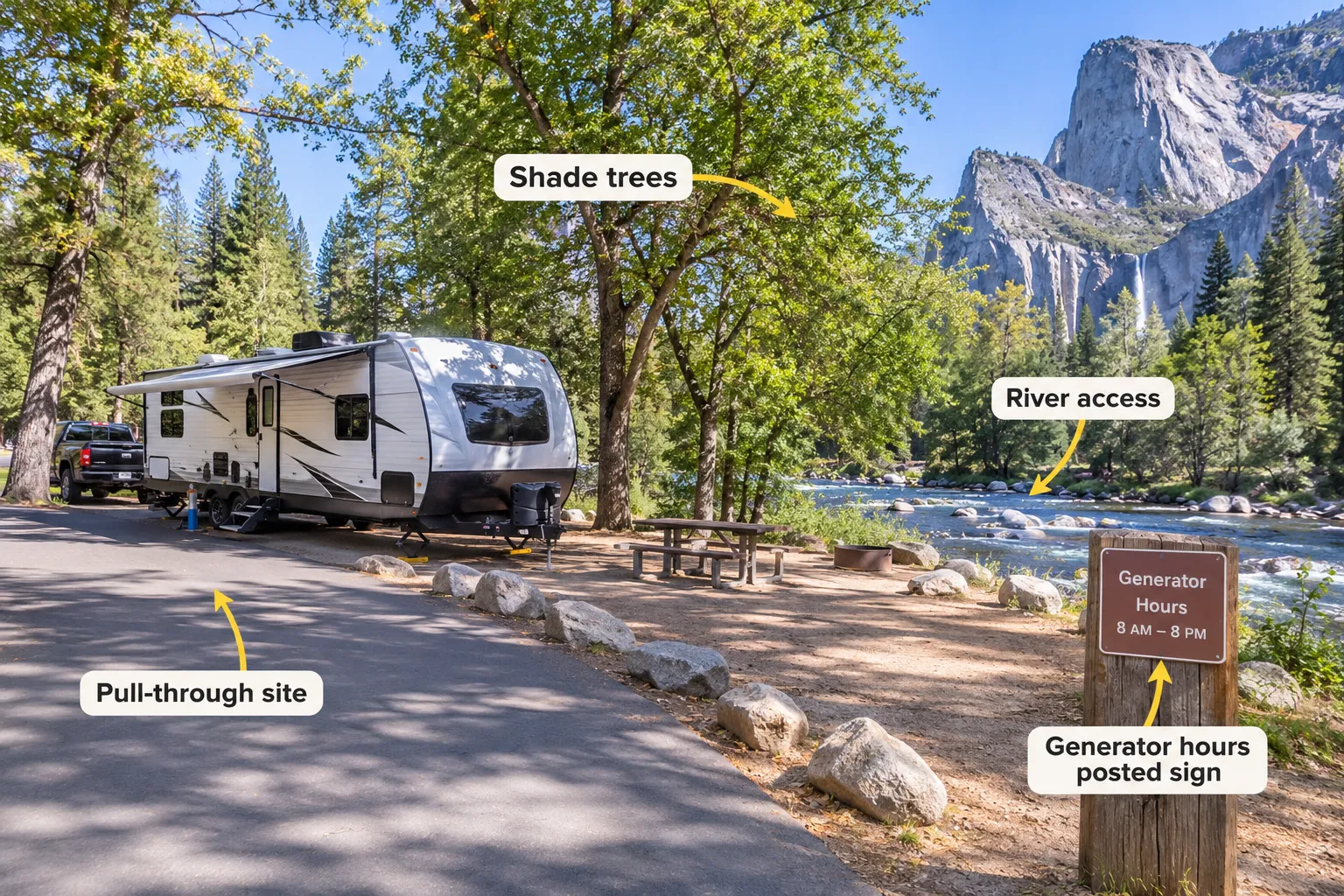
Upper Pines, Lower Pines, and North Pines in Yosemite Valley accept RVs and trailers, but length maximums typically run around 35 feet, and sites have no hookups [1]. Hodgdon Meadow, Crane Flat, Wawona, and Tuolumne Meadows also take RVs seasonally, with similar size restrictions and no electric or water hookups at most sites [1][2]. There’s no dump station network built for big rigs scattered conveniently through the Valley, either, RVers typically need to use designated stations at specific campgrounds.
Quick facts about in-park RV camping:
- Most campgrounds: no hookups, generator use limited to set hours
- Typical length cap: 27 to 35 feet, varies by loop and site
- Tuolumne Meadows and high-country campgrounds: seasonal only, closed in winter [3][4]
- Dump stations available at select locations, not every campground
For travelers with rigs over 35 feet, or anyone who wants full hookups, staying inside the park usually isn’t realistic. That’s where gateway camping becomes the smarter move for most RV owners.
Best Gateway Campgrounds Along Highway 140
The Highway 140 corridor, sometimes called the “All-Year Highway”, runs along the Merced River and is the lowest-elevation route into Yosemite Valley, making it a favorite for RVers worried about mountain grades or snow.
Private and public campgrounds along this corridor offer what the park can’t: full hookups, pull-through sites, and larger pads. Several RV parks sit within a 30- to 45-minute drive of the Arch Rock entrance, giving travelers an easy base camp without squeezing a 38-foot rig through tight Valley loops.
What to look for in a Highway 140 gateway campground:
- Confirmed RV length accommodation, call ahead rather than trusting a website filter.
- Proximity to Arch Rock entrance, shorter drive means less daily mountain-road wear and tear.
- Hookup availability, full hookups let travelers skip generator hours entirely.
- River or shade access, summer temperatures in this corridor can climb into the 90s.
Booking platforms like recreation.gov list several nearby public camping options worth comparing against private RV parks for amenities and price [5].
Lake and River Recreation Area Camping: Barrett Cove, McSwain, and McClure
For RVers who want more space, water recreation, and far less competition for sites, the lakes west of Yosemite are an underrated option. Barrett Cove Recreatio