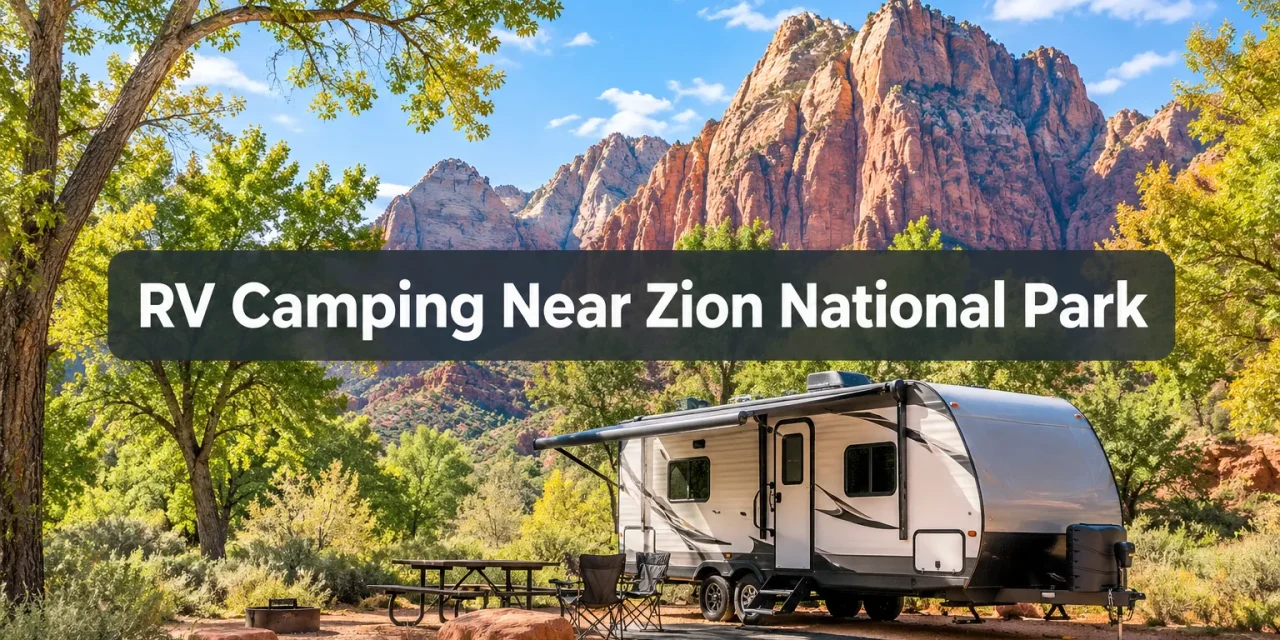
A 40-foot fifth wheel cannot simply roll through the Zion, Mt. Carmel Tunnel the way a pickup truck can. That single fact trips up more RV travelers than any other detail about visiting Zion National Park. Rig size dictates where travelers can drive, where they can park overnight, and even which trails they can realistically reach.
This guide breaks down everything RVers need before heading to southern Utah: where to camp, how big a rig can be, when to book, and which hikes actually make sense depending on the home base chosen for the trip. Understanding RV camping near Zion National Park, including campgrounds, trailer limits, reservations, and best hikes, can mean the difference between a smooth trip and a stressful one.
Key Takeaways
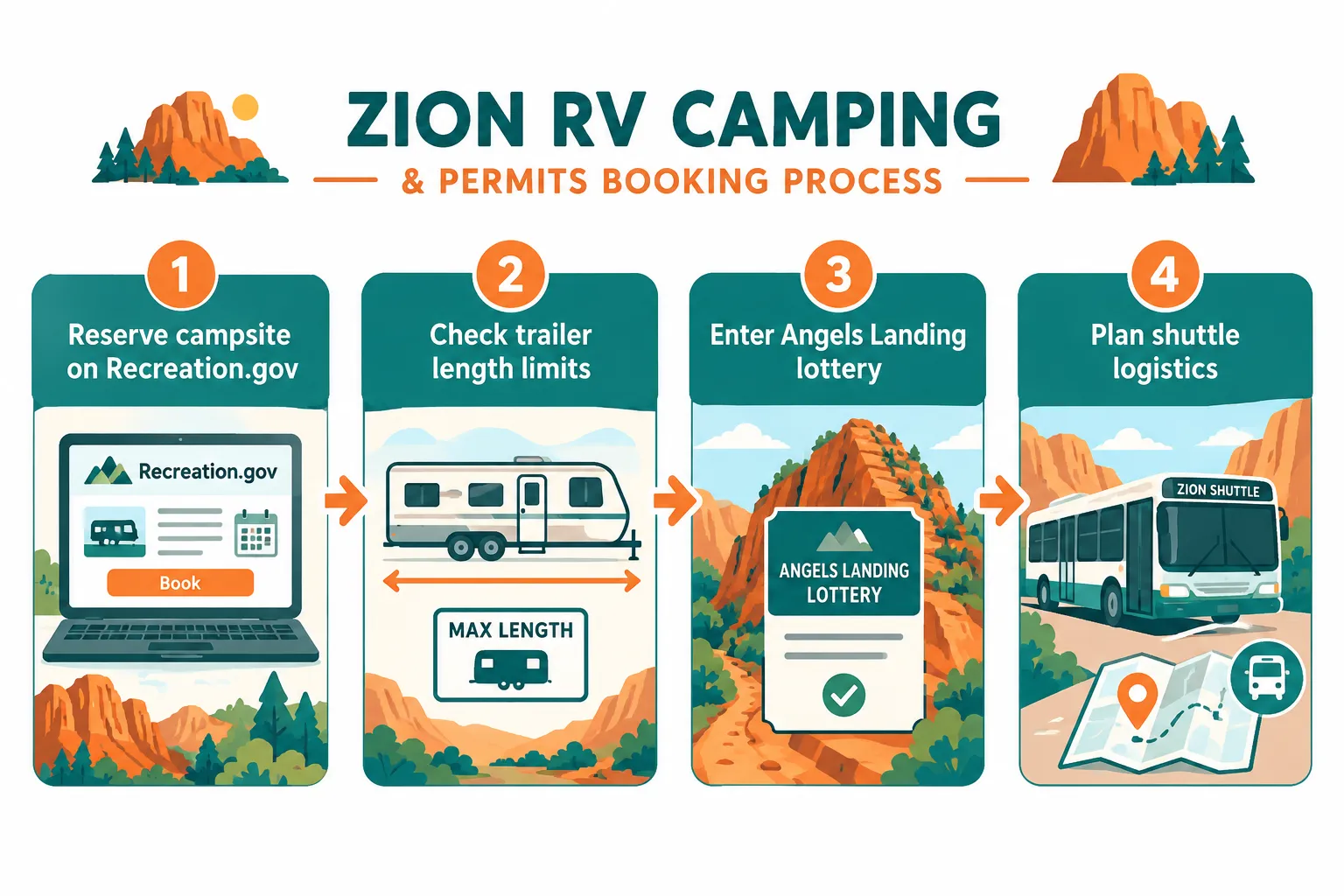
- Watchman and South Campgrounds are the only in-park options, and both require advance reservations through Recreation.gov.
- Trailer length limits vary by site, so checking Recreation.gov site details before booking is non-negotiable.
- New large-vehicle rules on the Zion, Mt. Carmel Highway, effective June 7, 2026, change how oversized RVs transit the tunnel.[1][2]
- Angels Landing now requires a seasonal lottery permit year-round, with separate windows for each season.[3]
- Basing camp outside the park in Springdale or nearby towns is often smarter for larger rigs.
RV Camping Near Zion National Park: Campgrounds Inside the Park
Two campgrounds sit inside Zion itself, and both fill up fast during peak months.
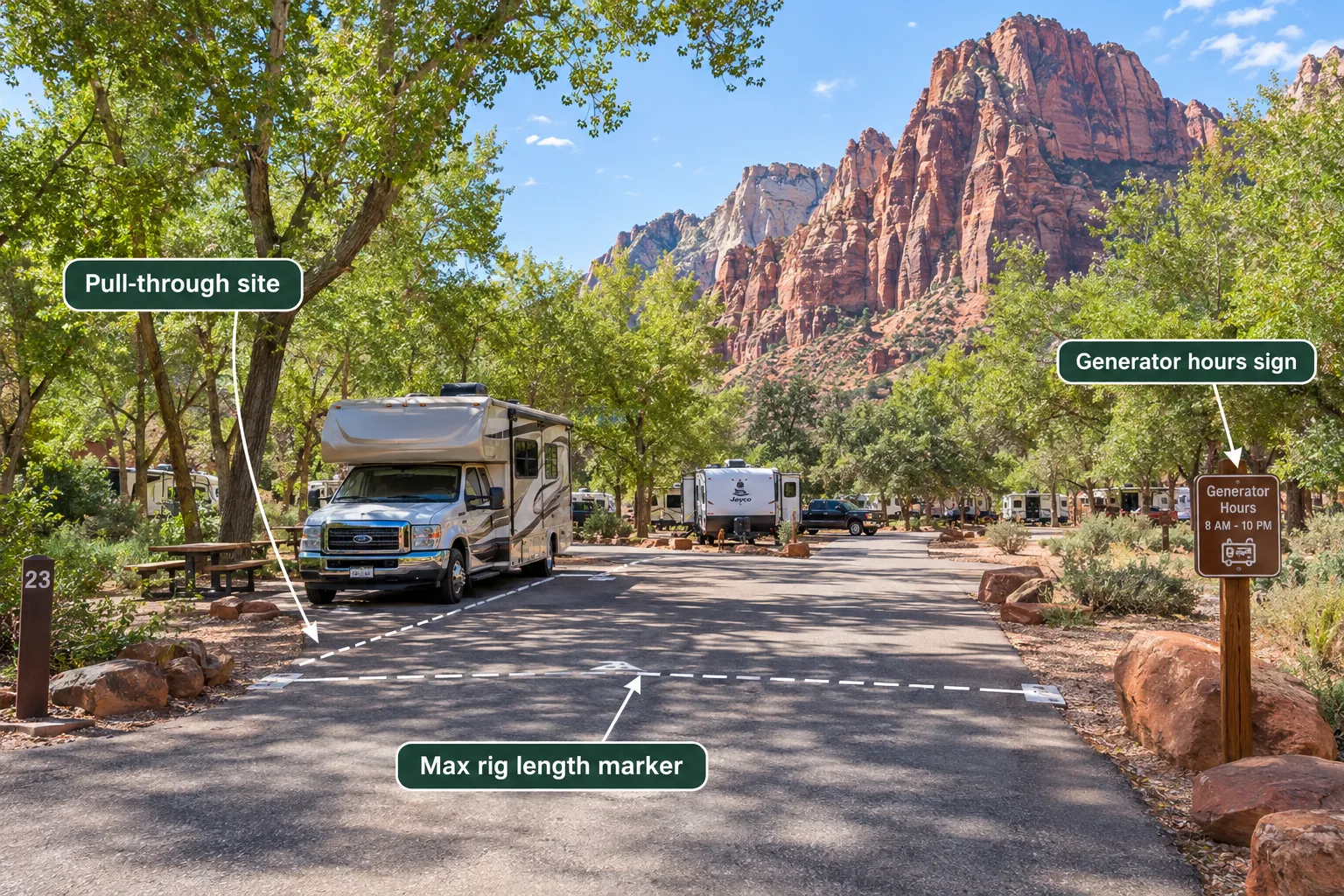
Watchman Campground is the larger of the two, located near the South Entrance by the Zion Canyon Visitor Center. It offers electric and non-electric sites, flush toilets, and proximity to the shuttle system. Per Recreation.gov data updated October 27, 2026, individual sites have specific RV and trailer length maximums, so reservation seekers should check the listed limit for each site before booking rather than assuming a blanket park-wide maximum.[4]
South Campground sits just south of Watchman and operates seasonally. It’s smaller, has fewer amenities, and tends to suit shorter rigs and tent campers more than large motorhomes.
Both campgrounds book through Recreation.gov, and reservations typically open months in advance. 🏕️ Waiting until the week before a trip almost guarantees a sold-out calendar during spring and fall.
For campers who strike out on in-park reservations, towns like Springdale, Hurricane, and Virgin offer private RV parks with hookups, dump stations, and more flexible length accommodations. These privately run spots often rival national park sites for charm, for a broader look at why smaller, independently owned campgrounds can outshine big corporate chains, see this breakdown of mom and pop campgrounds beating corporate RV parks.
Trailer Limits, Reservations, and Road Rules RVers Must Know
Checking Trailer Limits Before Booking
Not every site at Watchman can handle a 35-foot travel trailer. Length limits differ site by site, and some spots simply cannot fit longer rigs or vehicles towing a second trailer. Before locking in dates, pull up the current Recreation.gov map and filter by RV length. Doing this one step saves travelers from arriving only to discover their rig physically doesn’t fit the pad.
New Large-Vehicle Rules on the Zion, Mt. Carmel Highway
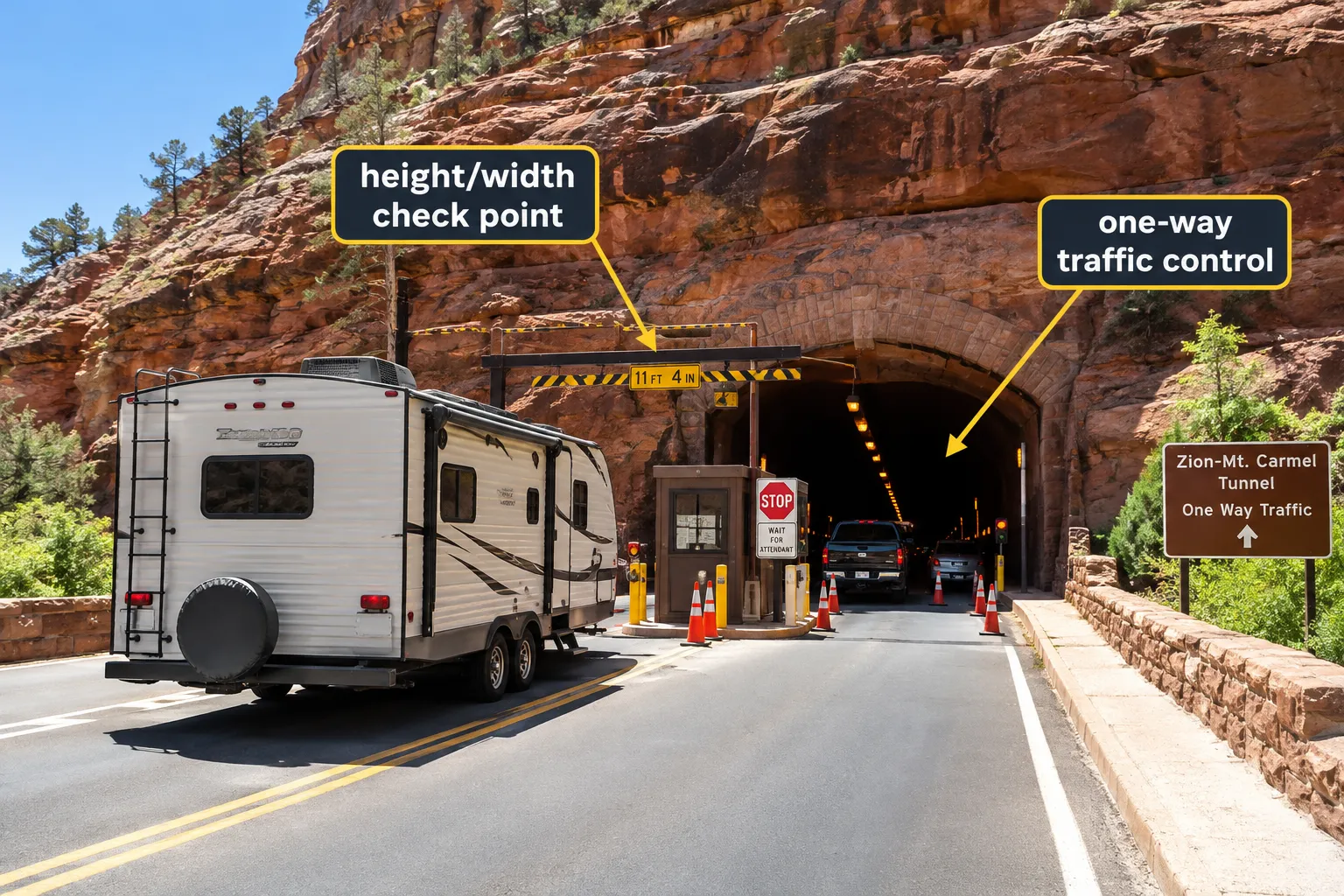
As of June 7, 2026, new rules govern large vehicles and RVs traveling the Zion, Mt. Carmel Highway and Tunnel.[1][2] The tunnel permit system that RVers relied on for years is being phased out, which changes how oversized vehicles move through this stretch of road. This matters because the tunnel connects the park’s east side to the main canyon, and vehicles over certain size thresholds have historically needed special escort timing or alternate routes.
Practically speaking, this means:
- Rig size directly affects which entrance an RV should use.
- Drivers with larger motorhomes or long trailers should plan routes in advance rather than assuming automatic tunnel access.
- Checking current NPS large-vehicle guidance before departure is essential, since these rules shifted mid-2026.[1]
Reservation Timing Strategy
| Booking Window | Best For | Notes |
|---|---|---|
| 6 months out | Watchman electric sites | Highest demand, books first |
| 2-3 months out | South Campground | Seasonal, fills slower |
| Last-minute (days) | Private RV parks nearby | More flexible, hookups available |
For general campground safety awareness while staying anywhere near Zion, it’s worth reviewing common dangers to consider when camping in an RV campground, especially around wildlife, flash flooding, and site terrain.
“Rig length isn’t just a camping detail at Zion, it’s a routing decision that affects the whole trip.”
RV Camping Near Zion National Park: Pairing Campgrounds With Best Hikes
Angels Landing Now Requires a Year-Round Permit
Angels Landing remains the park’s signature hike, but it now requires a permit in every season, not just summer.[3][5] The National Park Service runs a seasonal lottery system with specific application windows:
- Spring hikes (March 1, May 31): Lottery opens February 13, closes February 25, permits issued February 26.[3]
- Summer hikes (June 1, August 31): Lottery opens April 1, closes April 20, permits issued April 25.[3]
- Fall hikes (September 1, November 30): Lottery opens July 1, closes July 20, permits issued July 25.[3][6]
- Winter hikes (December 1, 2026, February 28, 2027): Lottery opens October 1, closes October 20, permits issued October 25.[3][7]
There’s also a day-before lottery for travelers who didn’t plan ahead, which comes with its own timing window and fee, current as of October 2026.[7] This backup option is worth knowing about, but it’s far less reliable than the seasonal lottery.
Matching Hikes to a Realistic Overnight Base
Choosing a campground should factor in which trails are the priority, since shuttle access and drive times vary:
- Watchman Campground, Best for Angels Landing, The Narrows, and Emerald Pools since it sits right at the shuttle hub.
- South Campground, Similar shuttle access, slightly smaller rig accommodation.
- Springdale RV parks, Walking distance to the shuttle, ideal for larger rigs that couldn’t secure in-park reservations.
- East-side or Kolob Canyons bases, Better for visitors prioritizing quieter trails over the main canyon’s big-name hikes.
For RVers towing toward the east entrance, checking current large vehicle guidance on road restrictions is critical before committing to that route.[1][2]
Practical Tips for a Smooth Zion RV Trip
- Fill water tanks before arrival. In-park hookups are limited, and dry camping is common even at Watchman’s non-electric loops.
- Dump before you leave. Finding a reliable RV dump station near the park saves time on travel days.
- Check campground water quality. Some travelers prefer bringing their own filtered water; see this guide on whether campground water is safe to decide what’s right for the trip.
- Protect electrical systems. Private parks near Springdale can have inconsistent power, so a surge protector is cheap insurance.
- Watch generator hours. In-park campgrounds enforce quiet hours and generator restrictions, check posted signage on arrival.
- Confirm tunnel rules before the trip, especially for anyone towing a trailer over standard width or height.[1]
Conclusion
Zion rewards RVers who plan ahead and punishes those who don’t. Trailer length limits, tunnel restrictions, and the Angels Landing lottery all operate on fixed schedules that don’t bend for last-minute travelers. The smartest move is to lock in a Recreation.gov reservation months out, confirm the exact rig dimensions a chosen site can handle, apply for the Angels Landing lottery during the correct seasonal window, and double-check current large-vehicle tunnel rules before mapping a route.
Do that homework early, and the reward is a front-row seat to some of the most dramatic scenery in the American Southwest, without a single surprise at the campground gate.
References
- Large Vehicles. nps.gov.
- Road Restrictions 2. zionarea.udot.utah.gov.
- 2026 02 11 Angels Landing. home.nps.gov.
- Campsites. recreation.gov.
- Angels Landing Hiking Permits. nps.gov.
- 2026 Operating Plan Commercially Guided Interpretive Hiking Level Iii 12082025. home.nps.gov.
- Permits. recreation.gov.