
Introduction
Are you tired of getting sticker shock every time you need new RV tires? You’re not alone! Beck and Becka from the YouTube channel @beckandbecka just shared their incredible money-saving strategy that cut their tire replacement costs by more than half.
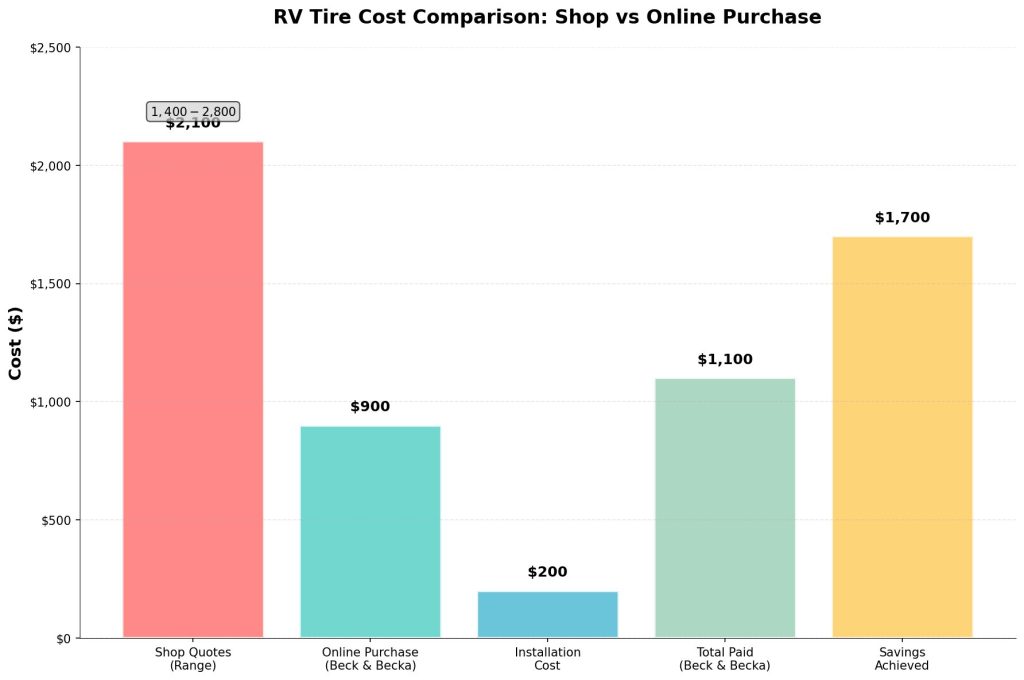
These RV enthusiasts were quoted anywhere from $1,400 to $2,800 for a complete tire replacement on their vintage motorhome, but they found a way to do it for just $1,100. That’s a savings of up to $1,700! If you’re looking to stretch your RV budget further while still getting quality tires, you’ll want to learn these proven strategies that can save you thousands of dollars.
Watch Beck & Becka’s money-saving tire tip:
1. Shop Online First, Then Install Locally
The biggest game-changer in Beck and Becka’s strategy was buying their tires online instead of through a traditional RV shop. They found all six tires for just $900 online, compared to shop quotes that ranged from $1,400 to $2,800 for the same job.
Key Statistics:
- Average RV tire costs: $250-$700 per tire at shops
- Online savings: Up to 60% off retail prices
- Beck & Becka’s savings: $500-$1,900 on tire purchase alone
You know what’s hilarious? RV shops act like they’re selling you the Crown Jewels when all you need are some round rubber things that go vroom. The internet doesn’t care about your dramatic tire-buying experience – it just wants to sell you tires at reasonable prices without the fancy waiting room coffee.
2. Master the Art of Installation Shopping
After buying tires online, Beck and Becka didn’t just settle for the first installation quote they received. They shopped around local shops to find the best installation pricing, ultimately paying just $200 for professional mounting and balancing.
Industry Installation Costs:
- Average installation cost: $25-$45 per tire
- Beck & Becka’s rate: $33 per tire ($200 for 6 tires)
- Potential savings by shopping around: $100-$300
The secret is calling multiple tire shops and asking specifically about installation-only services. Many shops offer competitive installation rates when you bring your own tires, especially during slower periods.
It’s like dating but for tire installation – you’ve got to shop around until you find someone who appreciates you (and your pre-purchased tires) for who you are. Don’t settle for the first shop that gives you the “we don’t usually do this” attitude.
3. Time Your Purchase Strategically
Smart RV owners know that timing can save hundreds of dollars on tire purchases. The best times to buy RV tires are during off-season months when demand is lower and retailers are clearing inventory.
Best Times to Buy:
- Late fall/early winter (October-December)
- Early spring before RV season (February-March)
- End of tire model years (typically July-August)
- Black Friday and Cyber Monday sales
Seasonal Pricing Patterns: