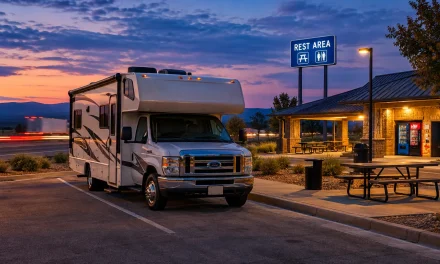

Here’s a fact that surprises a lot of new RVers: most people who quit the RV lifestyle don’t quit because they hate the road. They quit because of stress they never saw coming. Campgrounds are booked solid months out. Fees keep climbing. And the tiny space that felt cozy on day one starts to feel like a shoe box by month six.
If you’ve felt any of that pressure, you’re not alone, and you’re not doing it wrong. The 3 most stressful things about RV living (and how to fix them) are real, well-documented problems that affect weekend campers and full-timers alike [6][10]. The good news? Every single one of them has a fix. This guide breaks down exactly what’s causing the stress and gives you simple, real-world steps to feel calm and in control again.
Key Takeaways
- Money stress is growing because campsite fees, insurance, and repair costs are rising faster than many RV budgets [6].
- Legal and parking stress is real, new rules, parking bans, and enforcement sweeps are making it harder to find a safe place to stop [1][2][3][4][5][8][9].
- Daily-life stress comes from tight spaces, breakdowns, shaky internet, and feeling cut off from community [7][10].
- Planning ahead, picking the right home base, and building simple routines fix most of these problems fast.
- Experts agree: the RVers who thrive treat this lifestyle like a real plan, not just a dream [7][10].
Why These Are The 3 Most Stressful Things About RV Living Right Now
RV living looks peaceful in photos. Sunset views. Open roads. Coffee outside the camper door. But behind those photos, a lot of RVers are quietly stressed out.
Campground scarcity has become a structural problem, not just a seasonal one. Popular parks book up months in advance, and many older, affordable campgrounds are closing or raising prices because land and labor costs keep climbing [6]. At the same time, RV living is increasingly tied to economic pressure. Some people choose the lifestyle for freedom. Others choose it because rent got too high, and that mix creates a quiet fear of getting “trapped” in an RV instead of living in one by choice [10].
Layer on top of that a wave of new parking bans, overnight stay restrictions, and enforcement sweeps in cities and even some rural counties, and it’s easy to see why so many RVers describe their biggest worry as simply staying “legal” [1][2][3][4][5][8][9].
So let’s break down the 3 most stressful things about RV living (and how to fix them) one at a time, starting with the one that keeps the most people up at night.
Stressful Thing #1: Money Worries, Rising Fees, and Feeling “Stuck”
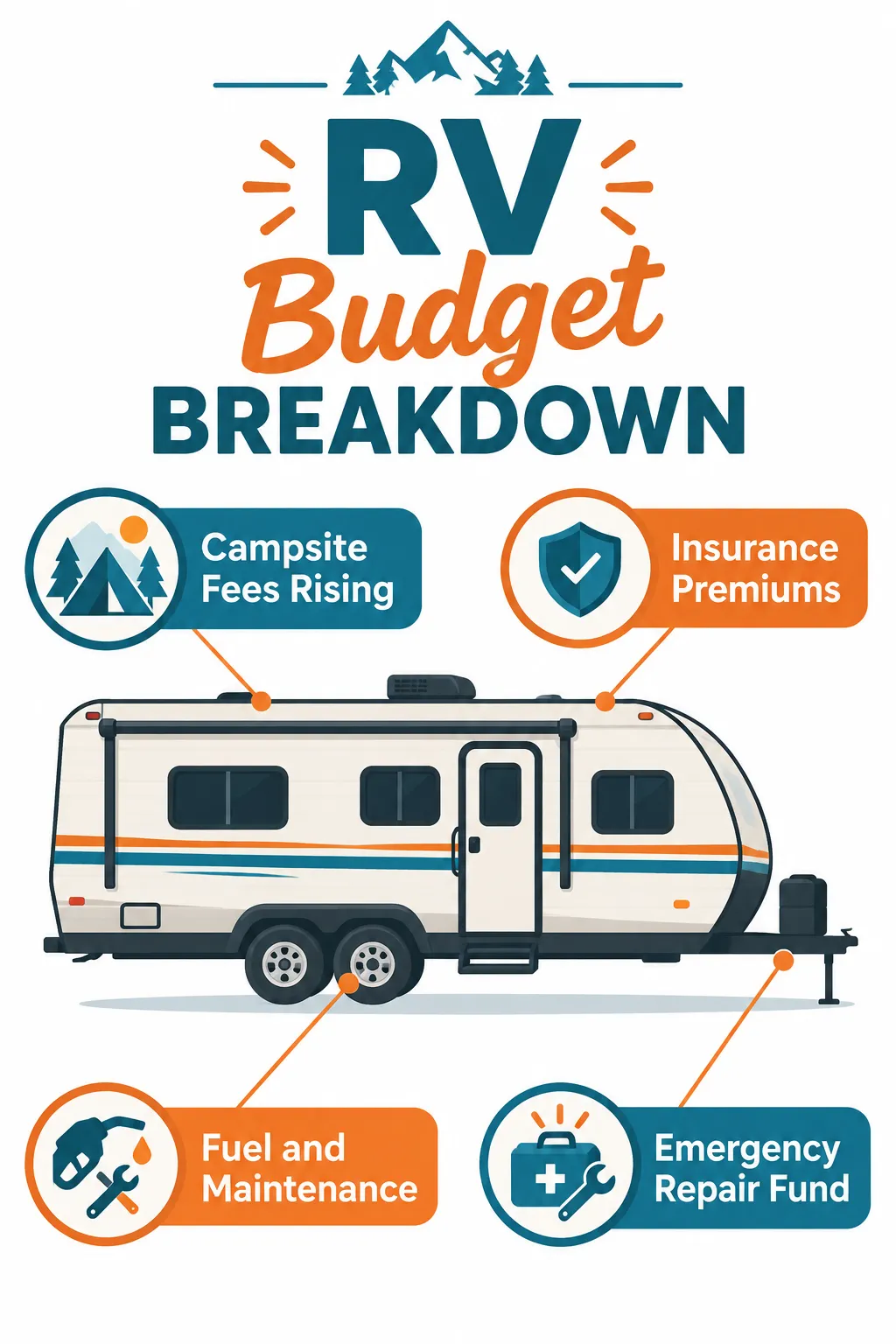
This is the big one. Campsite fees have jumped sharply in the last few years, and insurance premiums for RVs have climbed right along with them [6]. Add fuel, propane, repairs, and the cost of groceries on the road, and a budget that worked two years ago might not work today.
Here’s the part that makes this stress feel heavier: for some RVers, the RV wasn’t a dream purchase. It was a way to survive rising rent and housing costs. That turns “RV life” into something that can feel like a trap instead of freedom [10]. If the RV payment, insurance, and site fees eat up almost the whole budget, there’s no room left for savings, repairs, or fun. That’s a stressful place to live, literally.
How to Fix The Money Stress
- Build a “real” monthly budget, not a guess. Write down every cost: site fees, fuel, insurance, propane, phone/internet, food, and a repair fund. Seeing real numbers removes a lot of fear.
- Mix your camping style. Pair a few paid campground nights with free or low-cost boondocking spots on public land. This single change can cut monthly site costs by a huge amount.
- Book shoulder-season and midweek stays. Prices and availability are both better outside of peak summer and holiday weekends.
- Shop insurance every year. RV insurance rates vary a lot between companies. A 20-minute comparison call can save real money.
- Keep a dedicated repair fund. Experts who study RV living agree on one thing: the RVers who plan for repairs ahead of time feel far less financial panic when something breaks [7][10].
“A budget doesn’t take the fun out of RV life. It takes the fear out of it.”
Stressful Thing #2: Finding a Legal, Safe Place to Park
The second of the 3 most stressful things about RV living (and how to fix them) is simple to explain but hard to solve on the fly: where can you actually stop for the night without breaking a rule?
Across the country, more cities and counties are passing new RV parking laws. Some ban overnight street parking entirely. Others run enforcement sweeps that tow unregistered or long-term parked RVs with little warning [1][2][3][4][5][8][9]. For full-timers who rely on free overnight parking at stores, rest stops, or quiet side streets, this is a daily source of anxiety. One wrong turn, and you’re dealing with a ticket, a tow, or a knock on the door at 2 a.m.
On top of local parking rules, there’s a matching campground scarcity problem. Popular public campgrounds book out six to nine months ahead. Private RV parks are raising prices because land and operating costs keep rising, and some smaller, budget-friendly parks are closing for good [6]. That combination, fewer legal free spots and fewer affordable paid spots, is exactly why trip planning has become a real source of stress.
How to Fix The Parking and Planning Stress
- Book 3-6 months ahead for popular areas. National parks, coastal towns, and anywhere near a big event fill up fast. Set calendar reminders for booking windows.
- Use RV-specific apps and forums. Apps that track verified overnight parking spots, current local laws, and recent enforcement reports help you avoid guessing.
- Call ahead, every time. Laws change fast. A two-minute call to a city office or store manager beats finding out the hard way.
- Build a backup list. Always have two or three alternate stops planned in case your first choice is full or restricted.
- Consider membership campground networks. Many offer discounted or guaranteed sites, which removes a lot of last-minute scrambling.
Planning doesn’t kill spontaneity. It protects it. A little structure up front means fewer stressful surprises later.
Stressful Thing #3: Tight Space, Breakdowns, Weak Wi-Fi, and Feeling Alone
The third of the 3 most stressful things about RV living (and how to fix them) happens inside the rig itself, day after day.
RVs are small by design. That’s part of the charm, but it also means fragile systems, water pumps, slide-outs, AC units, batteries, are packed into a tight space and used hard every single day. Something breaking isn’t a question of “if.” It’s “when” [7]. Add a shaky cell signal that drops right before an important work call, and remote workers on the road feel that stress multiply fast [10].
Then there’s the physical side. Extreme heat, cold, storms, and wildfire smoke hit RVers harder than people in a sturdy house, especially older RVers managing health conditions in a small, mobile space [10]. And finally, there’s the quiet one nobody talks about enough: loneliness. Moving often, with no steady neighborhood or friend group, can create real emotional fatigue over time [10].
How to Fix The Space, Systems, and Loneliness Stress
For tight space and breakdowns:
- Do a 10-minute walk-around check every time before you drive, checking tires, hitch, slides, and tie-downs.
- Keep a basic toolkit and common spare parts (fuses, hoses, sealant) on board.
- Schedule seasonal maintenance instead of waiting for something to fail.
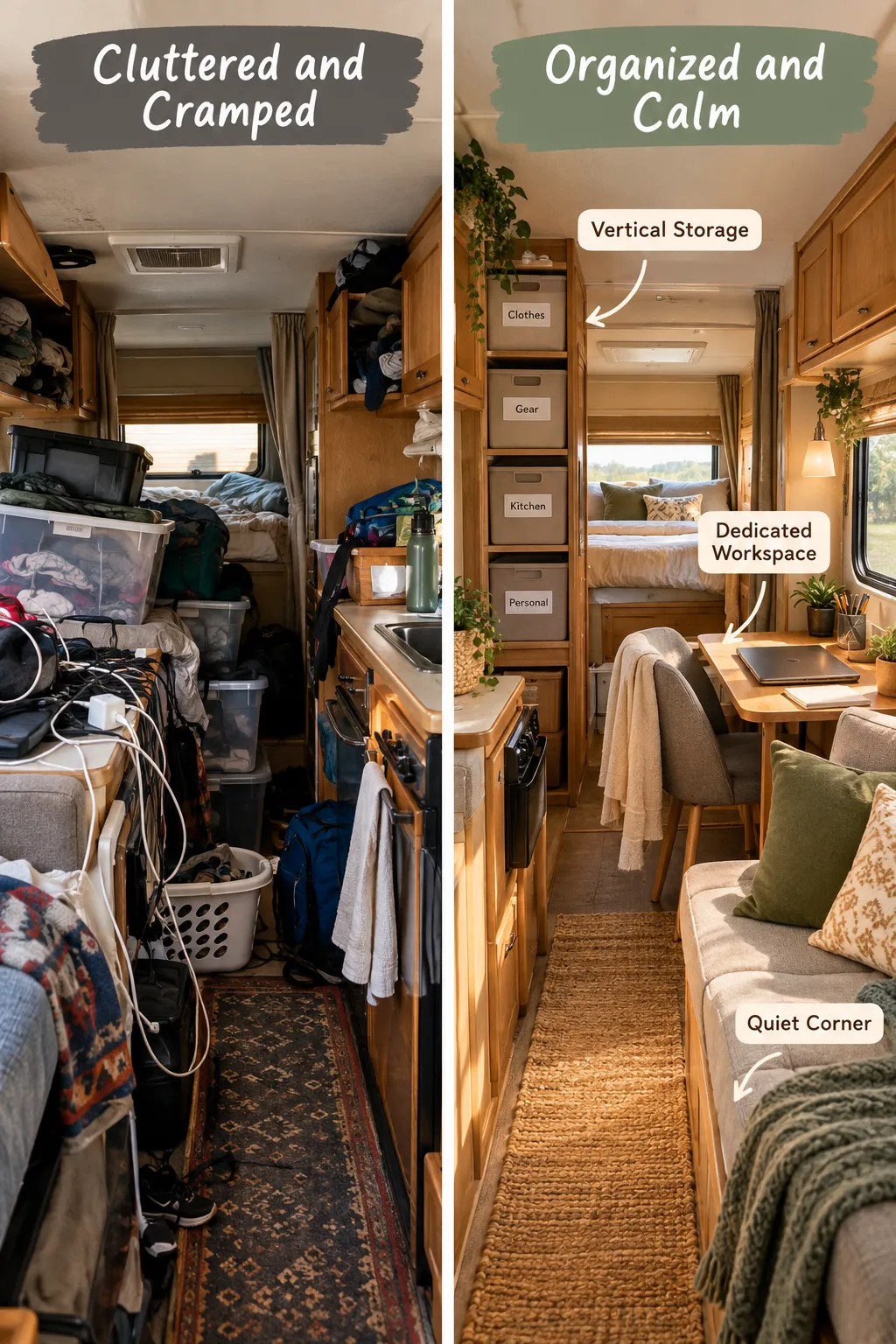
- Use vertical storage bins and labeled containers to make a small space feel bigger and calmer.
For connectivity:
- Carry at least two internet backups (a cell booster plus a second carrier’s hotspot) if work depends on being online [10].
- Check coverage maps before booking a site if a video call is non-negotiable that week.
For weather and health:
- Follow a simple seasonal travel pattern, many RVers go south for winter and north for summer to dodge the worst extremes.
- Keep a small first-aid kit and a list of nearby clinics or pharmacies for every region you visit.
For loneliness:
- Join RV rally events, Facebook groups, or campground potlucks. Community takes a little effort to find, but it’s out there.
- Return to a few favorite campgrounds each year. Familiar faces build real friendships over time.
How to Fix The 3 Most Stressful Things About RV Living For Good
Short-term fixes help, but lasting calm comes from three bigger-picture habits that experts keep pointing back to [7][10]:
| Stress Source | Quick Fix | Long-Term Fix |
|---|---|---|
| Money | Track every expense | Build a real repair/emergency fund |
| Legal/Parking | Call ahead, book early | Pick a legal domicile state and know the rules |
| Space/Systems/Lonely | Maintenance checklist, backup internet | Build routines, community, and seasonal travel plans |
Pick a Real Home Base (Domicile)
A huge, underestimated stressor for new full-timers is the admin side of this lifestyle: residency, state taxes, mail forwarding, and vehicle registration [10]. Many RVers wait until something goes wrong, a missed jury summons, a lapsed registration, a tax surprise, before fixing this. Choose a domicile state before you hit the road, set up a trusted mail-forwarding service, and keep copies of every important document in a digital folder.
Design a Lifestyle, Not a Vacation
Full-time RV living that feels like a never-ending vacation burns people out fast. The RVers who stay happy long-term build normal-feeling routines: regular grocery runs, a weekly check-in with family, set work hours, and realistic driving limits per day. This single mindset shift, “I’m building a life” instead of “I’m on a trip”, reduces a surprising amount of day-to-day stress.
Expect the Trend to Continue
It’s worth being honest here: campground costs, parking regulations, and site scarcity are expected to keep tightening through 2027, not loosen up [6]. That’s not meant to scare anyone off the lifestyle. It’s meant to help you plan like someone who knows what’s coming, instead of being caught off guard. The RVers who struggle least are the ones who treat planning, budgeting, and legal compliance as part of the lifestyle itself, not annoying extra chores.
Conclusion: Facing The 3 Most Stressful Things About RV Living (And How to Fix Them) Head-On
RV living is still one of the most rewarding ways to see the country. But pretending it’s stress-free doesn’t help anyone. The honest truth is that money pressure, legal parking headaches, and the daily grind of small-space living are real challenges that deserve real solutions.
The fix isn’t complicated. It’s consistent:
- Build a real budget and a repair fund before you need one.
- Plan trips and parking spots ahead of time instead of winging it.
- Create small-space routines, backup internet, and a community you can count on.
Start with just one of these fixes this week. Pick the stressor hitting you hardest right now, apply one tip from this guide, and build from there. The RV lifestyle rewards people who plan a little and adapt a lot. You’ve got this.
References
[1] Watch – https://www.youtube.com/watch?v=zXAV3sVJutI
[2] Watch – https://www.youtube.com/watch?v=M76lnHnV1Co
[3] Watch – https://www.youtube.com/watch?v=ws4KovE2DOk&vl=en-US
[4] Watch – https://www.youtube.com/watch?v=iVHjuLuMagw
[5] Watch – https://www.youtube.com/watch?v=zxiesV9Cxrs
[6] Us Rv Park And Campground Market Outlook 2026 Full Campgrounds Unforgiving Math – https://www.mmcginvest.com/post/us-rv-park-and-campground-market-outlook-2026-full-campgrounds-unforgiving-math
[7] Best Rv For Full Time Living – https://blog.campingworld.com/find-your-rv/best-rv-for-full-time-living/
[8] Watch – https://www.youtube.com/watch?v=RD0CJN81PXQ
[9] Watch – https://www.youtube.com/watch?v=Hal3GeVS1Mc
[10] Full Time Rv Living – https://www.ankersolix.com/blogs/outdoor/full-time-rv-living
rv living, RV stress, full-time RVing, RV budgeting, boondocking, RV parking laws, campground scarcity, RV maintenance tips, RV community, RV domicile, remote work RV, RV insurance