
Last updated: October 9, 2026
Quick Answer
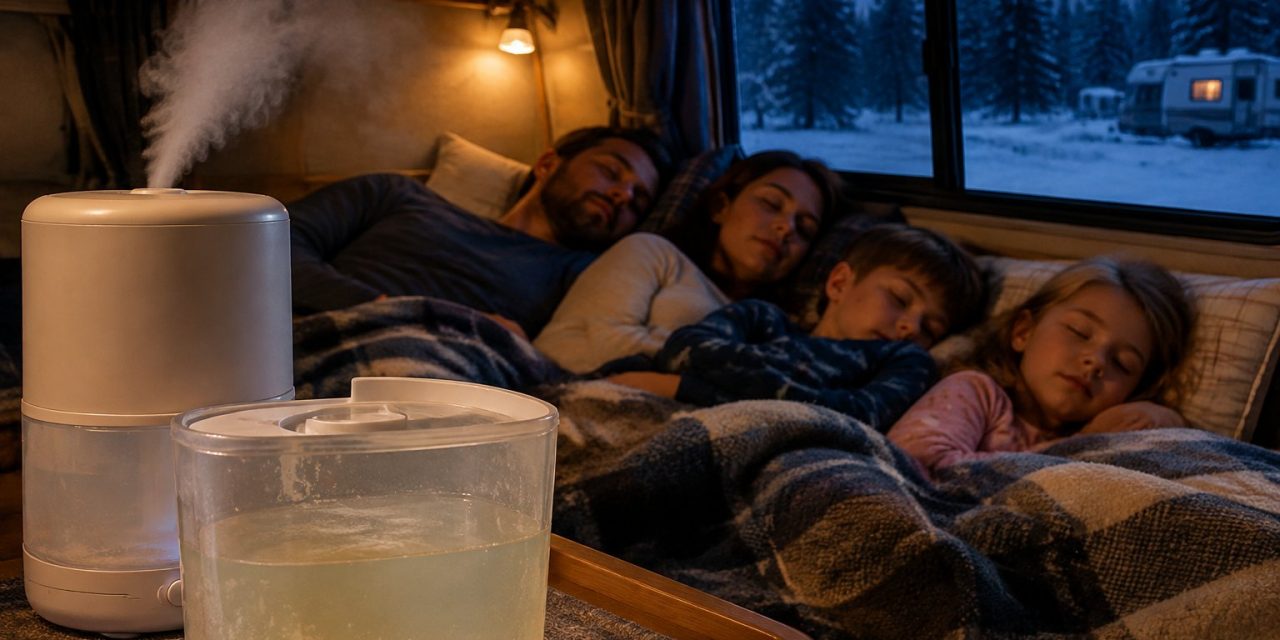
A family on a winter RV trip ran their portable humidifier for weeks without cleaning the water tank. Mineral scale and bacteria built up inside, and the unit sprayed that contaminated mist into the air they breathed every night. Within days, two family members developed fever, coughing, and breathing trouble serious enough to require a hospital visit. This is often called “humidifier fever” or, in severe cases, hospital-level lung inflammation linked to dirty humidifier tanks[1][8].
Key Takeaways
- A dirty humidifier tank can grow bacteria, mold, and fungus that get sprayed directly into the air of an RV or home[1][5].
- Breathing in contaminated mist can cause flu-like symptoms called “humidifier fever,” and in serious cases, lung inflammation that needs hospital care[8][9].
- Kids, older adults, and anyone with asthma or lung disease face the highest risk from dirty tank mist[8].
- The Consumer Product Safety Commission and EPA both recommend cleaning humidifier tanks every few days, not just every few weeks[2][6].
- White vinegar and water, left to sit for 20 to 30 minutes, breaks down the slimy buildup (biofilm) and mineral scale inside tanks[4][8].
- A 3% hydrogen peroxide solution also removes mineral film and buildup from humidifier tanks[1].
- Distilled water prevents “white dust” and slows down mineral buildup compared to tap water[5][6].
- RV owners should treat humidifier tanks, fresh water tanks, and holding tanks as separate risks, each with its own cleaning rules.
- Hospitals and healthcare facilities often restrict or ban personal humidifiers because contamination risk is so well documented[10].
What Is the “Dirty Tank” Mistake That Hospitalized a Family
The “dirty tank” mistake is simple: running a humidifier, water tank, or similar appliance for too long without emptying, drying, and disinfecting it. In the case many RV families share online and that doctors warn about, a portable humidifier sat filled with standing water inside a travel trailer for close to three weeks during a cold-weather trip.
Nobody dumped the tank between uses. Nobody scrubbed the inside. The water just sat there, day after day, in a warm, damp space that’s perfect for bacteria and mold to grow[1][5].
By the time the family noticed a musty smell coming from the unit, it was already too late. The humidifier had been spraying contaminated mist into the small cabin space every night while everyone slept. Two family members ended up in the emergency room with breathing problems serious enough that doctors kept them overnight for monitoring[8][9].
Choose extra caution if: you run a humidifier in a small, closed space like an RV bedroom or bunk area. Tight spaces mean everyone breathes the same recycled air, so contamination problems show up faster and hit harder.
How Does a Dirty Tank Cause Illness and Hospitalization
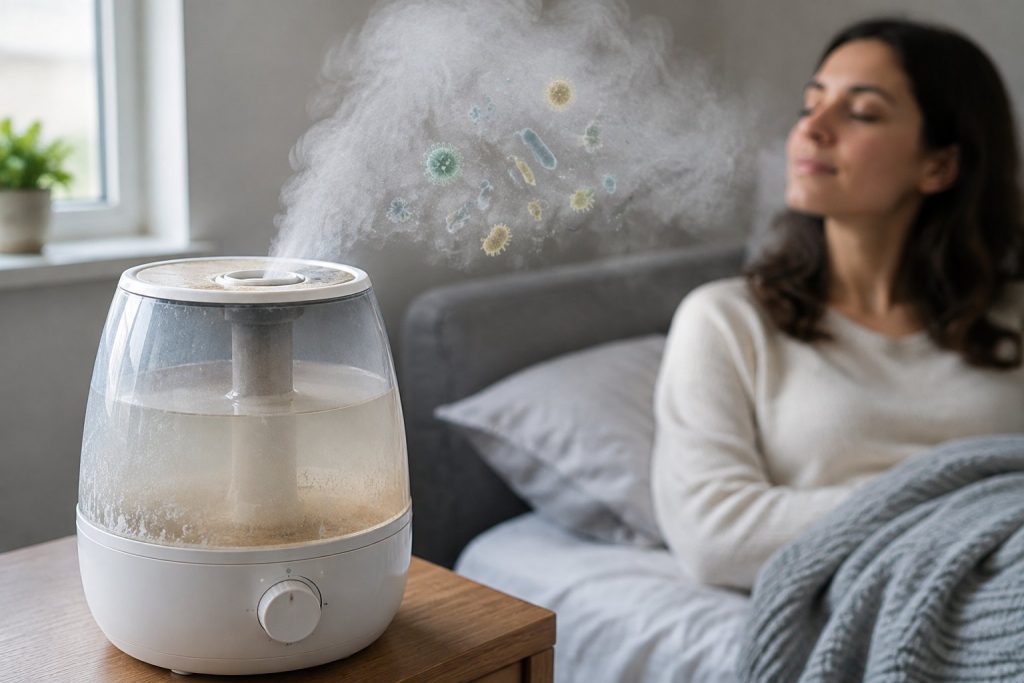
A dirty tank makes people sick because the humidifier doesn’t just release water vapor. It sprays tiny water droplets loaded with whatever is growing inside the tank straight into the air you breathe[1][5]. Once bacteria, mold, or fungus build up in standing water, every burst of mist becomes a delivery system for those germs.
Here’s the basic chain of events:
- Water sits in the tank without being changed or cleaned.
- Bacteria and mold multiply in the damp, dark environment.
- The humidifier’s mist mechanism breaks that contaminated water into tiny airborne droplets.
- Family members breathe in the droplets for hours while sleeping or relaxing nearby.
- Lungs react to the bacteria, mold, or endotoxins, causing inflammation.
Doctors have documented cases where this inflammation becomes serious enough to require hospitalization, sometimes diagnosed as hypersensitivity pneumonitis or “humidifier lung”[8][9]. In an RV, this process can move faster because the air space is smaller and less ventilated than a typical house room.
Common mistake: Many RV owners assume that because the water “looks clean,” the tank must be fine. Bacteria and mold don’t always change the color or smell of water right away, so visual checks alone aren’t reliable[1][3].
Symptoms of Dirty Tank Contamination Poisoning
Symptoms of dirty tank contamination usually show up as flu-like illness, breathing trouble, or allergy-type reactions. Doctors and health agencies describe this pattern as “humidifier fever,” and it can range from mild to severe enough for emergency care[8][9].
Watch for these warning signs in anyone who has been near a running humidifier or tank-based appliance:
- Fever and chills that come on suddenly
- Dry cough or wheezing
- Shortness of breath
- Chest tightness
- Headache and body aches
- Fatigue that doesn’t match normal activity level
- Worsening asthma or allergy symptoms, especially in kids
Children’s Colorado notes that these symptoms often mimic a common cold or flu at first, which is part of why dirty tank illness gets missed so often[8]. A family might treat it like a regular bug for days before realizing the symptoms only show up when they’re near the humidifier.
Quick example: If two or more family members in the same RV develop similar breathing symptoms within the same week, and nobody outside the RV has the same illness, the humidifier or water tank deserves a close look.