
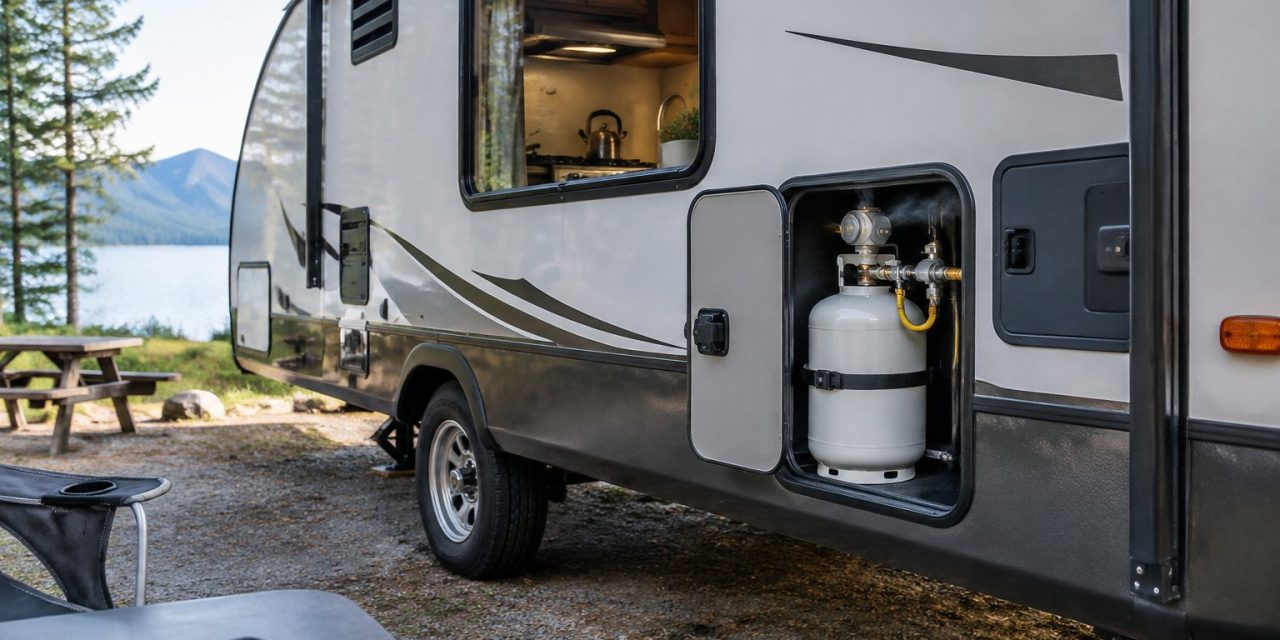
If you suspect a propane leak or hear a gas alarm in your RV, get everyone outside immediately: your two distinct risks are escaping propane that can ignite and carbon monoxide produced by faulty combustion. An unburned propane leak does not itself create carbon monoxide, so you need working detection for both hazards.
Your RV propane safety routine starts before you turn on the furnace or light a burner. A detector with a glowing power light may already be past its replacement date, and your nose offers limited protection while you sleep.
You can keep propane safety manageable with a few repeatable habits: check your alarms, maintain your equipment, and treat warning signs as a reason to leave immediately. Save troubleshooting for a qualified professional after everyone is safe.
What Should You Do if You Suspect a Propane Leak?
Your first action during a suspected RV propane leak is to evacuate people and pets without touching switches or investigating the smell. Once you are safely away, call for help and keep everyone out until a qualified professional clears the area.
Evacuate People and Pets Without Operating Switches
Leave immediately if you smell propane, hear escaping gas, or hear the propane alarm. As you exit, avoid turning electrical switches on or off, because operating electrical equipment can create a spark.
Leave lights, fans, the thermostat, and appliances in their current state. Keep your phone unused until you are safely away, and avoid smoking, vaping, or lighting any flame.
Take pets with you if they are immediately accessible, without delaying your exit or re-entering. Do not stop to collect belongings, open every window, or test the detector.
Close the Propane Tank Valve Only if Clearly Safe
Approach the exterior propane tank valve only when you can reach it without entering the suspected leak area. If you smell gas or hear hissing near the tank, leave the valve alone and move away.
If access is clearly safe, close the manual service valve clockwise by hand. Avoid forcing a stuck valve or using tools.
Closing the valve does not clear gas already released inside your RV. Keep everyone outside even after you shut off the supply.
Call for Help From a Safe Distance and Stay Out Until Cleared
Move well away from your RV and the suspected gas, preferably upwind. From there, call 911 or the fire department for an active leak or gas alarm, and explain that your RV has propane onboard.
Tell responders whether anyone has symptoms and whether you were able to close the tank valve. Keep other campers away, and avoid starting your RV or a nearby vehicle in the suspected gas area.
Wait for emergency responders to say it is safe to return. Before using propane again, have a qualified propane professional check the system for leaks and complete any necessary repairs.
How Can You Recognize a Hidden Propane Leak?
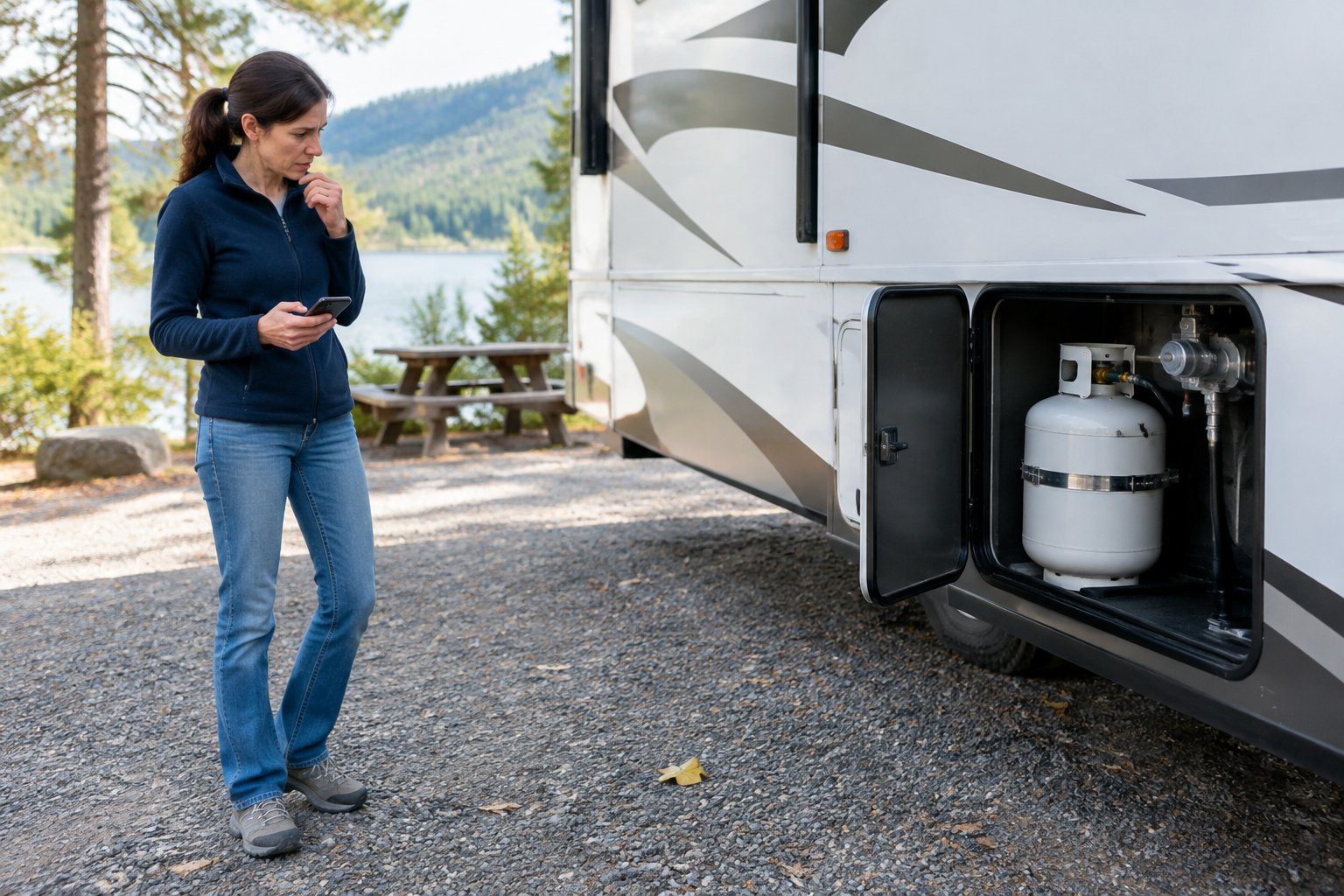
You should treat propane odor, a gas alarm, unexplained hissing, or unusual fuel consumption as warning signs. Your RV propane system needs attention even when only one of those signs is present.
Why Propane Has a Rotten Egg Smell
The propane you use has an added odorant, commonly ethyl mercaptan, that gives it a strong sulfur or rotten egg smell. That odor helps alert you to escaping fuel because propane itself is naturally odorless.
Make sure everyone traveling with you recognizes the warning smell. You can ask your propane supplier about a safe odor-awareness demonstration without deliberately releasing fuel yourself.
If you notice an unfamiliar sulfur smell inside or around your RV, treat it as a suspected leak. Leave identifying its origin to professionals after you have evacuated.
Why Smell Alone Cannot Keep You Safe
Your ability to notice propane odor changes with congestion, certain medical conditions, and sleep. Cooking smells or tobacco smoke also mask the warning, while continued exposure reduces your awareness through “odor fatigue.”
You also face situations where the odor never reaches your nose. Propane settles in low areas, and airflow moves or disperses the smell; contact with materials such as rust sometimes reduces the odorant itself.
Keep a working propane alarm in service even if your sense of smell is good. Respond to its alarm even when you smell nothing, and respond to propane odor even when the alarm stays quiet.
What Hissing, Damaged Connections, and Unexpected Fuel Loss Can Mean
A new hissing sound near a hose, fitting, or tank is a possible sign of escaping gas. If you notice it, follow the evacuation steps without moving closer to pinpoint the sound.
During a routine inspection, cracked hoses, worn connections, or impact damage give you a reason to keep the system off until it is inspected. Avoid bending suspect hoses or tightening fittings to see whether the problem goes away.
Track fuel use against your actual appliance use. A furnace working through cold weather uses more propane, but an unexplained drop deserves professional checking. A tank gauge alone cannot confirm that your system is leak-free.
How Is Carbon Monoxide Different From Leaking Propane?

You face a fire and explosion hazard from escaping propane, while carbon monoxide exposure comes from combustion exhaust. These hazards require different sensors, although either emergency calls for immediate evacuation.
Unburned Propane Creates Fire, Explosion, and Oxygen Displacement Hazards
When propane escapes into your RV, it mixes with air and creates an ignition hazard. A spark or flame can ignite a flammable mixture, including gas that has collected near the floor.
At high concentrations in an enclosed space, propane also displaces oxygen and creates a suffocation hazard. You should leave before trying to judge how much gas has accumulated.
An unburned propane leak does not itself produce carbon monoxide. Keep that distinction clear when choosing detectors and explaining an emergency to responders.
Faulty Combustion Can Produce Odorless Carbon Monoxide
Your propane appliances produce carbon monoxide when fuel burns incompletely. Blocked exhaust vents, inadequate combustion air, and appliance faults create conditions for dangerous exhaust to enter your living space.
You cannot smell or see carbon monoxide. Your propane odor warning therefore gives you no protection against this gas.