
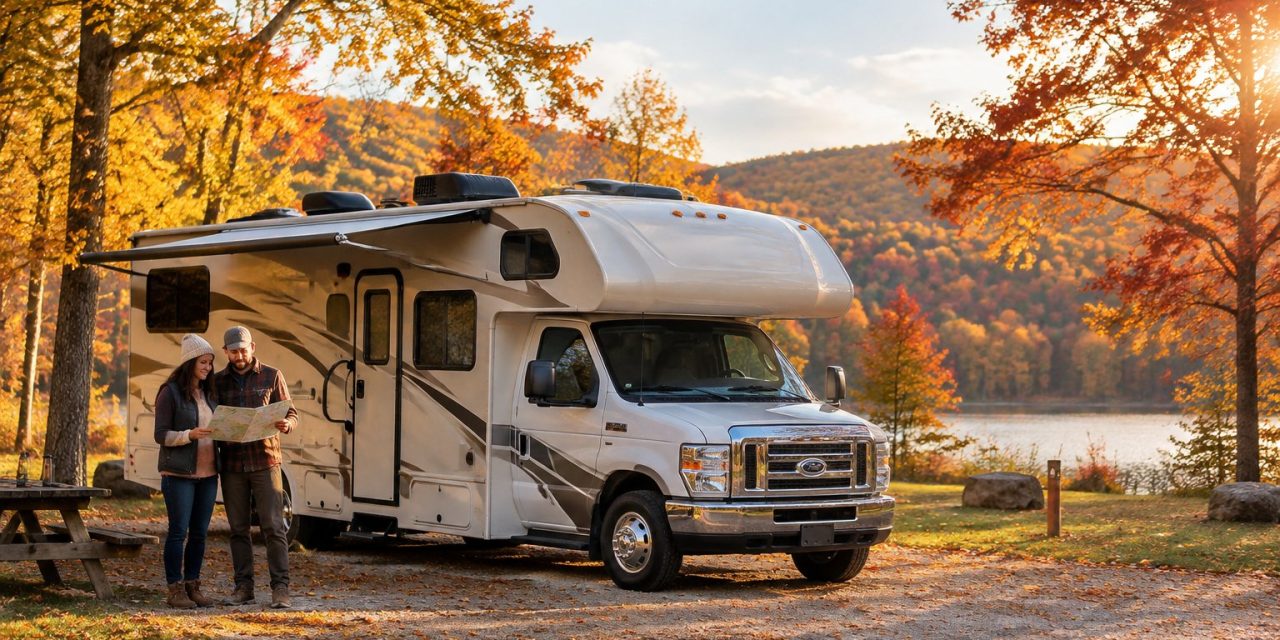
You can spend less on an RV trip in fall when lower demand brings down your campground and rental quotes, especially after summer vacation crowds leave. Fall is a season, though, and September, October, and November offer different savings opportunities across the United States.
Your best deal comes from matching affordable dates with a destination that still has comfortable weather and open campsites. A quiet lakeside park after Labor Day offers a different budget picture from a packed New England campground during peak foliage.
You also need to count the expenses beyond your nightly rate. Extra driving, rental mileage charges, and cold-weather heating all affect what you spend before you pull back into your driveway.
Why Can RV Trips Cost Less in Fall?
Your fall trip costs less when you find lower campsite or rental rates without adding expenses elsewhere. Whether you take a travel trailer or rent a motorhome, your savings start with the prices available for your specific dates.
How Lower Demand Can Reduce Campground and Rental Rates
You have an opportunity to find lower prices after school resumes and summer vacation travel slows. At properties that adjust prices with demand, fewer bookings give you a better chance of finding off-peak rates or longer-stay offers.
Compare the same campground and site type across several dates. A basic back-in site and a waterfront pull-through have different prices even during the same week. Keep your hookup needs and cancellation terms consistent, too.
For a rental, request quotes for the same vehicle category and trip length. Check pickup locations carefully: a cheaper rental across the state adds driving and fuel costs before your vacation begins.
Which Expenses Do Not Necessarily Get Cheaper?
Your fuel bill follows pump prices, distance, and your vehicle’s fuel use. A change of season provides no guarantee of cheaper gasoline or diesel.
You still need to budget for groceries, tolls, insurance, and park admission. If you own your RV, your loan payment and regular insurance continue regardless of your travel dates.
Cold nights add another expense. Your furnace uses propane and battery power, while some extended-stay campsites bill electricity separately. A lower campsite price deserves a closer look when your stay requires substantial heating.
When and Where Can You Find Fall Travel Savings?
Look for fall savings between your destination’s busy summer period and its seasonal shutdown. In warm-weather regions, check whether your arrival overlaps with the start of the busy winter travel season.
September vs. October vs. November: Price and Weather Trade-Offs
Your choice of month should reflect the region and elevation where you plan to camp.
- September: Start checking dates after Labor Day. You retain more daylight than later in fall, which helps with longer drives and outdoor activities. Northern and mountain destinations still require a close look at overnight forecasts.
- October: Compare midweek dates outside peak foliage areas. You need to watch campground closing dates more closely, especially at higher elevations.
- November: Focus on lower elevations and routes with dependable services. In colder regions, reduced availability and freezing conditions limit your options. Thanksgiving travel also deserves a separate price check.
For a fair comparison, keep the number of nights and mix of weekdays and weekends the same. Otherwise, a shorter stay or fewer weekend nights might explain the lower quote.
Why Fall Foliage Destinations and Holiday Weekends Can Cost More
You compete with leaf-peeping travelers during peak color in destinations such as New England and the Blue Ridge region. Nearby festivals and popular fall weekends add pressure to campsite availability.
Check Labor Day, the October holiday weekend, and Thanksgiving separately from surrounding dates. Include local events in your search, especially football games and fall festivals.
If your priority is affordable camping, compare nearby parks outside the busiest sightseeing corridor. Check the added driving distance before booking; a cheaper site loses some value when every outing requires a lengthy round trip.
How Regional Camping Seasons Change the Cheapest Travel Dates
You need a different calendar for each region. In northern states, your affordable window might fall just before campgrounds close. At mountain destinations, elevation adds weather risk even when a nearby town stays mild.
For Florida and the Southwest, check prices against winter demand. As seasonal visitors arrive, your fall dates may overlap with a busier period.
Along the Gulf and Atlantic coasts, include tropical weather in your planning. Review cancellation rules and evacuation guidance before committing to a prepaid stay. Your lowest quote should still leave you room to change plans safely.
How Much Will Your Fall RV Trip Actually Cost?
Your fall RV budget starts with complete campground and rental quotes, followed by the costs of driving and living in the rig. Use the same route and trip length when comparing options so that each total represents a similar vacation.
Compare Campground Fees and Full RV Rental Quotes
Ask your campground for the full amount due for your stay. Include taxes, booking fees, extra vehicle charges, and any separately billed electricity.
For a rental, check these items before comparing totals:
- Nightly charges and minimum rental periods
- Included mileage and excess-mile rates
- Insurance or protection charges and your deductible
- Cleaning, preparation, and required service fees
- Generator allowances and use charges
- Delivery, setup, or one-way fees
- Cancellation terms and refund deadlines
Keep a refundable security deposit separate from your expected trip spending. You still need enough available cash or credit to cover the hold.
Check rental nights against campsite nights as well. Pickup and return schedules sometimes require paying for a rental day that gives you little camping time.
Budget for Fuel, Mileage, Heating, and Seasonal Extras
Build your fuel budget from your full driving distance, including errands and sightseeing. Use this calculation:
Your fuel cost = total driving miles ÷ expected miles per gallon × fuel price per gallon.