A five-star rating on a booking app does not tell a parent whether their toddler can nap through a 2 p.m. generator run, or whether a 10-year-old can bike to the camp store alone. The best campgrounds for family outdoor adventures: comparing hookups, trails, water access, play areas, and reservation policies comes down to matching a site’s real features to what your family actually does outside, not to a star count.
This guide breaks down campground quality by activity instead of overall score, because a campground that’s perfect for anglers may be a poor fit for a family of mountain bikers. Along the way, you’ll find current reservation trends from state park systems around the country so you’re not caught off guard by a booking window that closed weeks ago.
Key Takeaways
- Match the campground to the activity, not just the star rating, hikers, paddlers, anglers, cyclists, and families with toddlers each need different features.
- Hookup type matters for comfort, but trail and water proximity often matter more for keeping kids entertained.
- Reservation windows vary wildly by state, from same-day booking in Oregon to rolling 11-month windows in Vermont [1][2].
- Seasonal closures and water shut-offs can catch families off guard, especially in cooler climates .
- Private, family-run campgrounds sometimes beat corporate parks on atmosphere and flexibility.
Evaluating the Best Campgrounds for Family Outdoor Adventures by Activity Type
Forget the one-size-fits-all checklist. The best campgrounds for family outdoor adventures: comparing hookups, trails, water access, play areas, and reservation policies really means asking, “What will my kids be doing most of the day?” Here’s how to judge a site through each lens.
For Hiking Families
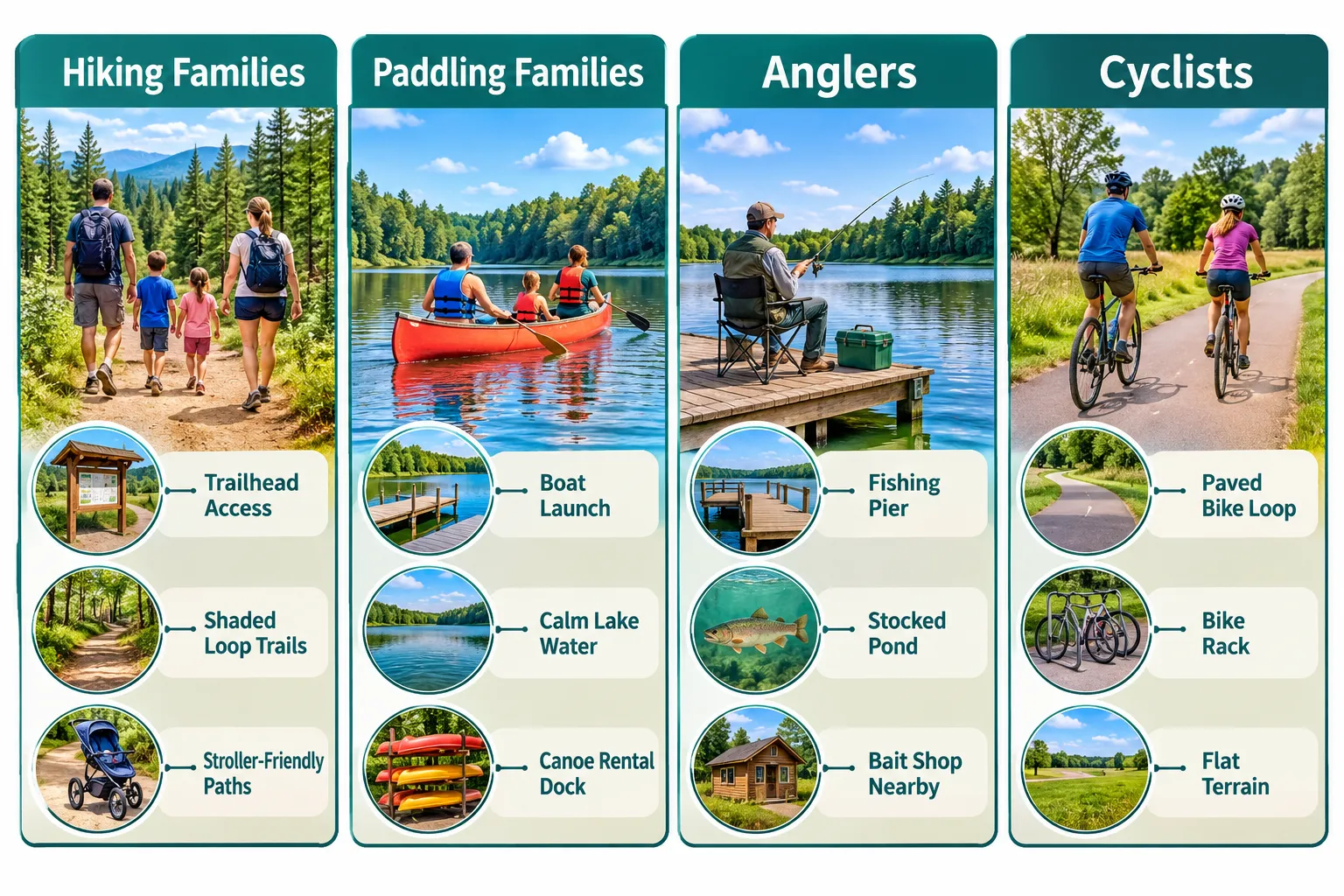
Look for campgrounds with trailheads inside the park boundary, not a drive away. Shaded loop trails under 2 miles are gold for families with young kids, while older kids benefit from longer backcountry-adjacent paths. Kentucky State Parks, for example, pair many of their 31 tent and RV campgrounds with nearby hiking and lake access, making them a solid pick for trail-focused trips [3].
Quick checklist:
- Trailhead within walking distance of the campsite loop
- Clearly marked, moderate-difficulty loops
- Shade cover for midday hikes with toddlers
For Paddling Families
Canoe and kayak access changes everything about a trip. Private parks like Campers Cove RV Park & Canoe Livery on Michigan’s Thunder Bay River have built their entire identity around waterfront paddling, and new owners have publicly committed to preserving that family feel after a recent sale . When evaluating a paddling-focused campground, check for:
- A boat launch or canoe livery on-site
- Calm water (lake or slow river) rather than fast-moving current
- Life jacket rentals for kids
For Anglers
Fishing families want more than “a lake nearby.” The best sites have a stocked pond or lake within walking distance, a pier or dock, and ideally a bait shop. Many Kentucky and West Virginia state parks combine lake access with family lodging upgrades, including new glamping units opening near Summersville Lake for the 2027 season [3][4].
For Cyclists
Paved, flat loop roads inside the campground let kids bike safely without parents chasing cars. Bonus points for connecting bike trails to a nearby town or beach. These features matter more than hookup voltage if biking is the trip’s main activity.
For Families With Young Children
Playgrounds, splash pads, and short walking distances to restrooms win here. Glamping and cabin options, like West Virginia’s new units at Blackwater Falls, Lost River, Pipestem Resort, and Summersville Lake, give families with very young kids a comfort buffer without giving up forest and lake surroundings [4]. If you’re weighing RV ownership for these trips, it’s also worth reading about whether now is a smart time to buy an RV given current pricing shifts.
Hookups, Water Access, and Play Areas: The Core Comparison
Once you know your family’s priority activity, compare the practical infrastructure. This is where the best campgrounds for family outdoor adventures: comparing hookups, trails, water access, play areas, and reservation policies really separates good trips from frus