
More than 23 million Americans planned an RV trip this fall, and a huge share of them never left a half-day’s drive from their driveway.[1][2] That’s not a compromise. That’s a strategy. Planning short, nearby fall foliage RV trips within 3-7 hours of home has quietly become the smartest way to chase peak color without burning a week of vacation or a tank of gas money on a cross-country haul.
RVIA’s latest travel data backs this up hard: over 90% of RV travelers now plan trips within that same 3-7 hour window.[3] There’s no need to drive to Vermont if a gorgeous overlook sits two states away. This guide breaks down exactly how to plan short, nearby fall foliage RV trips within 3-7 hours of home, from timing the leaves to picking campgrounds that won’t be packed solid.
Key Takeaways
- Short-distance fall RV trips are now the norm, with over 90% of travelers staying within 3-7 hours of home.[3]
- Affordability drives the trend, cited by more than half of fall RV travelers in 2026 as their top reason to hit the road.[1][4]
- Peak foliage timing varies by elevation and latitude, generally running late September through early November depending on region.[5][6]
- Weekly state foliage reports (like Pennsylvania’s DCNR updates) help travelers time last-minute trips with real accuracy.
- Booking flexibility and short trip length are becoming the industry’s focus for fall and shoulder-season marketing.
Why Short-Distance Fall RV Trips Are Having a Moment
Gas prices, grocery bills, campground fees, it all adds up. That’s exactly why affordability tops the list of reasons RVers hit the road this fall, named by more than half of surveyed travelers as their number-one motivator.[1][4] A 3-7 hour trip means less fuel, fewer overnight stops, and way less wear on the tow vehicle or motorhome.
There’s also a simple truth here: nobody needs a 12-hour drive to see spectacular color. Comfort and convenience rank right up there with foliage-chasing as reasons people choose RV travel in the fall.[1][4] Planning short, nearby fall foliage RV trips within 3-7 hours of home lets travelers enjoy the ride instead of just enduring it.
Interestingly, fall RV trip intentions dipped about 14.8% compared to 2024, yet road trips remain the top trip type across nearly every generation of RVer.[2] That’s a signal, not a slump, people aren’t skipping fall travel, they’re just getting smarter and more local about it.
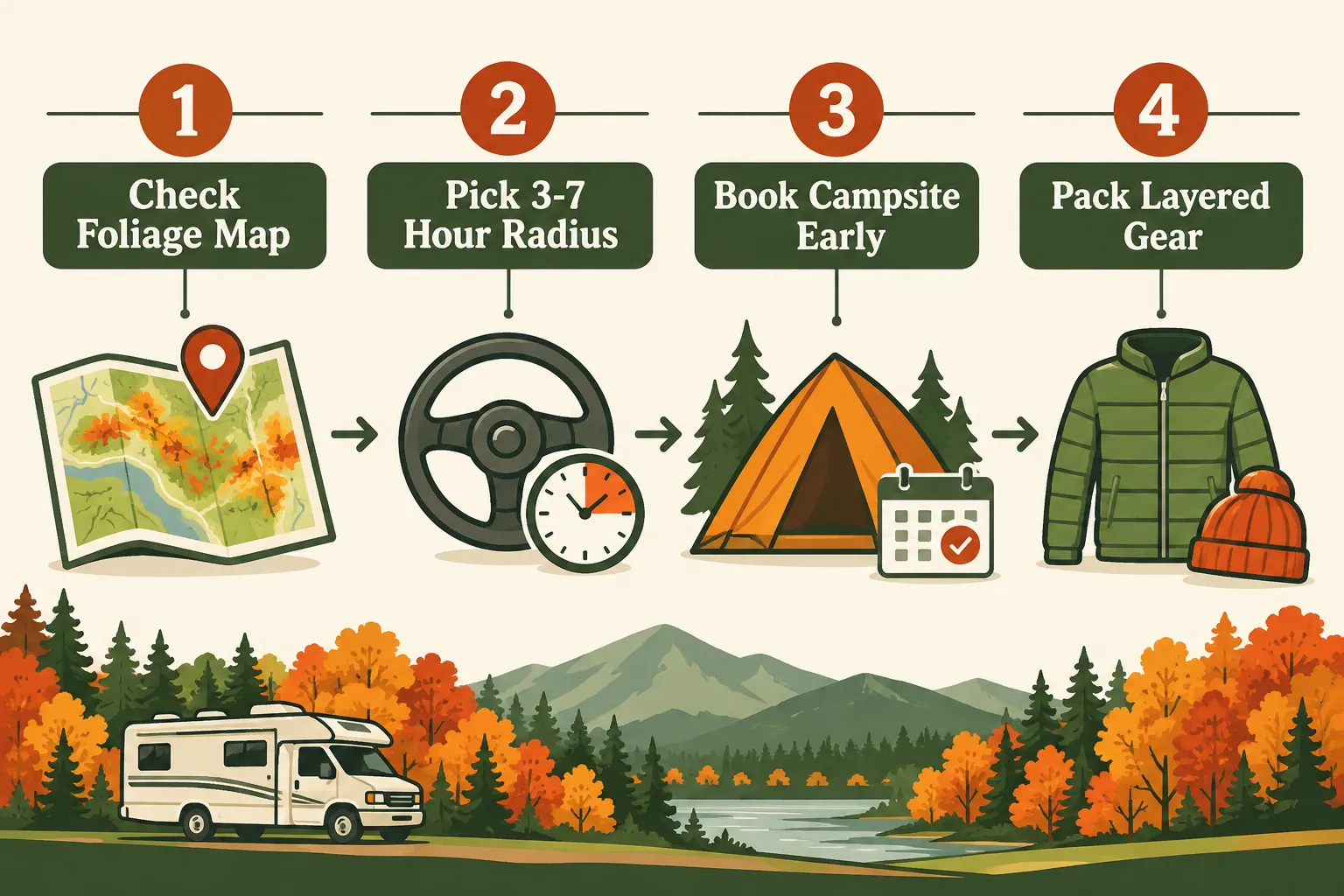
Modern Campground’s fall coverage even points out that marketers are being pushed to promote shorter trips and flexible booking over long, complicated itineraries this season. Translation: the RV industry itself is catching up to what weekend campers already figured out.
For those still deciding if RV travel makes sense at all, the complete RV lifestyle encyclopedia is a solid starting point before locking in a fall itinerary.
How to Time Your Trip: Reading Fall Foliage Forecasts
Timing is everything when planning short, nearby fall foliage RV trips within 3-7 hours of home. Miss peak color by a week and that same drive feels a lot less magical.
Here’s the general pattern across the U.S.:
Peak color typically rolls from north to south and high elevation to low, starting in late September and wrapping up by early-to-mid November.[5][6] The Old Farmer’s Almanac’s foliage map confirms this progression, which makes it easy to pick a target weekend based on distance and direction from home.[6]
Regional specifics help narrow things down even further:
| Region | Expected Peak Window | Notes |
|---|---|---|
| Northern New England / Adirondacks | Early, mid October | Early starters, cooler nights |
| Southern New England / Catskills | Mid, late October | Slightly later window |
| Central Appalachians | Oct 12-28 | Especially strong color expected[7][8] |
| Blue Ridge / Smokies | Mid, late October | Classic mountain color |
| Southern Appalachians | Oct 18, Nov 2 | Extended season[7] |
| North Georgia | Late Oct, early Nov | Last to peak |
Color intensity isn’t random either. Areas that got good rainfall in spring and summer, followed by warm days and cool nights heading into fall, tend to produce the most vivid and longest-lasting displays.[8]