Over 11 million American households now own an RV — and that number keeps climbing every single year. That is not a small hobby. That is a full-blown movement. Whether someone just bought their first travel trailer or has been full-timing for a decade, the RV lifestyle has something for everyone. Camping in an RV is not just a vacation choice anymore. It is a way of life that millions of people are choosing over traditional living. This encyclopedia covers everything from picking the right rig to finding the best campsite, powering your adventures, and building lasting friendships on the road. 🚐
Key Takeaways 📋
- RV types matter — choosing the right rig for your lifestyle saves money and frustration
- Power systems are evolving fast — lithium batteries and solar are now standard expectations in 2026 [1]
- Camping costs can be managed — smart planning keeps the RV lifestyle affordable at every budget level
- Community is everything — connecting with other RVers makes the journey richer and easier
- Resources are plentiful — trusted guides and online communities help beginners and veterans alike [2]
Section 1: Choosing Your Perfect RV — A Complete Camping Guide to Every Type
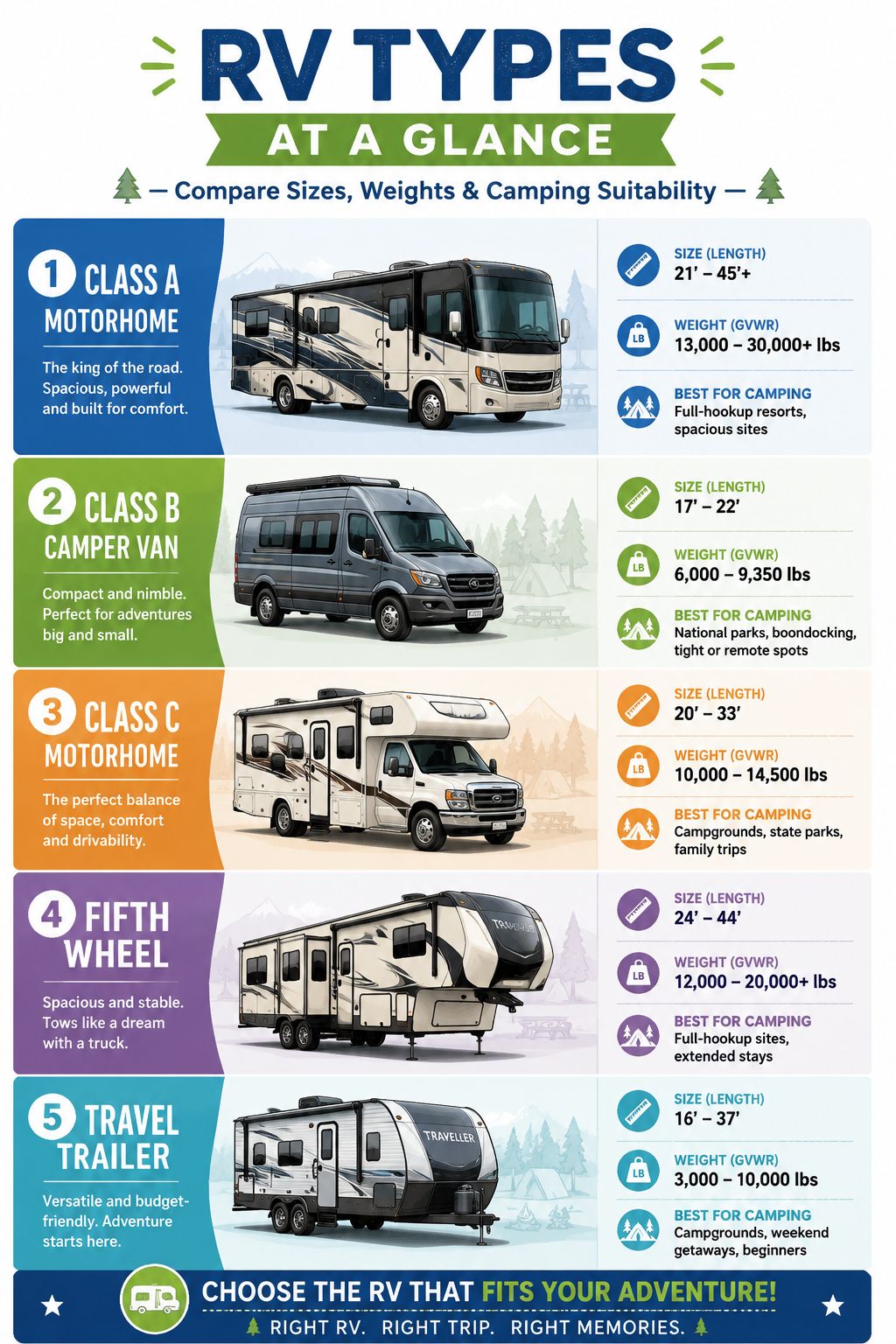
The first big decision in the RV lifestyle is picking the right vehicle. This choice shapes everything — your budget, your camping style, and how far you can travel. There are more options than most beginners realize.
The Six Main RV Categories
Here is a simple breakdown of every major RV type:
| RV Type | Best For | Average Cost | Driving Difficulty |
|---|---|---|---|
| Class A Motorhome | Full-timers, families | $80,000–$500,000+ | High |
| Class B Camper Van | Solo travelers, couples | $50,000–$150,000 | Low |
| Class C Motorhome | Families, beginners | $60,000–$200,000 | Medium |
| Fifth Wheel | Long-term campers | $30,000–$150,000 | Medium |
| Travel Trailer | Budget-friendly campers | $15,000–$80,000 | Low-Medium |
| Pop-Up Camper | Casual weekend campers | $5,000–$25,000 | Low |
Class A Motorhomes 🏠
Class A rigs are the big ones. They look like buses and drive like them too. These are the kings of the road. They offer the most living space, the most storage, and the most comfort. Full-time RVers who want a true home on wheels often choose Class A.
Pros:
- Huge living space
- Lots of storage
- Premium amenities available
- Great for long-term camping
Cons:
- Expensive to buy and maintain
- Hard to park in tight spots
- Lower fuel efficiency
Class B Camper Vans 🚐
Class B vans are the smallest motorhomes. They look like regular cargo vans from the outside. Inside, they pack a surprising amount of comfort. Solo travelers and couples love them for their easy driving and great fuel economy.
💬 Pull Quote: “The best RV is the one that fits YOUR life — not someone else’s dream rig.”
Class C Motorhomes
Class C rigs sit between Class A and Class B in size. They have a distinctive cab-over sleeping area above the driver’s cab. Families love Class C because they offer good space without being too hard to drive. Many beginners start here.
Fifth Wheels 🔩
Fifth wheels are towed by pickup trucks using a special hitch in the truck bed. They offer a lot of living space for the money. In 2026, manufacturers are making fifth wheels more affordable than ever, responding to strong demand from budget-conscious buyers [1].
Key fact: Fifth wheels typically have a bi-level design, meaning the bedroom is raised above the hitch area. This creates a very home-like feel.
Travel Trailers
Travel trailers are the most popular RV type in America. They connect to a regular hitch on the back of a truck or SUV. They come in every size imaginable — from tiny teardrop trailers to massive 40-foot units. They are also the most affordable entry point into camping with an RV.
Pop-Up Campers
Pop-up campers fold flat for towing and pop up when parked. They are lightweight, affordable, and easy to store at home. Perfect for families who camp a few weekends a year but do not want to commit to a full RV.
How to Choose the Right RV
Ask these questions before buying:
- How often will you camp? (Weekend warrior vs. full-timer)
- How many people will travel? (Solo, couple, or family)
- What is your tow vehicle? (Or do you want a motorhome?)
- What is your budget? (Purchase price AND running costs)
- Where will you camp? (National parks, campgrounds, or boondocking)
Section 2: Power, Tech, and Camping Systems for Modern RVers
The biggest change in the RV world right now is happening in the power department. In 2026, the technology inside RVs has jumped forward in a huge way. Understanding your RV’s power system is one of the most important skills any camper can develop. [1]
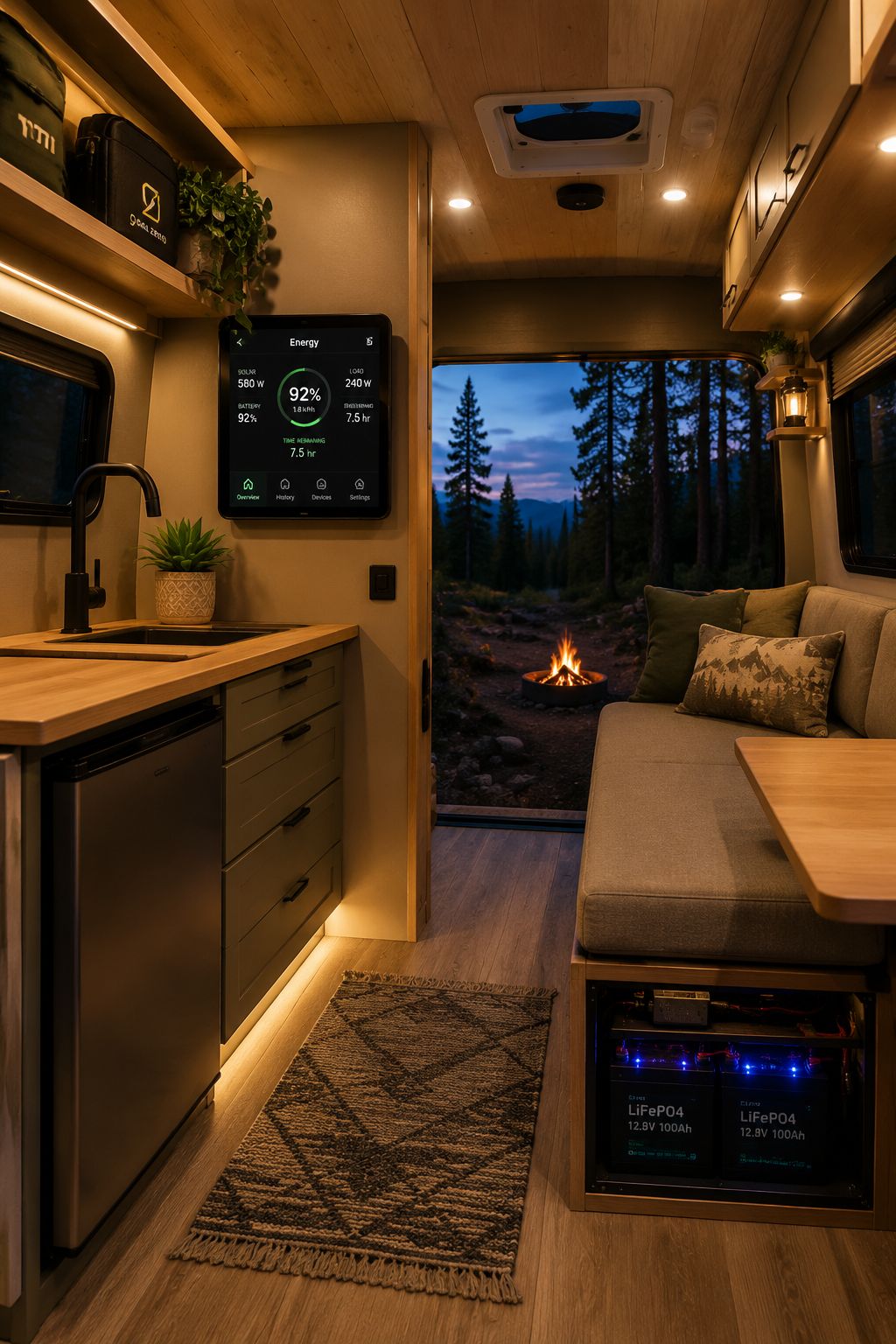
The 2026 Power Revolution ⚡
According to current industry trends, lithium battery packages, solar pre-wiring, larger inverters, and smart control apps are no longer luxury upgrades. They are becoming standard features — even in mid-range RVs [1].
This is great news for campers. Here is what it means:
- Lithium batteries last much longer than old lead-acid batteries
- Solar pre-wiring means adding solar panels later is simple and cheap
- Larger inverters let you run more appliances without shore power
- Smart apps let you monitor and control your RV’s systems from your phone
Understanding RV Power Sources
There are three main ways to power an RV:
1. Shore Power (Electric Hookup) 🔌 This is plugging into a campground’s electrical outlet. Most campgrounds offer 30-amp or 50-amp service. It is the easiest and most reliable power source. Great for beginners.
2. Generator Power 🔋 Generators burn gasoline or propane to make electricity. They are useful when camping without hookups. Modern RVs often have built-in generators. Portable generators are also popular.
3. Solar Power ☀️ Solar panels on the roof charge batteries during the day. Those batteries then power the RV at night. This is the most popular system for boondocking (camping without hookups).
💬 Pull Quote: “In 2026, solar pre-wiring is shipping on more RVs by default — making future upgrades simpler than ever before.” [1]
Solar Pre-Wiring: Why It Matters
More RVs are now shipping with solar pre-wiring and mounting infrastructure built in from the factory [1]. Even if the buyer does not add solar panels right away, the wiring is already there. This makes adding panels later much easier and cheaper.
What solar pre-wiring includes:
- Roof penetrations already sealed
- Wiring run from roof to battery compartment
- Charge controller mounting space ready
- No drilling or major modifications needed later
Lithium vs. Lead-Acid Batteries
| Feature | Lithium | Lead-Acid |
|---|---|---|
| Lifespan | 8–15 years | 3–5 years |
| Weight | Much lighter | Heavy |
| Usable capacity | ~95% | ~50% |
| Charge speed | Fast | Slow |
| Cost | Higher upfront | Lower upfront |
Lithium batteries cost more at first. But they last much longer and work much better. Most serious campers say lithium is worth every penny.
Smart Control Apps 📱
New RVs in 2026 often come with apps that connect to the RV’s systems via WiFi or Bluetooth. These apps let campers:
- Check battery levels
- Monitor solar charging
- Control the thermostat
- See fresh water and gray water tank levels
- Get alerts for low propane
This makes camping easier and more comfortable, especially for beginners who are still learning their systems.
Water Systems in Your RV
Every RV has three water tanks:
- Fresh water tank — holds clean drinking and cooking water
- Gray water tank — holds water from sinks and shower
- Black water tank — holds toilet waste
Tips for managing water:
- Fill fresh water only at potable water sources
- Dump gray and black tanks at designated dump stations
- Use RV-safe toilet paper to avoid clogs
- Keep tank sensors clean for accurate readings
Propane Systems 🔥
Most RVs use propane for cooking, heating, and the water heater. Propane is safe when handled correctly. Always:
- Turn off propane when driving
- Check connections regularly for leaks
- Keep a propane detector inside the RV
- Know where the propane shut-off valve is
Section 3: Finding Campsites, Planning Routes, and Living the Camping Life
Having the right RV and knowing how to power it is great. But the real adventure starts when the wheels start rolling. Finding amazing places to camp and planning smart routes makes all the difference between a stressful trip and an incredible one.
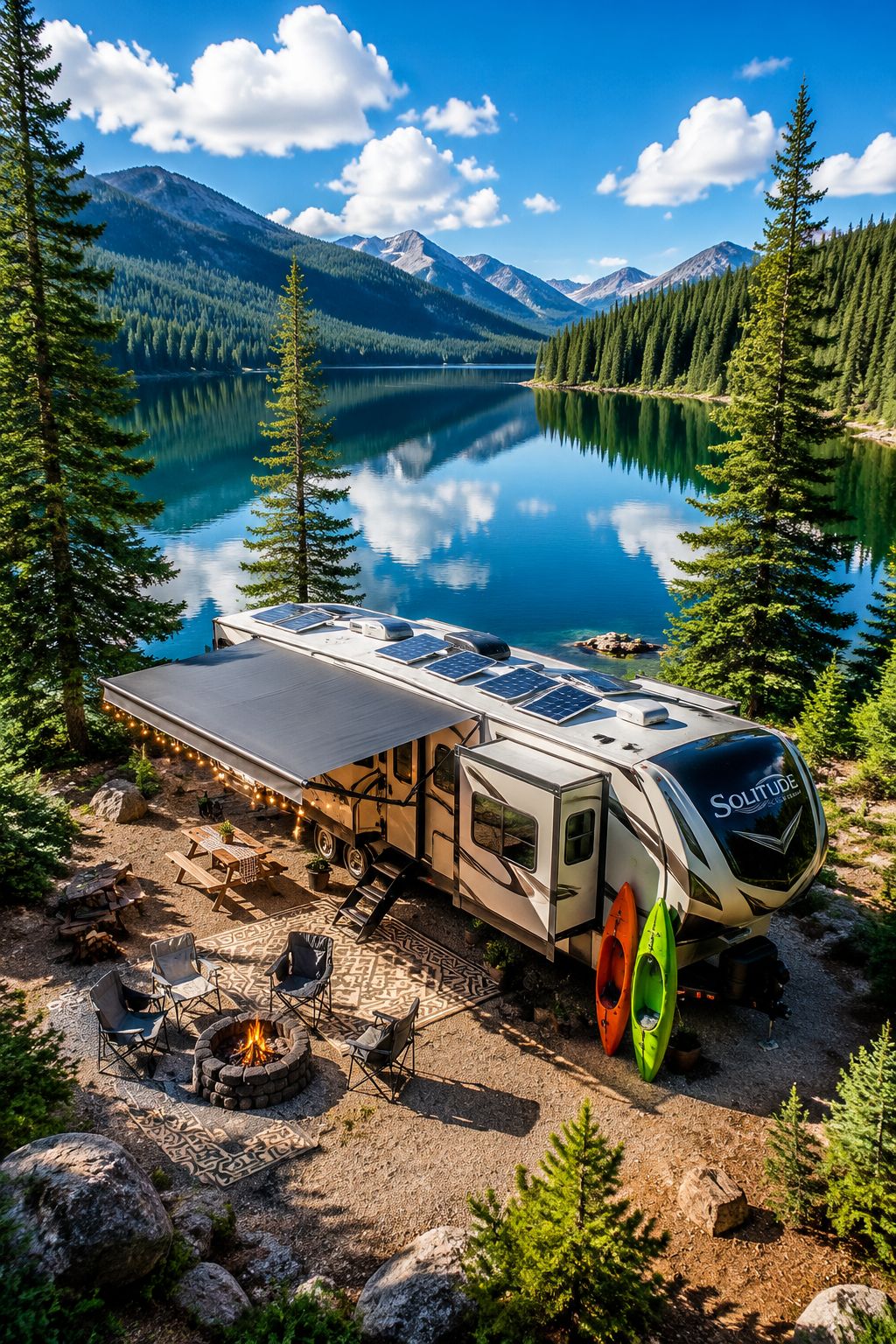
Types of Camping for RVers 🏕️
There are many different styles of camping. Each one offers a different experience.
Full Hookup Camping This is parking at a campground with electric, water, and sewer connections. It is the most comfortable option. Great for beginners and families. Most state parks and private campgrounds offer this.
Partial Hookup Camping Some sites have electric and water but no sewer. You dump your tanks at a station when they fill up. Still very comfortable and often cheaper than full hookup sites.
Dry Camping / Boondocking No hookups at all. Just you, your RV, and nature. This requires a good battery system and water management skills. But the rewards are incredible — often the most beautiful and peaceful camping spots are free boondocking locations.
Dispersed Camping This is camping on public land (like National Forests or BLM land) outside of designated campgrounds. It is usually free. Rules vary by location, so always check before setting up.
Best Resources for Finding Campsites
| Resource | Type | Cost |
|---|---|---|
| Recreation.gov | National parks & federal land | Free to browse |
| Campendium | User reviews of all types | Free |
| The Dyrt | Crowdsourced campsite info | Free/Premium |
| iOverlander | Off-grid & boondocking spots | Free |
| Harvest Hosts | Unique stays (wineries, farms) | Membership fee |
| Passport America | Campground discounts | Membership fee |
Planning Your Camping Route 🗺️
Good route planning makes camping trips much more enjoyable. Here are the key steps:
Step 1: Set a Destination Pick a general area or specific park. Work backward from there.
Step 2: Check Your RV’s Limits Know your rig’s height, length, and weight. Some roads and bridges have limits. Some campgrounds cannot fit large rigs.
Step 3: Plan Daily Driving Distance Most experienced RVers suggest driving no more than 200–300 miles per day. Shorter days mean less fatigue and more time to enjoy the destination.
Step 4: Book Ahead for Popular Spots National parks fill up fast — sometimes months in advance. Book early for summer and holiday weekends.
Step 5: Have a Backup Plan Sometimes reservations fall through or weather changes plans. Always have a backup campsite in mind.
Camping in National Parks 🌲
America’s National Parks are some of the best camping destinations in the world. Here are tips for RV camping in national parks:
- Get an America the Beautiful Pass — $80/year and covers entrance fees at all national parks and federal lands. Huge savings for frequent visitors.
- Book early — Popular parks like Yellowstone and Yosemite book up months in advance
- Check size limits — Some park roads and campgrounds have strict length limits for RVs
- Respect quiet hours — Usually 10 PM to 6 AM in most campgrounds
- Leave No Trace — Pack out all trash, stay on designated roads, respect wildlife
Boondocking 101 🌵
Boondocking (also called dry camping or dispersed camping) is camping without any hookups. It is free or very cheap. Many RVers consider it the purest form of camping.
What you need for successful boondocking:
- Enough battery capacity (lithium preferred)
- Solar panels or a generator
- Enough fresh water for your stay
- Proper waste management plan
- A way to navigate to remote areas
Where to find boondocking spots:
- BLM (Bureau of Land Management) land
- National Forests
- Some state lands
- Casino parking lots (many allow overnight stays)
- Walmart and Cracker Barrel parking lots (with permission)
Seasonal Camping Tips 🌡️
Summer Camping:
- Arrive early to claim sites
- Use fans and ventilation to stay cool
- Watch for thunderstorms in mountain areas
- Stay hydrated
Fall Camping:
- Beautiful foliage makes this a favorite season
- Fewer crowds and lower campground prices
- Bring extra blankets for cold nights
- Watch for early snow at high elevations
Winter Camping:
- Insulate water lines to prevent freezing
- Use a heated water hose for hookups
- Run the furnace but watch propane levels
- Skirt the RV to keep the underbelly warm
- Head south — the Sunbelt states are popular winter camping destinations
Spring Camping:
- Mud season in many areas — check road conditions
- Wildflowers and wildlife are spectacular
- Book early as campgrounds start filling up again
RV Camping Etiquette 🤝
Good camping neighbors make everyone’s experience better. Follow these simple rules:
- Respect quiet hours — keep noise down after 10 PM
- Keep your campsite tidy — do not spread gear into neighboring sites
- Control pets — keep dogs leashed and clean up after them
- Be friendly — a wave and a smile go a long way
- Do not cut through other campsites — always walk around
- Generator etiquette — check campground rules about generator hours
Section 4: RV Lifestyle Costs, Community, and Long-Term Camping Success
The RV lifestyle is amazing. But it requires planning — especially around money and community. The good news is that in 2026, there are more resources than ever to help RVers succeed. [2]
What Does the RV Lifestyle Actually Cost? 💰
This is the question everyone asks. The answer depends on how and where you camp. Here is a realistic breakdown:
Monthly Costs for Full-Time RVers:
| Expense | Budget Range | Average |
|---|---|---|
| Campsite fees | $0–$1,500 | $600 |
| Fuel | $200–$800 | $400 |
| RV insurance | $100–$300 | $150 |
| Maintenance & repairs | $100–$500 | $200 |
| Groceries | $300–$800 | $500 |
| Health insurance | $200–$800 | $400 |
| Cell/WiFi | $100–$300 | $150 |
| Entertainment | $50–$300 | $100 |
| TOTAL | $1,050–$5,300 | ~$2,500 |
Many full-time RVers spend less than they did living in a house or apartment. The key is smart planning and mixing free camping with paid campgrounds.
Making the RV Lifestyle Affordable
In 2026, manufacturers are pushing hard to make RV ownership more accessible at different price points [1]. Here are more ways to keep costs down:
Buy Smart:
- Consider used RVs — a 2–3 year old RV can save 30–40% off the new price
- Avoid buying the biggest rig you can afford — bigger means more fuel and maintenance costs
- Get a pre-purchase inspection from an independent RV technician
Camp Smart:
- Mix free boondocking with paid campgrounds
- Use campground membership programs for discounts
- Travel in the off-season when campground rates drop
- Stay longer in one place to reduce fuel costs
Maintain Smart:
- Learn basic RV maintenance — it saves huge repair bills
- Check roof seals every six months to prevent water damage
- Service the chassis and engine on schedule
- Keep tires properly inflated and replace them on schedule
Working While Camping: The Digital Nomad RV Life 💻
More people than ever are working remotely from their RVs. This makes full-time RV living possible for a much wider group of people.
Popular remote work options for RVers:
- Remote employee (many companies now allow full remote work)
- Freelance writing, design, or programming
- Online teaching or tutoring
- Content creation (YouTube, blogs, social media)
- Virtual assistant work
- Online selling (Etsy, eBay, Amazon)
Getting reliable internet while camping:
- Cell data plans — Verizon, AT&T, and T-Mobile all offer unlimited plans. Many RVers use multiple carriers for better coverage.
- WiFi boosters — Amplify weak campground WiFi signals
- Starlink — Satellite internet that works almost anywhere. Very popular with boondockers. There is now an RV-specific Starlink plan.
- Mobile hotspots — Dedicated hotspot devices with their own data plans
The RV Community 🤗
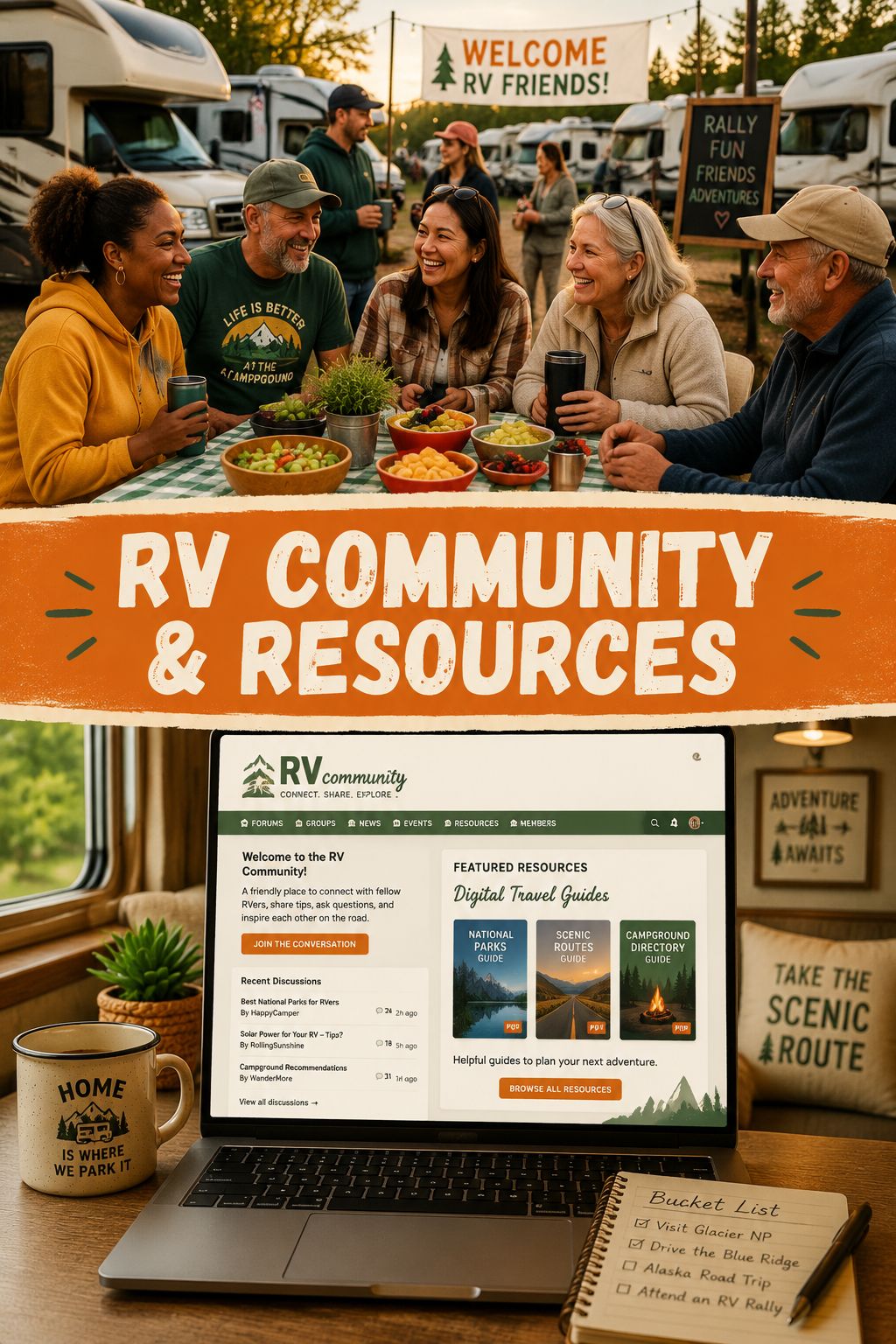
One of the best parts of the RV lifestyle is the community. RVers are some of the friendliest, most helpful people you will ever meet. The community is a huge part of what makes camping in an RV so special.
💬 Pull Quote: “The RV community is one of the most welcoming groups of people on the planet — strangers become friends over campfire conversations every single night.”
Ways to connect with the RV community:
- RV Lifestyle (rvlifestyle.com) — One of the best online resources for RV tips, news, reviews, and community connection [2]
- RV rallies and meetups — Organized gatherings where RVers camp together
- Online forums and Facebook groups — Thousands of active RV communities online
- YouTube channels — Many experienced RVers share their lives and tips on video
- Campground conversations — The best community happens naturally around the campfire
Essential RV Resources and Digital Guides 📚
Having the right information makes the RV lifestyle much easier. There are excellent resources available for every level of RVer.
RV Lifestyle (rvlifestyle.com) is one of the most trusted sources for RV information online [2]. It offers:
- Practical how-to guides
- RV news and industry updates
- Campground and destination reviews
- Community forums and connection
- Digital travel guides in PDF format [7]
The digital guides available through RV Lifestyle cover specific destinations and topics in detail [7]. These are great for planning trips to specific regions or learning about specific RV topics.
Essential Gear for Every Camper 🎒
Every RVer needs certain gear to camp safely and comfortably. Here is a starter checklist:
Safety Gear:
- ✅ Smoke detector (test monthly)
- ✅ Carbon monoxide detector
- ✅ Propane/gas detector
- ✅ Fire extinguisher (rated for RV use)
- ✅ First aid kit
- ✅ Roadside emergency kit
Camping Comfort Gear:
- ✅ Leveling blocks
- ✅ Wheel chocks
- ✅ Sewer hose and connections
- ✅ Freshwater hose (drinking-water safe)
- ✅ Surge protector / EMS (electrical management system)
- ✅ Water pressure regulator
- ✅ Outdoor rug and chairs
- ✅ Awning lights
Tools and Maintenance:
- ✅ Basic hand tools
- ✅ Tire pressure gauge
- ✅ Portable air compressor
- ✅ Duct tape and Flex Seal
- ✅ Roof sealant for touch-ups
RV Maintenance Schedule
Staying on top of maintenance prevents expensive repairs. Here is a simple schedule:
Before Every Trip:
- Check tire pressure and condition
- Test all lights (interior and exterior)
- Check propane connections
- Test smoke and CO detectors
- Check roof for any new damage
Monthly:
- Check and clean battery terminals
- Inspect roof seals and caulking
- Test all appliances
- Check water heater anode rod (annually)
- Lubricate slide-out mechanisms
Annually:
- Full roof inspection and reseal if needed
- Service generator (oil change, filters)
- Flush and sanitize fresh water system
- Check and service brakes
- Inspect all hoses and connections
Full-Time vs. Part-Time RV Living
Not everyone needs to go full-time to enjoy the RV lifestyle. Both approaches have real benefits.
Full-Time RV Living:
- 🟢 Total freedom and flexibility
- 🟢 Can be cheaper than traditional housing
- 🟢 See the country year-round
- 🔴 No permanent home base
- 🔴 Mail and legal address can be complicated
- 🔴 Social connections require more effort
Part-Time / Weekend Camping:
- 🟢 Keep your home base and community
- 🟢 Lower overall costs
- 🟢 Easier to manage
- 🔴 Less total freedom
- 🔴 RV sits unused much of the time
- 🔴 Miss out on the full experience
Seasonal RVing (Snowbirds): Many RVers spend winters in warm states (Florida, Arizona, Texas) and summers in cooler northern states or Canada. This “snowbird” lifestyle is extremely popular with retirees. It combines the best of both worlds.
Health and Wellness on the Road 🏃
Staying healthy while living and camping in an RV takes some intentional effort.
Physical health tips:
- Make exercise a daily habit — hiking, cycling, and swimming are all perfect RV activities
- Cook healthy meals in the RV kitchen instead of eating out constantly
- Stay hydrated — especially in hot climates
- Get regular checkups — use telehealth services when between locations
Mental health tips:
- Connect with other RVers regularly to avoid isolation
- Set a routine — it helps with structure and stability
- Embrace the unexpected — flexibility is a key RV lifestyle skill
- Take breaks from driving — do not rush through destinations
Domicile and Legal Considerations 📋
Full-time RVers need a legal home state for taxes, vehicle registration, driver’s license, and mail. Three states are most popular for RVers:
| State | Why Popular |
|---|---|
| South Dakota | No state income tax, easy process, mail forwarding services available |
| Texas | No state income tax, large RV community, easy registration |
| Florida | No state income tax, warm weather, large RV community |
Mail forwarding services are essential for full-timers. Companies like Escapees RV Club and America’s Mailbox forward mail to wherever you are camping.
Conclusion: Your RV Adventure Starts Now 🚐
The RV lifestyle is one of the most rewarding ways to experience life. Whether someone spends one weekend a month at a nearby campground or lives full-time on the road, the freedom, community, and connection to nature are truly special.
In 2026, there has never been a better time to get into RV camping. Technology is better than ever — with lithium batteries, solar systems, and smart apps making life on the road easier and more comfortable [1]. Prices are becoming more accessible across all RV types [1]. And the community of fellow RVers is bigger and more welcoming than ever [2].
Actionable Next Steps
Ready to start or level up the RV adventure? Here is what to do right now:
- Define your camping style — weekend warrior, seasonal, or full-time? This shapes every other decision.
- Set a realistic budget — include purchase price, insurance, fuel, campsite fees, and maintenance.
- Research RV types — visit dealers and RV shows to sit in different rigs before buying.
- Take a test trip — rent an RV for a weekend before committing to a purchase.
- Join the community — visit rvlifestyle.com for tips, reviews, and community connection [2].
- Grab a digital guide — RV Lifestyle’s digital travel guides are a great planning resource [7].
- Start planning that first trip — pick a destination, book a campsite, and go!
The open road is waiting. The campfire is ready. The only thing left to do is start. 🔥
References
[1] What’s Changing for RVers in 2026 – https://www.youtube.com/watch?v=Q_cg-Jnx6WQ
[2] RV Lifestyle – https://rvlifestyle.com
[3] Watch – https://www.youtube.com/watch?v=-LJ1ChvG0ME
[4] Watch – https://www.youtube.com/watch?v=FWUeJ17SU4w
[5] Watch – https://www.youtube.com/watch?v=2futBzoBJrk
[6] Watch – https://www.youtube.com/watch?v=ws4KovE2DOk
[7] Digital Guides – https://rvlifestyle.myshopify.com/collections/digital-guides
[8] RV Lifestyle Guide – https://rvlifestyle.com/rv-lifestyle-guide/
[9] Watch – https://www.youtube.com/watch?v=DJQ544KMj54