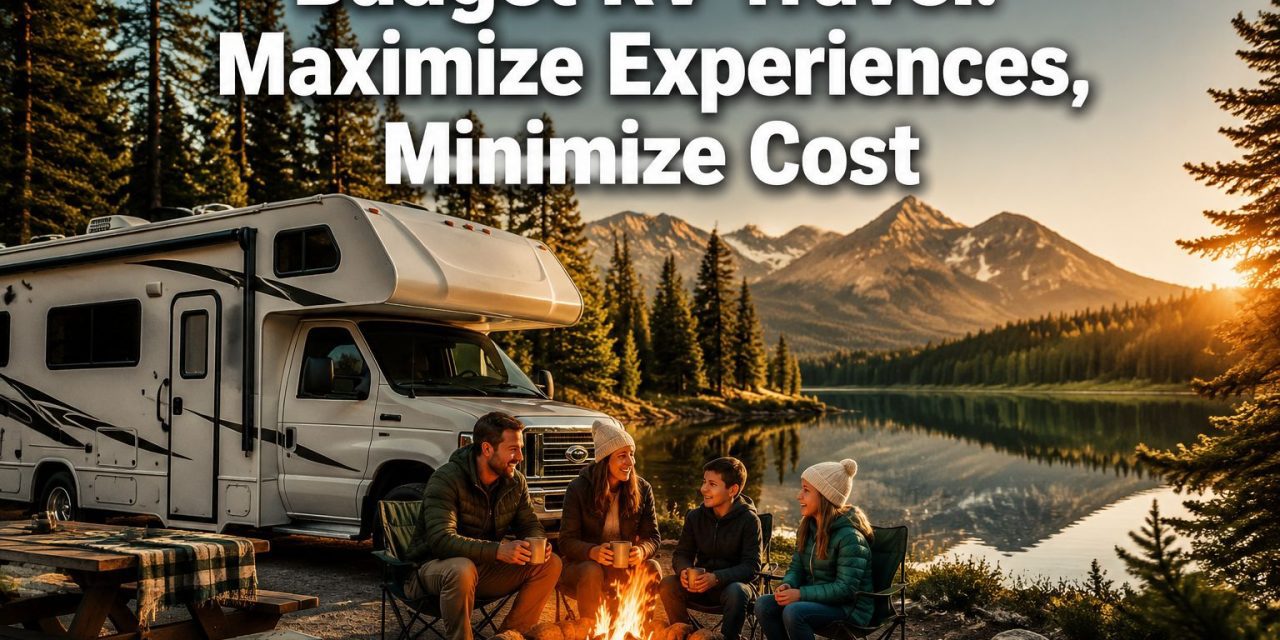
The average American family spends $5,000–$10,000 per year on RV travel — but savvy road warriors routinely cut that number nearly in half without sacrificing a single sunset, s’more, or scenic detour. The secret isn’t sacrifice. It’s strategy.
Whether you’re a weekend warrior or a full-time nomad, finding the right rv campsites and building smart habits around fuel, food, and planning can transform every trip from a budget buster into a genuine adventure. In 2026, the tools, apps, and community knowledge available to RV lovers have never been better — and this guide puts all of it in one place.
Key Takeaways 🗝️
- Fuel is your biggest cost lever — drive less, stay longer, save more
- The right rv campsites (state parks, county parks, Army Corps sites) offer huge savings over private resorts
- Meal planning beats restaurant stops every single time for budget travel
- Free apps like Campendium and RV Trip Wizard help find affordable campgrounds fast
- Delaying gear upgrades until after your first trips prevents wasted spending
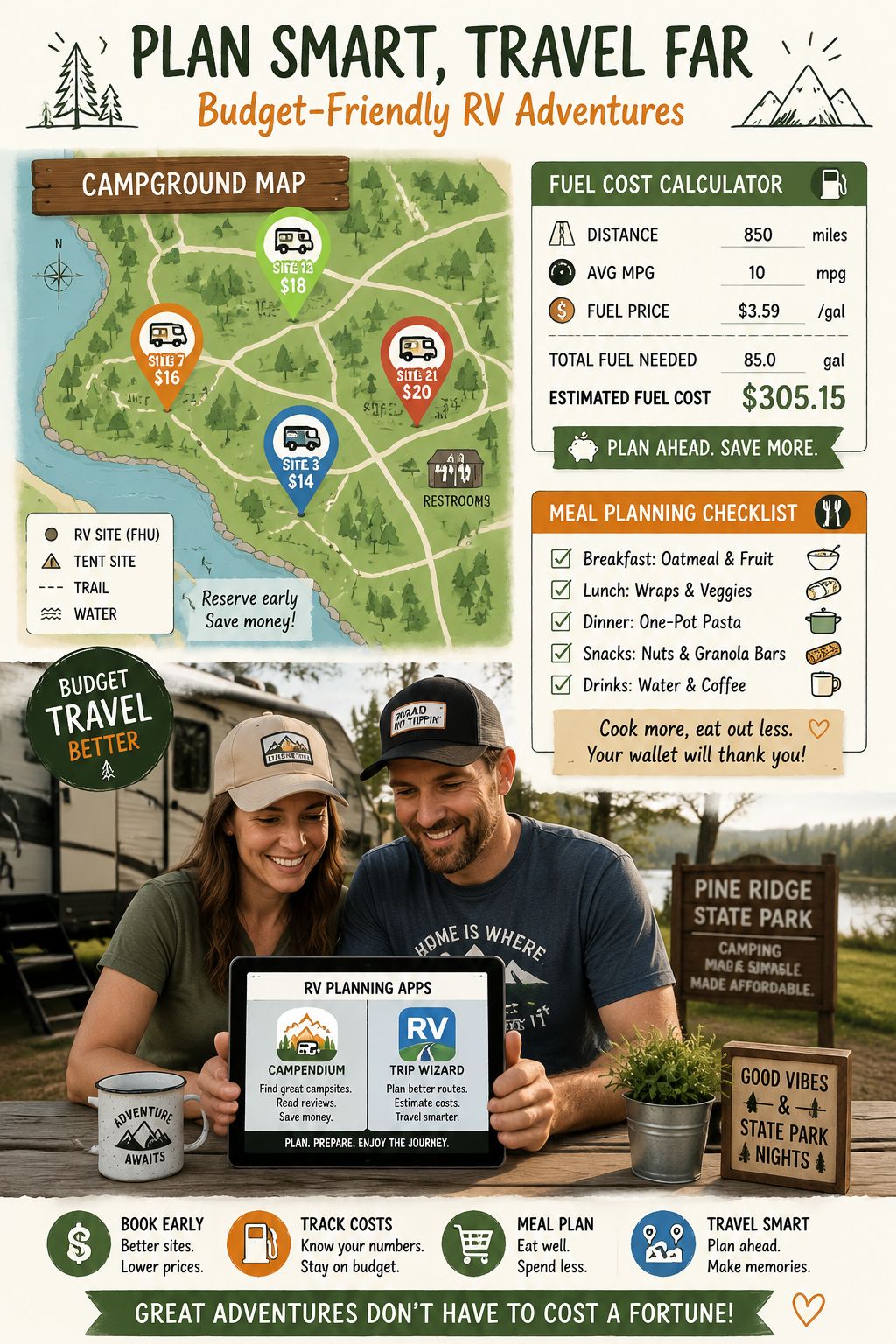
🏕️ Why Fuel Is the #1 Budget Killer at Any RV Campsite Trip
Here’s a truth most new RVers learn the hard way: fuel costs eat budgets faster than anything else. A Class A motorhome getting 8 miles per gallon can burn through $200–$400 in a single day of driving. That adds up fast.
The fix is simple but powerful: move less, stay longer.
💬 “The biggest money-saving move any RVer can make is to stop treating the drive as the destination. Park it. Explore it. Love it.”
Experienced RVers recommend the “300-mile rule” — keep daily driving under 300 miles and try to arrive at your campsite by 3:00 PM. This reduces stress, lowers fuel spend, and gives you more time to actually enjoy where you are [2].
Smart Driving Habits That Save Money
| Habit | Estimated Savings |
|---|---|
| Stay 3+ nights per site | Up to 30% fuel reduction |
| Drive under 300 miles/day | Less wear, less fuel |
| Avoid peak traffic hours | Better MPG, less idling |
| Maintain proper tire pressure | Up to 3% better fuel economy |
| Reduce highway speed by 5 mph | 5–10% fuel savings |
Extended stays at single locations are one of the most powerful budget tools available. When you stop rushing from place to place, your per-day cost drops dramatically [5].
🗺️ How to Find Affordable RV Campsites Near You
Not all campgrounds cost the same — and the cheapest ones are often the most beautiful. The key is knowing where to look.
Best Types of Budget-Friendly Campgrounds
1. State Parks 🌲 State park campgrounds typically cost $15–$35 per night. They offer clean facilities, beautiful scenery, and a sense of community. Many accept reservations online months in advance.
2. County and Regional Parks 🏞️ These hidden gems are often overlooked. County parks frequently charge less than state parks and attract fewer crowds. Perfect for first-season trips close to home [1].
3. Army Corps of Engineers Campgrounds ⛺ These are some of the best-kept secrets in RV travel. Located near lakes and rivers across the country, they offer stunning settings at very low nightly rates — often $10–$25.
4. National Forests (Dispersed Camping) 🌄 Free or nearly free camping on public land. No hookups, but no fees either. Great for self-sufficient RVers with solar or generator setups.
5. Boondocking Spots 🌵 Camping off-grid on BLM (Bureau of Land Management) land is completely free. Apps like Campendium and iOverlander help locate legal spots.
🔍 Top Apps for Finding Cheap RV Campsites in 2026
In 2026, the best RV planning apps make finding affordable campgrounds easier than ever [3]:
- Campendium — user reviews, photos, and pricing for thousands of rv campsites
- RV Trip Wizard — full route optimization with campground cost comparison
- RV Life Campgrounds — detailed filters for hookups, price, and amenities
- Roadtrippers — great for scenic route planning with campsite integration
- The Dyrt — excellent for free and dispersed camping discovery
💡 Pro Tip: Most experienced RVers use 2–3 apps together. Campendium for reviews, RV Trip Wizard for routing, and The Dyrt for free spots.
🚐 Start Smart: Keep First Trips Close to Home
One of the best pieces of advice for spring 2026 trips — especially after a long winter in storage — is to stay within 1–2 hours of home for your first outings [1].
Here’s why this saves money:
- Lower fuel costs — short drives mean minimal gas spend
- Easy returns — if something breaks, you’re not stranded far away
- Diagnostic value — you discover what actually needs fixing before a big trip
- Less pressure — no expensive “we drove 500 miles, we HAVE to stay” mindset
Local and regional rv campsites give you the full RV experience without the full RV price tag. Think of early trips as test runs that protect your wallet on future adventures.
First Trip Checklist ✅
- Check all systems (water, electric, propane, brakes)
- Pack a basic tool kit and spare fuses
- Book a campsite within 90 minutes of home
- Plan all meals in advance
- Download at least two campground apps
- Review campground policies before booking
🍳 Meal Planning: The Easiest Money You’ll Ever Save
Food costs are the second biggest budget leak for most RVers. The culprit? “Restaurant creep” — those “just this once” stops that quietly drain $30–$80 per meal [1].
The math is brutal: eating out just three times per week on a two-week trip can add $500–$1,000+ to your total cost.
Simple Campsite Meal Strategy
Breakfast and lunch should almost always happen at the campsite. These are the easiest meals to prepare and the most expensive to outsource.
Here’s a simple weekly meal budget framework:
| Meal | Campsite Cost | Restaurant Cost | Weekly Savings |
|---|---|---|---|
| Breakfast (daily) | $2–$4/person | $10–$15/person | $56–$77/person |
| Lunch (daily) | $3–$5/person | $12–$18/person | $63–$91/person |
| Dinner (4x/week) | $6–$10/person | $20–$35/person | $56–$100/person |
Total potential savings per person per week: $175–$268 💰
Budget Campsite Meal Ideas 🔥
- Breakfast: Oatmeal, scrambled eggs, pancakes, fruit
- Lunch: Sandwiches, wraps, pasta salad, canned soup
- Dinner: One-pot chili, foil packet meals, grilled veggies and sausage
- Snacks: Trail mix, apples, peanut butter crackers
Batch cooking before the trip and using a good cooler system can stretch grocery budgets even further.
⚡ Full Hookups vs. Free Camping: What Actually Costs Less?
This surprises many new RVers: paying more per night for full hookups often saves money overall [1].
Here’s the logic:
When you camp without electric hookups, you run your generator. Generators consume 0.5–1 gallon of fuel per hour. Run it 6 hours a day and you’re spending $15–$25 extra daily — which can easily exceed the hookup fee itself.
Cost Comparison: Full Hookup vs. Dry Camping
| Factor | Full Hookup Site ($35/night) | Dry Camping ($10/night) |
|---|---|---|
| Nightly fee | $35 | $10 |
| Generator fuel (6 hrs) | $0 | $18–$25 |
| Water hauling | $0 | $5–$10 |
| True daily cost | $35 | $33–$45 |
The numbers often flip in favor of hookups — especially for longer stays. Always calculate the true daily cost, not just the sticker price.
🔧 Don’t Upgrade Gear Until You Know What You Actually Need
New RVers often make one expensive mistake before their first trip: buying gear they don’t need yet.
The smarter move is to use your first 2–3 trips as a diagnostic period. Live with what you have. Notice what’s actually missing or broken. Then spend money on things that genuinely improve your experience [1].
Gear Worth Waiting On (Until You Know You Need It)
- Fancy solar panel systems
- Expensive leveling systems
- Premium kitchen gadgets
- High-end outdoor furniture
- Upgraded mattresses (test the stock one first)
Budget-Friendly Upgrades That Actually Help
These small investments pay off quickly:
- Magnetic knife strips — free up counter space
- Collapsible kitchen gear — bowls, colanders, cutting boards
- Door organizers — maximize vertical storage space
- Surge protector — protects expensive electronics at campgrounds
- Water pressure regulator — protects plumbing at rv campsites [2]
💬 “The best RV gear is the gear you actually use. Wait until you know what you’re missing before spending a dime.”
📋 Avoid Hidden Campground Fees Before They Hit Your Wallet
Campground fees listed online are rarely the full story. Hidden costs can add $10–$30 per night if you’re not careful [1].
Common Hidden Campground Costs to Watch For
- 🐾 Pet fees — $5–$15 per pet per night
- 🚗 Extra vehicle fees — $5–$10 per additional car
- ⚡ Electricity surcharges — metered electric at some sites
- 🕐 Late check-in fees — charged after certain hours
- 🔌 Generator hour restrictions — fines for running outside allowed times
- 🏊 Amenity fees — pools, Wi-Fi, laundry sometimes cost extra
- ❌ Cancellation penalties — non-refundable deposits at many parks
Always read the full campground policy page before booking. A quick 5-minute review can save $50+ per trip.
Questions to Ask Before Booking Any RV Campsite
- Are pets allowed? What’s the fee?
- Is there a second vehicle fee?
- Is electricity included or metered?
- What are the generator hours?
- What is the cancellation policy?
- Are there any amenity fees?
🧭 Choose the Right RV for Your Route
This tip saves money before you even leave the driveway. Choosing an RV that doesn’t fit your planned route leads to costly detours, mechanical stress, and sometimes dangerous situations [2].
RV Size vs. Terrain Guide
| RV Type | Best For | Avoid |
|---|---|---|
| Class A (35–45 ft) | Flat highways, RV parks | Mountain passes, tight roads |
| Class B (Van) | All terrain, urban areas | Large families, long stays |
| Class C (21–35 ft) | Balanced use, state parks | Very tight campgrounds |
| Travel Trailer | Flexibility, budget camping | Steep grades without proper tow vehicle |
| Fifth Wheel | Comfort, extended stays | Low-clearance roads |
Before booking rv campsites in mountainous or coastal areas, check road clearance requirements, bridge weight limits, and campsite length restrictions. Many campground websites list maximum RV lengths in their booking details.
💡 Smart Budgeting: Build Your RV Trip Cost Tracker
Tracking spending in real time is one of the most powerful habits any budget RVer can build. Here’s a simple framework:
Sample Weekly RV Budget Template
| Category | Budget | Actual | Notes |
|---|---|---|---|
| Campsite fees | $175 | — | 5 nights avg $35 |
| Fuel | $150 | — | Est. 300 miles |
| Groceries | $120 | — | Pre-planned meals |
| Dining out | $50 | — | 1 dinner out |
| Activities | $75 | — | Parks, attractions |
| Misc/Emergency | $50 | — | Buffer fund |
| Total | $620 | — | Per week |
Compare this to a hotel-based vacation for two people — easily $1,500–$2,500 per week — and the RV advantage becomes crystal clear.
Community forums like iRV2 show real RVers sharing actual 2026 budgets, with many full-timers keeping costs under $2,500/month including campsite fees, fuel, food, and maintenance [9].
🌟 Boondocking: The Ultimate Free Camping Strategy
Boondocking — camping without hookups on public land — is the ultimate budget move for self-sufficient RVers.
What You Need to Boondock Successfully
- Fresh water tank — fill completely before leaving
- Power solution — solar panels, generator, or large battery bank
- Waste management — know your gray and black tank capacity
- Apps — Campendium, iOverlander, or FreeRoam for legal spot locations
- Patience — finding the right spot takes practice
The payoff? Zero campsite fees for nights, sometimes weeks at a time.
BLM land rules generally allow stays of up to 14 days in one location before you must move. After that, move at least 25 miles and the clock resets.
💡 Boondocking Starter Tip: Try a one-night boondock close to home before committing to a week off-grid. Test your systems. Know your limits. Then go further.
Conclusion: Your Budget RV Adventure Starts Now 🚀
RV travel in 2026 doesn’t have to drain your savings account. The biggest wins come from a handful of smart, repeatable habits:
✅ Your Action Plan:
- Start close to home — keep first trips within 1–2 hours to test systems and save fuel [1]
- Use planning apps — Campendium, RV Trip Wizard, and RV Life make finding affordable rv campsites effortless [3]
- Follow the 300-mile rule — drive less, arrive earlier, enjoy more [2]
- Plan every meal — breakfast and lunch at the campsite, every time [1]
- Read campground policies — avoid hidden fees before they surprise you [1]
- Stay longer at each spot — extended stays slash per-day costs dramatically [5]
- Wait on gear upgrades — let your first trips tell you what you actually need [1]
The open road is calling. The best rv campsites are out there waiting — and with the right strategy, they don’t have to cost a fortune to enjoy. Pack smart, plan ahead, and make every mile count. 🏕️🌅
References
[1] Rv Trip Budget – https://letsrv.com/rv-trip-budget/ [2] Rv Traveling – https://www.ecoflow.com/us/blog/rv-traveling [3] Rving In 2026 Best Products And What You Need To Know – https://rvshare.com/blog/rving-in-2026-best-products-and-what-you-need-to-know/ [4] New Rv Habits To Start In 2026 – https://www.rvlock.com/blogs/on-the-road/new-rv-habits-to-start-in-2026 [5] Watch – https://www.youtube.com/watch?v=BM9aDDGmVoE [6] Rvdt2896 – https://www.rvtravel.com/rvdt2896/ [7] Watch – https://www.youtube.com/watch?v=1iEQjqd1COY [8] 12 Travel Goals To Check Off In 2024 – https://www.cruiseamerica.com/trip-inspiration/12-travel-goals-to-check-off-in-2024 [9] Budget For Rving In 2026 – https://www.irv2.com/threads/budget-for-rving-in-2026.2180079/