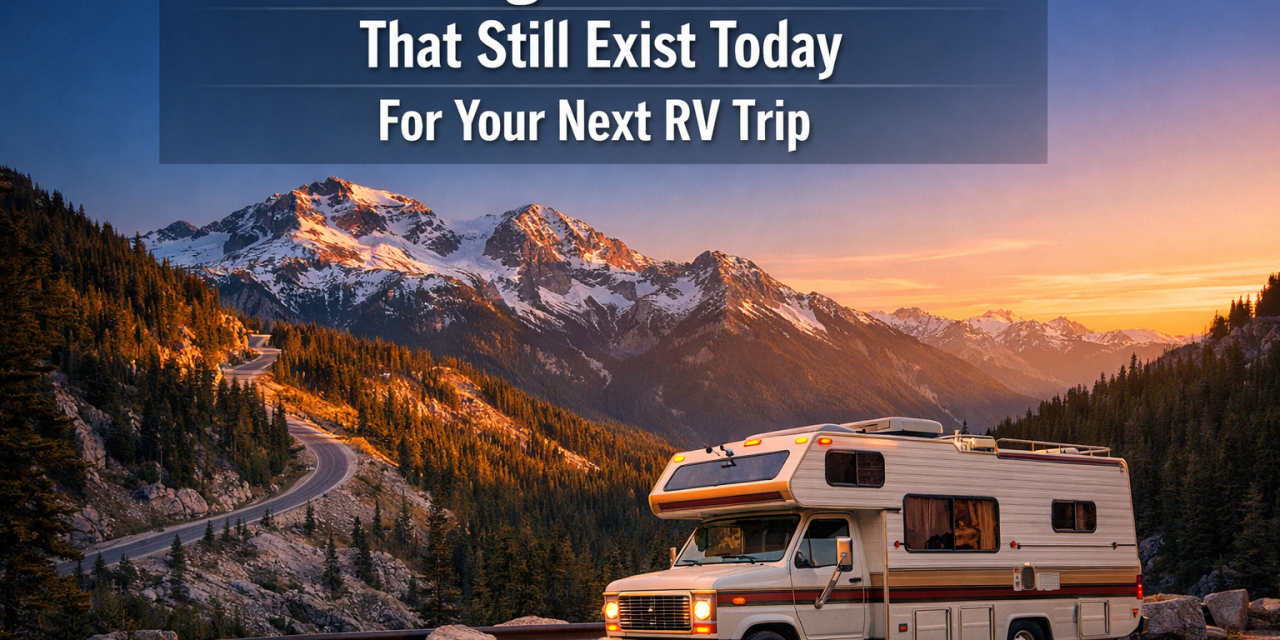
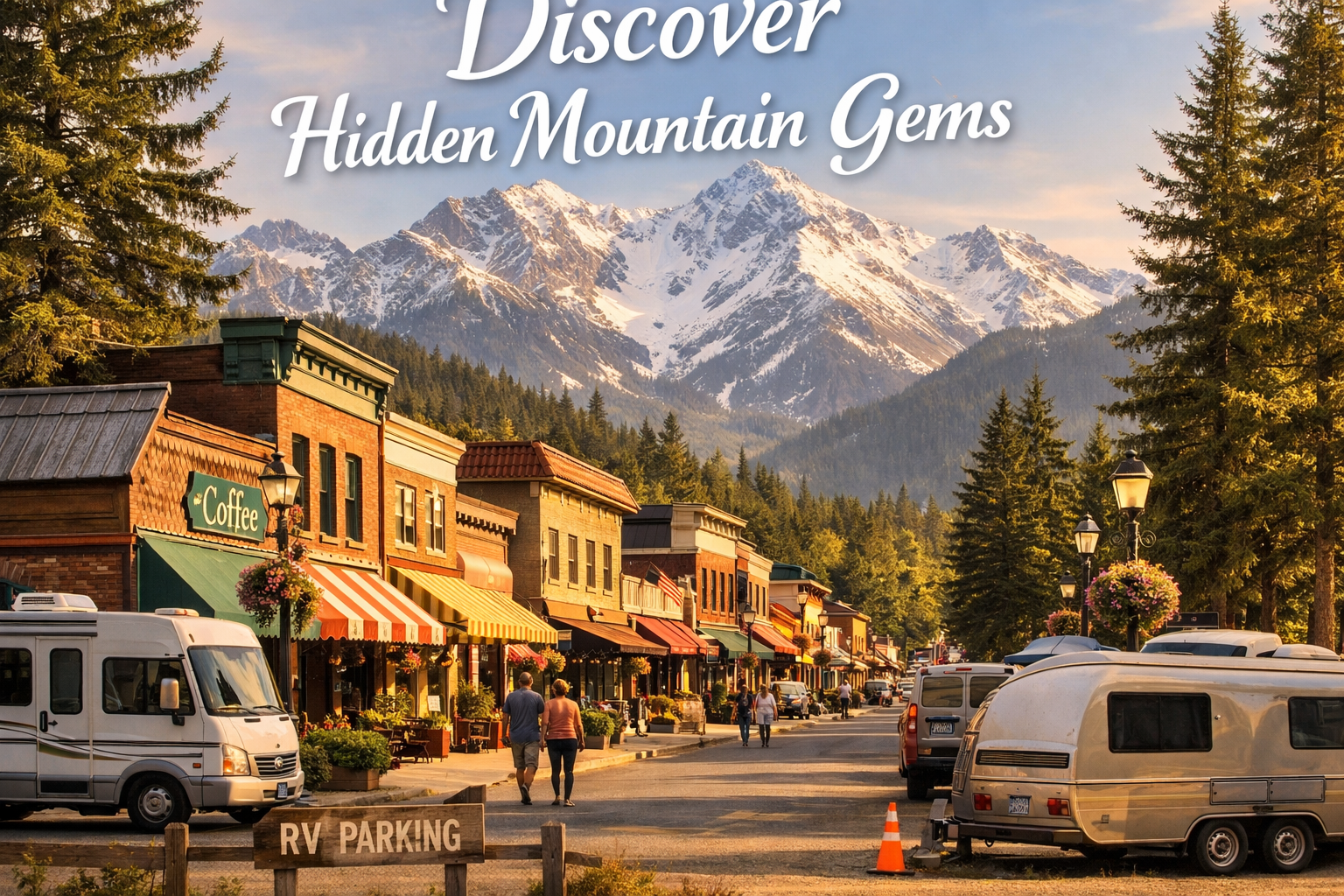
The best mountain towns for RV trips in 2026 combine authentic small-town charm with practical amenities like full hookup sites, dump stations, and easy access to outdoor recreation. These communities have survived economic shifts, maintained their historic character, and continue to welcome travelers year-round. From Colorado’s high country to Montana’s wilderness gateways, these destinations offer RV enthusiasts everything from alpine skiing to summer hiking, with campgrounds designed specifically for larger rigs.
Key Takeaways
- Mountain towns across the American West continue to welcome RV travelers with excellent campgrounds and stunning natural scenery
- Many historic mining and railroad towns have preserved their authentic character while adding modern RV amenities
- Spring 2026 offers excellent opportunities for RV enthusiasts, with 2.8 million Americans planning RV trips this season[6]
- Current tourism patterns show reduced crowds in some popular destinations, creating better experiences for visitors
- Proper planning for elevation, seasonal access, and RV-specific facilities ensures a successful mountain getaway
Would you like to save this article?
What Makes These Mountain Towns Perfect for RV Enthusiasts in 2026?
Mountain towns that thrive today offer RV travelers a combination of accessible campgrounds, authentic local culture, and year-round outdoor activities. Unlike generic highway stops, these communities have preserved their unique identities while adapting to modern travelers’ needs.
The current tourism landscape actually favors RV travelers. While hotel bookings in Colorado mountain destinations are down approximately 25% from last year[2], RV parks continue to attract visitors who prefer self-contained travel and flexibility. This shift means less crowded attractions, easier parking, and more availability at popular campgrounds.
Here’s what sets exceptional mountain RV destinations apart:
- Full hookup availability – 30/50 amp electrical service, water, and sewer connections
- Big rig accessibility – Pull-through sites accommodating 40+ foot motorhomes
- Year-round or extended season access – Not just summer-only operations
- Proximity to attractions – Within 15 minutes of hiking, fishing, or town centers
- Elevation considerations – Between 5,000-9,000 feet for comfortable acclimatization
- Local character – Authentic downtown areas with local businesses, not chain stores
Choose mountain towns with multiple campground options if you’re traveling during peak season. Single-campground destinations can fill quickly, leaving you without backup options.
Common mistake: Assuming all mountain towns welcome large RVs. Many historic mining towns have narrow streets and limited turnaround space. Always verify RV length restrictions before arrival.
Where Are the Best Mountain Towns That Still Exist Today for RV Trips?
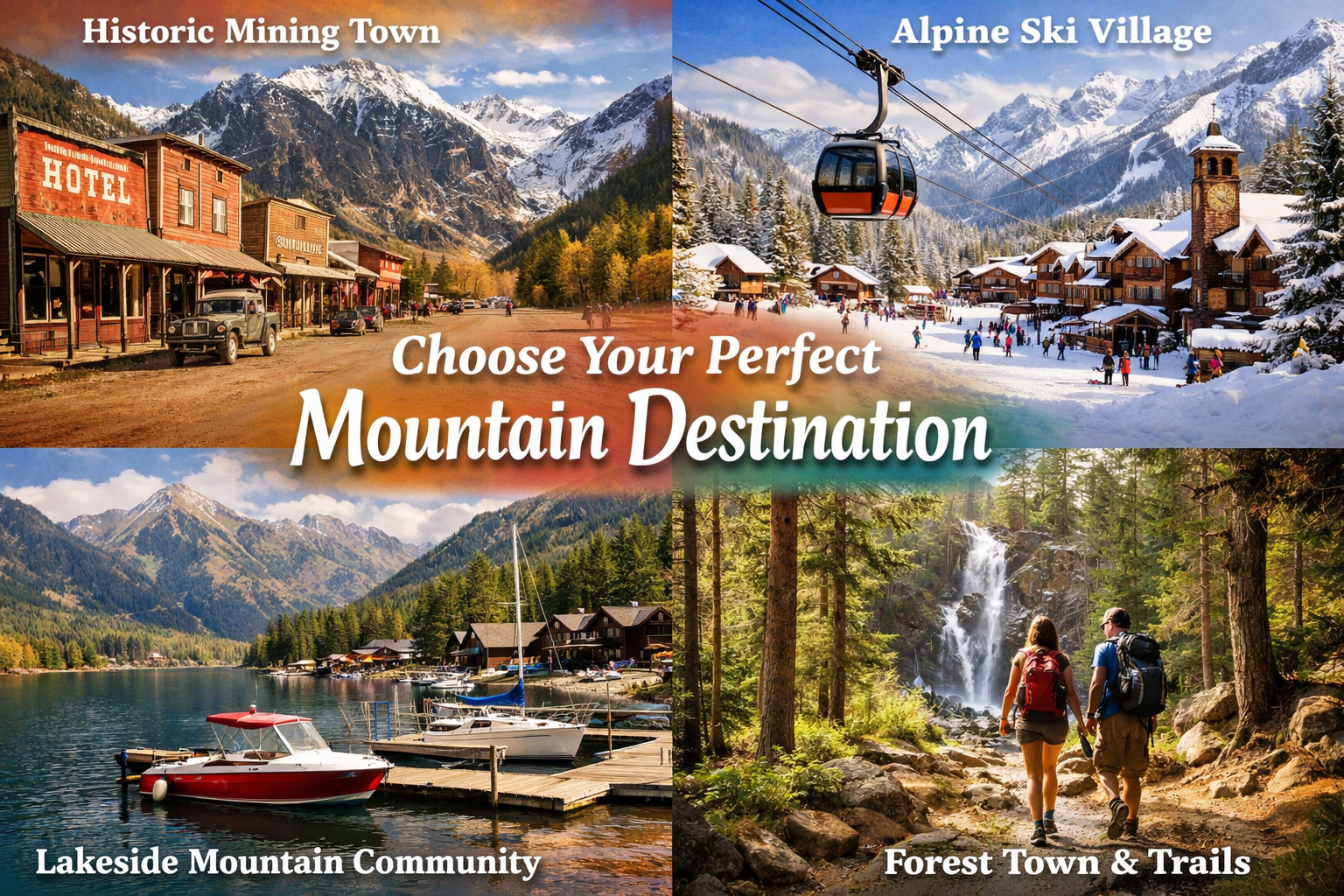
The top mountain towns for RV adventures span from the Colorado Rockies to the Pacific Northwest, each offering distinct character and well-maintained RV facilities.
1. Ouray, Colorado – The Switzerland of America
Ouray sits at 7,792 feet elevation in a natural amphitheater of towering peaks. This Victorian mining town has preserved its 1880s architecture while adding modern conveniences.
RV specifics:
- Ouray RV Park & Cabins offers full hookups with mountain views
- 4 Mile Creek Campground provides pull-through sites for big rigs
- Town streets accommodate RVs up to 35 feet (larger rigs should use designated parking)
Best for: Hot springs enthusiasts, Jeep trail adventurers, and photographers. The Million Dollar Highway provides spectacular drives.
2. Red Lodge, Montana – Gateway to Beartooth Highway
Red Lodge combines Old West charm with access to one of America’s most scenic drives. The town’s main street features historic buildings housing breweries, galleries, and outfitters.
RV specifics:
- Perry’s RV Park offers 50-amp service and WiFi
- Red Lodge KOA provides pull-throughs and mountain views
- Easy access to Beartooth Highway (opens late May, closes mid-October)
Best for: Motorcyclists, wildlife watchers, and anglers. Elevation 5,555 feet makes acclimatization easy.
3. Leavenworth, Washington – Bavarian Alpine Village
This transformed logging town adopted Bavarian architecture in the 1960s and now thrives as a year-round destination. The themed approach might seem gimmicky, but the execution is thorough and charming.
RV specifics:
- Pine Village KOA offers riverside sites with full hookups
- Icicle River RV Resort provides premium amenities
- Town parking accommodates RVs with designated lots
Best for: Festival lovers (Oktoberfest, Christmas Lighting), river activities, and families. Less extreme elevation (1,170 feet) than Rocky Mountain towns.
4. Salida, Colorado – Arkansas River Adventure Hub
Salida blends historic downtown charm with serious outdoor recreation. The Arkansas River provides world-class whitewater rafting, while 14,000-foot peaks surround the valley.
RV specifics:
- Heart of the Rockies RV Park offers full hookups
- Salida RV Park provides pull-through sites
- Downtown streets accommodate careful RV navigation
Best for: Whitewater enthusiasts, mountain bikers, and hot springs seekers. Elevation 7,083 feet. Strong arts community with galleries and studios.
5. Estes Park, Colorado – Rocky Mountain National Park Gateway
Estes Park serves as the eastern entrance to Rocky Mountain National Park. The town balances tourist amenities with genuine mountain town character.
RV specifics:
- Estes Park KOA offers mountain views and full hookups
- Spruce Lake RV Park provides big rig sites
- Park entrance requires timed entry permits (reserve ahead)
Best for: Wildlife viewing (elk herds in town), alpine hiking, and photographers. Elevation 7,522 feet. Book campgrounds months in advance for summer visits.
6. Durango, Colorado – Historic Railroad Town
Durango’s narrow-gauge railroad still runs to Silverton, offering a glimpse into 1880s mountain travel. The town combines Victorian architecture with modern mountain culture.
RV specifics:
- Durango RV Resort offers luxury amenities
- Alpen Rose RV Park provides riverside sites
- Downtown has designated RV parking areas
Best for: Train enthusiasts, mountain bikers (extensive trail system), and history buffs. Elevation 6,512 feet makes it accessible year-round.
7. Whitefish, Montana – Glacier Country Base Camp
Whitefish serves as the gateway to Glacier National Park while maintaining its own identity as a ski town and summer resort. The downtown area features locally-owned shops and restaurants.
RV specifics:
- Whitefish KOA offers full hookups and pull-throughs
- Whitefish Lake State Park provides scenic camping
- Good RV access to downtown and ski resort
Best for: Glacier National Park visitors, skiers, and lake activities. Elevation 3,033 feet. Going-to-the-Sun Road typically opens late June.
8. Crested Butte, Colorado – Wildflower Capital
Crested Butte remains authentically quirky, avoiding the overdevelopment of some Colorado ski towns. The mountain biking scene here is legendary, and summer wildflower displays are spectacular.
RV specifics:
- Crested Butte RV Park offers full hookups
- Lake Irwin Campground provides forest service camping
- Town streets are narrow; park RV at campground and use tow vehicle
Best for: Mountain bikers, wildflower enthusiasts, and those seeking uncrowded skiing. Elevation 8,909 feet requires acclimatization. Access road can be challenging for large RVs.
9. Jackson, Wyoming – Tetons and Yellowstone Hub
Jackson combines Western heritage with upscale amenities. The town square’s iconic elk antler arches frame views of the Teton Range.
RV specifics:
- Virginian RV Park offers in-town convenience
- Snake River Park KOA provides riverside sites
- Grand Teton and Yellowstone campgrounds nearby
Best for: National park visitors, wildlife photographers, and Western culture enthusiasts. Elevation 6,237 feet. Expect higher prices than other mountain towns.
10. Flagstaff, Arizona – Four Seasons Mountain Town
Flagstaff offers mountain experiences at Arizona’s high elevation. Ponderosa pine forests, proximity to Grand Canyon, and Route 66 history create unique appeal.
RV specifics:
- Flagstaff KOA offers full hookups and pull-throughs
- Woody Mountain Campground provides forest setting
- Good RV access throughout town
Best for: Grand Canyon day trips, Route 66 enthusiasts, and those seeking four-season camping. Elevation 6,910 feet provides cool summers and snowy winters.
How Do Current Tourism Trends Affect Mountain Town RV Travel?
Mountain town tourism is experiencing a slowdown in 2026, which actually benefits RV travelers through reduced crowds and better availability. Vail Resorts reported ski visits down 20% in mid-January 2026 compared to the previous year[4], and hotel bookings across Colorado mountain destinations are down approximately 25%[2].
This shift creates advantages for RV enthusiasts:
Better campground availability: With fewer overall visitors, popular RV parks have more last-minute openings. Sites that previously required 6-month advance bookings now show availability weeks out.
Less crowded attractions: Hiking trails, restaurants, and downtown areas are more accessible. Breckenridge saw a 14% drop in overnight stays during summer 2025[1], though day-trip traffic remained strong.
Competitive pricing: Some RV parks are offering discounts or added amenities to attract visitors during the slower season.
Improved local experiences: With reduced crowds, locals have more time to engage with visitors, creating better authentic experiences.
However, these trends also mean some challenges:
- Reduced business hours: Some restaurants and shops may have limited schedules
- Staffing reductions: Service businesses are cutting workers’ hours[4], potentially affecting tour operators and outfitters
- Uncertainty about summer 2026: Tourism officials expect the slow season could continue into summer[4]
Choose mountain towns with diverse economies if you’re concerned about business closures. Towns that rely solely on tourism may have more shuttered storefronts, while communities with year-round residents and varied industries maintain better services.
The economic factors driving these trends include tariffs, economic uncertainty, and currency fluctuations affecting international visitors. Canadian tourist visits to mountain towns were down 58% as of summer 2025[1].
What RV-Specific Amenities Should You Look for in Mountain Towns?
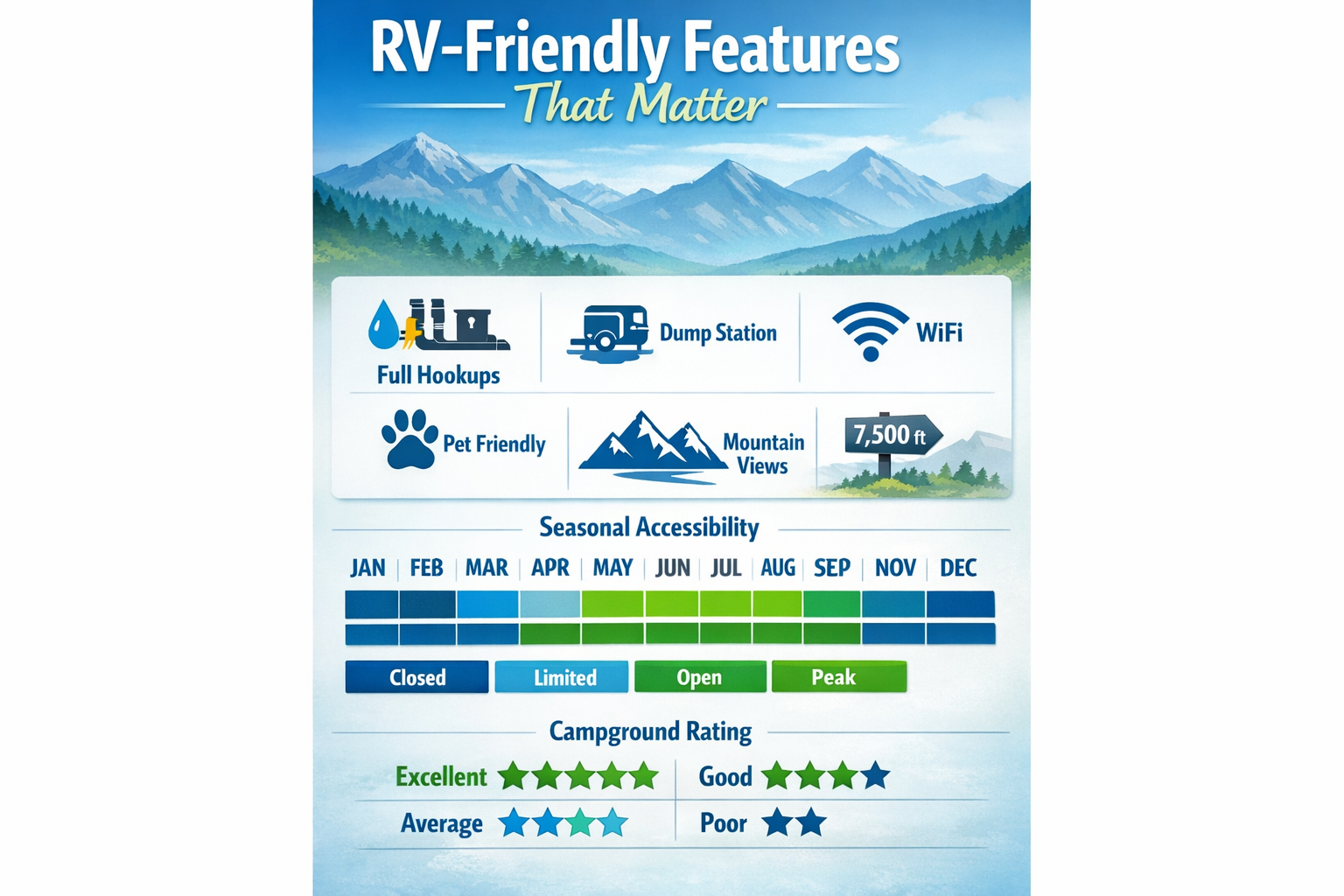
Essential RV amenities in mountain destinations include reliable full hookups, adequate site length, and facilities designed for high-elevation conditions.
Critical Infrastructure
Electrical service: Mountain weather can be extreme. Look for 50-amp service if you’re running air conditioning, heating, and appliances simultaneously. 30-amp service works for smaller rigs with moderate power needs.
Water quality: High-elevation water sources may have different mineral content. Ask campground operators about water quality and whether filters are recommended.
Dump station access: If you’re staying at a dry camping site, verify dump station locations and hours. Some mountain towns have limited public dump facilities.
Propane availability: Mountain temperatures drop quickly after sunset. Ensure propane refill stations are accessible, especially for extended stays.
Site Considerations
| Feature | Why It Matters in Mountains | What to Ask |
|---|---|---|
| Pull-through sites | Easier navigation on sloped terrain | “Do you have level pull-through sites for 40+ foot rigs?” |
| Site leveling | Mountain campgrounds often slope | “How much leveling is typically needed?” |
| Altitude considerations | Generators work less efficiently above 8,000 feet | “What’s your elevation and are there generator restrictions?” |
| Seasonal access | Snow closes many campgrounds October-May | “What are your exact operating dates?” |
| Cell/WiFi service | Mountain terrain blocks signals | “Which carriers have service and is WiFi reliable?” |
Weather-Related Amenities
Covered areas: Afternoon thunderstorms are common in mountain regions during summer. Covered picnic areas or pavilions add comfort.
Laundry facilities: Mountain adventures generate dirty clothes quickly. On-site laundry saves trips into town.
Pet facilities: Many RV travelers bring dogs. Look for designated pet areas, waste stations, and information about local leash laws and wildlife precautions.
Bear-proof storage: In bear country (Montana, Wyoming, Colorado high country), verify that campgrounds provide bear-proof trash containers and food storage guidance.
Common mistake: Assuming WiFi works as advertised. Mountain terrain and limited infrastructure mean “WiFi available” might mean one weak signal near the office. Bring cellular boosters and have offline entertainment options.
When Is the Best Time to Visit Mountain Towns in Your RV?
The ideal time for mountain RV travel depends on your priorities: summer (June-August) offers full access and warm weather, while shoulder seasons (May, September-October) provide fewer crowds and lower prices.
Summer Season (June-August)
Advantages:
- All roads and campgrounds open
- Warmest weather and longest days
- Full range of activities available
- All businesses operating
Disadvantages:
- Highest prices for campsites
- Most crowded trails and attractions
- Afternoon thunderstorms common
- Advance reservations essential
Best for: Families with school-age children, first-time mountain visitors, those seeking guaranteed access to high-elevation areas.
Spring Shoulder Season (May-early June)
Advantages:
- Lower campground rates
- Wildflowers blooming at lower elevations
- Fewer crowds than summer
- Pleasant daytime temperatures
Disadvantages:
- High-elevation roads still closed
- Some campgrounds not yet open
- Unpredictable weather, possible snow
- River levels high from snowmelt (caution for water activities)
Best for: Budget-conscious travelers, wildflower enthusiasts, those comfortable with weather variability.
Fall Shoulder Season (September-October)
Advantages:
- Spectacular aspen colors (late September)
- Comfortable temperatures, fewer bugs
- Reduced crowds after Labor Day
- Lower prices than summer
Disadvantages:
- Shorter days limit activity time
- Some businesses reduce hours or close
- High-elevation campgrounds close mid-September
- Sudden cold snaps possible
Best for: Photographers, leaf-peepers, retirees with flexible schedules, those seeking solitude.
Winter (November-April)
Advantages:
- Lowest RV park rates
- Ski town atmosphere and activities
- Unique winter landscapes
- Minimal crowds at RV parks
Disadvantages:
- Many campgrounds closed
- Challenging driving conditions
- RV winterization essential
- Limited to lower-elevation towns
Best for: Experienced winter RVers, skiers with winter-ready rigs, those seeking extended stays in ski towns.
Choose shoulder seasons if you want the best balance of weather, crowds, and value. Late May and September offer 70-80% of summer’s benefits at 50-60% of the cost.
With 2.8 million Americans planning RV trips this spring[6], early season travel is increasingly popular. Book May and early June sites by March to secure preferred locations.
What Common Mistakes Should RV Travelers Avoid in Mountain Towns?
The most critical mistakes involve underestimating altitude effects, misjudging RV maneuverability on mountain roads, and failing to plan for rapid weather changes.
Altitude-Related Errors
Ignoring acclimatization needs: Driving from sea level to 8,000+ feet in one day can cause altitude sickness. Symptoms include headaches, nausea, and fatigue.
Solution: Plan overnight stops at intermediate elevations. If traveling from low elevation to Crested Butte (8,909 feet), stop in Salida (7,083 feet) for a night.
Overlooking RV performance changes: Engines lose approximately 3% power per 1,000 feet of elevation. Your RV that easily climbs highway grades at sea level will struggle on mountain passes.
Solution: Downshift earlier than usual, allow extra time for climbs, and avoid passing on steep grades.
Navigation and Road Mistakes
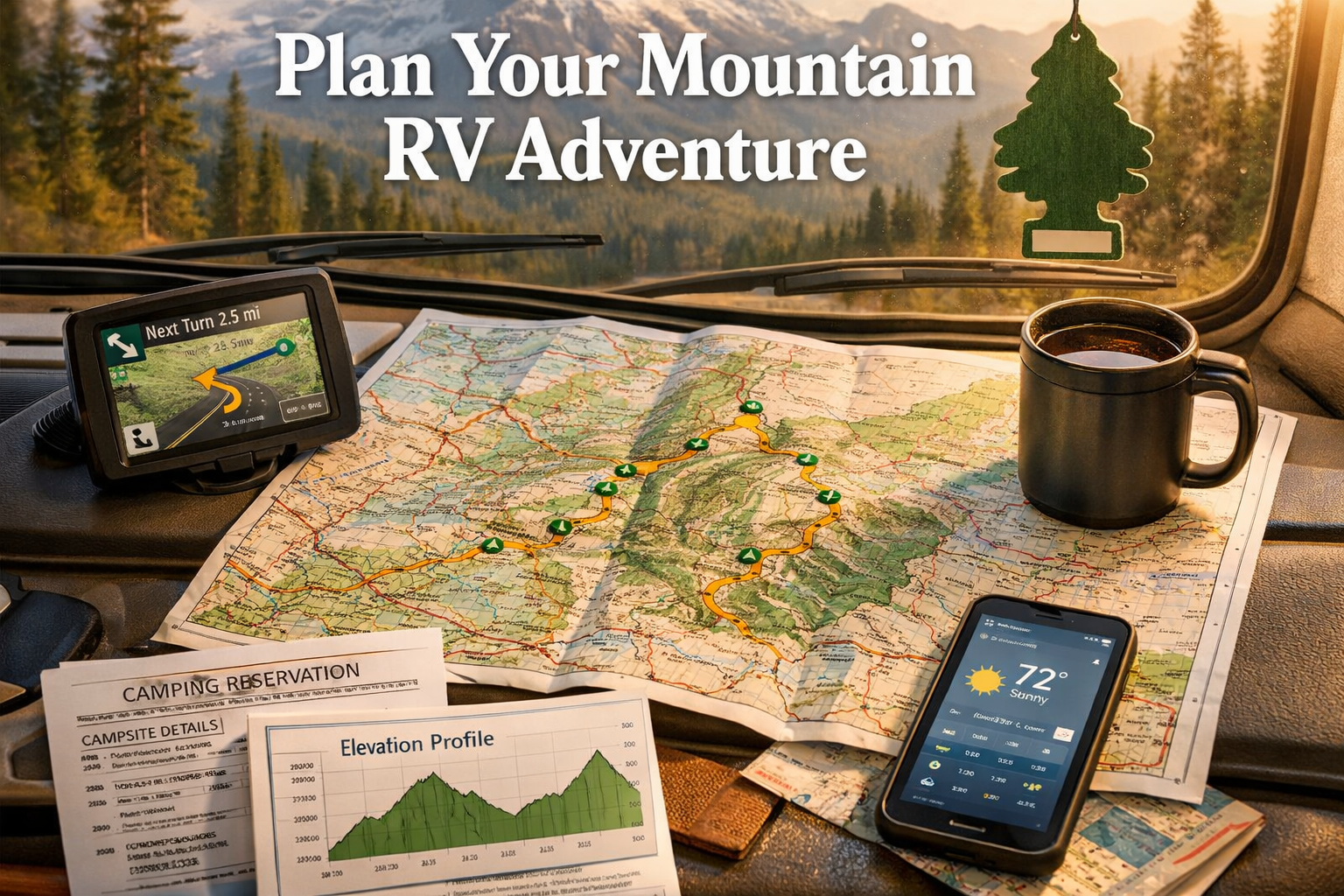
Following GPS blindly: Standard GPS units route RVs down roads unsuitable for large vehicles.
Solution: Use RV-specific GPS units or apps (RV Life, Good Sam) that account for height, weight, and length restrictions.
Underestimating road conditions: Historic mining town streets weren’t designed for 40-foot motorhomes.
Solution: Research specific RV parking before entering town centers. Many mountain towns provide designated RV parking lots outside the historic core.
Attempting challenging passes unprepared: Roads like Red Mountain Pass (US 550) and Beartooth Highway require confidence and experience.
Solution: Drive these routes in good weather, start early before afternoon thunderstorms, and consider unhitching tow vehicles for particularly challenging sections.
Planning and Preparation Errors
Assuming summer means warm: Mountain temperatures can drop to freezing even in July at high elevations.
Solution: Pack cold-weather clothing, extra blankets, and ensure your heating system works properly.
Neglecting to check seasonal road closures: Many spectacular mountain roads close October through May or June.
Solution: Verify road status through state DOT websites before departure. Going-to-the-Sun Road in Glacier typically opens late June, not Memorial Day.
Overlooking reservation requirements: Rocky Mountain National Park and other popular destinations now require timed entry permits, even if you’re just driving through.
Solution: Book permits when you reserve campgrounds, typically 2-3 months in advance for summer visits.
Forgetting about bears: Food left outside in bear country creates dangerous situations for both bears and campers.
Solution: Store all food, toiletries, and scented items inside your RV or in bear-proof containers. Never leave food outside overnight.
How Can You Maximize Your Mountain Town RV Experience?
The best mountain town experiences come from balancing popular attractions with local discoveries, staying flexible with weather-dependent plans, and engaging with the community.
Before You Go
Research beyond the highlights: Every mountain town has well-known attractions, but locals know hidden gems.
- Join town-specific Facebook groups and ask for recommendations
- Check local newspaper websites for current events
- Read recent blog posts from full-time RVers who’ve visited
- Download offline maps for areas with limited cell service
Prepare your RV for elevation:
- Service your engine and transmission before mountain travel
- Check brake fluid and pads (mountain descents are demanding)
- Verify tire pressure (altitude affects readings)
- Test your generator at elevation if possible
- Bring leveling blocks (mountain sites often slope)
During Your Visit
Adopt a flexible schedule: Mountain weather changes rapidly. Have indoor backup plans for rainy days and be ready to seize perfect weather windows.
Example: If you wake to clear skies after forecast rain, postpone your museum visit and hit the trail. Museums are always available; perfect alpine weather isn’t.
Support local businesses: Mountain town economies depend on visitor spending. Choose locally-owned restaurants over chains, buy from local outfitters, and visit farmers markets.
Engage with locals: Strike up conversations at coffee shops, breweries, and trailheads. Locals often share information about current conditions, hidden spots, and upcoming events.
Respect the environment:
- Stay on designated trails to prevent erosion
- Pack out all trash (mountain wildlife is attracted to food waste)
- Use established campsites in dispersed camping areas
- Follow fire restrictions (often in effect during dry periods)
Making the Most of Your Time
Prioritize early mornings: Mountain towns are magical at dawn, with fewer crowds and better wildlife viewing. Afternoon thunderstorms are common in summer, making mornings ideal for hiking.
Plan for shorter hiking distances: Elevation makes trails more challenging. A “moderate” 5-mile hike at 9,000 feet feels harder than a “difficult” 8-mile hike at sea level.
Sample local food culture: Mountain towns often have distinctive culinary scenes. Try local breweries (many mountain towns have excellent craft beer), farm-to-table restaurants, and regional specialties.
Document your journey: Mountain landscapes photograph beautifully, but also capture the small details: historic building architecture, local characters, wildflowers, and your RV in scenic settings.
Choose one signature experience per destination. Trying to do everything creates rushed, stressful travel. In Ouray, focus on hot springs and one Jeep trail. In Durango, prioritize the narrow-gauge railroad. In Whitefish, dedicate time to Glacier National Park.
Frequently Asked Questions
What’s the best mountain town for first-time RV travelers?
Flagstaff, Arizona offers the easiest introduction to mountain RV travel with moderate elevation (6,910 feet), excellent RV infrastructure, and year-round accessibility. The town has multiple RV parks with full hookups, easy navigation, and proximity to major attractions without extreme mountain driving.
Can you visit mountain towns in an RV during winter?
Yes, but only certain towns remain accessible and RV-friendly in winter. Durango, Flagstaff, and Jackson have year-round RV parks, but you’ll need a winterized rig with working heating systems. Many high-elevation towns close campgrounds November through April due to snow.
How far in advance should you book mountain town RV sites?
For summer travel (June-August), book 3-6 months ahead for popular destinations like Estes Park and Jackson. Shoulder seasons (May, September) typically require 1-2 months advance booking. Current tourism trends in 2026 show better availability than previous years, but prime weekends still fill quickly.
Are mountain towns safe for large RVs?
Most mountain towns accommodate RVs up to 40 feet, but always verify specific campground and road restrictions. Historic mining towns like Ouray and Crested Butte have narrow downtown streets requiring you to park your RV at the campground and use a tow vehicle for town visits.
What elevation is too high for RV camping?
Most RVers handle elevations up to 9,000 feet comfortably with proper acclimatization. Above 10,000 feet, altitude sickness becomes more common, and RV systems (generators, engines) lose efficiency. Campgrounds above 9,000 feet typically operate only in summer months.
Do mountain town RV parks have good WiFi?
WiFi quality varies significantly in mountain locations due to terrain and limited infrastructure. Don’t rely on campground WiFi for work-critical tasks. Bring cellular signal boosters and have offline entertainment options. Verizon and AT&T generally have the best mountain coverage.
How much does it cost to stay at mountain town RV parks?
Expect $50-$90 per night for full hookup sites in popular mountain towns during summer 2026. Premium locations near national parks charge $80-$120. Shoulder season rates drop 20-30%. National Forest campgrounds offer budget options at $20-$35 but typically lack full hookups.
What’s the best mountain town for avoiding crowds in 2026?
Red Lodge, Montana and Salida, Colorado offer excellent mountain experiences with fewer tourists than destinations like Estes Park or Jackson. Current tourism data shows reduced crowds across most mountain towns[2][4], making 2026 an excellent year for visiting previously overcrowded destinations.
Can you bring pets to mountain town RV parks?
Most mountain RV parks welcome pets with restrictions (typically 2 pets maximum, weight limits, leash requirements). However, mountain towns are in wildlife territory. Keep pets leashed, never leave them outside unattended, and be aware that bears and mountain lions inhabit these areas.
What’s the most scenic drive for RVs in mountain towns?
Beartooth Highway from Red Lodge, Montana to Yellowstone ranks as America’s most scenic drive, but it’s challenging for large RVs and closes October-May. For easier RV driving with spectacular views, try the Million Dollar Highway between Ouray and Silverton (summer only, requires confidence with steep grades).
Do you need a special license to drive an RV in mountains?
Standard driver’s licenses suffice for most RVs under 26,000 pounds in mountain states. However, mountain driving requires skills beyond flat-terrain RVing: understanding engine braking, managing steep descents, and navigating switchbacks. Practice on easier mountain roads before attempting challenging passes.
How do you find free camping near mountain towns?
National Forest land surrounding mountain towns often allows dispersed camping (free, no hookups, 14-day limit). Use apps like FreeRoam or Campendium to locate sites. Arrive early (before noon) during summer as popular spots fill quickly. Follow Leave No Trace principles and fire restrictions.
Key Takeaways
- Mountain towns across the American West continue to thrive as RV destinations, offering authentic experiences, stunning scenery, and excellent campground facilities for travelers in 2026
- Current tourism trends favor RV travelers with reduced crowds in many popular destinations, better campground availability, and less congested attractions compared to previous years
- Proper planning for elevation, weather, and RV-specific needs ensures successful mountain trips—research campground amenities, road conditions, and seasonal access before departure
- The best mountain towns balance accessibility with character, offering full hookup sites, manageable roads for large rigs, and preserved historic downtown areas with local businesses
- Shoulder seasons (May and September) provide optimal value, combining 70-80% of summer’s benefits with lower prices, fewer crowds, and spectacular natural displays like wildflowers and fall colors
- Essential preparations include RV maintenance for mountain conditions, altitude acclimatization planning, bear-aware camping practices, and flexible scheduling for weather changes
- Support local economies by choosing locally-owned businesses, engaging with community members, and respecting environmental guidelines that protect these mountain ecosystems
- Spring 2026 shows strong RV travel interest with 2.8 million Americans planning trips[6], making early reservations important for popular destinations despite overall reduced tourism
- Each mountain town offers unique character—from Ouray’s Victorian mining heritage to Leavenworth’s Bavarian theme to Flagstaff’s Route 66 history—allowing you to match destinations to your interests
- Successful mountain RV travel requires different skills than flat-terrain camping, including understanding engine performance at altitude, managing steep descents, and navigating narrow historic streets
Conclusion
The 10 amazing mountain towns that still exist today for your next RV trip offer something increasingly rare in modern travel: authentic experiences in communities that have preserved their character while welcoming visitors. From Colorado’s high country to Montana’s wilderness gateways, these destinations provide RV enthusiasts with the perfect combination of natural beauty, outdoor recreation, and small-town charm.
Current conditions in 2026 actually favor RV travelers. While overall tourism has slowed in some mountain destinations, this creates opportunities for better campground availability, less crowded trails, and more meaningful interactions with locals. The communities featured here have weathered economic cycles, maintained their infrastructure, and continue to invest in facilities that serve RV travelers well.
Take action now to plan your mountain RV adventure:
- Choose your destination based on your priorities—skiing, hiking, history, or simply scenic beauty
- Book campgrounds 2-3 months ahead for summer travel, or 3-4 weeks ahead for shoulder seasons
- Prepare your RV with mechanical service, proper supplies for elevation, and safety equipment for mountain travel
- Research specific routes using RV-appropriate GPS and recent traveler reports
- Build flexibility into your schedule to accommodate weather and spontaneous discoveries
- Reserve any required permits for national parks or restricted areas near your chosen towns
These mountain towns aren’t just surviving—they’re thriving by staying true to their roots while adapting to modern travelers’ needs. Whether you’re seeking the Victorian elegance of Ouray, the wilderness access of Whitefish, or the four-season appeal of Flagstaff, your RV opens doors to experiences that hotel-bound travelers simply can’t access.
The mountains are calling, and your RV is the perfect way to answer. Start planning your journey to these amazing towns that have stood the test of time and continue to welcome travelers with open arms and spectacular scenery.
References
[1] Summer Travel To Mountain Towns Improves From Malaise To Firmly Okay – https://www.kunc.org/regional-news/2025-08-22/summer-travel-to-mountain-towns-improves-from-malaise-to-firmly-okay
[2] Colorado Mountain Tourism Decline – https://www.cpr.org/2026/01/13/colorado-mountain-tourism-decline/
[4] Slow Tourism Season Could Continue Into The Summer In Mountain Towns – https://www.wyomingpublicmedia.org/natural-resources-energy/2026-02-12/slow-tourism-season-could-continue-into-the-summer-in-mountain-towns
[6] 28 Million Americans Plan Go Rving Spring – https://www.rvia.org/news-insights/28-million-americans-plan-go-rving-spring