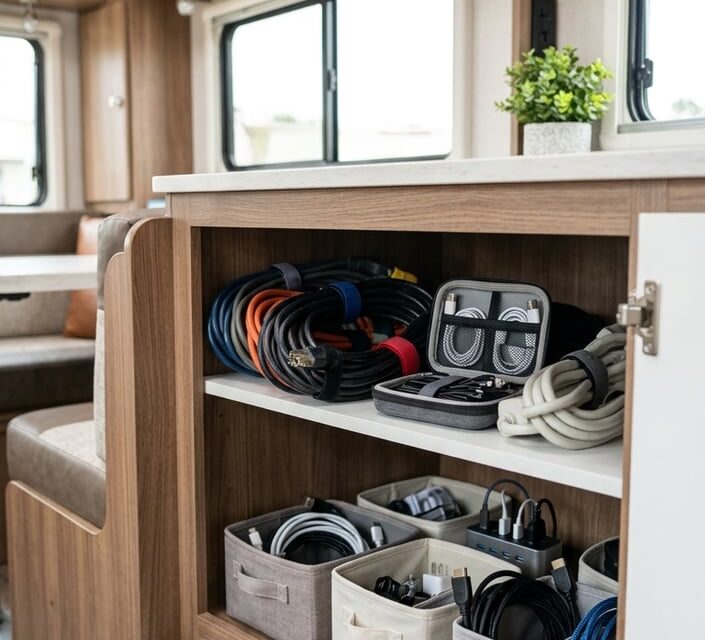
Loose cables take up drawer space, snag on gear, and slow your campsite setup. These 10 genius RV storage hacks for cables and cords in a clutter-free RV give each cord a compact, easy-to-find home.
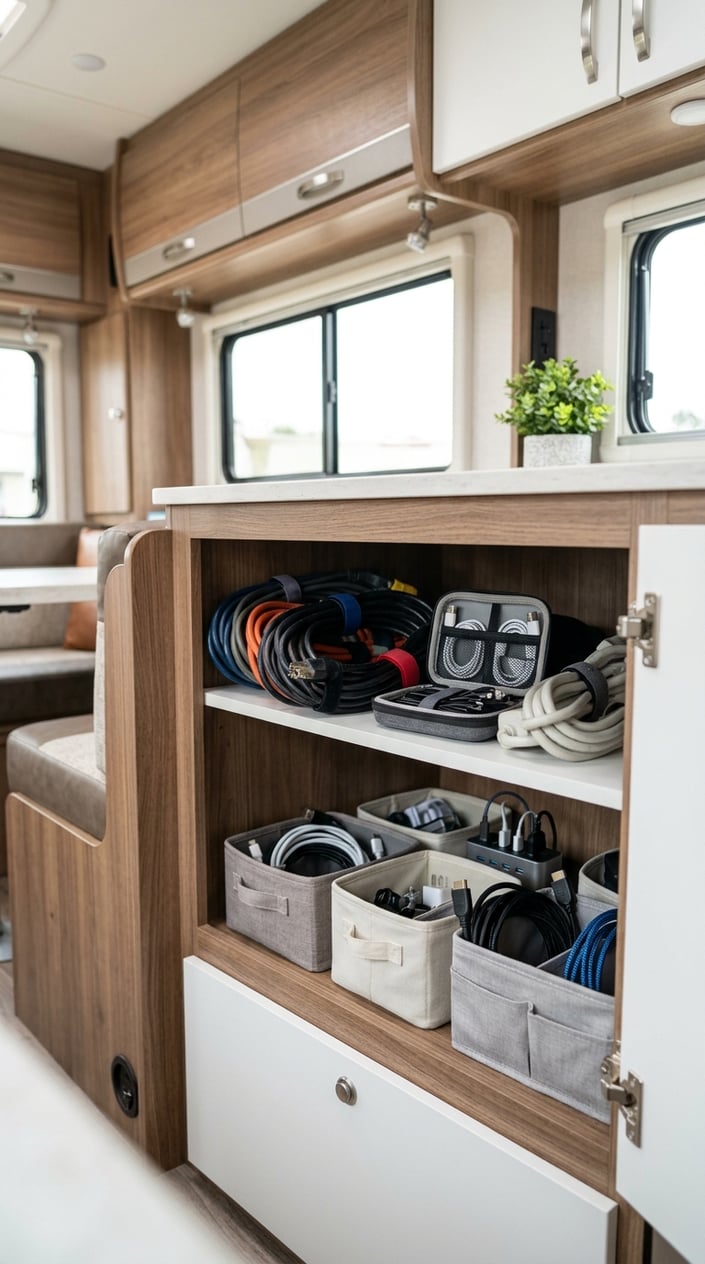
You can keep RV cords tidy with reusable ties, a reel for bulky power cords, and storage that fits each cable’s size and use. Start with the cords you reach for most, then assign larger cables and spare adapters their own spots.
1) Velcro One-Wrap Ties for Coiling Cords
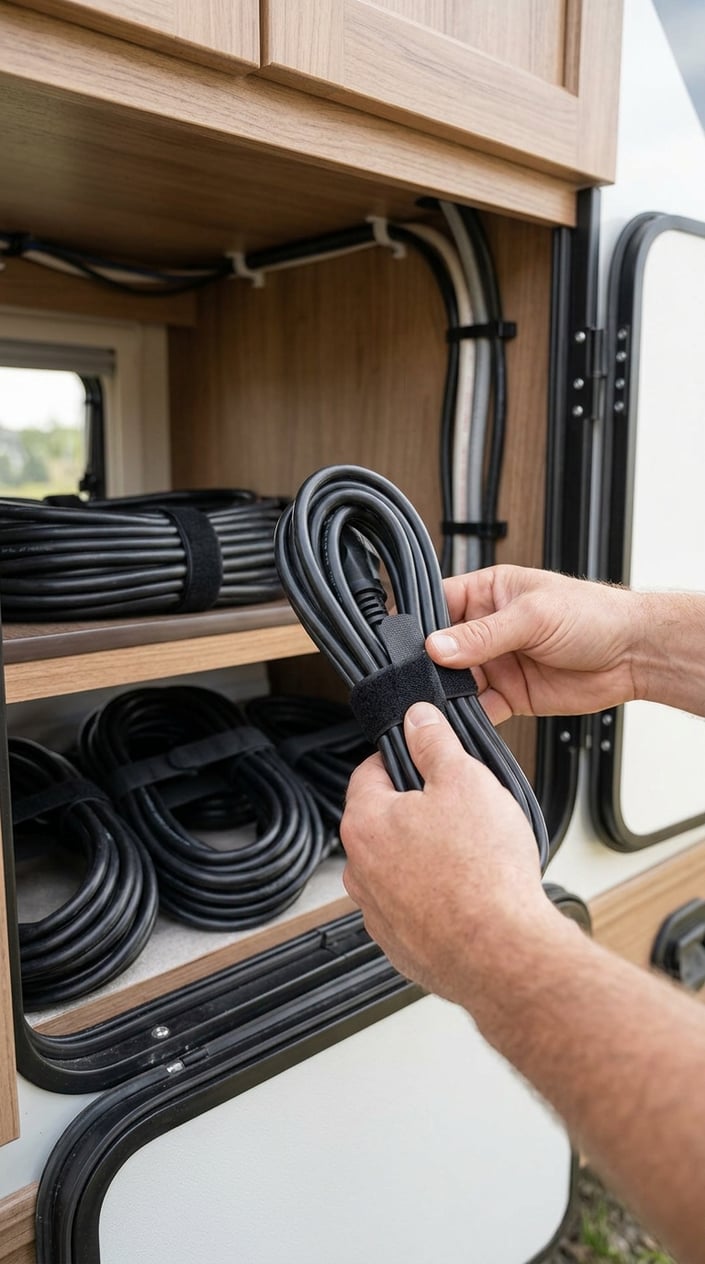
Reusable Velcro One-Wrap ties keep everyday cables coiled and easy to grab. Gather each cord into a loose loop, wrap the tie around the center, and fasten it without pulling tight.
Keep a few ties near your charging station for phone cables, USB cords, and small appliance leads. You can adjust the wrap as the coil changes, then attach a small label to identify each cable. For a bulky extension cord, choose a reel or larger strap that fits its weight and diameter.
2) Heavy-Duty Extension Cord Reel
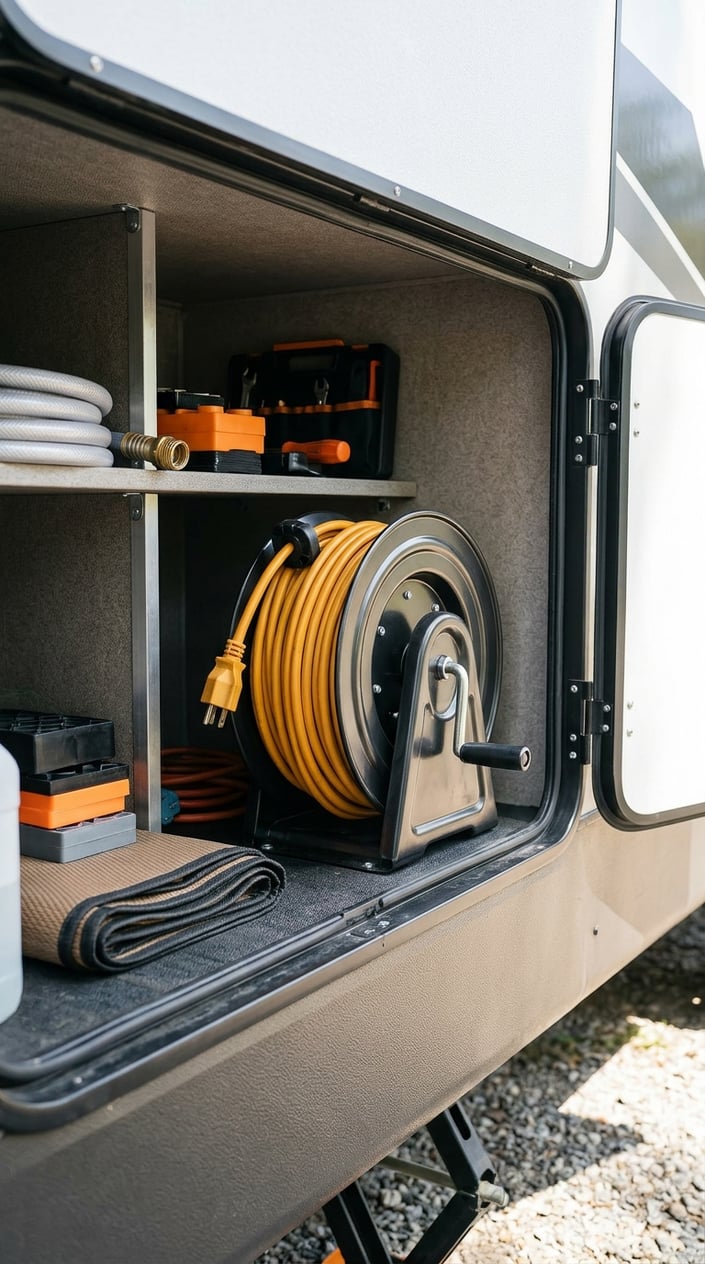
A heavy-duty cord reel keeps a long RV extension cord contained and ready for campsite hookups. Choose a reel sized for the cord’s length and gauge, then wind the cord evenly so it stays within the reel’s edges.
Store the reel in an exterior bay where you can reach it during setup. Before winding, unplug the cord and check that it is dry and free of damage. When using a cord under electrical load, follow its instructions and rating, and uncoil it as directed to help prevent heat buildup.
3) PVC Pipe Sleeves for Coiled Cables
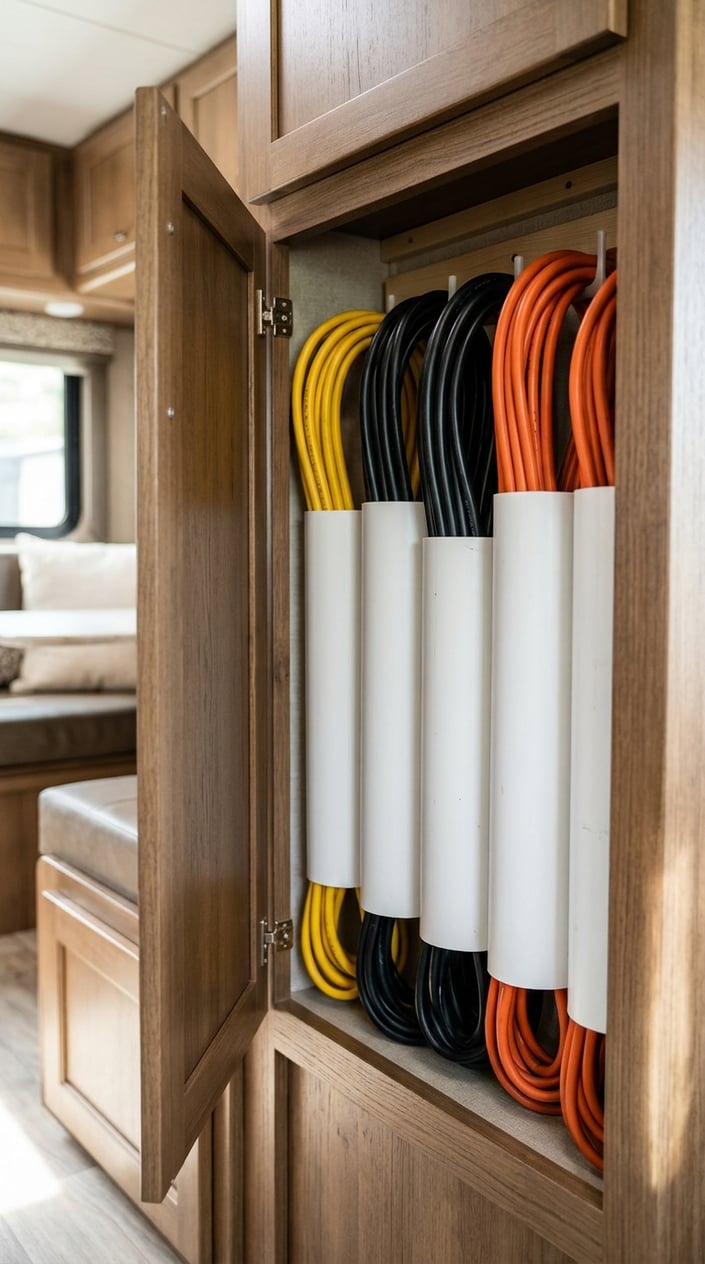
PVC pipe sleeves give you simple, separate slots for coiled cables. Choose pipe with enough diameter for each coil, cut sections to fit your cabinet or bay, and smooth every cut edge before storing cords inside.
Stand the sleeves upright in a bin or secure them in a cabinet so they do not roll during travel. Leave both ends open for easy access, and use a label on each sleeve for quick identification. Keep only unplugged, dry cords in the pipes.
4) Clear, Labeled Bins for RV Storage Bays
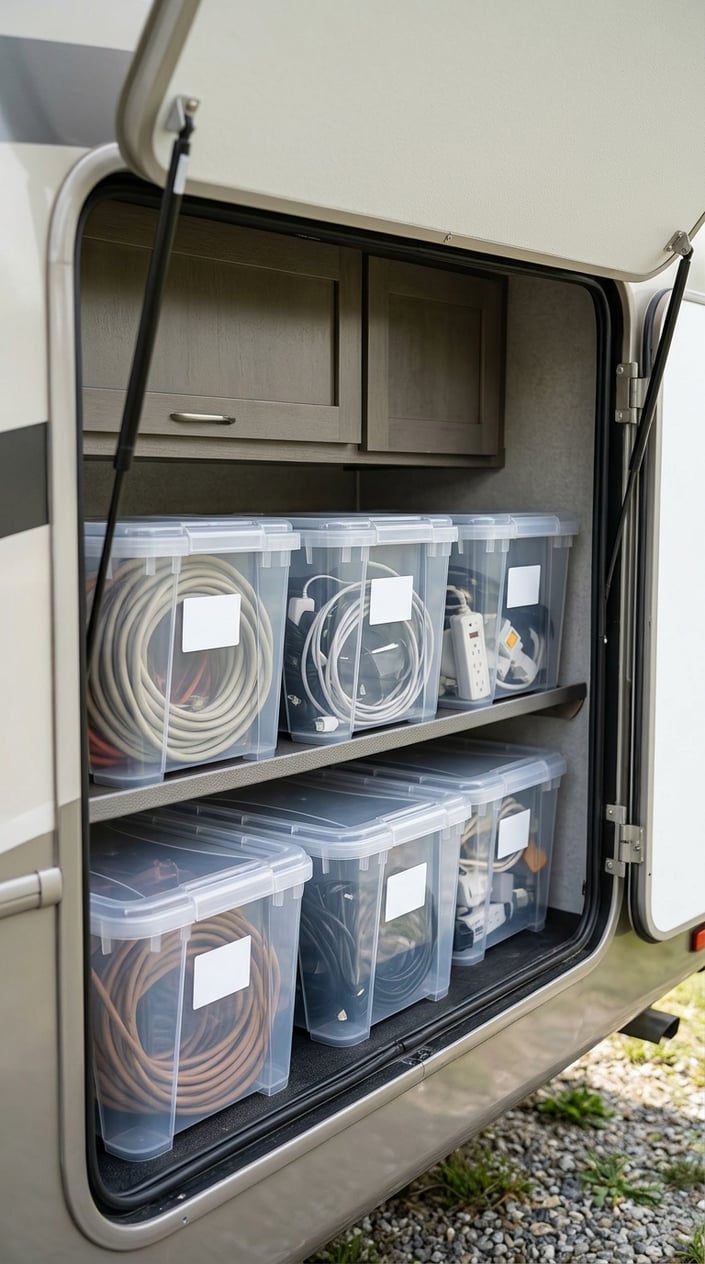
Clear bins let you see your stored cords without unloading the entire bay. Sort cables by purpose, such as campsite power, outdoor lighting, or spare electronics, and label the front of each container.
Measure the bay opening before you buy bins, then leave room to lift each one out. Use lidded containers for dusty compartments, and avoid packing cords so tightly that connectors or insulation get pinched. A smaller bin inside the main tote keeps adapters from sinking beneath a large cord coil.
5) Padded Cable Organizer Pouch for Electronics
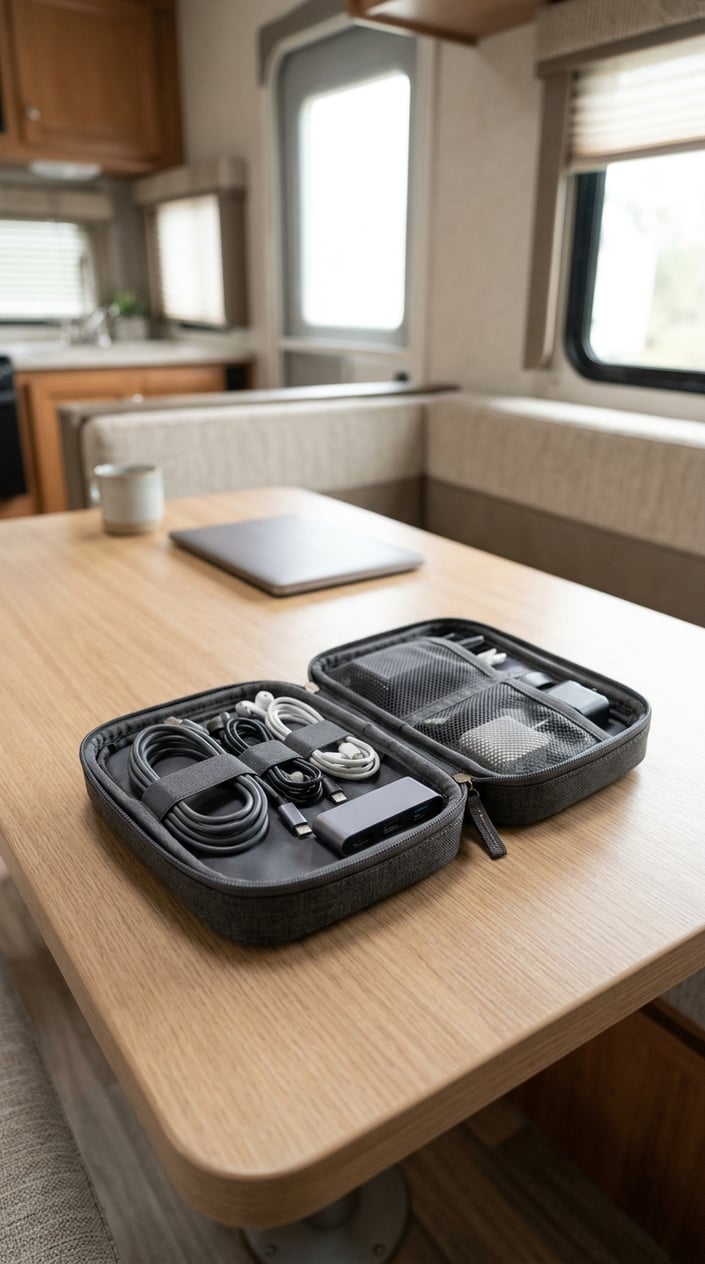
A padded organizer pouch keeps your charging cables and small electronics together inside the RV. Pick one with separate pockets or elastic loops so cords, earbuds, and compact chargers stay sorted.
Coil each cable loosely and secure it with a small tie before placing it in a pocket. Keep the pouch in a drawer or dinette compartment you can reach from your usual charging spot. A pouch also makes it easier to carry your everyday cables between the RV and your destination.
6) Adhesive Cable Clips at a Charging Station
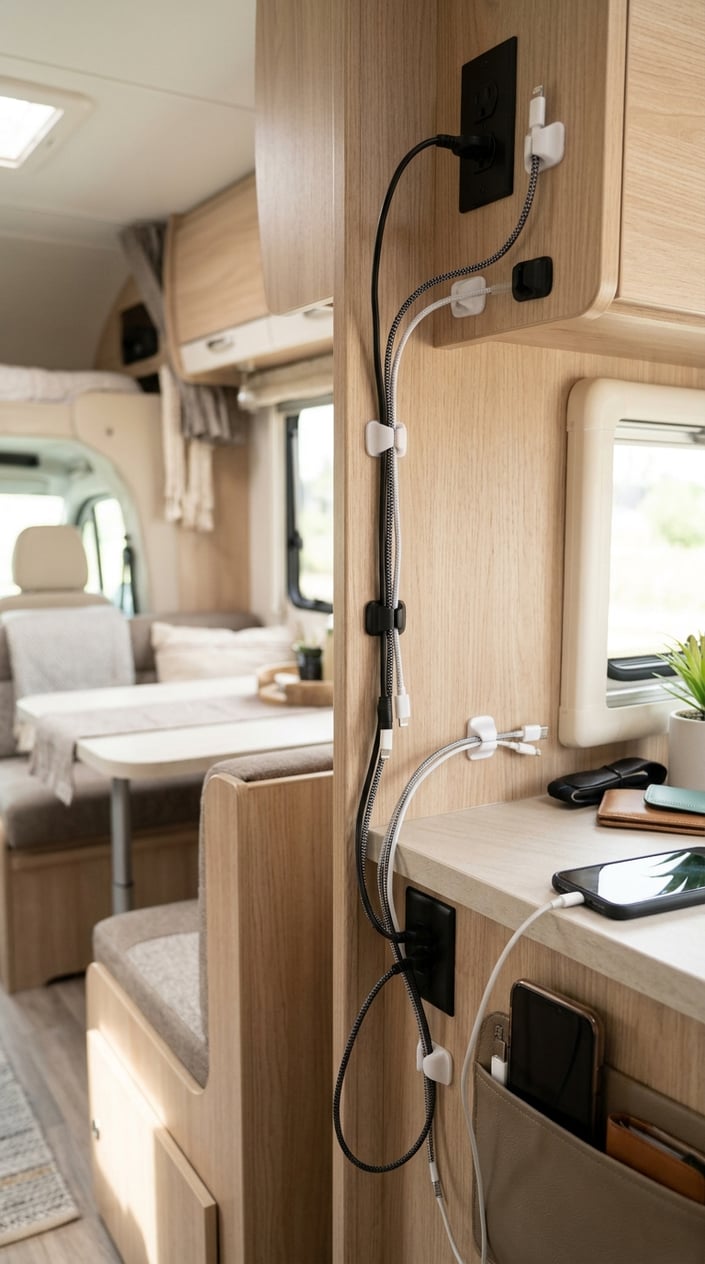
Adhesive cable clips keep charging leads in place beside your RV’s charging station. Clean and dry the mounting surface, press each clip onto a smooth area, and follow the adhesive’s set time before routing a cord through it.
Place clips where you can reach a phone or tablet without stretching the cable across a walkway. Match the clip opening to the cord diameter so the cable rests securely without being squeezed. Check that the clip adhesive suits the surface you plan to use.
7) Wall-Mounted Hooks for Frequently Used Cords
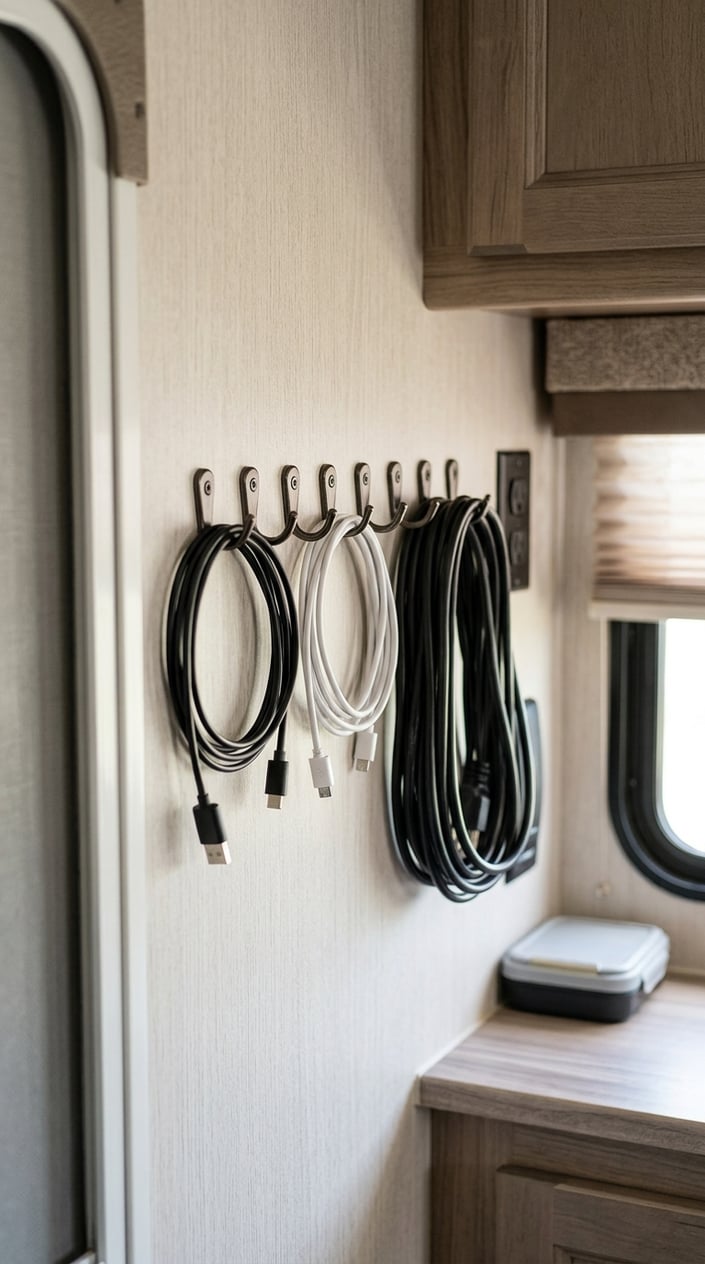
Wall-mounted hooks give frequently used cords a clear home near an entry or utility area. Choose hooks with enough capacity for the cord’s weight, and mount them on a solid surface where hanging loops will stay clear of doors and walkways.
Coil each cord loosely before hanging it, and use a separate hook for each one. Adhesive hooks suit lightweight cables on smooth surfaces; heavier cords need a mounting method rated for their load. Stow hanging cords before driving.
8) Color-Coded Tags for Quick Cord Identification
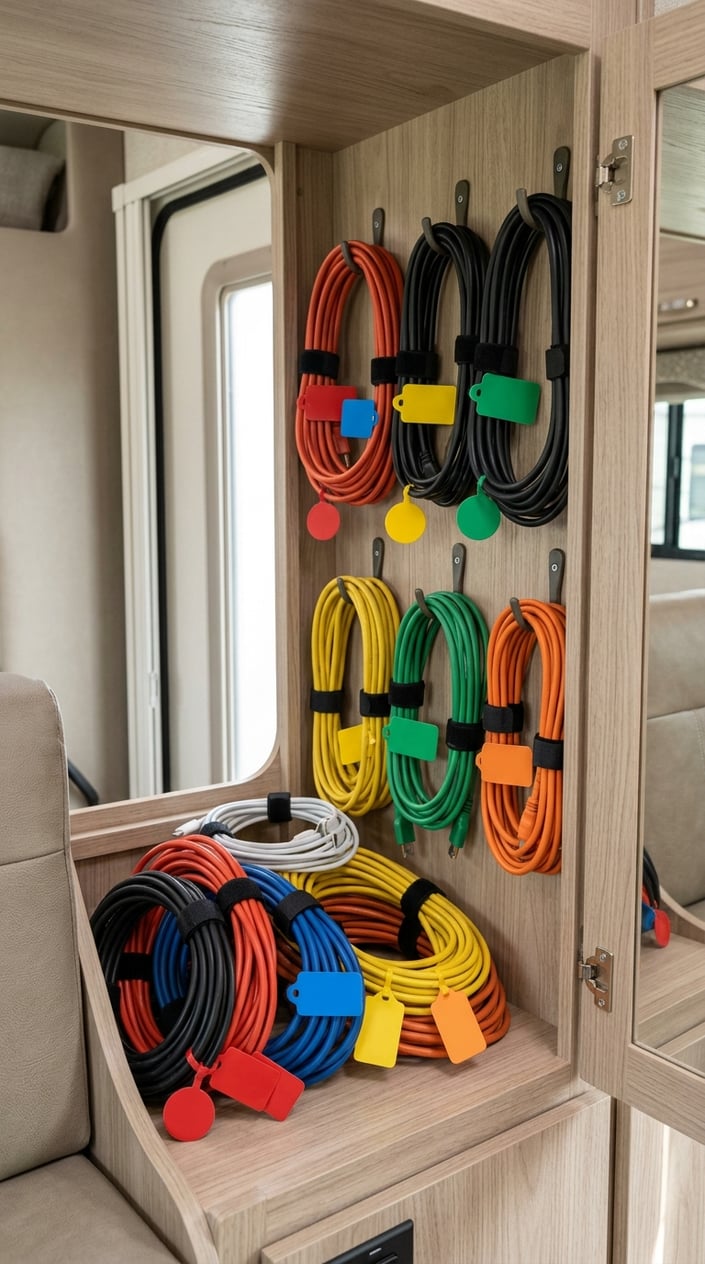
Color-coded tags help you identify a cord at a glance. Assign a color to each use, such as blue for electronics and orange for outdoor gear, then use that same system on the cable and its storage spot.
Attach tags near the plug without covering safety labels or blocking the connector. Add a short written label too, so the system stays clear if you add more cords later. Choose tags that stay fastened through regular handling.
9) Mesh Bags for Adapters and Short Cables
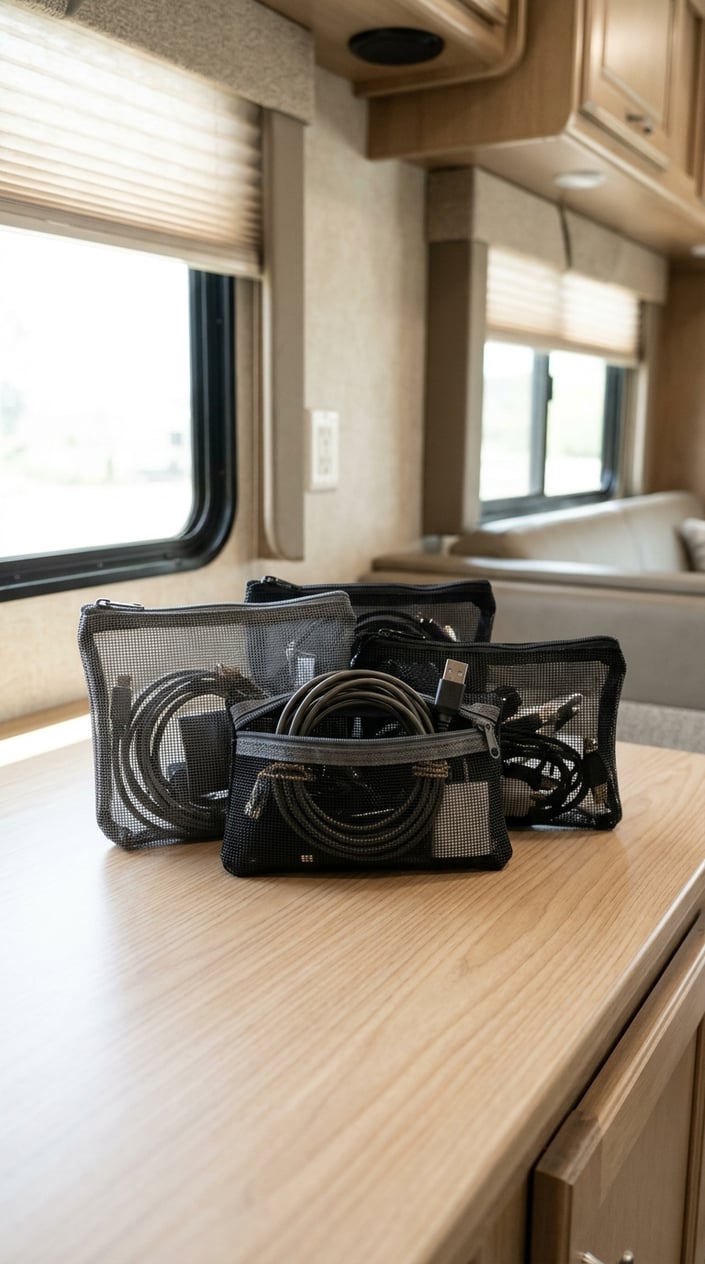
Mesh bags keep small adapters and short cables together while letting you see what is inside. Use one pouch for USB adapters, another for video cables, and a separate one for spare connectors.
Choose a zipper pouch sized to its contents so pieces do not collect at the bottom of an oversized bag. Label each pouch and store it in a cubby or bin where it will stay upright. Keep plugs and adapters dry before packing them.
10) Bungee Straps to Secure Coils in the Basement
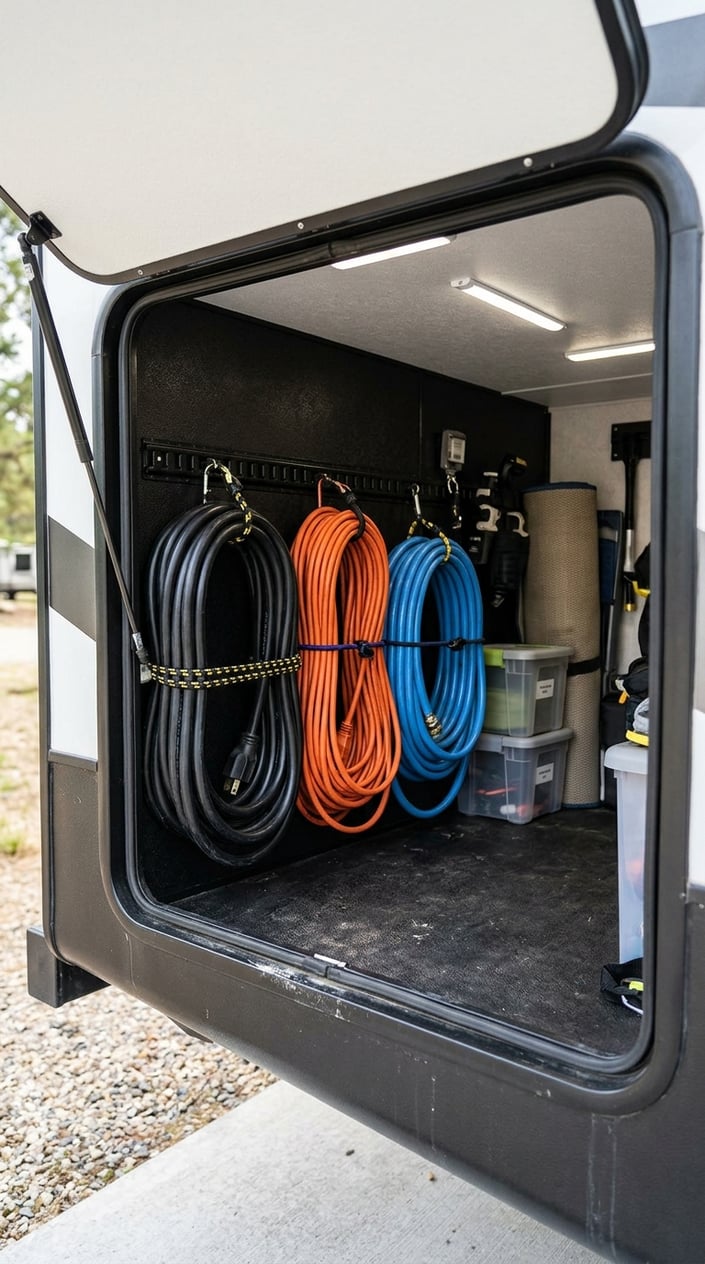
Bungee straps help hold larger cord coils in place inside an RV basement compartment. Secure the strap to suitable anchor points, then place it across the coil with enough tension to prevent movement without crushing the cord.
Keep connectors tucked inside the coil or protected from knocks, and leave clearance around compartment doors and stored gear. Check the strap and its attachment points for wear before each trip. Store cords dry and unplugged.
How to Choose a Cord Storage Method
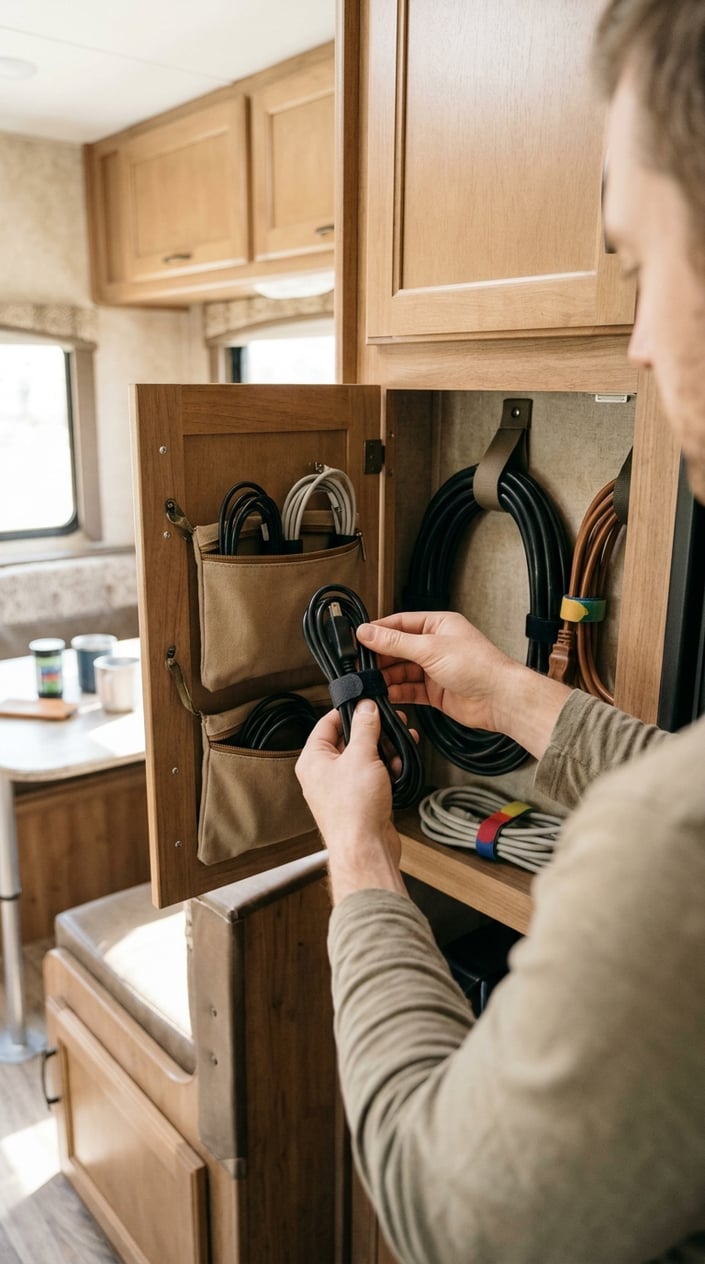
Choose a storage method by matching it to the cord’s access needs, size, and exposure to dirt or moisture. Keep your routine simple: place each cable where you can reach it safely and return it to the same spot.
Which cords need quick access?
Keep daily-use charging cables in a pouch or by a charging station with cable clips. Store campsite power cords near the exterior bay you use for hookups, with the reel or coil easy to lift out.
Put spare adapters and seasonal cables in labeled bins or mesh bags. This arrangement gives you a fast grab for common tasks while keeping less-used gear out of the main living area.
How much space can you dedicate to storage?
Measure the cabinet, drawer, or storage bay before choosing bins, reels, or pipe sleeves. Include the space needed to lift out a container and open its lid.
Use ties or a pouch for a small drawer, and reserve a larger bin or reel for bulky cords. If one compartment holds several cable types, divide it with smaller labeled containers to keep items sorted.
Do your cords need extra protection from moisture or dirt?
Use a lidded bin for cords stored in a dusty exterior bay, and make sure everything is dry before packing. A pouch helps keep small electronics cables together inside the RV.
Check plugs and cord jackets before storage. Keep power cords away from sharp edges and chemicals, and follow the cord maker’s guidance for storage and care.
How to Keep Cords Secure While Traveling
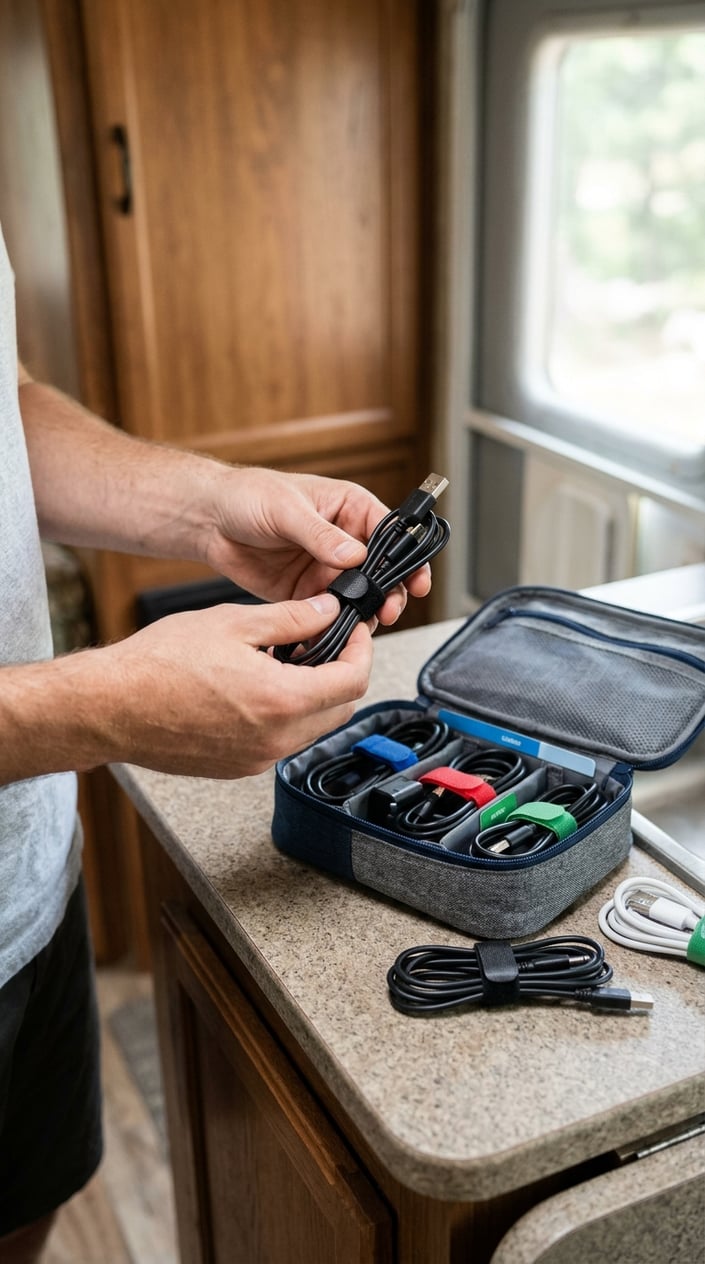
Secure each coil inside a closed bin, pouch, reel, or mounted holder before you drive. A quick check of the compartment and its contents helps keep cords from shifting into doors, hinges, or other gear.
How can you stop stored cords from shifting?
Use a tie or strap to hold each coil, then place it in a bin that fits without excess empty space. Add a divider or a small piece of non-slip liner if items slide inside the container.
Close lids and secure loose pouches before placing them in a storage bay. Keep heavy cords low and fasten hooks or straps to stable mounting points rated for the load.
What should you check before driving?
Check that each cord is unplugged, coiled, and secured in its assigned spot. Make sure connectors are protected and nothing blocks a compartment latch.
Look over straps, ties, and hooks for damage, then close and latch the storage doors. Stow any cord hanging near a walkway or doorway before you set off.