Thousands of Americans are packing up their lives, hitching their RVs, and heading to places most people wouldn’t expect. Forget the usual suspects like Austin or Nashville—the migration map has completely changed. From mountain towns in Tennessee to prairie cities in the Dakotas, the 10 unexpected cities Americans are moving to represent a dramatic shift in how people choose where to live. These aren’t just relocation trends; they’re opportunities for RV lovers to discover incredible destinations that combine affordability, natural beauty, and genuine community.
Key Takeaways
- Knoxville, Tennessee leads all cities with a 1.61 in-to-out move ratio, making it the #1 unexpected destination for relocators[2][6]
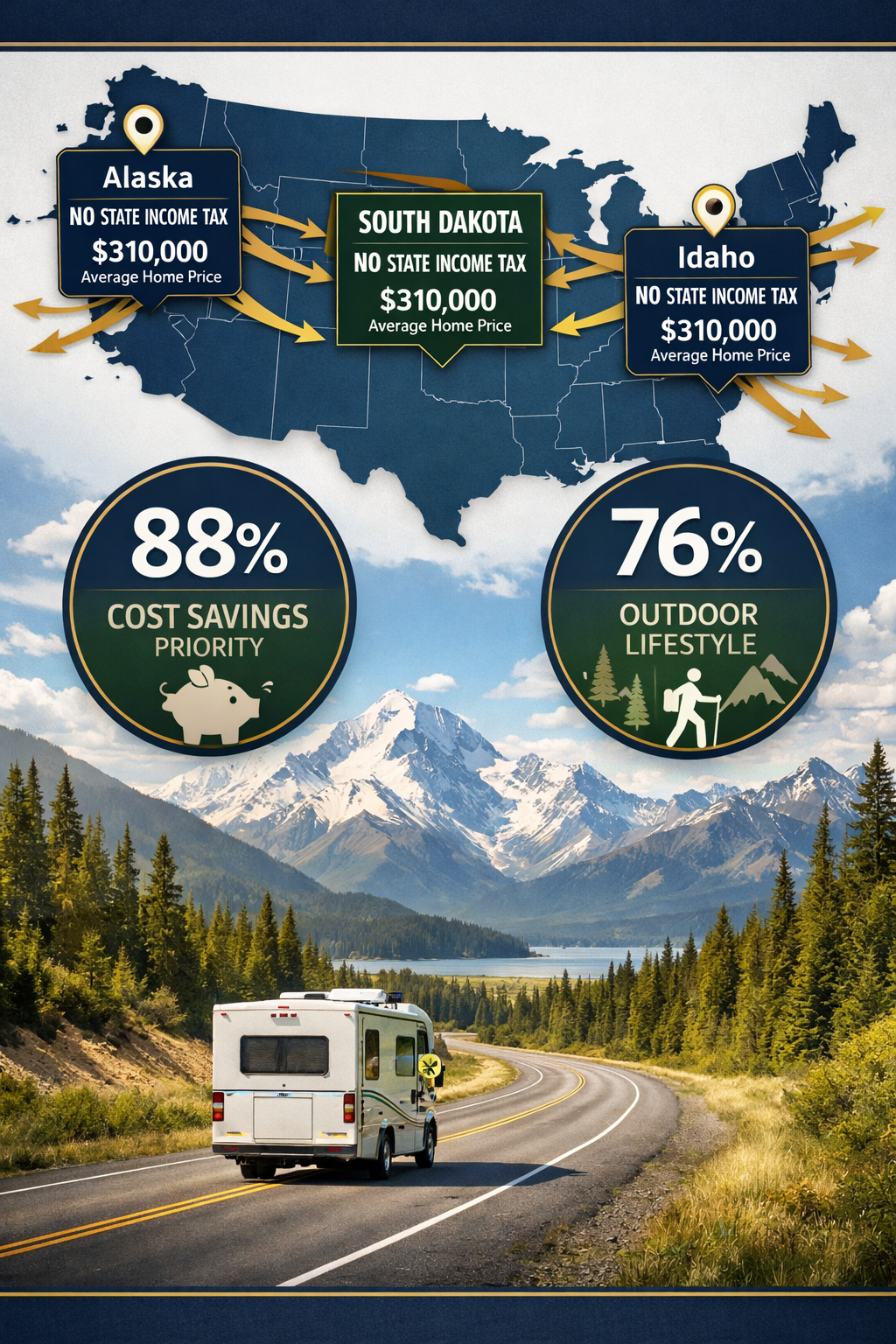
- South Dakota tops state destinations with 11,000 more people moving in than leaving, offering no state income tax and $310,000 average home prices[3]
- 88% of movers prioritize cost savings while 76% seek better outdoor lifestyle access, driving migration to mid-sized cities over major metros[3]
- Remote work flexibility enables professionals to leave expensive coastal cities for affordable alternatives while maintaining their careers[1]
- University towns and revitalized downtowns have replaced traditional big cities as America’s most desirable destinations
Why Americans Are Choosing Unexpected Destinations
Would you like to save this article?
The migration patterns shaping America today look nothing like they did just a few years ago. Remote work has fundamentally changed where people can live, freeing professionals from expensive coastal cities. Instead of cramming into overpriced apartments in Los Angeles or Washington, DC, Americans are discovering that quality of life matters more than zip code prestige[1].
Cost savings drive the majority of these decisions. With 88% of movers citing affordability as their primary motivation, it’s no wonder people are leaving behind $3,000 monthly rents for mortgage payments half that size[3]. But it’s not just about money—76% of relocators specifically seek better access to outdoor recreation, hiking trails, and natural beauty[3].
Mid-sized university towns have emerged as the sweet spot, offering cultural amenities, educated populations, and affordable housing that major metros can’t match anymore[1]. For RV enthusiasts, these destinations provide the perfect base camp: lower costs mean more money for adventures, while proximity to nature means endless exploration opportunities.
1. Knoxville, Tennessee: The #1 Unexpected Migration Leader
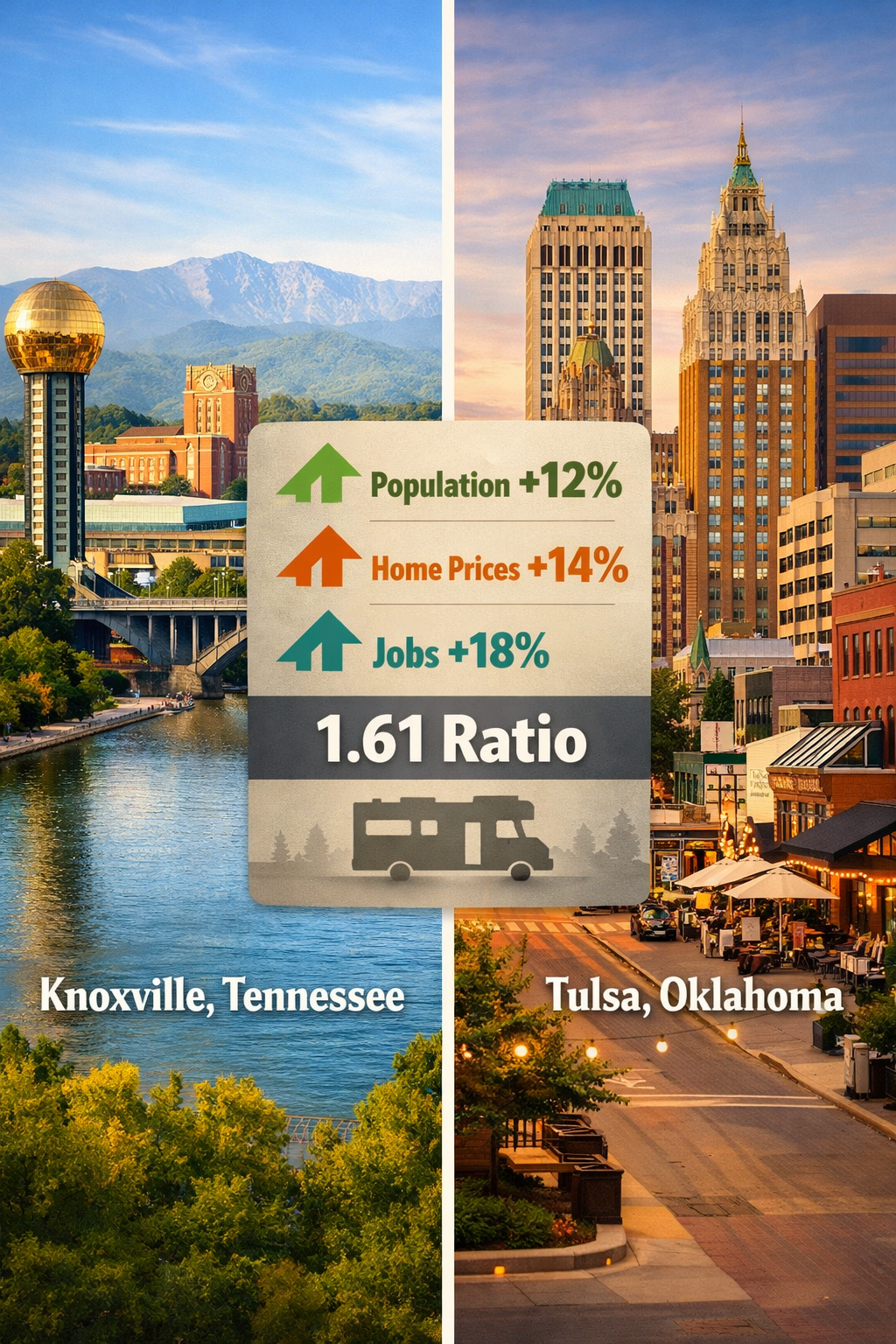
🏔️ Knoxville takes the crown as the most unexpected city Americans are moving to, with a staggering 1.61 ratio—meaning for every person who leaves, more than one and a half new residents arrive[2][6]. This East Tennessee gem sits at the gateway to the Great Smoky Mountains, offering unparalleled access to America’s most-visited national park.
The University of Tennessee brings vibrant energy, cultural events, and a steady stream of young professionals who often stay after graduation. Downtown Knoxville has transformed into a foodie paradise with craft breweries, farm-to-table restaurants, and a thriving arts scene that rivals cities twice its size.
Why RV lovers are choosing Knoxville:
- Multiple RV-friendly campgrounds within 30 minutes of downtown
- Year-round access to hiking, kayaking, and mountain biking
- Affordable cost of living compared to other Southern cities
- Mild winters that extend the camping season
The housing market remains accessible, with home prices well below national averages. Combined with Tennessee’s lack of state income tax, Knoxville offers financial breathing room that coastal cities simply can’t provide.
2. Tulsa, Oklahoma: Downtown Revitalization Success Story
Tulsa captures the #2 spot among unexpected cities, proving that previously declining urban areas can stage remarkable comebacks[2]. This Oklahoma powerhouse has invested heavily in downtown revitalization, creating a walkable urban core filled with Art Deco architecture, innovative restaurants, and cultural attractions.
The Tulsa Remote program has attracted hundreds of remote workers by offering $10,000 to relocate, demonstrating the city’s commitment to growth. But beyond incentives, Tulsa offers genuine value: affordable housing, low traffic, and a welcoming community that embraces newcomers.
What makes Tulsa special:
- Thriving arts district with galleries and performance venues
- Cost of living 15-20% below national average
- Growing tech and entrepreneurship ecosystem
- Easy access to Oklahoma’s lakes and outdoor recreation
For RV travelers, Tulsa serves as an excellent hub for exploring the Great Plains while enjoying urban amenities when desired.
3. Vancouver, Washington: Pacific Northwest Without Portland Prices
Nestled just across the Columbia River from Portland, Vancouver, Washington offers all the Pacific Northwest appeal without the crushing costs[2]. This strategic location provides access to Portland’s job market, cultural scene, and airport while maintaining Washington’s lack of state income tax—a combination that saves residents thousands annually.
The city blends urban convenience with outdoor adventure. Mount St. Helens, the Columbia River Gorge, and countless hiking trails sit within easy driving distance. The waterfront has been completely redeveloped, creating parks, walking paths, and community gathering spaces.
Vancouver advantages:
- No state income tax (unlike neighboring Oregon)
- Lower housing costs than Portland metro
- Access to both Washington and Oregon recreation
- Growing downtown with local businesses
RV enthusiasts appreciate Vancouver’s proximity to incredible camping destinations while maintaining access to big-city amenities when needed.
4. South Dakota: The State Leading Migration Numbers
While not a single city, South Dakota deserves recognition as the top destination state with approximately 11,000 more people moving in than leaving[3]. Cities like Sioux Falls and Rapid City are experiencing unprecedented growth, driven by factors that appeal directly to value-conscious Americans.
No state income tax ranks as South Dakota’s biggest draw, allowing residents to keep more of their earnings. Average home prices around $310,000 remain accessible compared to coastal markets where starter homes exceed $700,000[3]. The state’s business-friendly environment attracts entrepreneurs and remote workers alike.
| South Dakota Benefits | Details |
|---|---|
| State Income Tax | 0% |
| Average Home Price | $310,000 |
| Net Migration | +11,000 residents |
| Business Climate | Top 10 nationally |
The Black Hills region around Rapid City offers stunning natural beauty, while Sioux Falls provides urban amenities and a surprisingly vibrant cultural scene. For RV travelers, South Dakota represents the ultimate freedom: affordable living, incredible landscapes, and endless exploration opportunities.
5. Alaska: Remote Work Meets Last Frontier
Alaska ranks as the #1 state destination according to moveBuddha forecasts, attracting remote workers who prioritize outdoor lifestyles above all else[6]. This might seem counterintuitive—Alaska’s harsh winters and remote location traditionally deterred settlers. But today’s digital nomads see opportunity where previous generations saw obstacles.
The state offers lower living costs than many assume, particularly in cities like Anchorage and Fairbanks. Housing prices remain reasonable, and the lack of state sales tax helps offset higher grocery costs. The Alaska Permanent Fund Dividend provides annual payments to residents, essentially paying people to live there.
Alaska’s unique appeal:
- Unmatched wilderness access and wildlife viewing
- Strong remote work infrastructure in major cities
- Permanent Fund Dividend annual payments
- Adventure opportunities year-round
For RV enthusiasts, Alaska represents the ultimate bucket list destination. The Alcan Highway journey alone provides memories for a lifetime, while the state’s RV-friendly culture ensures plenty of camping options.
6. Boise, Idaho: Continued Western Migration Hub
Idaho led all states for inbound moves in recent years, and Boise continues attracting newcomers despite rising prices[1]. This capital city combines outdoor recreation with a growing tech sector, creating opportunities for both career advancement and adventure.
The Boise River Greenbelt provides 25 miles of trails through the city, while world-class skiing sits just an hour away. The downtown core has evolved into a foodie destination with craft breweries, farm-to-table dining, and a thriving local business scene.
Boise highlights:
- Four distinct seasons with mild winters
- Growing job market in tech and healthcare
- Extensive trail systems and outdoor access
- Strong sense of community
Housing costs have increased but remain below coastal markets. For RV lovers, Boise offers the perfect combination: a livable city with immediate access to Idaho’s incredible wilderness.
7. Greenville, South Carolina: Southern Charm Meets Modern Growth
Greenville exemplifies the Southern migration trend, attracting retirees and career movers seeking quality of life[2]. This upstate South Carolina city has transformed its downtown into a pedestrian paradise, complete with a stunning waterfall right in the city center.
The region’s mild climate allows year-round outdoor activities, while the Blue Ridge Mountains provide weekend escape options. Major employers like BMW and Michelin offer career opportunities, while the cost of living remains remarkably affordable.
Greenville advantages:
- Revitalized downtown with local businesses
- Mild climate with four gentle seasons
- Growing job market in manufacturing and healthcare
- Proximity to mountains and beaches
RV travelers appreciate Greenville’s location—equidistant from mountains and coast, making it an ideal base for exploring the Southeast.
8. Fayetteville, Arkansas: Ozark Mountain University Town
Arkansas shows fast-growing relocation interest despite its smaller population, with Fayetteville leading the charge[2]. Home to the University of Arkansas, this mountain town combines college-town energy with outdoor recreation and surprisingly sophisticated cultural amenities.
The Ozark Mountains provide endless hiking, mountain biking, and scenic drives. Fayetteville’s downtown square hosts farmers markets, festivals, and community events that create genuine connection among residents.
Fayetteville benefits:
- Extremely affordable cost of living
- University-driven cultural scene
- Mountain biking trails rated among nation’s best
- Growing entrepreneurship ecosystem
For RV enthusiasts, Northwest Arkansas offers incredible value and access to underrated natural beauty that rivals more famous destinations.
9. Asheville, North Carolina: Blue Ridge Mountain Paradise
While North Carolina continues drawing residents across multiple cities, Asheville stands out for its unique character[2]. This mountain city has long attracted artists, retirees, and outdoor enthusiasts, but recent growth has accelerated as remote workers discover its charms.
The Blue Ridge Parkway provides access to countless hiking trails, waterfalls, and scenic overlooks. Downtown Asheville features more breweries per capita than almost any American city, along with farm-to-table restaurants and thriving arts scene.
Asheville highlights:
- Stunning mountain scenery and outdoor access
- Vibrant arts and music culture
- Craft beverage scene (breweries, cideries, distilleries)
- Mild four-season climate
Housing costs have risen but remain below major metros. RV travelers find numerous campgrounds in the surrounding mountains, making Asheville an excellent extended-stay destination.
10. Rapid City, South Dakota: Gateway to National Treasures
Rapid City serves as the western anchor of South Dakota’s migration boom, offering something truly unique: proximity to Mount Rushmore, Badlands National Park, and the Black Hills[3]. This city combines Western heritage with modern amenities and incredible outdoor access.
The lack of state income tax and affordable housing attract families and retirees, while the tourism industry provides employment opportunities. The climate offers four distinct seasons, and the lower humidity makes summer heat more bearable than Southern alternatives.
Rapid City advantages:
- Gateway to multiple national parks and monuments
- No state income tax
- Affordable housing market
- Strong tourism economy
For RV enthusiasts, Rapid City represents the ultimate basecamp. Countless campgrounds surround the city, while the region’s attractions could fill months of exploration.
Understanding the Migration Patterns Behind These Unexpected Cities
The movement toward these unexpected destinations reflects fundamental shifts in American priorities. Remote work flexibility has severed the connection between employment and location for millions of professionals[1]. When geography no longer constrains career options, people choose based on lifestyle, affordability, and community.
“Americans overwhelmingly stay within their home region, trading expensive cities for nearby affordable alternatives that match budget and lifestyle preferences.”[5]
This regional loyalty means most relocators aren’t making cross-country moves. Instead, they’re finding better value within their familiar area—leaving Seattle for Spokane, or San Francisco for Boise. The pattern represents optimization rather than complete reinvention.
Mid-sized university towns check multiple boxes: educated populations, cultural amenities, healthcare infrastructure, and affordable housing[1]. These cities offer big-city benefits without big-city problems like traffic, crime, and crushing costs.
What These Trends Mean for RV Enthusiasts
The 10 unexpected cities Americans are moving to create exciting opportunities for RV travelers. These destinations offer:
✅ Affordable extended stays – Lower campground costs and living expenses allow longer visits
✅ Improved infrastructure – Growing cities invest in RV parks, dump stations, and traveler amenities
✅ Community connection – Smaller cities foster genuine relationships with locals
✅ Outdoor access – Most unexpected destinations prioritize nature and recreation
✅ Discovery opportunities – Lesser-known cities offer authentic experiences without tourist crowds
Many RV enthusiasts use these migration trends to inform their travel plans, spending extended time in growing cities to evaluate them as potential home bases. The flexibility of RV living allows risk-free exploration—if a destination doesn’t fit, simply move to the next one.
Planning Your Visit to These Unexpected Destinations
For RV travelers interested in exploring these migration hotspots, planning makes the difference between good trips and great ones. Research campground availability well in advance, especially during peak seasons. Many of these cities have limited RV infrastructure compared to traditional tourist destinations.
Consider the seasons carefully. Knoxville and Greenville offer mild winters perfect for snowbird escapes, while Alaska and South Dakota shine during summer months. Shoulder seasons often provide the best combination of pleasant weather and lower crowds.
Connect with local communities through farmers markets, festivals, and community events. These unexpected cities welcome newcomers, and RV travelers often receive warm receptions when they engage authentically with local culture.
Budget for exploration. The money saved on affordable campgrounds and lower daily costs can fund adventures, dining experiences, and activities that create lasting memories.
The Future of American Migration
The trends driving people toward these unexpected cities show no signs of slowing. Remote work continues expanding, giving more Americans the freedom to prioritize lifestyle over location. As coastal cities grow increasingly expensive, the value proposition of mid-sized cities becomes more compelling.
Climate considerations also influence decisions. Cities in the Southeast and Mountain West offer milder weather than traditional Northern industrial cities, while avoiding the extreme heat and water concerns affecting the Southwest.
Infrastructure investments in these growing cities will improve quality of life further. As populations increase, so do amenities, cultural offerings, and economic opportunities—creating positive feedback loops that attract even more residents.
For RV enthusiasts, this means more destinations worth exploring, better facilities, and growing communities of like-minded travelers and locals who value outdoor lifestyles.
Conclusion: Discovering America’s Hidden Gems on Your Terms
The 10 unexpected cities Americans are moving to represent more than migration statistics—they’re invitations to discover incredible places that offer genuine value, natural beauty, and authentic community. From Knoxville’s mountain gateway to Alaska’s last frontier, these destinations prove that America’s best opportunities often hide in unexpected places.
For RV lovers, these trends create the perfect storm of opportunity. Affordable destinations with improving infrastructure and outdoor access align perfectly with the RV lifestyle. Whether seeking a new home base or planning epic adventures, these unexpected cities deserve spots on every traveler’s itinerary.
Take action today:
- Research campgrounds in your top three cities from this list
- Plan a visit during shoulder season for best weather and availability
- Connect with local RV clubs to learn insider tips and meet fellow travelers
- Budget extra time to truly experience each destination beyond tourist attractions
- Stay flexible and open to surprises—the best discoveries often come unexpectedly
The open road leads to countless possibilities. These unexpected cities prove that adventure, affordability, and community await those willing to explore beyond the obvious choices. Hitch up, head out, and discover why thousands of Americans are choosing these hidden gems as their next chapter.
References
[1] U S Migration Trends Why Americans Are Leaving Some States And Flocking To Others – https://www.thestreet.com/economy/u-s-migration-trends-why-americans-are-leaving-some-states-and-flocking-to-others
[2] Where Are People Moving Most In The U S In 2026 – https://gmsmobility.com/blog/where-are-people-moving-most-in-the-u-s-in-2026/
[3] Americans Leave Big Cities Rural States Migration Patterns Shift 2026 – https://www.foxnews.com/travel/americans-leave-big-cities-rural-states-migration-patterns-shift-2026
[5] On The Move Migration Patterns – https://institute.bankofamerica.com/economic-insights/on-the-move-migration-patterns.html
[6] – https://www.wsbtv.com/news/lsquoitrsquo-cities/RY4WPW6IAI44PBTKPFLPOINKQY/?outputType=amp