
You’re cruising down a dusty highway in your RV, the open road stretching before you, when suddenly you spot a weathered sign pointing toward an abandoned town. Your curiosity sparks—should you explore? The answer might surprise you: absolutely not. While ghost towns seem like the perfect off-the-beaten-path adventure, many of these forgotten places pose serious dangers to RV travelers, from unstable structures and hazardous materials to impassable roads that can leave your rig stranded. This guide reveals the 10 secret empty towns in the US to not visit on your next RV trip, helping you avoid costly mistakes and potentially dangerous situations that could turn your dream vacation into a nightmare.
Key Takeaways
- Many ghost towns feature hazardous conditions including unstable buildings, abandoned mine shafts, and contaminated sites that pose serious safety risks to visitors
- RV accessibility is severely limited in most abandoned towns due to narrow roads, poor pavement conditions, and lack of turnaround space for larger vehicles
- Legal issues abound with many ghost towns located on private property where trespassing can result in fines or worse
- Emergency services are virtually nonexistent in remote abandoned areas, meaning help could be hours away if something goes wrong
- Better alternatives exist that offer the ghost town experience with proper facilities, safety measures, and RV-friendly infrastructure
Why These 10 Secret Empty Towns in the US Should Stay Off Your RV Itinerary
Would you like to save this article?
Ghost towns hold an undeniable allure for adventurous travelers. The promise of stepping back in time, exploring forgotten Main Streets, and capturing Instagram-worthy photos of decaying buildings draws thousands of visitors each year. However, not all ghost towns are created equal—and some are downright dangerous for RV enthusiasts.
The reality behind many abandoned settlements reveals a darker picture. Crumbling structures can collapse without warning, old mine shafts create deadly pitfalls, and roads designed for horse-drawn carriages certainly weren’t built for modern motorhomes. Add in the legal complexities of trespassing on private property, and you’ve got a recipe for disaster that no amount of wanderlust can justify.
For RV travelers specifically, these locations present unique challenges. Your home-on-wheels requires adequate road width, stable surfaces, and turnaround space—luxuries that simply don’t exist in most abandoned towns. Getting stuck miles from civilization with a 30-foot trailer is nobody’s idea of a good time. 🚫
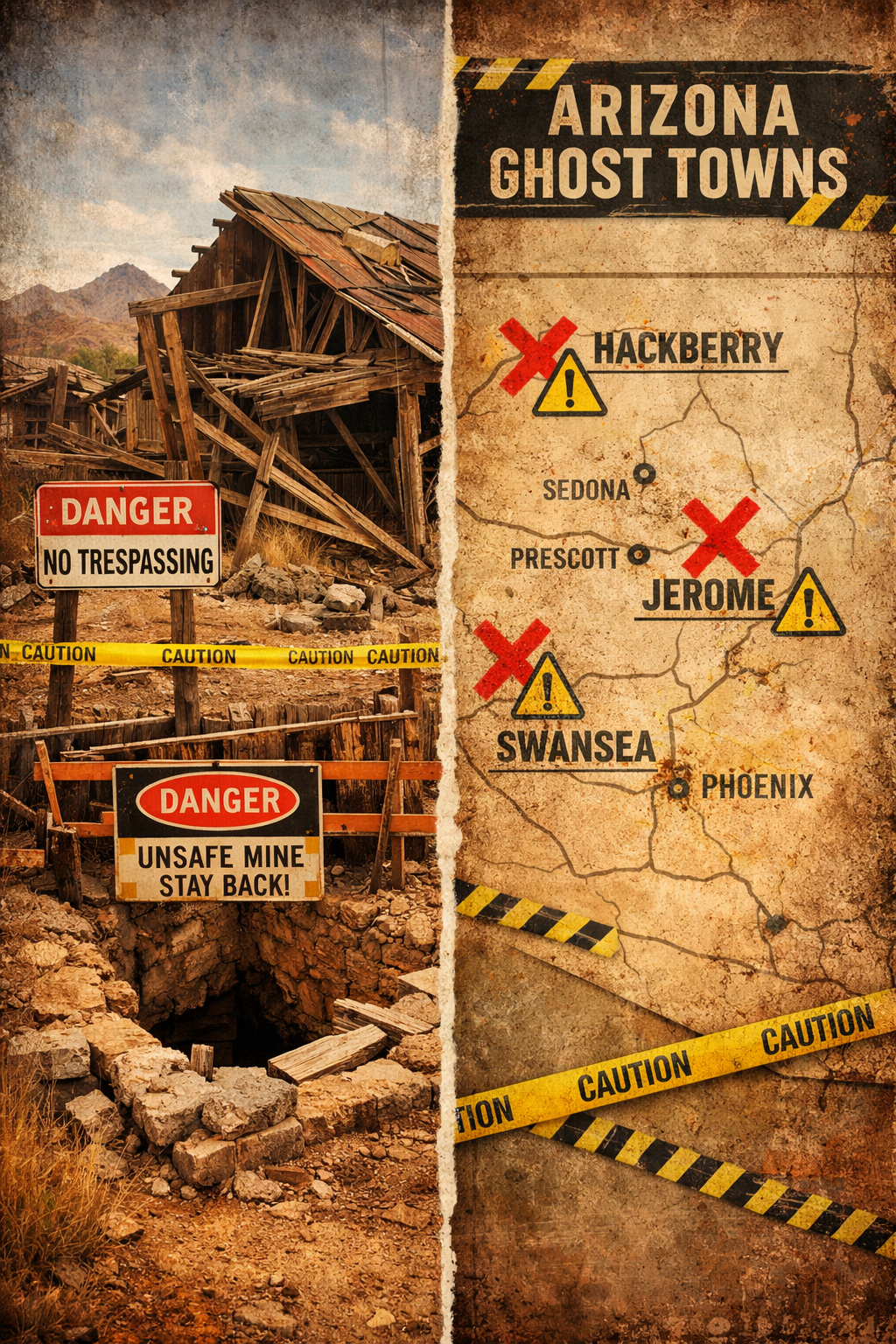
The Arizona Ghost Towns You Should Avoid
Hackberry: More Hazard Than History
Hackberry, Arizona might appear on tourist maps as a quirky Route 66 stop, but venturing beyond the small visitor area reveals serious problems. The town’s abandoned sections contain unstable structures and debris fields that pose risks to explorers[1]. While a small general store remains operational for tourists, the surrounding ghost town areas are largely off-limits and unsuitable for RV navigation.
The roads leading to the truly abandoned portions are narrow, unpaved, and riddled with potholes that can damage RV suspension systems. Local authorities have posted warnings about the dangers of exploring these areas without proper equipment and knowledge.
Goldfield: Fool’s Gold for RV Travelers
Located near the Superstition Mountains, Goldfield presents itself as a tourist-friendly ghost town, but this manufactured experience masks the genuine dangers lurking in the surrounding area[1]. The authentic abandoned sections of Goldfield contain:
- Abandoned mine shafts without proper barriers or warning signs
- Unstable wooden structures that could collapse
- Extreme temperature conditions (summer temperatures regularly exceed 115°F)
- Limited cell phone coverage for emergencies
The tourist area itself is cramped and difficult to navigate with larger RVs, making parking a significant challenge during peak seasons.
Jerome: The Town That Won’t Let Your RV Through
Perched precariously on Cleopatra Hill, Jerome’s steep, narrow streets are a nightmare for RV drivers[1]. This former copper mining town features:
| Challenge | Impact on RV Travelers |
|---|---|
| Grade | Streets with 15-20% inclines |
| Width | Roads as narrow as 12 feet |
| Parking | Virtually no RV-accessible spots |
| Turns | Hairpin curves unsuitable for trailers |
While Jerome has transformed into an arts community, its infrastructure remains from the early 1900s when automobiles were rare. Modern RVs simply don’t belong on these treacherous mountain roads.
Swansea: Isolation Meets Danger
Swansea represents one of Arizona’s most authentically preserved ghost towns—and one of its most dangerous[1]. Located in the remote desert, this abandoned copper mining town offers:
- No services for miles in any direction
- Roads that deteriorate rapidly and may be impassable after rain
- Extreme isolation with no cell phone coverage
- Contaminated soil from mining operations
The 4-mile dirt road leading to Swansea can become impassable for RVs, and there’s no guarantee you’ll be able to turn around once you arrive. The risk of getting stranded far outweighs any historical interest.
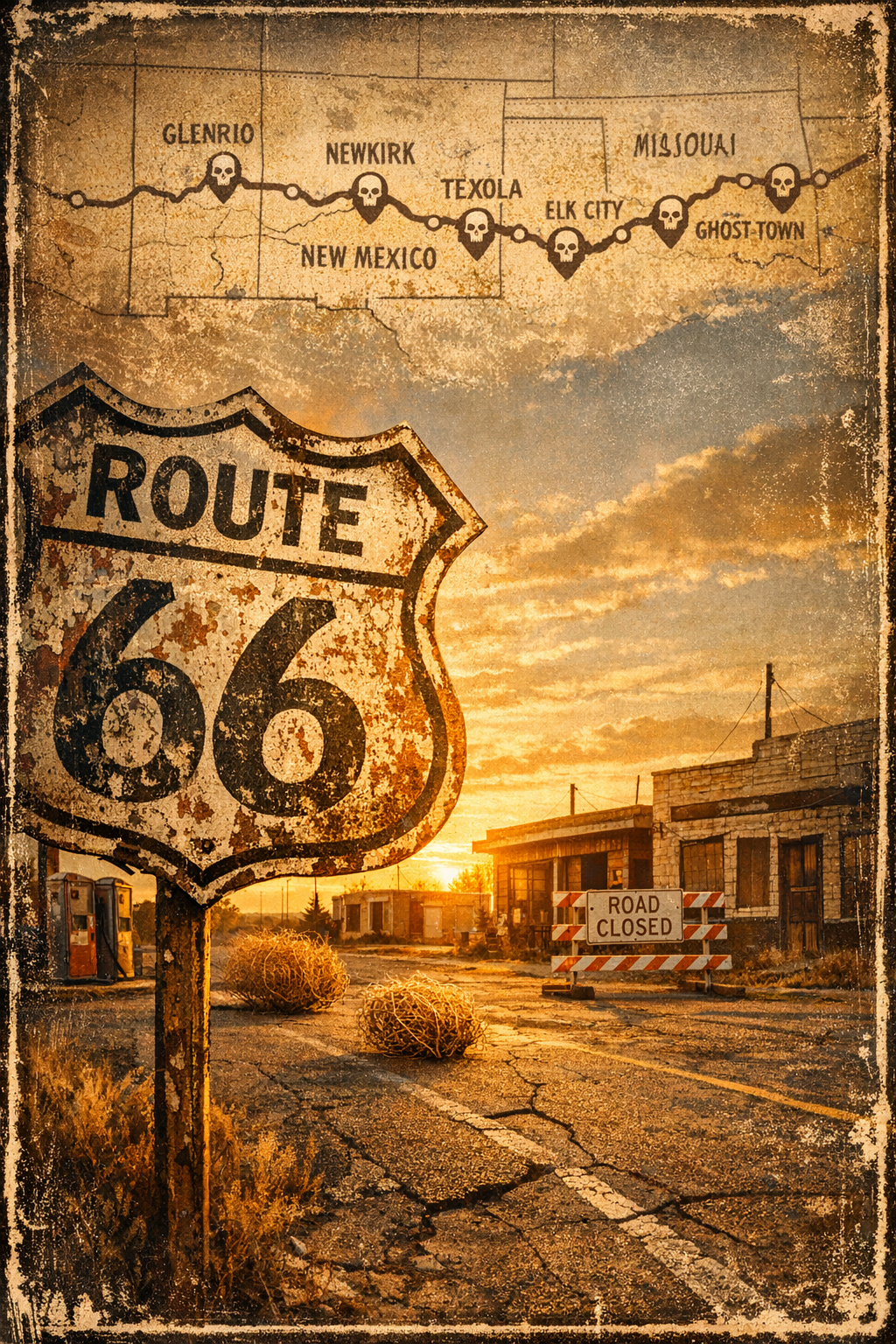
Route 66 Ghost Towns That Should Remain in Your Rearview Mirror
Glenrio: Straddling the Texas-New Mexico Border of Danger
Glenrio sits abandoned along Route 66, split between Texas and New Mexico, creating a jurisdictional gray area that complicates everything from property rights to emergency response[2]. This once-thriving stop for travelers now features:
- Collapsed buildings that could injure curious explorers
- Private property mixed with public areas, creating trespassing risks
- No facilities, water, or services of any kind
- Roads that haven’t been maintained in decades
The town’s location along the interstate might make it seem accessible, but the old Route 66 alignment through Glenrio is rough, narrow, and completely unsuitable for RVs.
Newkirk, New Mexico: A Dead End for RV Adventures
Newkirk represents the quintessential Route 66 ghost town—completely abandoned and slowly returning to the desert[2]. What makes this particularly problematic for RV travelers:
“The roads through Newkirk are barely passable for passenger vehicles, let alone RVs. We’ve seen multiple travelers get stuck trying to navigate the deteriorated pavement and soft shoulders.”
The town offers nothing but photo opportunities that aren’t worth the risk of damaging your RV or getting stranded in an area with no cell service.
Dilia, New Mexico: Off the Grid and Off Limits
Dilia’s remote location in New Mexico makes it one of the most isolated spots along Route 66[2]. The problems multiply for RV travelers:
- Extreme remoteness with the nearest services 30+ miles away
- Dirt roads that become mud traps during monsoon season
- No emergency services available in reasonable time
- Private property concerns with aggressive “No Trespassing” enforcement
The few remaining structures are on private land, and locals don’t appreciate tourists poking around their property.
Afton, Oklahoma: Station Stop Turned Safety Hazard
While Afton isn’t completely abandoned, the ghost town portions present serious concerns[2]. The combination of occupied and abandoned areas creates confusion about where visitors can legally explore. Additionally:
- Crumbling buildings intermixed with occupied structures
- Narrow streets designed for Model T Fords, not modern RVs
- Limited turnaround options once you’re committed to a route
- Aggressive property owners who don’t welcome uninvited guests
Spencer, Missouri: Rusty Relics and Real Risks
Spencer’s abandoned section along old Route 66 contains numerous hazards for the unwary[2]. The town’s decay has accelerated in recent years, with:
- Buildings collapsing into the street, creating obstacles
- Contaminated sites from old gas stations and automotive shops
- Overgrown vegetation hiding potholes and debris
- No legal parking areas for RVs
Local law enforcement actively discourages visitors from exploring the abandoned areas due to safety concerns.
Oatman, Arizona: Tourist Trap With RV Nightmares
Oatman might seem like a functioning ghost town attraction, but it’s a terrible destination for RV travelers[2]. The town’s narrow main street, combined with free-roaming burros, creates chaos:
- Streets barely 20 feet wide with buildings on both sides
- Wild burros that block traffic and can damage vehicles
- Extremely limited parking (no RV spaces)
- Daily gunfight reenactments that close the main road
Many RV travelers report getting trapped in Oatman’s narrow streets, unable to turn around and forced to back out for blocks while tourists and burros impede progress.
Western Ghost Towns Where RVs Don’t Belong
St. Elmo, Colorado: Mountain Majesty Meets RV Misery
St. Elmo is one of Colorado’s best-preserved ghost towns, but preservation doesn’t equal RV accessibility[3]. Located at 10,000 feet elevation in the Rocky Mountains, this town presents:
- Narrow mountain roads with steep grades and tight switchbacks
- Limited oxygen at high altitude affecting engine performance
- Unpredictable weather that can turn dangerous quickly
- No RV parking or turnaround areas
The final approach to St. Elmo involves a rough dirt road that’s challenging even for 4×4 vehicles. RVs attempting this route risk serious damage or becoming completely stuck.
Virginia City, Nevada: Silver State, Golden Problems
Virginia City attracts tourists with its Wild West charm, but RV travelers face significant challenges[4]. The historic town clings to the side of Mount Davidson with:
| Issue | RV Impact |
|---|---|
| Elevation changes | Steep hills strain engines and brakes |
| Street width | Many roads too narrow for RVs |
| Parking | Extremely limited, often prohibited |
| Traffic | Congestion makes navigation difficult |
The town’s infrastructure dates to the 1860s silver rush and simply cannot accommodate modern recreational vehicles safely.
Bodie, California: State Park With State-Sized Problems
Bodie State Historic Park is California’s official ghost town, but getting there with an RV is strongly discouraged[4]. The final 13 miles to Bodie involve:
- Rough, unpaved roads that damage RV undercarriages
- No services, water, or dump stations
- Extreme weather exposure (summer heat, winter snow)
- Strict parking limitations that exclude most RVs
Park rangers actively warn RV travelers to leave their rigs at established campgrounds and drive smaller vehicles to Bodie instead.
The Hidden Dangers Beyond the Obvious
Environmental Hazards You Can’t See
Many ghost towns harbor invisible threats that make them genuinely dangerous:
Abandoned mines often contain toxic heavy metals like mercury, lead, and arsenic that contaminate soil and water. Walking through these areas can expose you to harmful substances that cling to shoes and clothing, potentially contaminating your RV’s interior.
Asbestos was widely used in building materials throughout the early 1900s. Deteriorating structures release asbestos fibers into the air, creating serious respiratory hazards for anyone exploring abandoned buildings.
Unstable ground above collapsed mine tunnels can give way without warning, creating sinkholes that could swallow vehicles or injure pedestrians.
Legal Landmines and Property Rights
The romantic notion of exploring abandoned towns often clashes with legal reality:
- Most ghost towns exist on private property, even if they appear abandoned
- Trespassing charges can result in fines exceeding $1,000
- Property owners may use force to protect their land in some states
- Liability issues mean you’re on your own if injured while trespassing
Some ghost town property owners have installed surveillance systems and actively prosecute trespassers to discourage unwanted visitors.
The Emergency Response Problem
When something goes wrong in a ghost town, help may be impossibly far away:
- Cell phone coverage is typically nonexistent in remote areas
- The nearest hospital could be 50+ miles away
- Emergency services may refuse to enter dangerous areas
- Rescue operations can take hours to organize and execute
For RV travelers with medical conditions or families with children, this lack of emergency infrastructure presents unacceptable risks.
Better Alternatives: Ghost Town Experiences Done Right
Fortunately, plenty of ghost town attractions offer authentic experiences without the dangers:
Calico Ghost Town, California – Fully restored with RV-friendly campgrounds, paved roads, and modern amenities while maintaining historical authenticity.
Tombstone, Arizona – Working town with ghost town atmosphere, excellent RV facilities, and safe exploration opportunities.
Deadwood, South Dakota – Historic town with full services, RV parks, and well-maintained attractions.
Silverton, Colorado – Accessible mountain town with ghost town character, RV accommodations, and safe touring options.
These alternatives provide the historical experience without compromising safety or risking your RV investment. They feature:
✅ Paved, maintained roads suitable for RVs
✅ Proper parking and turnaround areas
✅ Emergency services and cell phone coverage
✅ Legal access without trespassing concerns
✅ Amenities like water, dump stations, and supplies
What RV Experts Say About Ghost Town Travel
Professional RV travelers and industry experts consistently warn against visiting truly abandoned ghost towns. The consensus emphasizes that authentic ghost towns and RV travel simply don’t mix well[5][7].
The primary concerns include:
- Infrastructure incompatibility – Roads built for horses can’t safely accommodate 40-foot motorhomes
- Risk vs. reward imbalance – The danger far exceeds any educational or entertainment value
- Liability exposure – Insurance may not cover incidents occurring during trespassing
- Vehicle damage – Rough roads and tight spaces commonly damage RVs
Instead, experts recommend researching destinations thoroughly before arrival, choosing developed ghost town attractions over authentic abandoned sites, and prioritizing safety over adventure when traveling with your RV home.
Planning Your RV Trip: Ghost Towns to Actually Visit
If ghost town exploration appeals to you, focus on these criteria when planning:
Accessibility Check:
- Paved roads rated for RV traffic
- Adequate parking with turnaround space
- Clear signage and navigation
- Multiple exit routes
Safety Verification:
- Active emergency services nearby
- Cell phone coverage confirmed
- Weather conditions favorable
- Legal access without restrictions
Amenity Availability:
- Water and dump stations within reasonable distance
- Fuel stations accessible to RVs
- Campgrounds or overnight parking options
- Supply stores for emergencies
Research Resources:
- Official tourism websites for current conditions
- RV forums with recent visitor reports
- Google Maps satellite view for road assessment
- Local RV clubs for insider knowledge
The Bottom Line on Ghost Town RV Adventures
The 10 secret empty towns in the US to not visit on your next RV trip share common characteristics that make them unsuitable for recreational vehicle travel: poor road conditions, legal ambiguity, safety hazards, and lack of emergency services. While the allure of exploring authentic abandoned settlements is understandable, the risks simply outweigh the rewards.
Smart RV travelers recognize that some destinations are better left unexplored. The ghost towns highlighted in this guide—from Arizona’s mining camps to Route 66’s forgotten stops to Western mountain settlements—present challenges that can damage your RV, endanger your family, and create legal problems that follow you home.
The good news? Plenty of safe, legal, and RV-friendly ghost town experiences exist across America. These developed attractions offer the historical ambiance and photo opportunities you’re seeking without the dangers and difficulties of truly abandoned sites.
Conclusion: Choose Wisdom Over Wanderlust
Exploring America’s ghost towns can be a fascinating addition to any RV adventure—when done safely and legally. The 10 secret empty towns in the US to not visit on your next RV trip represent the dangerous extreme of ghost town tourism, where crumbling infrastructure, legal gray areas, and genuine hazards create unacceptable risks.
Your action plan moving forward:
- Research thoroughly before adding any ghost town to your itinerary
- Prioritize developed attractions over authentic abandoned sites
- Verify RV accessibility through recent visitor reports and satellite imagery
- Check legal status to ensure you’re not trespassing on private property
- Consider alternatives that offer similar experiences with proper facilities
- Trust your instincts – if a location feels unsafe, it probably is
Remember, your RV represents a significant investment, and your safety is priceless. The open road offers countless incredible destinations that welcome RV travelers with open arms and proper infrastructure. Save your adventurous spirit for places that can accommodate it safely.
The ghost towns that should remain ghosts are those that time has truly forgotten—places where nature is reclaiming what humans abandoned, and where modern visitors simply don’t belong. Respect these spaces, acknowledge their dangers, and redirect your travels toward destinations that offer both adventure and safety.
Your next RV trip should create memories, not emergencies. Choose your destinations wisely, and leave the truly abandoned towns to the tumbleweeds and history books where they belong. 🚐✨
References
[1] Ghost Towns In Arizona – https://www.cruiseamerica.com/trip-inspiration/ghost-towns-in-arizona
[2] Must Visit Ghost Towns Route 66 – https://rvshare.com/blog/must-visit-ghost-towns-route-66/
[3] Ghost Towns And Haunted Highways To Explore This Fall – https://grechrv.com/ghost-towns-and-haunted-highways-to-explore-this-fall/
[4] Go Rving These Western Ghost Towns – https://www.gorving.com/tips-inspiration/travel-guides/go-rving-these-western-ghost-towns
[5] 88799 Ghost Towns Of The West – https://www.gonomad.com/88799-ghost-towns-of-the-west
[6] Berlin Nevada Ghost Town Ancient Marine Creatures Rvt 1128 – https://www.rvtravel.com/berlin-nevada-ghost-town-ancient-marine-creatures-rvt-1128/
[7] 6 Ghost Towns With A Haunted Past An Rv Guide – https://www.rvtrader.com/blog/2025/10/08/6-ghost-towns-with-a-haunted-past-an-rv-guide/
[8] Watch – https://www.youtube.com/watch?v=SQXaQURkWcs