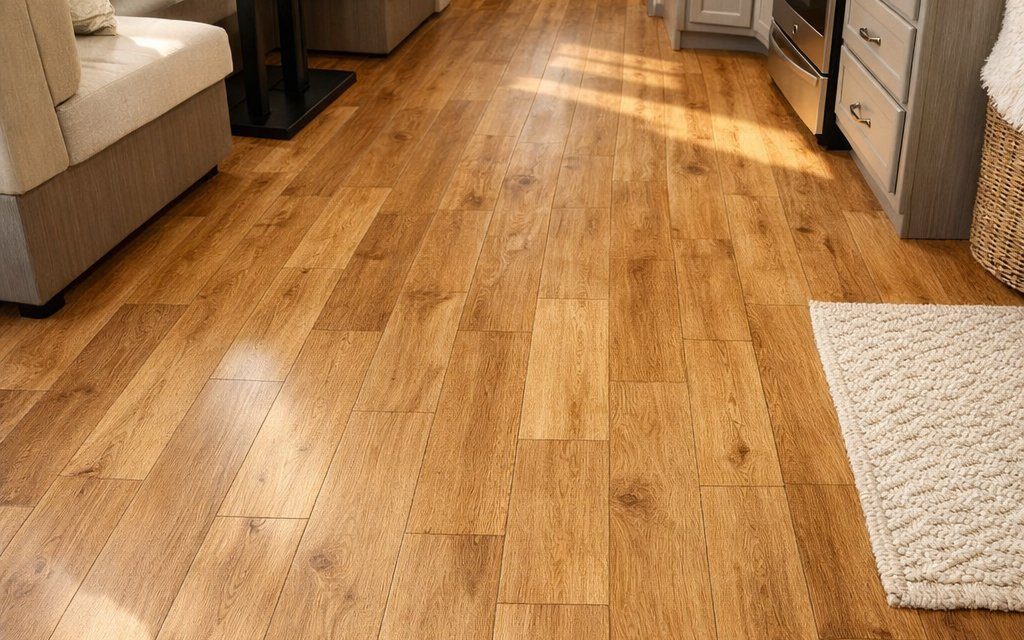
You want a fresh RV floor without a big time or money commitment. This article shows quick, do-it-yourself ideas you can tackle over a weekend to transform the look and feel of your space.
You will find options that fit simple tools and basic skills, from peel-and-stick and vinyl sheets to paint and epoxy. Pick a solution that matches your budget, skill level, and the amount of traffic your RV gets.
You can mix materials and finishes to get a custom look while keeping work time short. Small, staged projects let you test a style before committing to the whole floor.
These projects focus on easy prep, fast installation, and low mess so you can enjoy your updated RV by the end of the weekend.
1) Peel-and-stick vinyl planks
Would you like to save this article?
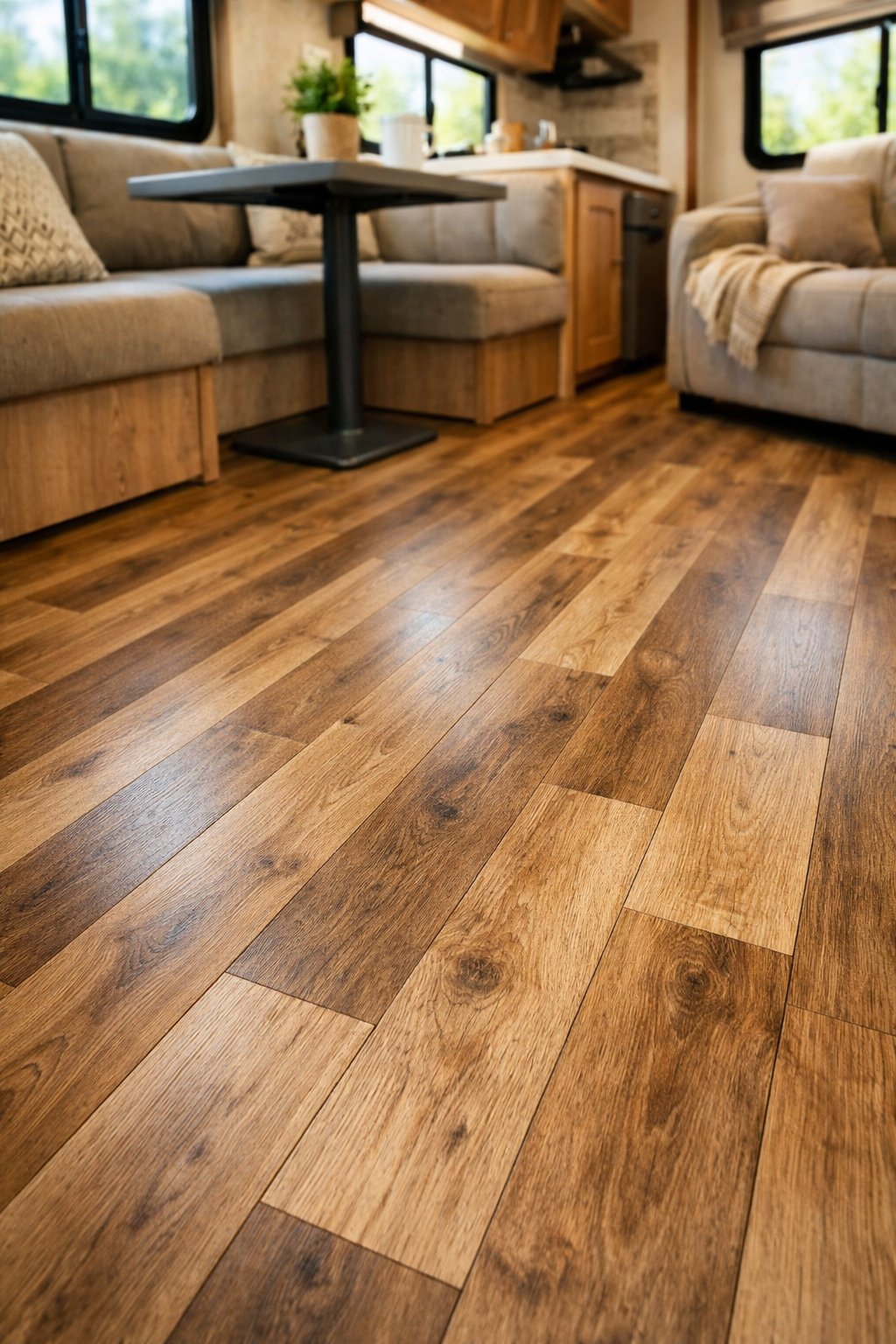
Peel-and-stick vinyl planks let you change your RV floor fast. They come in thin sheets with adhesive backing, so you only need a utility knife and a straight edge to cut and fit them.
Clean and dry the floor before you start. Peel a bit of backing, align the plank, then press it down firmly to avoid bubbles.
Work from one side to the other and stagger the seams for a natural look. You can trim around cabinets and wheel wells, and most planks are waterproof enough for spills and pet messes.
PRO TIP
Measure twice and cut once to avoid waste. Use a roller or a heavy object to press seams for better adhesion and longer life.
2) Interlocking foam floor tiles
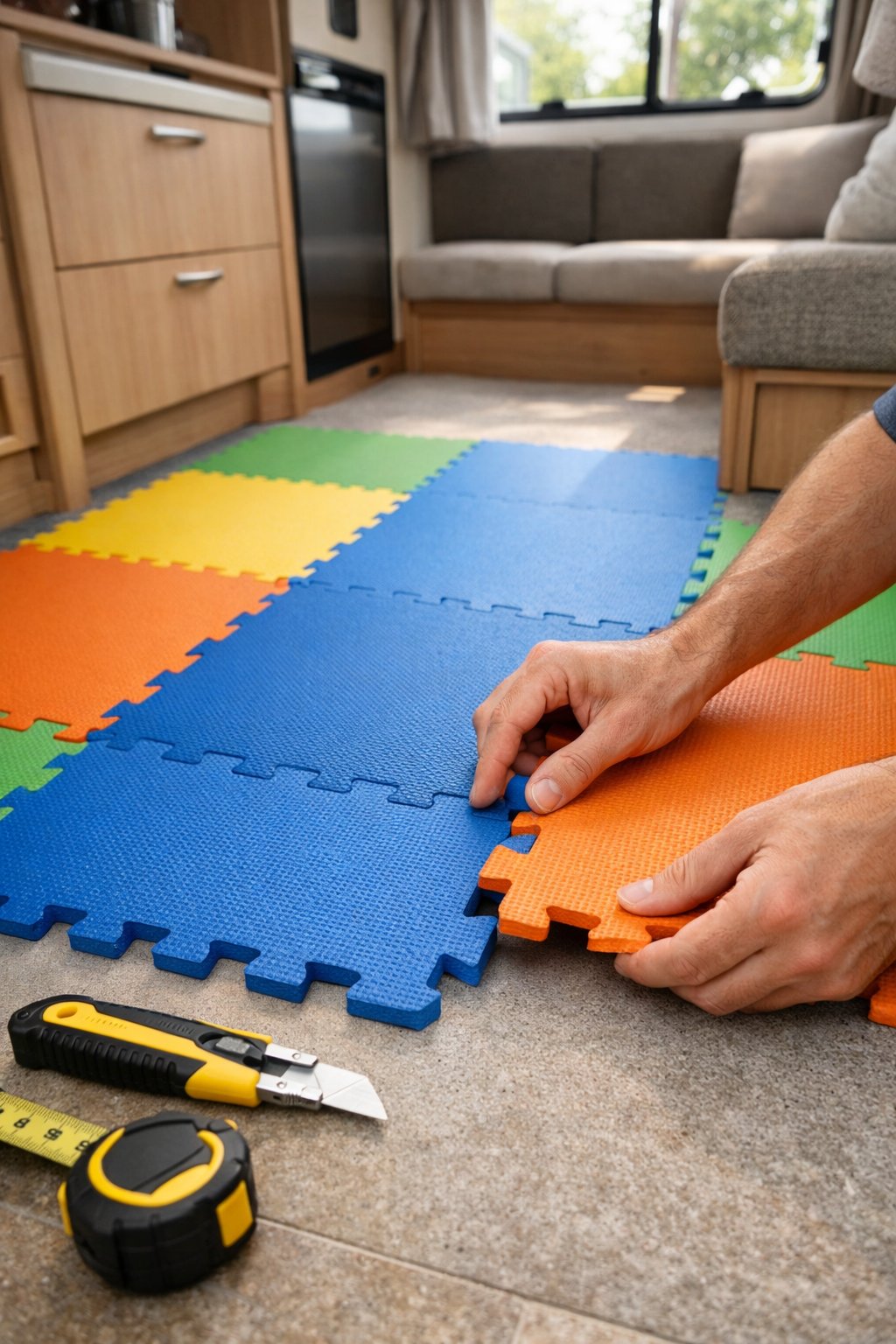
Interlocking foam tiles snap together and cover uneven floors quickly. You can cut them with a utility knife to fit around cabinets and wheel wells.
They feel soft underfoot and add a bit of insulation, which helps on cold mornings. The tiles are lightweight, so you can remove or replace sections without tools.
Installation takes just a few hours for most RVs. Clean the subfloor first, then work from one side across to the other for a neat finish.
PRO TIP
Trim tiles for a tighter fit and use double-sided tape at edges to stop shifting while driving.
3) DIY painted checkerboard floor
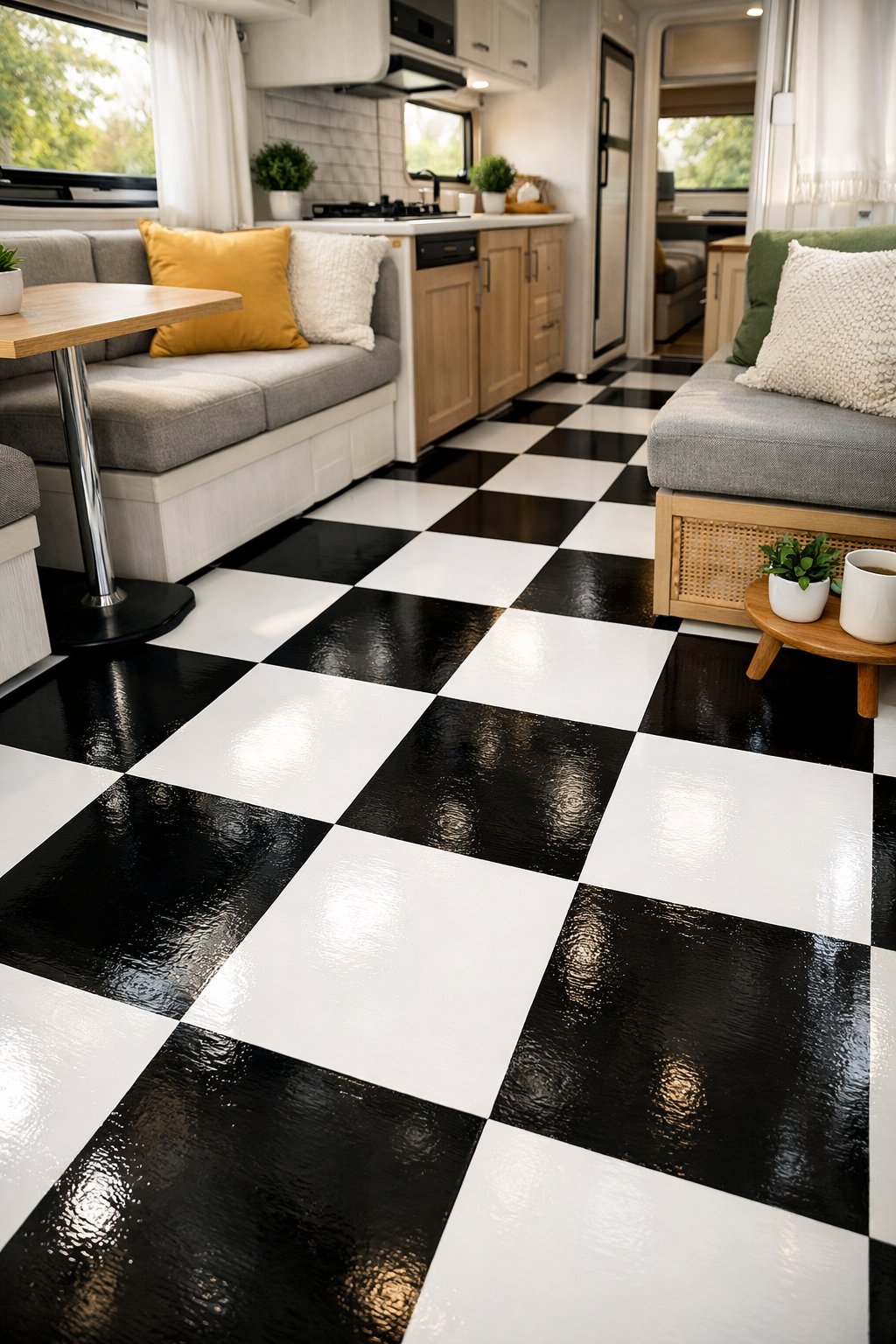
A painted checkerboard floor gives your RV a fresh, clean look without heavy work. You’ll need paint, painter’s tape, a measuring tape, and a steady hand.
Start by cleaning and sanding the floor so paint will stick. Measure and mark a grid of equal squares, then tape the edges for crisp lines. Paint every other square with your first color, let it dry, then tape and paint the remaining squares.
Use thin coats to avoid drips and maintain an even finish. Finish with a clear sealer to protect the paint from scuffs and moisture. This project takes a weekend and brightens the space with a classic pattern.
PRO TIP
Choose two colors with good contrast for the checkerboard to look sharp.
4) Rust-oleum Floor Coating kit
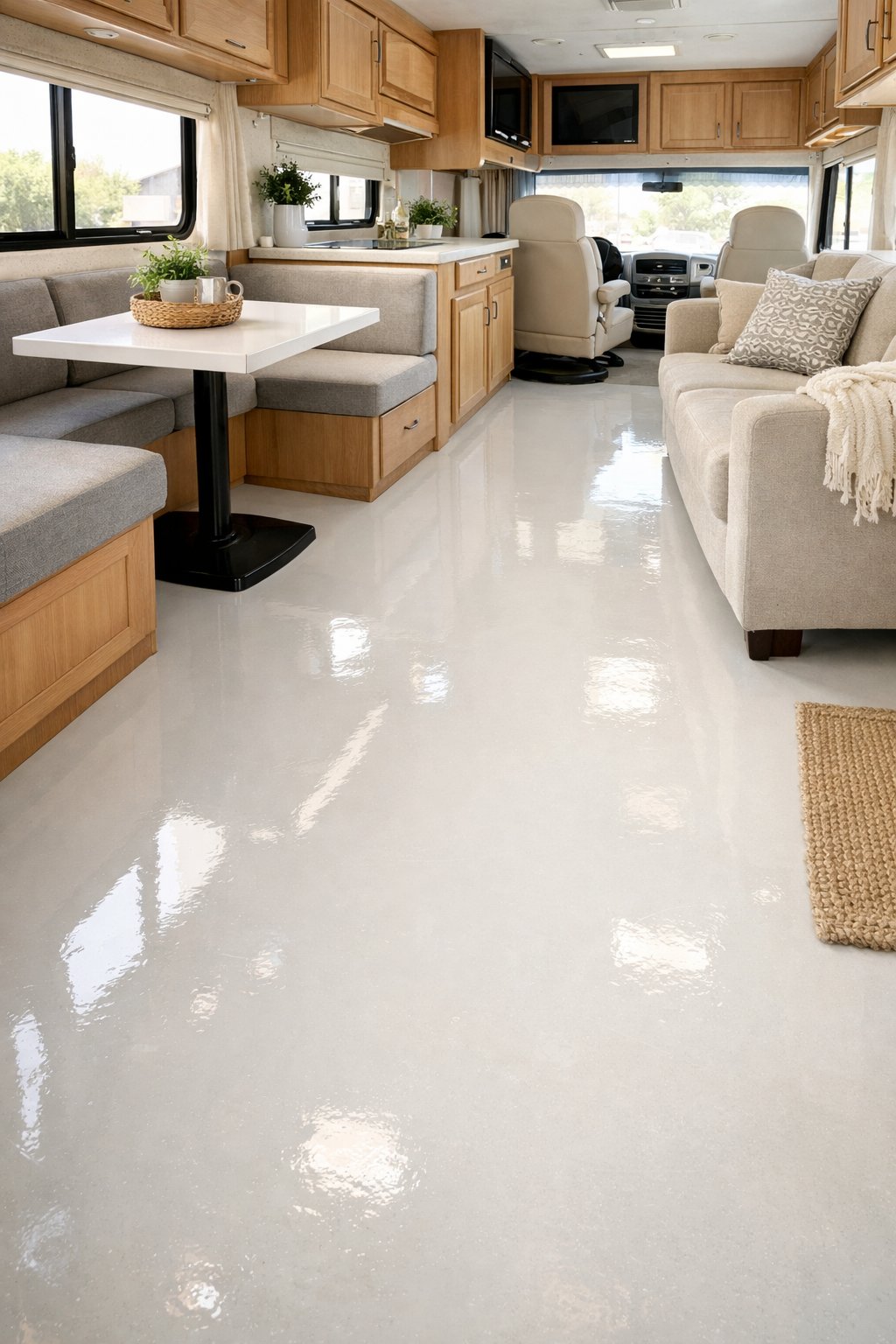
This kit gives your RV floor a hard, protective finish you can apply over existing surfaces. You mix and roll on the coating in a few simple steps, and it dries into a tough layer that resists scratches and stains.
Prep well by cleaning and lightly sanding the floor so the coating bonds. Work in small sections and use a short-nap roller for even coverage.
Expect to wait a day or two for full cure, depending on temperature and humidity. Ventilate the space while it dries to help the fumes clear and speed curing.
PRO TIP
Keep a damp rag nearby to smooth drips before they set. Test a small area first to check adhesion and color.
5) Contact paper for countertops

Contact paper gives your RV countertops a fresh look without heavy tools. You can peel and stick it over old surfaces in a few hours. It hides stains and scratches and comes in many colors and patterns.
Clean the countertop well and measure carefully before cutting. Smooth the paper slowly to avoid air bubbles. Use a straight edge and a sharp blade to trim edges for a neat finish.
PRO TIP
Warm the adhesive gently with a hair dryer while smoothing to help it conform to curves. Replace any damaged sections quickly to prevent peeling. You can remove it later without harming the surface if you change your mind.
6) Self-adhesive cork floor tiles
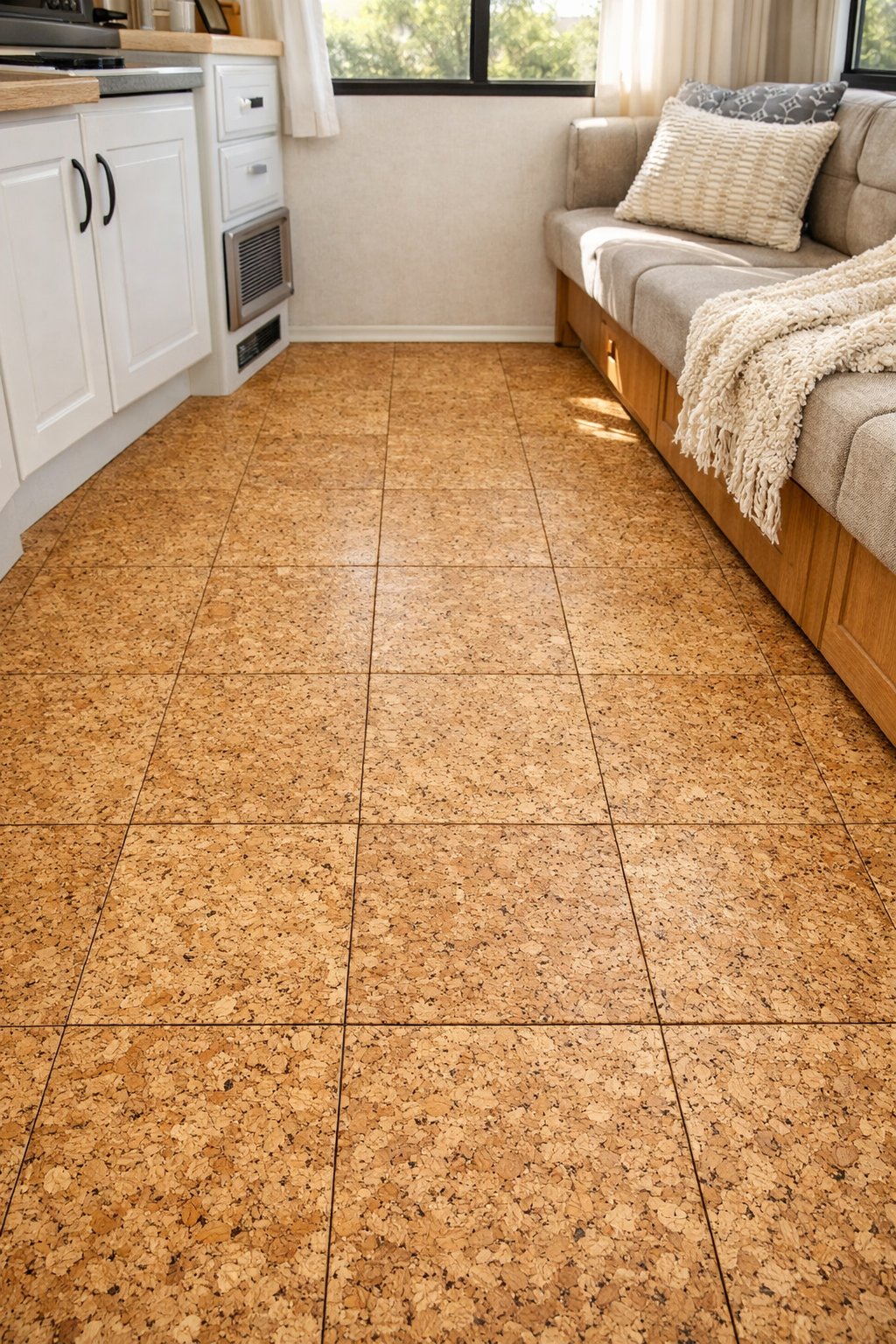
Cork tiles stick down fast and cut noise and cold inside your RV. You can peel and press each tile in place without glue, which makes installs quick and less messy.
Cork feels softer underfoot than vinyl or laminate, so long drives and standing at the sink are easier on your feet. It also resists mold better than some materials, but you should still keep spills wiped up.
Measure your floor and lay out tiles dry before you stick them. Work from the center outward for a tidy look and trim edges with a utility knife for a snug fit.
PRO TIP
Roll a heavy object over new tiles to boost contact with the subfloor and reduce edges lifting later.
7) Lay down bamboo vinyl flooring
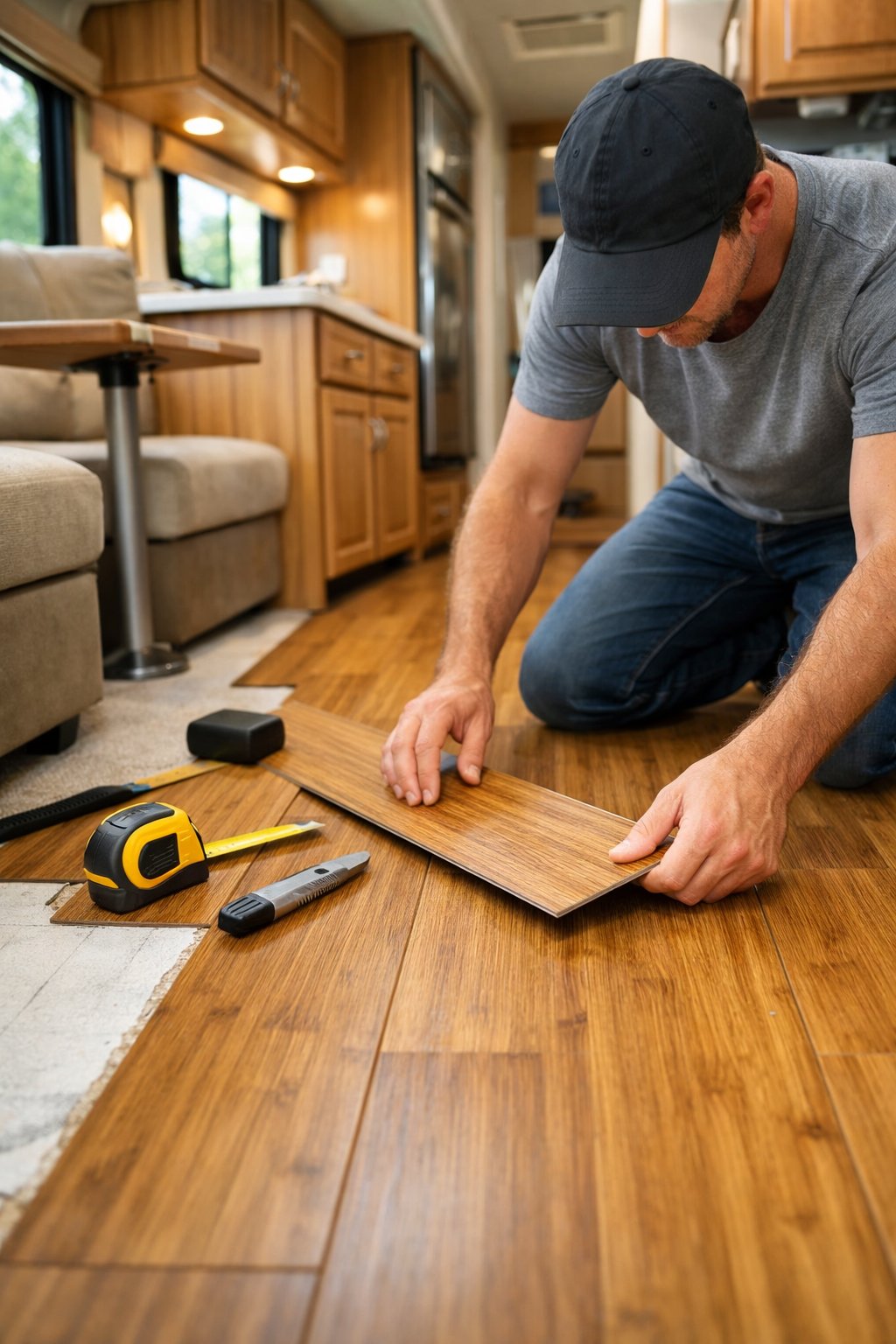
Bamboo vinyl is thin, light, and tough, so it works well in an RV. You can cut it with a utility knife and lay it over your existing floor, which keeps the job quick.
Start by cleaning and leveling the floor. Peel-and-stick or click-lock planks make installation fast, and you can do small repairs later if a panel gets damaged.
Work from the far end toward the door so seams stay tight. Use a roller or heavy object to press seams and edges for a smooth finish.
PRO TIP
Measure twice and cut once to avoid waste. Keep spare planks for future repairs, and let the flooring acclimate in the RV a few hours before installing.
8) DIY epoxy resin floor finish
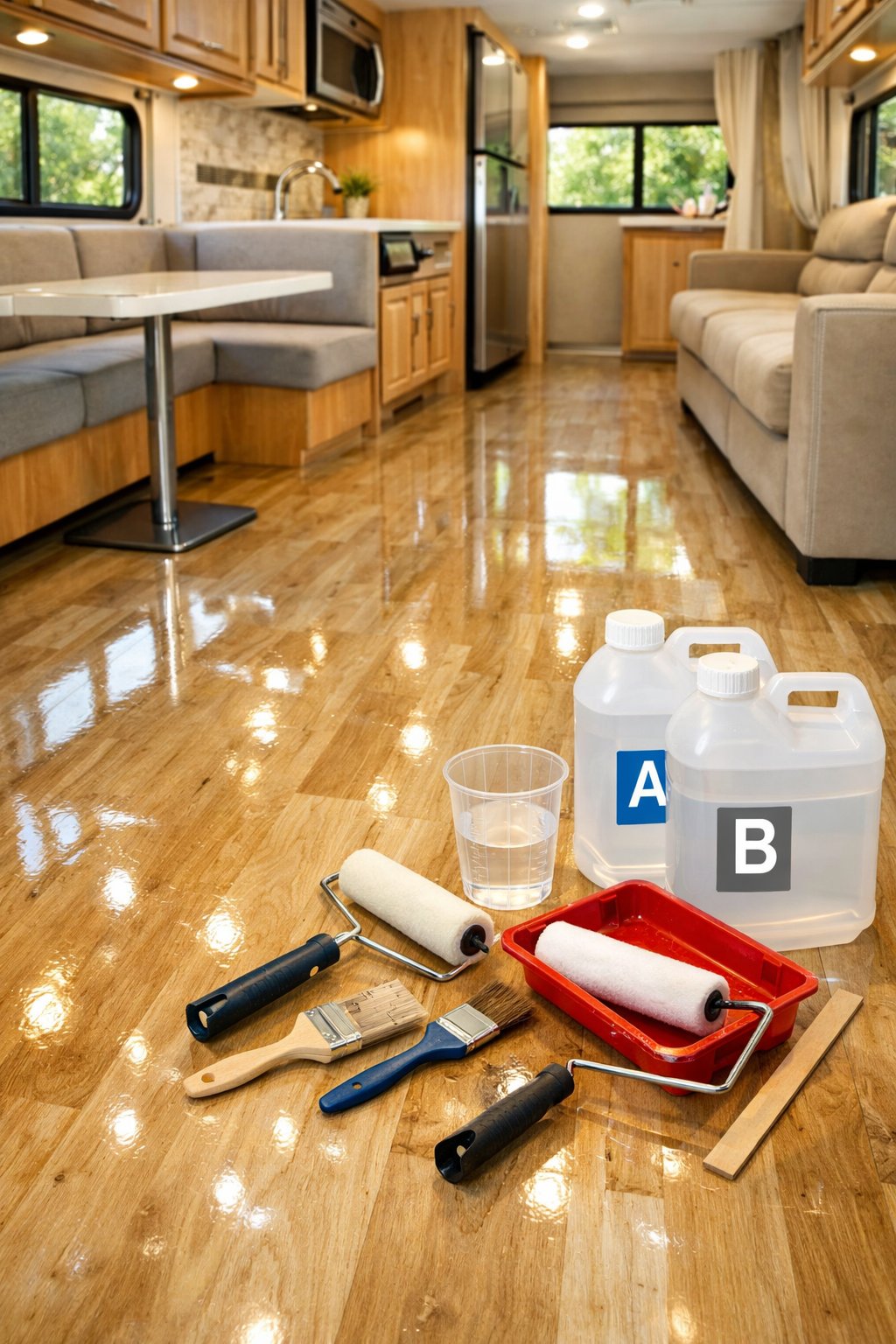
Epoxy gives your RV floor a hard, glossy surface that resists water and stains. You mix a two-part resin and spread it with a roller, covering seams and worn spots with one smooth coat.
Work in a well-ventilated space and wear gloves and a respirator. Prep the floor by cleaning, sanding glossy areas, and taping edges so the resin bonds well.
Pour slowly and use a notched squeegee or roller to level the resin. Small bubbles can be popped with a heat gun or torch, but move it quickly to avoid damage.
PRO TIP
Do one small test area first so you learn working time and finish. Plan to stay nearby while it cures; epoxy needs a consistent temperature and time to harden well.
9) Stenciled geometric floor design
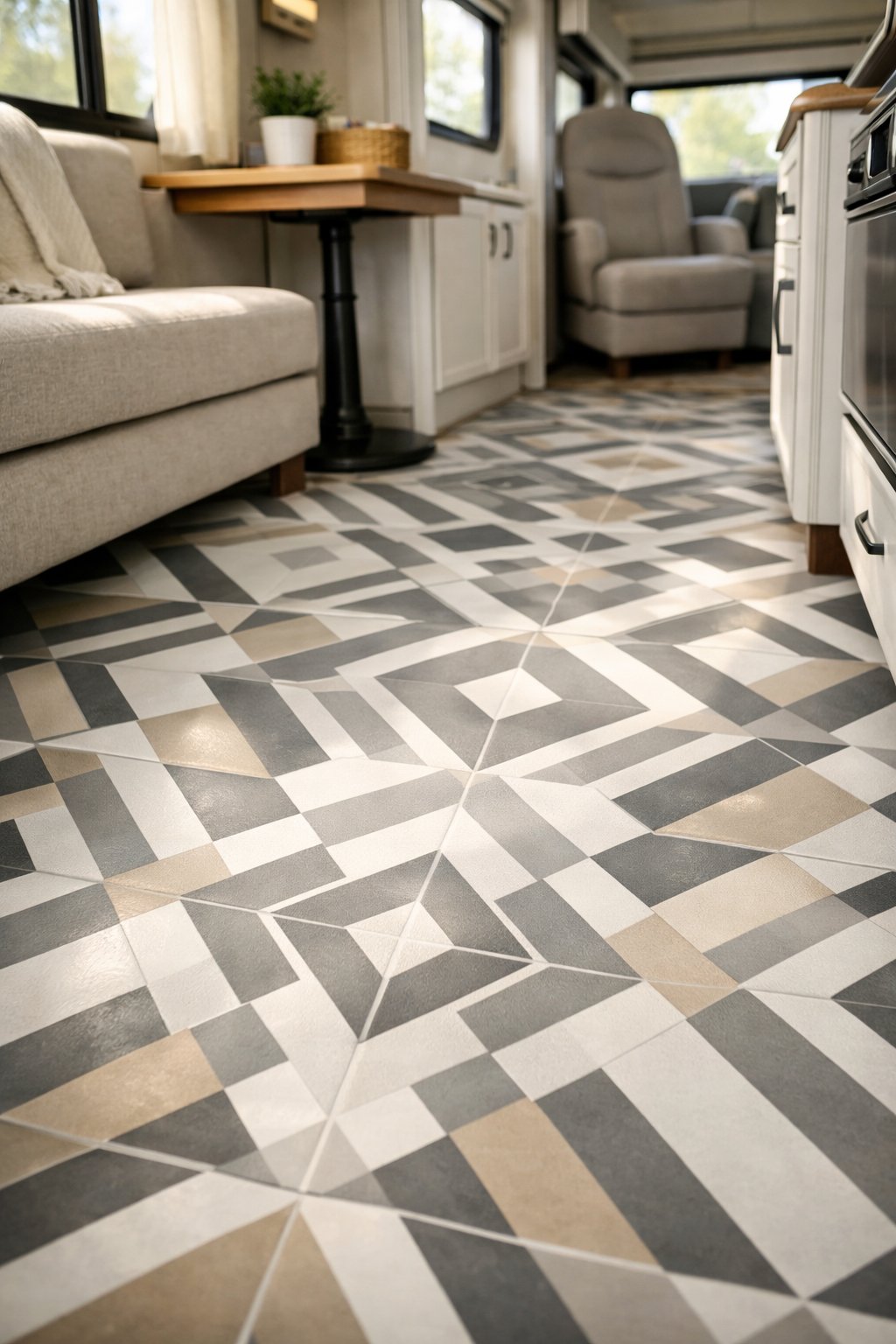
Stenciling gives your RV floor a fresh, modern look without full replacement. You can cover worn spots or add pattern where the floor looks plain.
Start by cleaning and sanding the area. Tape down a simple stencil with painter’s tape. Use a small roller or sponge to apply thin coats of paint. Let each coat dry before adding more to avoid drips.
Pick two or three colors that work with your decor. Stick to simple shapes—triangles, diamonds, or hexagons—so the pattern stays neat. Work in small sections so the paint stays crisp and edges stay sharp.
PRO TIP
Practice the pattern on cardboard first. That way you learn pressure and spacing before working on your RV floor.
10) Laminate plank flooring install
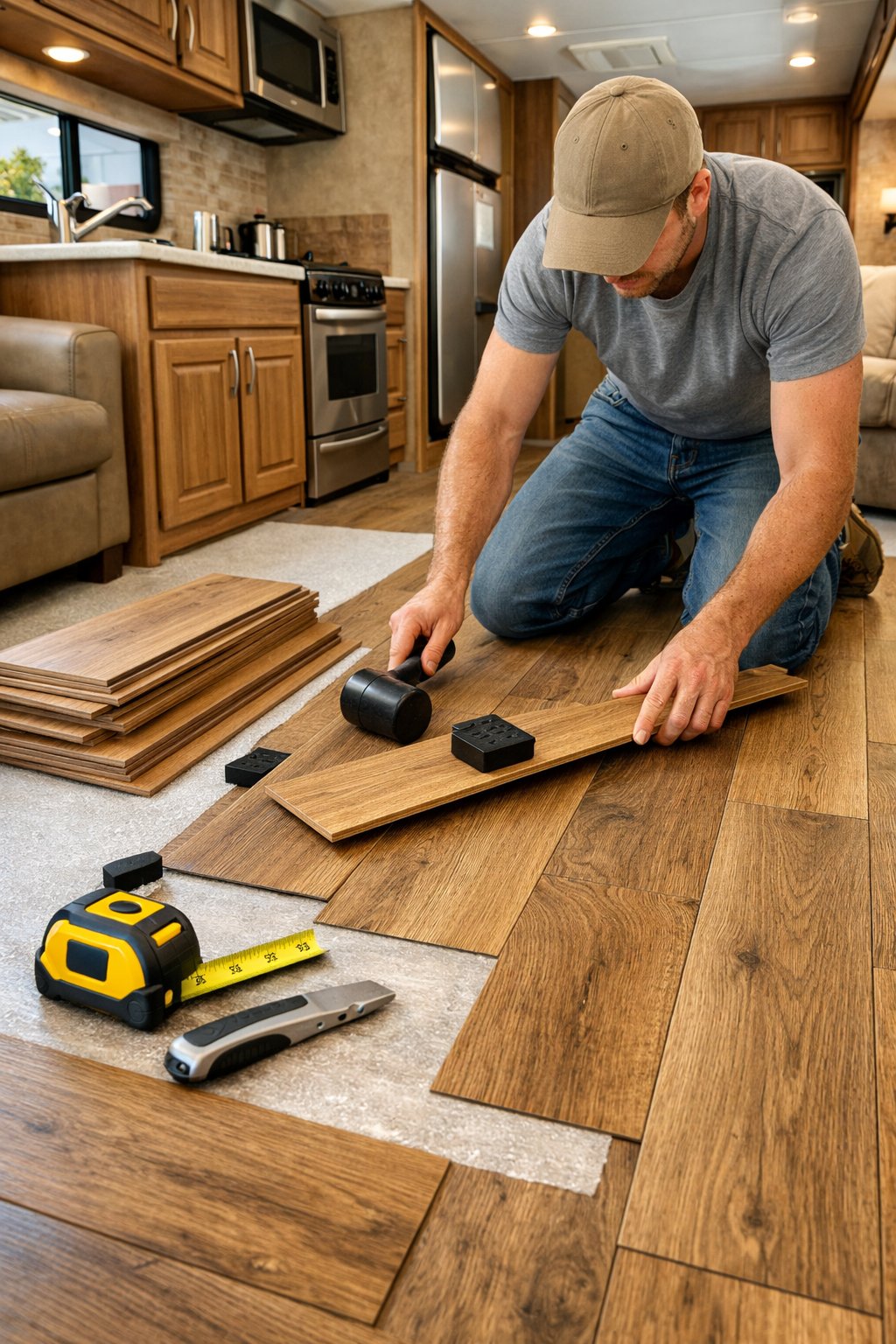
Laminate plank flooring gives your RV a fresh, clean look without heavy work. You can lay planks over many existing floors if they are level, which saves time and effort.
Measure your floor and buy a little extra for cuts and mistakes. Lay a foam underlayment first to reduce noise and protect against moisture. The planks click together, so you can float the floor without glue or nails.
Work from one corner and stagger seams for strength and a natural look. Use a tapping block and pull bar to fit pieces snugly around vents and cabinets. Trim planks with a saw and add trim pieces at walls to hide gaps.
PRO TIP
Acclimate the planks in your RV for 48 hours before installation so they expand and contract less after you install them.
11) Installing peel-and-stick carpet tiles
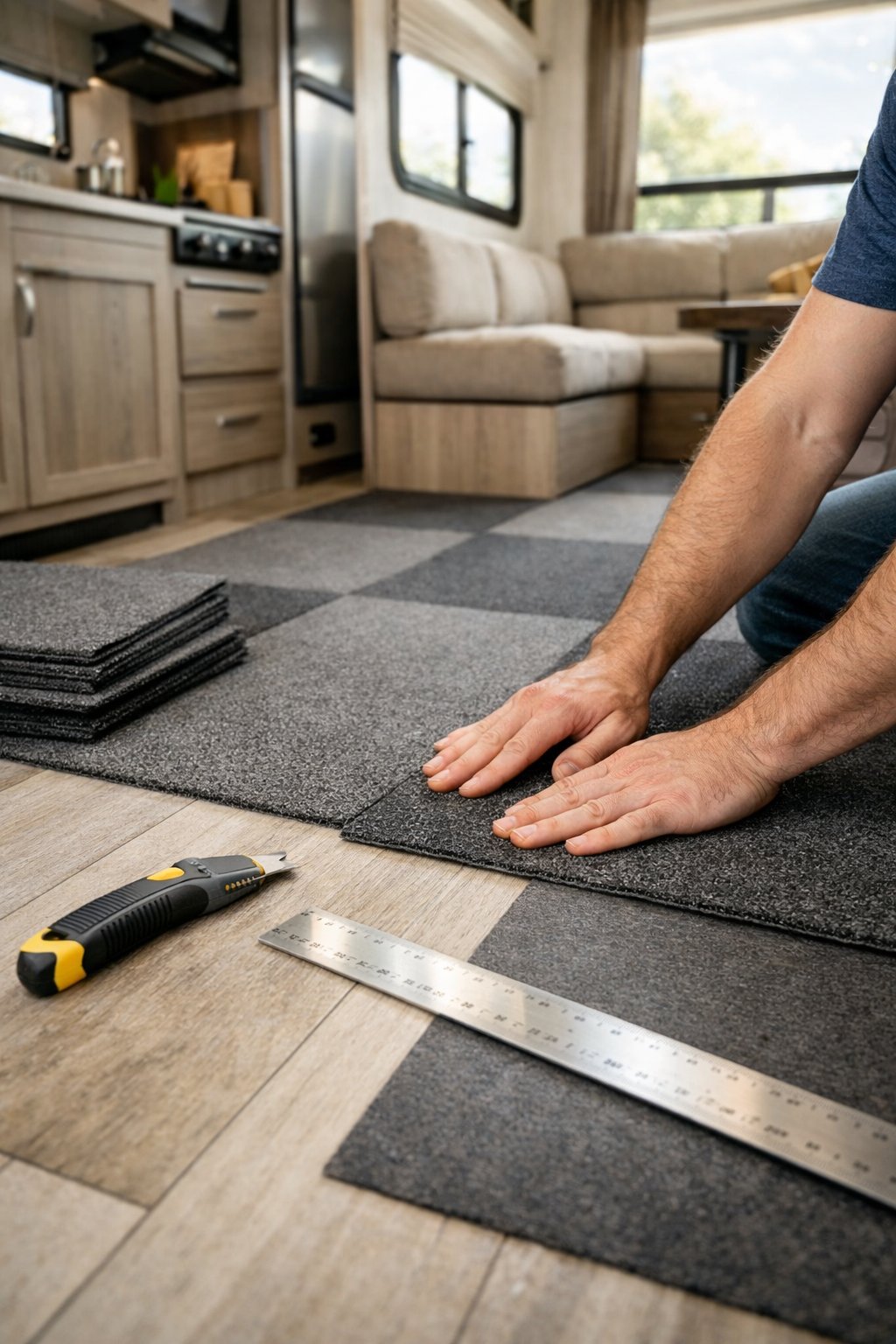
Peel-and-stick carpet tiles make quick work of worn RV floors. You cut tiles to fit, peel the backing, and press them down for instant coverage.
Start by cleaning and drying your floor well. Measure the space and plan a layout to avoid tiny edge pieces.
Work from the center or a straight reference line to keep tiles even. Use a utility knife for neat cuts around cabinets and curves.
Press each tile firmly, rolling seams with a small roller or by hand. Let the adhesive set for a few hours before walking on it.
PRO TIP
Warm the tiles slightly if it’s cold to make them stick better. Store extra tiles for future repairs.
12) DIY faux tile with floor paint
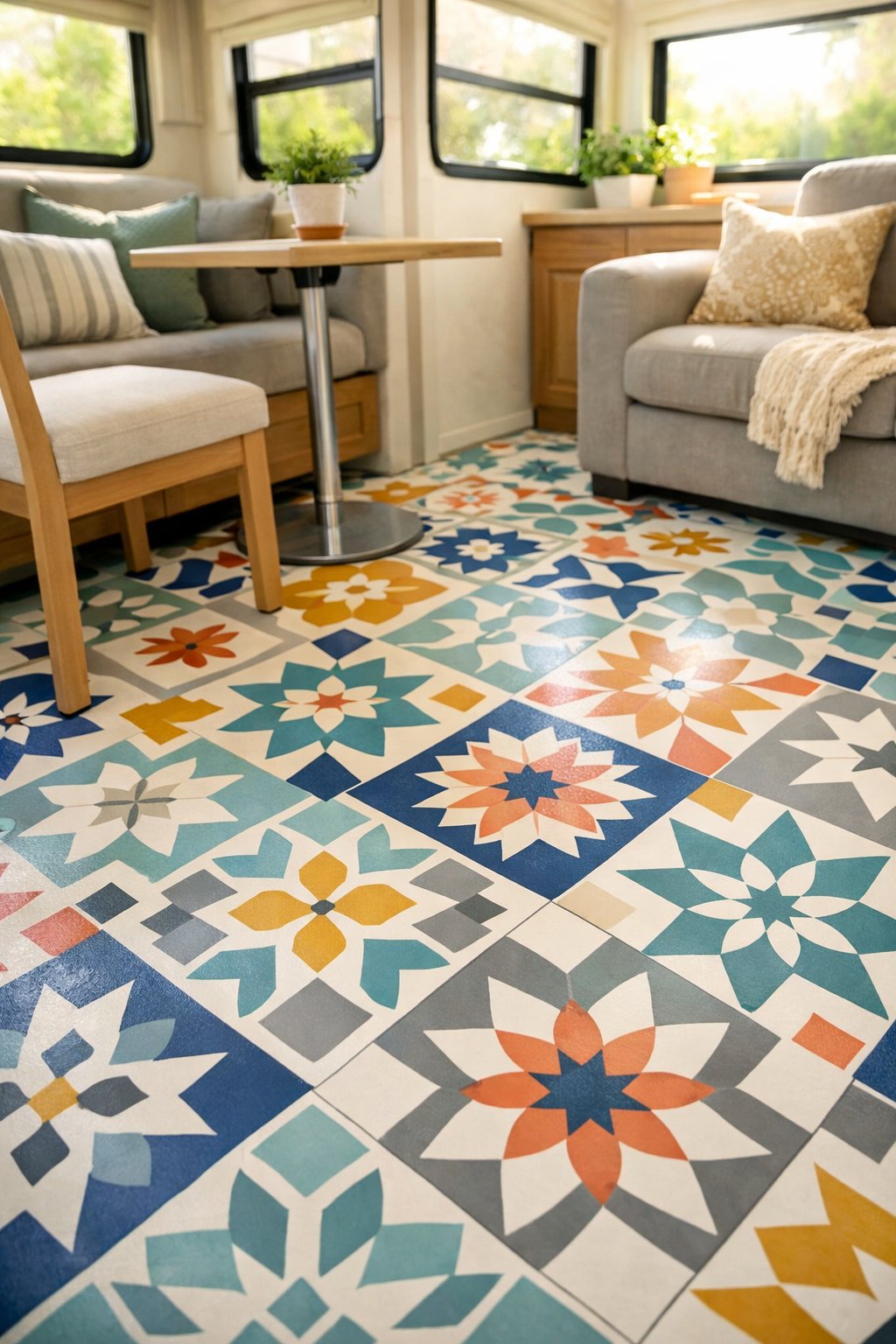
You can give your RV a tile look without tearing up the floor. Start by cleaning and sanding the surface so paint will stick well.
Measure and mark a grid with chalk or light pencil lines to guide your tiles. Paint a base color, let it dry, then use a small brush or roller to add grout lines and tile color.
Work in small sections to keep edges neat. Use painter’s tape for straight lines if you want a crisp, modern look.
PRO TIP
Test colors on a scrap piece first so you know how they’ll look when dry. Seal the painted floor with a clear topcoat for extra durability and easier cleaning.
13) Using inflatable floor mats
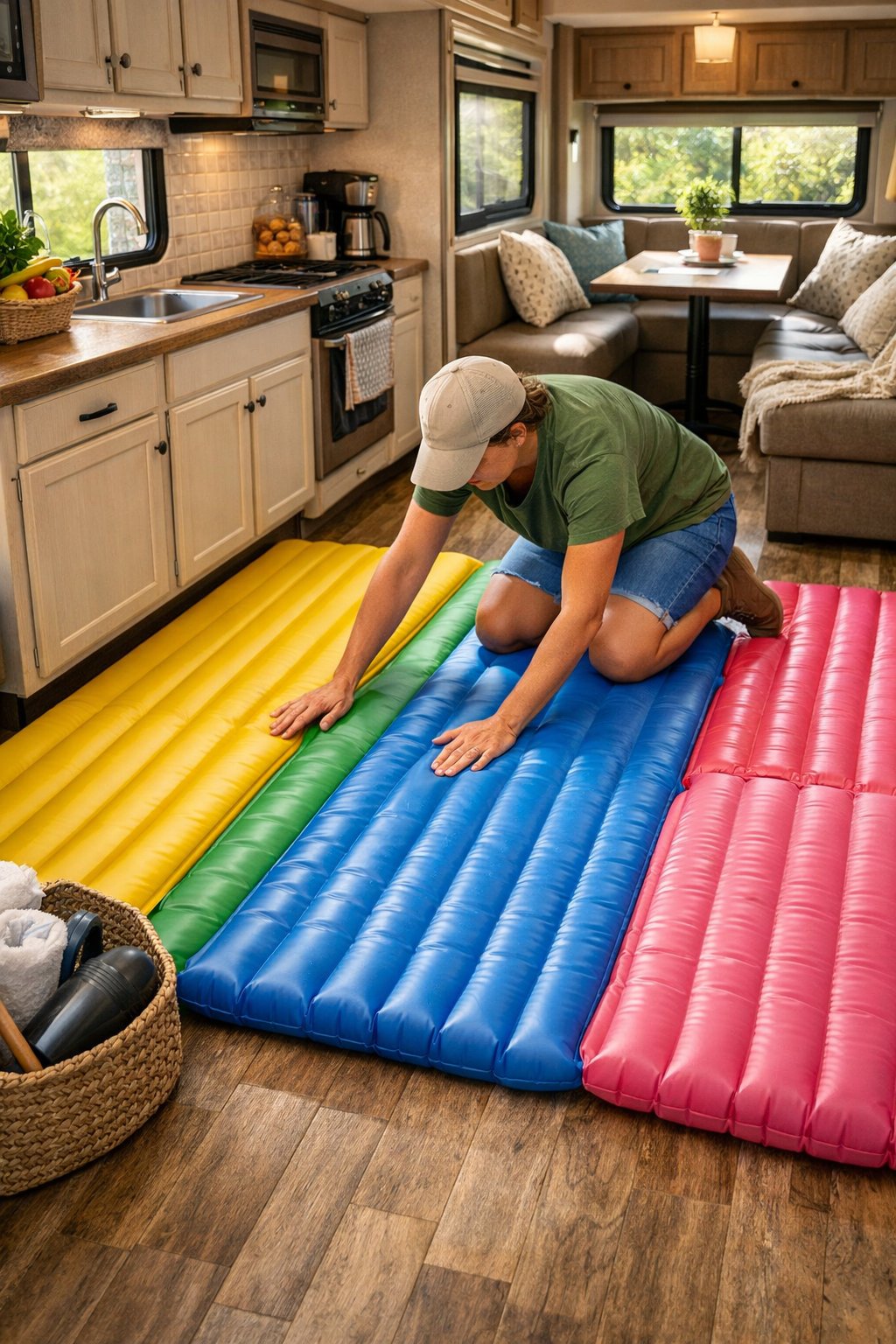
Inflatable floor mats add a soft, cushioned layer that makes your RV feel cozier. You can roll them out in minutes and adjust the air level for firmer or softer support.
These mats help protect existing floors from scratches and spills. They are lightweight, easy to store, and handy for camping with kids or pets.
PRO TIP
Choose a mat with a textured bottom to reduce slipping. Keep a small pump on hand so you can inflate or top up quickly when needed.
14) Installing a durable rubber floor mat
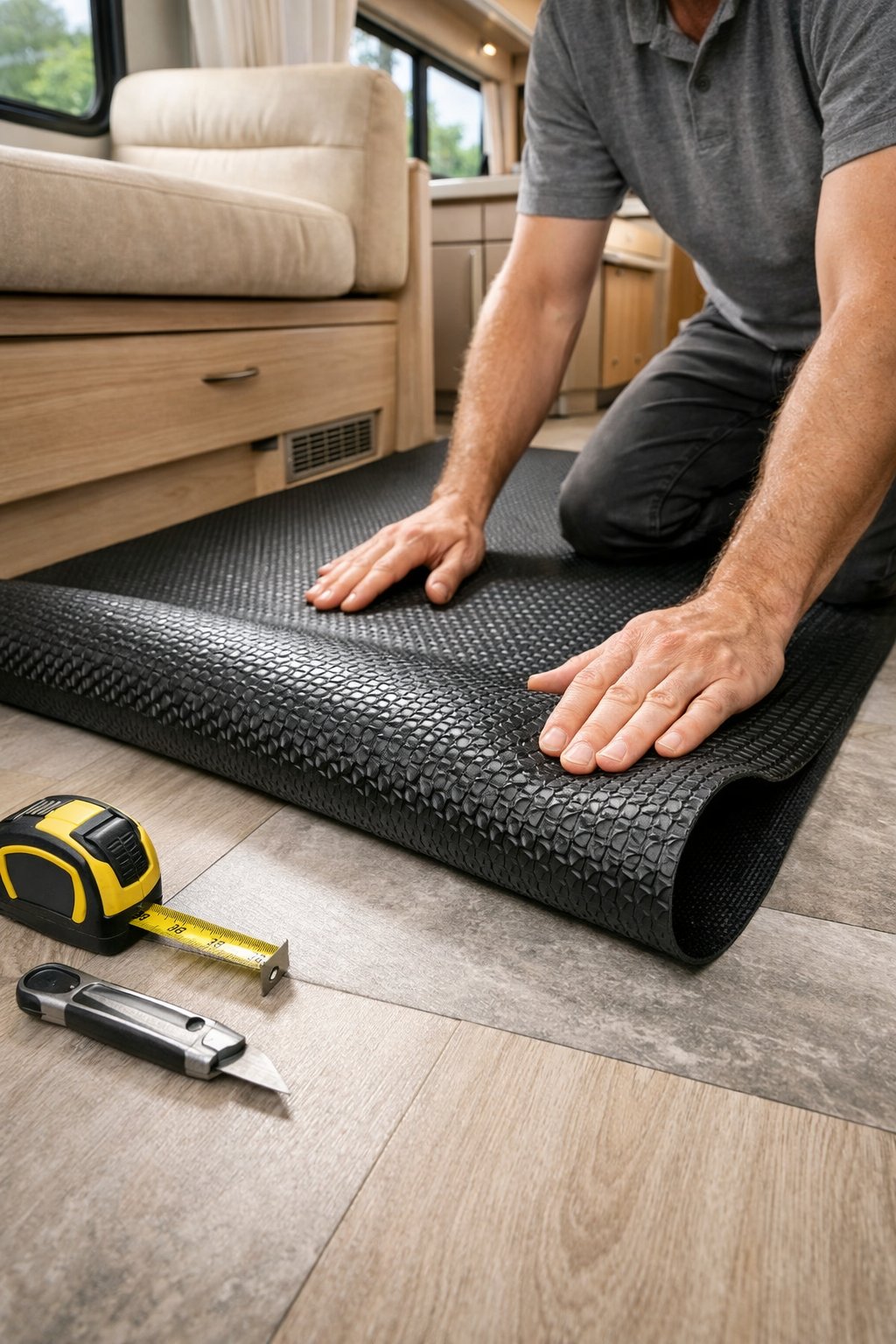
A rubber floor mat gives your RV instant protection from dirt, water, and heavy wear. You can cut it to fit any space, and it stays put without complicated adhesives.
Measure the area first and mark where you’ll trim. Use a straightedge and heavy-duty scissors or a utility knife for a clean edge.
Lay the mat in place and test the fit before you secure it. If it needs extra grip, add a few non-slip pads under the corners or use temporary double-sided tape.
H3 PRO TIP
Choose a mat with textured surface for better traction and easy cleaning. Roll it out and leave it a few hours to flatten before trimming for the best fit.
15) Quick oil-rubbed wood floor finish
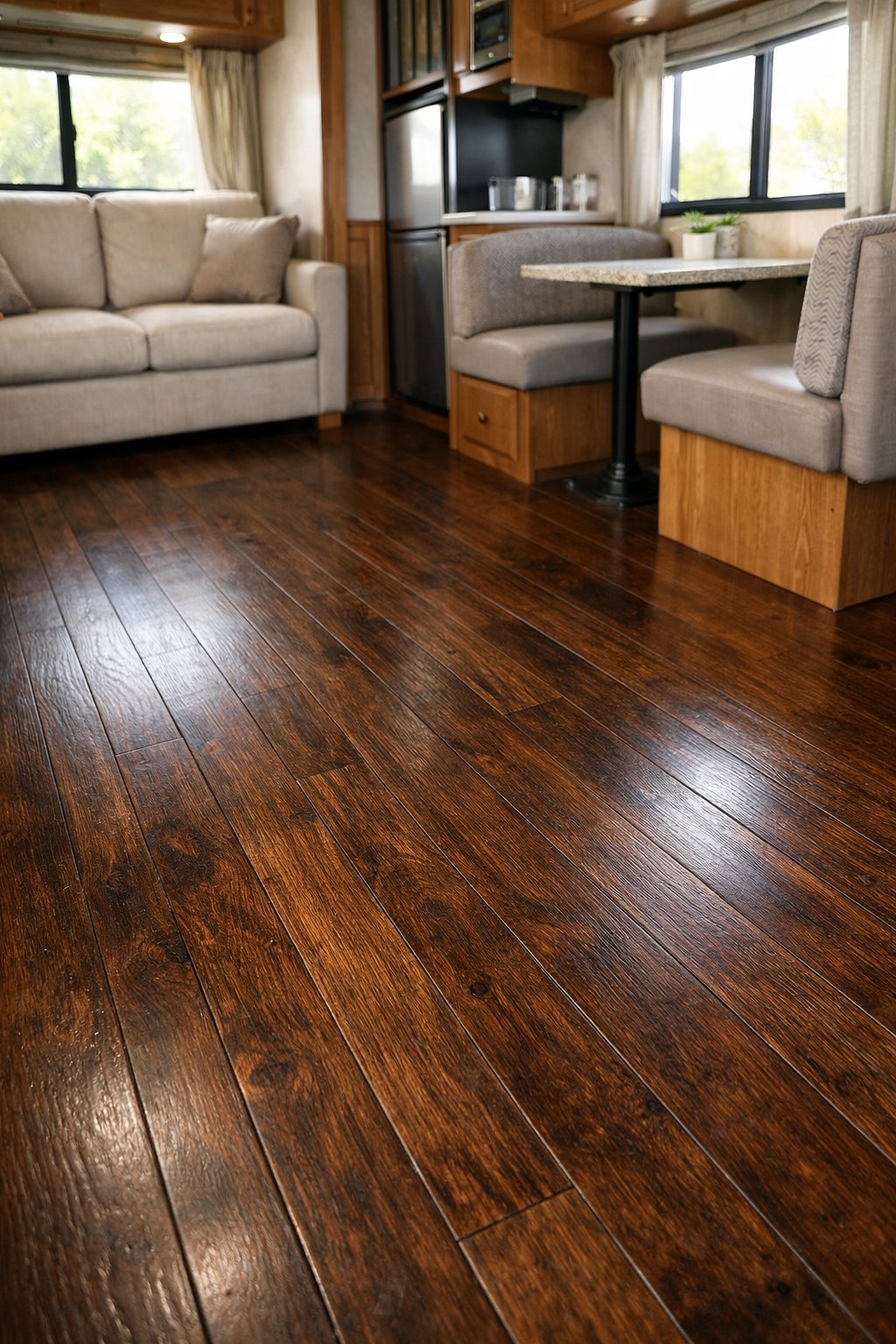
An oil-rubbed finish gives your RV floors a warm, low-sheen look without sanding too deep. You clean the floor, lightly sand or scuff the surface, then apply a thin coat of oil with a lint-free cloth. Work in small sections and wipe off excess oil to avoid sticky spots.
The finish soaks into the wood and highlights grain while adding basic protection. It dries in a few hours but cure time is longer, so keep traffic light for a day or two. Reapply a light coat every few months in high-traffic areas to maintain the look.
PRO TIP
Test the oil on a small hidden spot first to confirm the color. Use good ventilation and gloves while working to protect your skin and nose.
16) Weatherproof vinyl sheet flooring
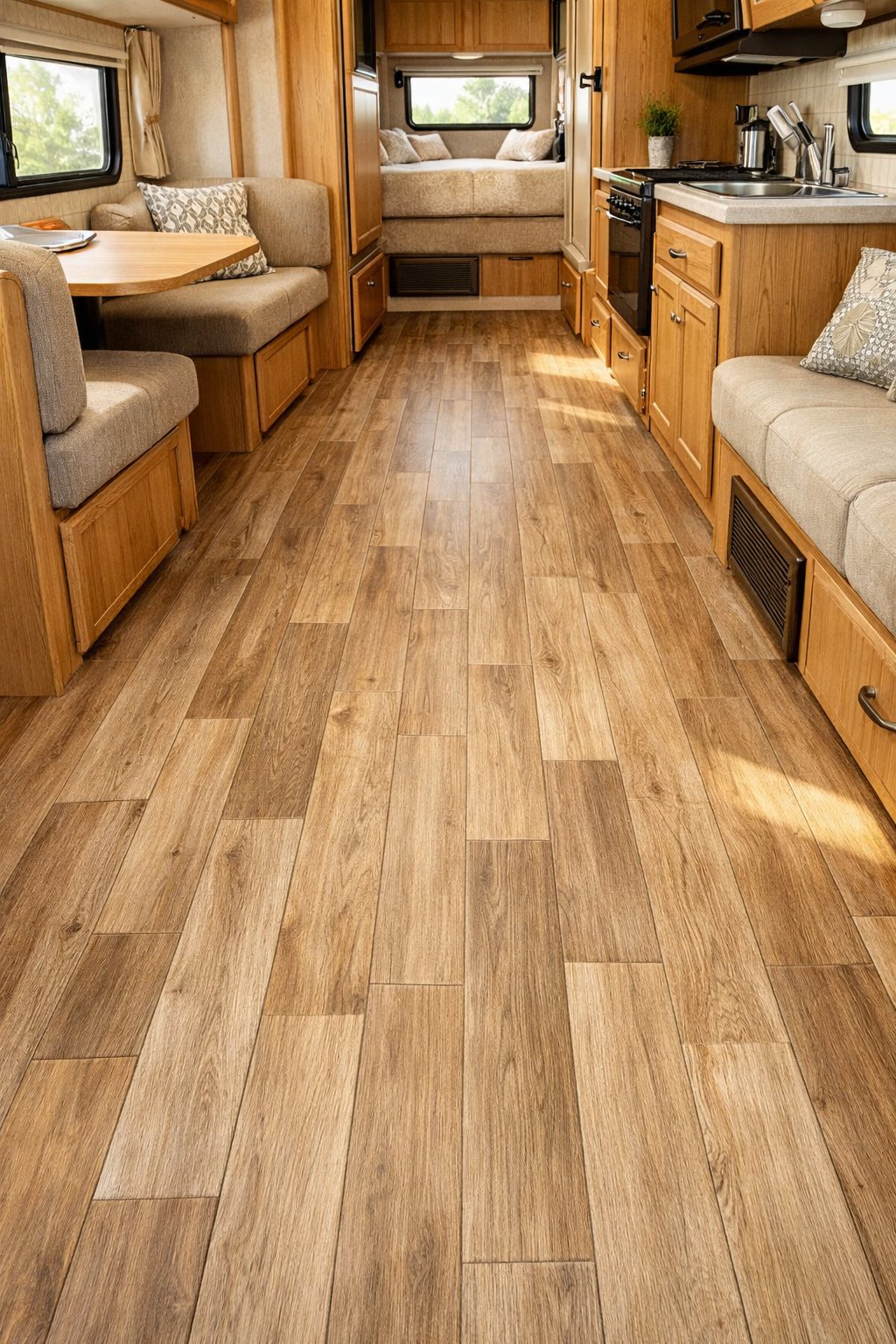
Vinyl sheet flooring gives your RV a tough, water-resistant surface you can clean easily. It lays flat and covers seams, which helps keep water from seeping into your subfloor.
You can cut the sheet to fit your space and glue it down in a single afternoon. The material is thin but durable, so it won’t add much weight to your rig.
Choose a pattern that hides dirt and wear. Use a straightedge and sharp blade for clean cuts around fixtures and cabinets.
PRO TIP
Roll the sheet out and let it relax for an hour before trimming. Work from the center toward the edges when smoothing to avoid bubbles.
17) DIY plywood plank floor

You can turn thin plywood into a warm, wood-look floor without heavy tools. Cut planks to size, sand the edges, and glue them down over your RV subfloor for a snug fit. The result feels sturdy and looks custom.
Stain or paint the plywood before you install it to save time and avoid mess. Seal with a clear finish to protect against spills and wear. Keep pieces small so they flex slightly with RV movement.
PRO TIP
Lay out a dry run first to mix plank sizes and patterns before you glue anything. Use a roller to press planks down for better adhesion and fewer bubbles.