(As an amazon affiliate, we earn a commission when purchasing via our links below)
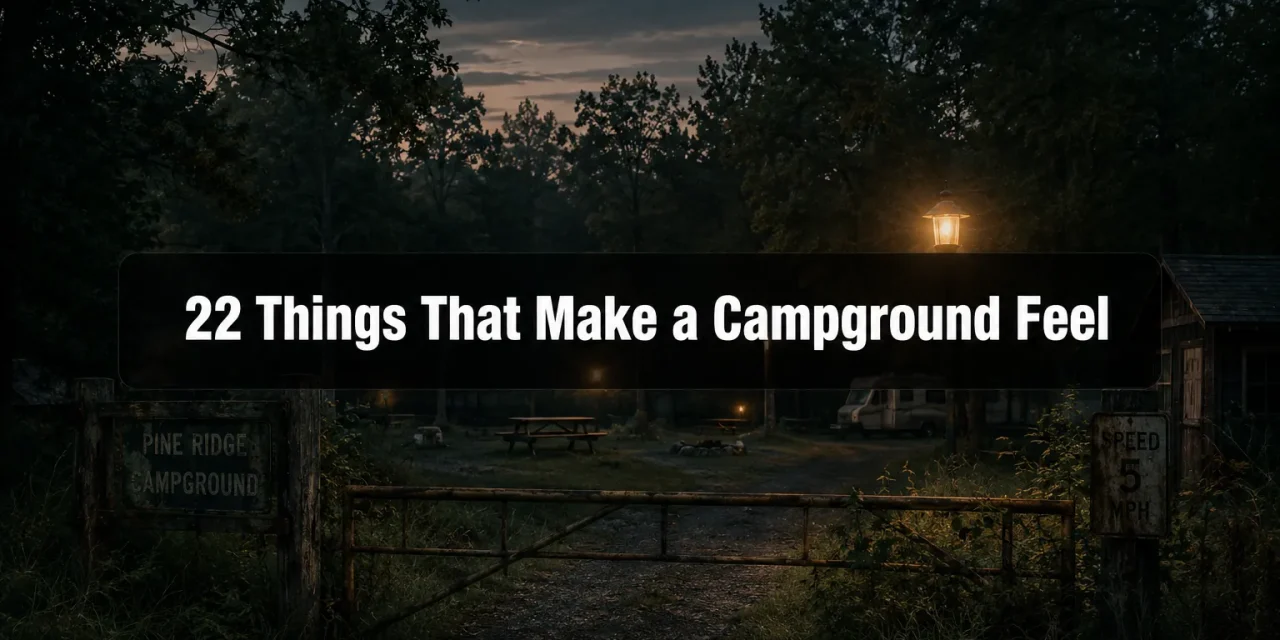
Nearly 60 million Americans go camping every year, but not every campground delivers the peaceful escape they were hoping for. Some spots have a way of sending off bad vibes the moment you pull through the gate. That gut feeling? It’s usually right.
This guide covers the 22 things that make a campground feel instantly sketchy so RV lovers like you can spot the red flags before unhooking the tow vehicle. Whether it’s a first-time booking or a last-minute stop, knowing what to look for can save a trip, or even keep everyone safe.
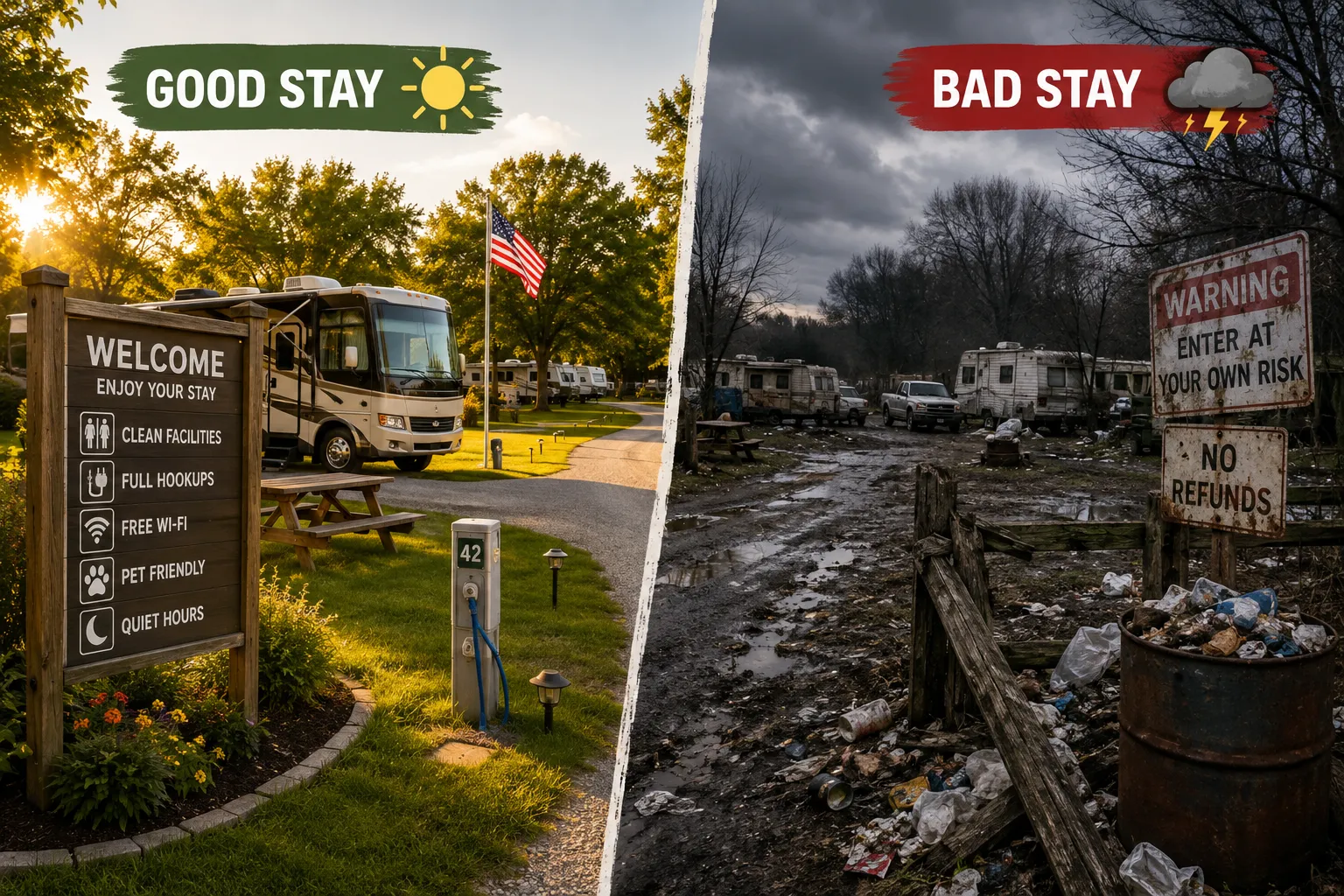
Red Flags at the Entrance and First Impressions
The very first look at a campground tells a huge story. These are the signs to watch for right at the gate.
1. 🪨 A Broken or Unmanned Gate
A gate that hangs open, sits broken, or has no one watching it is a big warning. Good campgrounds control who comes and goes. An open gate means anyone can walk in, and that includes people who shouldn’t be there.
ITEM TO CONSIDER

2. 🗑️ Trash Everywhere Near the Entrance
Garbage piled near the entrance shows the management doesn’t care. If they can’t keep the front clean, imagine what the back looks like. Overflowing trash cans and litter on the ground are classic signs of a poorly run campground.
ITEM TO CONSIDER

3. 🪧 Faded, Broken, or Missing Signs
Good campgrounds keep their signs updated and easy to read. Faded signs, missing arrows, or boards that are falling apart suggest the place hasn’t had proper care in a long time.
4. 🌿 Overgrown Grass and Weeds
A campground that looks like a jungle hasn’t been maintained. Tall weeds can hide hazards like broken glass, animal burrows, or uneven ground. It also signals that the whole property is probably neglected.
5. 🚗 Abandoned Vehicles on the Property
Seeing old, rusted cars sitting on sites or in parking lots is a major red flag. It often means people are living there long-term without proper management oversight, and that can change the whole vibe of a campground.
“If the entrance looks like nobody cares, the rest of the campground probably doesn’t either.”
Poor Facilities and Maintenance Issues
Once inside, the condition of the facilities reveals everything about how a campground is really run. These are the 22 things that make a campground feel instantly sketchy that show up most often in restrooms, hookups, and common areas.
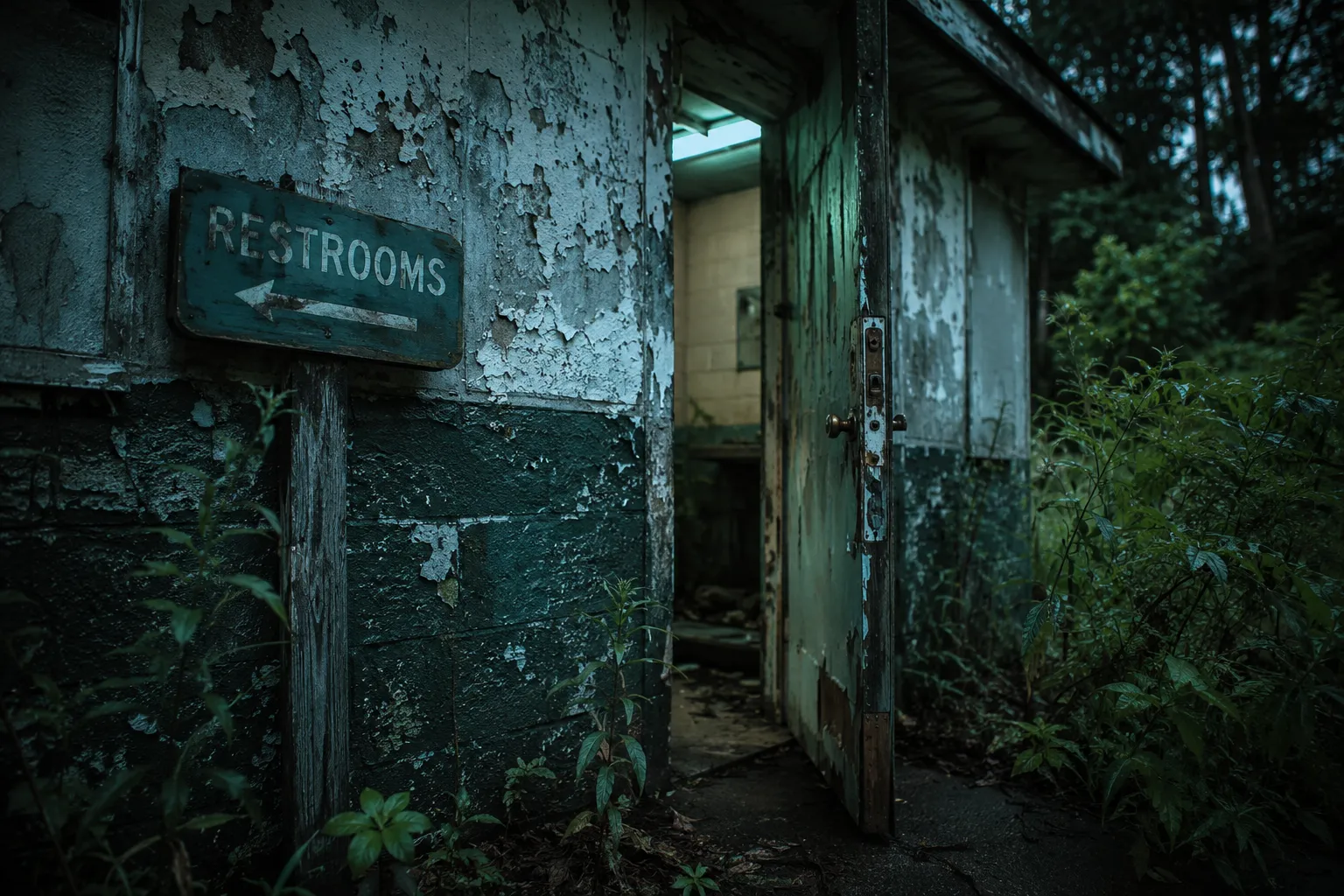
6. 🚽 Dirty or Broken Restrooms
This one is huge for RV campers who need dump stations and clean bathrooms. Restrooms with broken locks, no toilet paper, or visible mold are not just gross, they’re a health hazard. A campground that can’t keep bathrooms clean won’t keep much else clean either.
7. 🚿 Non-Functioning Showers
Cold-only showers, broken shower heads, or stalls with mildew growing on every surface are a sign of deep neglect. Clean shower facilities take daily effort. If no one is putting that effort in, it shows fast.
ITEM TO CONSIDER

8. 🔌 Sketchy or Outdated Electrical Hookups
Electrical issues are not just annoying, they can fry an RV’s systems or cause a fire. Watch for:
- Outlets that look burned or melted
- Loose pedestal covers
- Missing breakers
- Rust on the electrical box
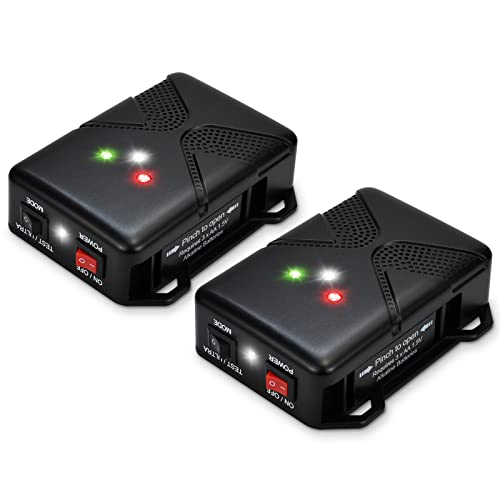
Always use a surge protector before plugging in at any campground, especially one that looks run-down.
ITEM TO CONSIDER

9. 💧 Discolored or Smelly Water
Turn on the water before connecting your hose. If it comes out brown, smells like sulfur, or has a weird taste, don’t use it for drinking. Some campgrounds don’t test their water regularly, which can be a serious health concern.
10. 🪣 Broken or Overflowing Dump Stations
A clogged or broken dump station is a nightmare for RV travelers. Worse, it’s a sign that routine maintenance just isn’t happening. If the dump station smells worse than expected or has visible backflow, find another campground.
ITEM TO CONSIDER

11. 🏚️ Crumbling or Unsafe Structures
Pavilions with rotting wood, playground equipment that wobbles, or picnic tables missing planks are signs of a campground that’s falling apart. These aren’t just eyesores, they’re injury risks.
12. 🌑 Poor or No Lighting at Night
A campground with broken lights or no pathway lighting at night feels unsafe for good reason. Good lighting helps people navigate safely and deters unwanted visitors. Dark, unlit campgrounds are a common complaint in sketchy reviews.
ITEM TO CONSIDER

⚡ Quick Safety Tip:
Before booking, search the campground name plus “reviews 2026” on Google. Look specifically for photos posted by real campers, they show what the listing photos won’t.
13. 🐀 Signs of Pests or Wildlife Intrusion
Droppings near the bathrooms, chewed wires on utility posts, or raccoon damage to trash cans all point to a pest problem. A well-managed campground takes pest control seriously. An unmanaged one lets it spiral fast.
ITEM TO CONSIDER
14. 🔧 Sites That Haven’t Been Leveled or Graded
RV campers need level sites. A campground that hasn’t maintained its pads, with deep ruts, washed-out gravel, or severe slopes, shows a lack of care for RV-specific needs.
ITEM TO CONSIDER

Neighbor and Management Warning Signs
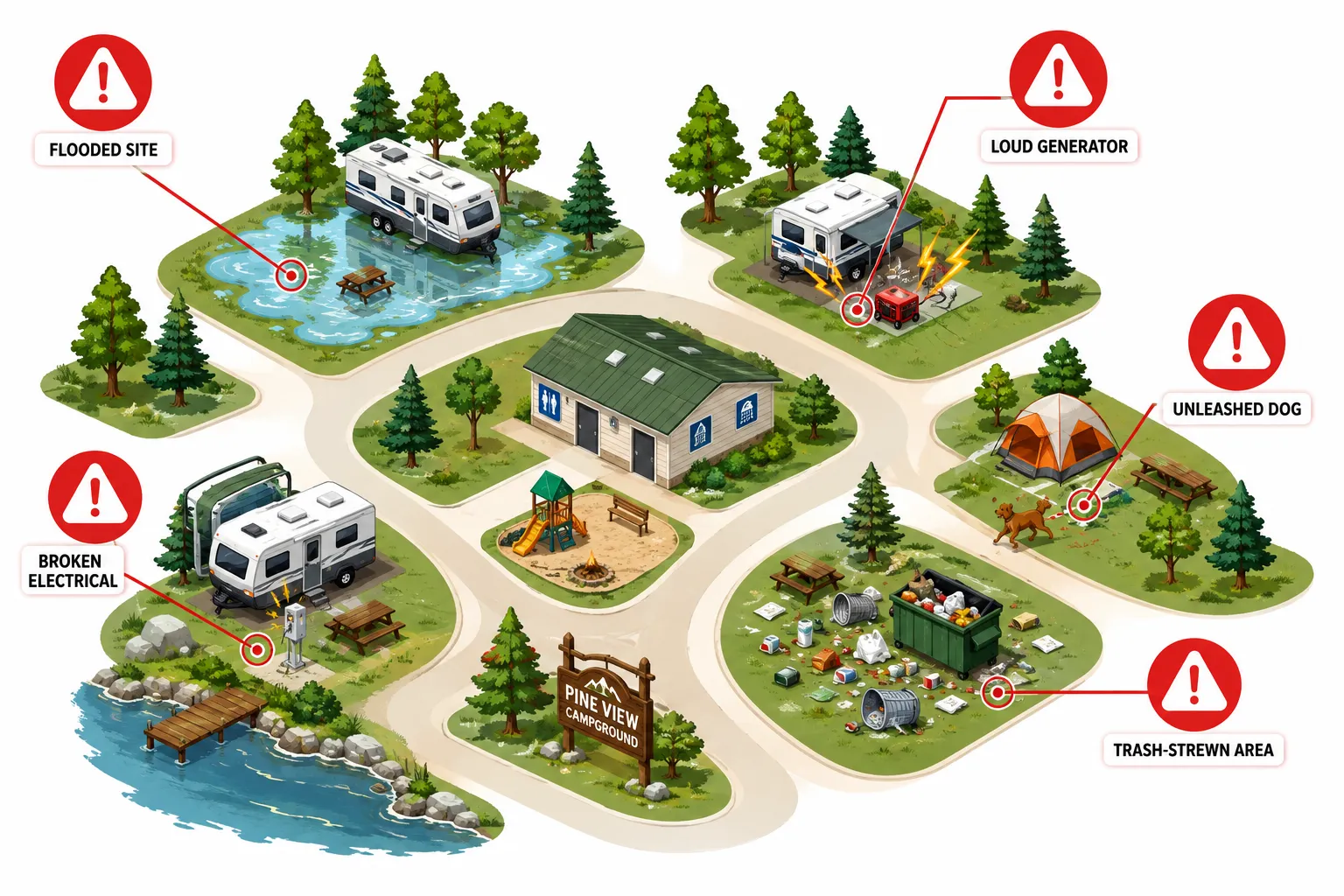
Sometimes the facilities look okay, but the people and management make a campground feel sketchy. These final entries round out the full list of 22 things that make a campground feel instantly sketchy.
15. 👤 No Visible Staff or Host
A campground with no host on site and no one answering the office phone is a concern. Who handles emergencies? Who enforces the rules? No visible staff often means no accountability, and that invites problems.
16. 📋 No Posted Rules or Quiet Hours
Rules aren’t just bureaucracy, they set expectations. A campground with no posted quiet hours, no speed limits, and no fire rules is one where anything goes. That’s fun for some people and a nightmare for others.
17. 🐕 Unleashed or Aggressive Dogs
Dogs are welcome at most campgrounds, but unleashed dogs roaming the property are a safety issue. If management doesn’t enforce leash rules, it usually means they’re not enforcing much else either.
ITEM TO CONSIDER

18. 🔊 Constant Loud Noise at All Hours
A party campground is fine, if that’s what was advertised. But a campground that claims to be family-friendly and has people blasting music at 2 a.m. with no response from staff is a red flag. Noise complaints that go unanswered say a lot.
19. 🚬 Heavy Smoke, Strange Smells, or Open Drug Use
This one is uncomfortable but real. Some campgrounds attract long-term residents or visitors who engage in behavior that makes families feel unsafe. Trust the nose and the eyes on this one.
ITEM TO CONSIDER

20. 📵 Fake or Suspiciously Perfect Online Reviews
Before booking, look at the pattern of reviews, not just the star rating. Watch out for:
| Warning Sign | What It Means |
|---|---|
| All 5-star reviews with no details | Possibly fake or incentivized |
| Sudden spike in reviews | Could be a review-buying campaign |
| No photos from real campers | Management controls the narrative |
| Responses that ignore complaints | Management doesn’t care |
21. 🚧 Construction or Renovation With No End Date
Some campground renovations are legitimate. But a site that’s been “under construction” for years, with half-finished bathrooms and blocked-off sites, is one that’s perpetually broken. Check recent reviews to see if the “coming soon” amenities ever actually arrive.
22. 💸 Prices That Are Way Too Cheap
If a campground is charging $10 a night when every comparable spot nearby costs $45,$60, ask why. Sometimes it’s a great deal. More often, there’s a reason. Extremely low prices can signal poor conditions, safety issues, or a campground that’s struggling to stay open at all.
How to Quickly Vet a Campground Before You Book
Knowing the 22 things that make a campground feel instantly sketchy is only half the battle. Here’s a fast checklist to use before hitting “Book Now”:
✅ Search recent reviews (within the last 6 months) on Google, Campendium, and The Dyrt
✅ Look at camper-uploaded photos, not just the official listing images
✅ Check the campground’s social media for recent activity and responses to complaints
✅ Call the office, if no one answers during business hours, that’s a sign
✅ Ask in RV Facebook groups, the community always knows which spots to skip
✅ Use satellite view on Google Maps to see the actual layout and condition
✅ Read the 1-star and 2-star reviews first, they reveal the real problems
Conclusion
Not every rough-around-the-edges campground is dangerous, some hidden gems just need a little love. But when multiple red flags show up at once, it’s almost always better to drive on and find somewhere safer.
The 22 things that make a campground feel instantly sketchy covered here, from broken gates and dirty bathrooms to no-show staff and suspiciously cheap prices, give RV travelers a solid checklist to work from. Trust the gut, do the research, and never be afraid to pull out of a sketchy spot.
Here’s what to do next:
- 📱 Download Campendium or The Dyrt and start reading real camper reviews
- 🗺️ Before every trip, do a quick Google Maps satellite check of the campground
- 💬 Join an RV Facebook group and ask locals about campgrounds on the route
- 🔌 Always travel with a surge protector, no exceptions
- 🚗 Build in a backup campground option for every night of the trip
Safe travels, and may every site be level, clean, and quiet by 10 p.m. 🏕️