
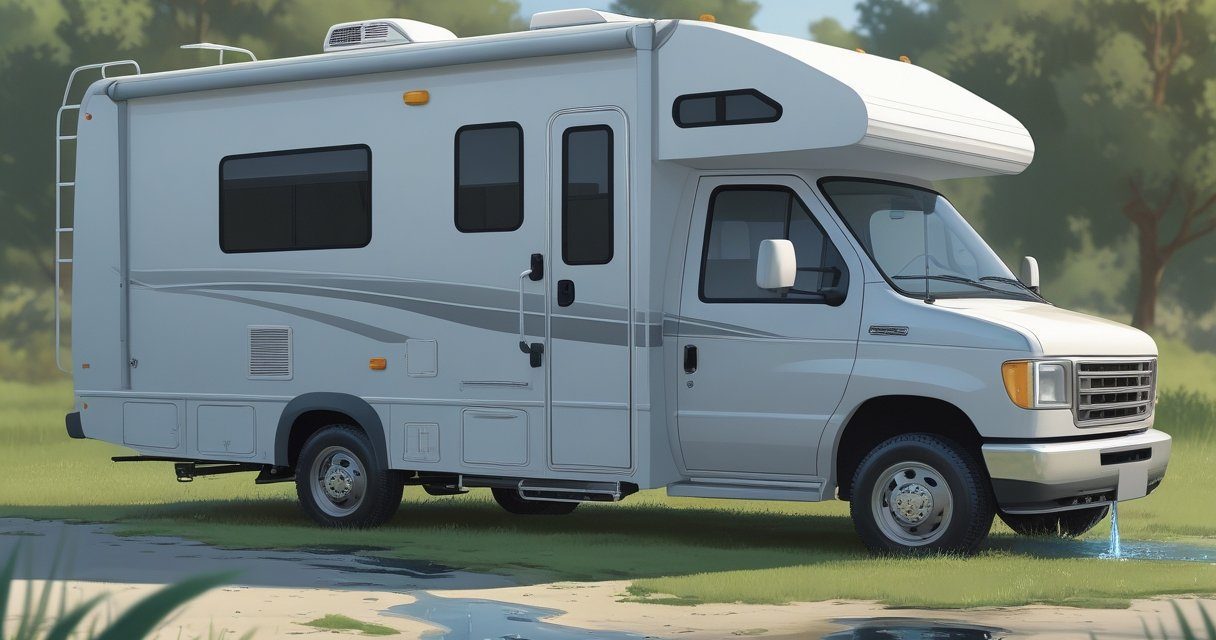
RVs are supposed to represent freedom and adventure, but every owner knows the reality includes a healthy dose of unexpected repairs. Whether you shelled out $12,000 for a used camper or $80,000 for a brand-new luxury model, certain things are going to break.
Not might break—will break. It’s like death and taxes, except with more duct tape and fewer deductions. A staggering 3 in 10 motorhomes break down by their second year, and by year five, up to 80% of RVs face major mechanical problems.
This isn’t about blaming manufacturers or calling one brand better than another—it’s just the reality of living with a house on wheels that bounces down highways at 60 mph.
Would you like to save this article?
1. Water Leaks: The Silent RV Assassin
Water damage is the number one enemy of every RV owner. Leaks don’t announce themselves with sirens and flashing lights—they sneak in quietly and cause chaos. You’ll be walking across your floor when suddenly it feels squishy. That’s when the panic sets in. You start crawling around like a detective, sniffing corners and tapping walls, trying to locate the source. And here’s the kicker: water in an RV doesn’t drip where the problem is—it travels.
The leak might be on the roof, but the water shows up near your shoes. RV water damage repair costs range from $20 to $2,800, depending on the severity. Window leaks are cheap fixes, but roof repairs can cost nearly $2,800, and if the water damages your subfloor, you’re looking at upwards of $3,000 for professional replacement.
Statistics don’t lie: Water leaks are among the most common RV problems, and they lead to mold, rot, and thousands in damage if ignored.
Why Leaks Love Catching You Off Guard
Here’s where things get entertaining. When you find a leak, you won’t fix it right away. Instead, you’ll stare at it like it’s a puzzle you didn’t ask to solve. You’ll touch it once, then touch it again just to confirm your worst fears. Then you’ll Google the problem, which is a terrible idea. Online RV forums will either tell you it’s a quick $3 gasket fix or that your entire RV is compromised and you should evacuate immediately. A guy named Diesel Dave from a 2009 forum will confidently diagnose your issue with zero actual information. And somehow, both answers will feel equally valid. Eventually, you’ll clean the area and hope it doesn’t happen again—which is basically RV roulette.
| Water Damage Type | Repair Cost |
|---|---|
| Window Leaks | $20 – $200 |
| Plumbing Leaks | $100 – $500 |
| Roof Repairs | $150 – $2,800 |
| Subfloor Replacement | $1,000 – $3,000+ |
| Appliance Leaks | $200 – $1,600 |
2. Seals: The Most Confident Liars on Your RV
Seals around your windows, doors, and roof look perfectly fine from the outside. They’ll smile at you and say, “Everything’s great!” Meanwhile, they’re holding on by a thread. And when do seals fail? Not during a sunny afternoon when you’re parked at home. Nope. They fail during torrential downpours, long road trips, or the exact moment you say, “Everything’s going smooth.” That’s when they betray you.
Seals are sneaky. They crack, dry out, and deteriorate slowly, and by the time you notice, water has already infiltrated. Cabinets, doors, and storage compartments account for 7.48% of all RV repairs, and compromised seals are often the culprit.
When Good Seals Go Bad
Picture this: You’re on a cross-country trip, and it starts raining. Hard. You think your seals are fine because you checked them last season. But RV seals don’t care about your schedule. They fail when they decide to fail, and water starts sneaking into your rig like an uninvited guest. Water moves with purpose in an RV—it enters through the roof and shows up in the most inconvenient places. Before you know it, you’ve got water damage, and you’re Googling “how to fix RV seals” at 2 a.m. in a campground with spotty Wi-Fi. The good news? Sealant repairs cost $150 to $400. The bad news? If you ignore it, you might be facing a full roof replacement at $3,000 to $8,000.
3. Electrical Issues: The Moody Teenager of RV Systems
RV electrical systems don’t break—they develop attitudes. Your lights will flicker like they’re thinking about working. Your outlets will function when they feel like it. You’ll plug something in and then wait, not for power, but for confirmation that the outlet remembers its job. You hit a switch once, nothing happens. You hit it again, and suddenly it works, and you look around like you just performed a magic trick.
Electrical problems are maddeningly inconsistent, which makes them almost impossible to fix. According to RV service data, electrical issues are among the top complaints from owners, regardless of whether the RV is new or used.
When Your RV’s Wiring Has Commitment Issues
Electrical gremlins are real, and they live in your walls. One day, everything works perfectly. The next, half your outlets are dead, and your fridge is acting like it forgot how to refrigerate. You’ll troubleshoot by flipping breakers, checking fuses, and praying to the RV gods. Sometimes the problem magically resolves itself, which is even more unsettling because now you don’t know what you fixed—or if it’ll happen again. Labor fees for RV maintenance typically cost over $100 per hour, so if you can’t figure out the electrical issue yourself, prepare to pay a professional to solve the mystery. Or you’ll live with it and develop workarounds, like avoiding that one outlet that only works on Tuesdays.
4. Slide-Outs: The Biggest Gamble in the RV Industry
When slide-outs work, they’re glorious. You press a button, and your RV magically expands into a spacious palace. You feel like a genius. But when they don’t work, everything changes. You’re standing outside your RV, the slide is halfway extended, and your neighbors are pretending not to watch while you frantically press buttons like you’re defusing a bomb.
Slide-out problems account for 4.59% of all RV repairs, and they typically stem from motor failure, seal damage, or misalignment. Regular lubrication and operation on level ground can prevent issues, but let’s be real—how many RV owners remember to do that before something goes wrong?
The Slide-Out Standoff
Nothing tests your patience quite like a malfunctioning slide-out. You press the button. Nothing. You press it again. Still nothing. Now you’re fully committed to the lie: “It’s probably just the angle we’re parked on.” But there is no angle. Your RV is perfectly level, and your slide-out has simply decided today is not the day. You’ll try extending it, then retracting it, and eventually you’ll grab the manual override crank and start cranking like you’re operating a medieval torture device. Your spouse will offer helpful suggestions like, “Did you try pressing the button?” Yes. You tried pressing the button. Seventeen times. Eventually, you’ll get it working—or you’ll just live in a slightly smaller RV and tell yourself it’s “cozier this way.”
| Slide-Out Problem | Common Causes | Prevention |
|---|---|---|
| Won’t Extend/Retract | Battery failure, motor issues, misaligned track | Check battery, lubricate annually |
| Seal Leaks | Worn or damaged seals | Clean and lubricate seals regularly |
| Misalignment | Unlevel ground, overloading | Operate on level ground, avoid heavy furniture |
5. Small Relentless Nonsense: The Death by a Thousand Paper Cuts
This is where RV ownership really gets you. It’s not the big catastrophic failures—it’s the constant little annoyances. A handle that loosens every single trip. A drawer that won’t stay closed no matter how many times you adjust it. A cabinet with its own agenda. Nothing is serious, but everything is consistent. Your RV doesn’t break all at once—it takes turns, like it’s trying to be polite.
Over time, you stop fixing everything. Not because you’re lazy, but because you’ve done the math. You start categorizing problems: Needs fixing now, Should fix eventually, and Not worth my time. That last category gets crowded fast. According to RV ownership analysis, annual maintenance costs range from $500 to $2,000, but that doesn’t include all the little “character-building” repairs you ignore because life’s too short.
The Art of Strategic Neglect
At first, every problem stresses you out. But eventually, you reach RV enlightenment. Something breaks, and instead of panicking, you just look at it and think, “What is it this time?” You develop a casual relationship with dysfunction. You’ve got one light you don’t use, an outlet you don’t trust, and a drawer you open slowly because it might fall on the floor. You don’t fix these things—you adapt to them. It’s like living with a quirky roommate who occasionally stops working but means well. By year five, 80% of RVs face major problems, but by then, you’ve become a Zen master of acceptance. You’ve learned that RV ownership isn’t about perfection—it’s about appreciating those rare moments when everything actually works.
The Bottom Line: Embrace the Chaos
It doesn’t matter if you bought a budget camper or a luxury motorhome—things are going to break. Water will leak, seals will fail, electrical systems will throw tantrums, slide-outs will stage protests, and small annoying things will test your sanity. That’s not a defect—it’s part of the deal. But here’s the thing: once you accept that reality, RV life becomes a lot more enjoyable.
You stop chasing the perfect setup and start appreciating the moments when nothing’s broken. And when everything does work? That’s history. Write it down. Tell your grandchildren. You just experienced a miracle.
So if you’re an RV owner—or considering becoming one—know this: repairs are inevitable, but adventures are worth it. Keep a good toolbox, maintain a sense of humor, and remember that every problem is just another story to tell around the campfire.
SOURCES
https://www.yahoo.com/lifestyle/much-does-rv-water-damage-102510492.html
https://johnmarucci.com/2024/09/15/the-real-cost-of-rv-ownership-5-year-analysis/
https://www.bishs.com/blog/top-5-most-common-rv-problems-and-how-to-prevent-them/


