
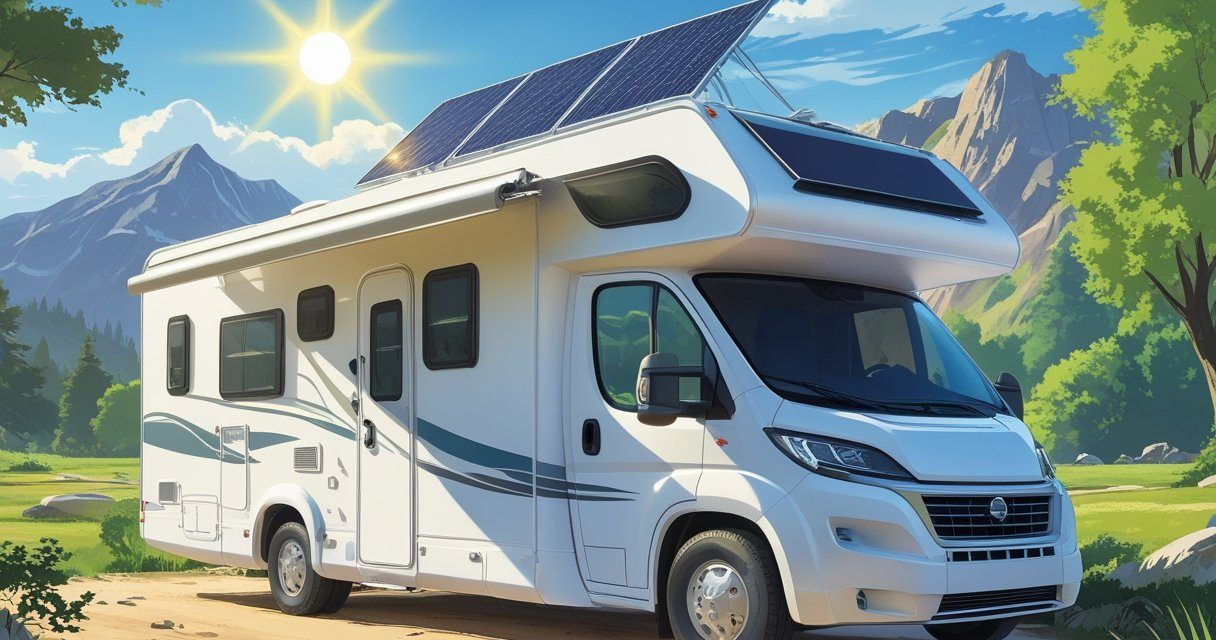
So you’re sitting in your RV, dreaming about endless boondocking adventures without worrying about power. You’ve heard about solar, but the whole thing seems as complicated as rocket science. Well, buckle up, because RV solar expert Dan Heming just dropped some serious knowledge bombs that’ll transform how you think about powering your rig.

Whether you’re planning a basic setup or going full off-grid warrior mode, these insights will save you headaches, money, and maybe even prevent a small electrical fire (yikes!).

Would you like to save this article?

We'll email this post to you, so you can come back to it later to read!

1. The 2-3X Rule: Your Solar Panel Sizing Secret Formula

Here’s a rule that’ll make solar sizing way easier than you thought. For every amp-hour of battery capacity you have, you need 2 to 3 times that number in solar panel watts. Got 400 amp-hours of battery? You’ll want 800-1,200 watts of solar panels. According to the Recreational Vehicles Batteries Market, lithium battery adoption is growing at 64% more per year than the RV battery market as a whole, meaning more RVers are upgrading their power systems than ever before.

This formula isn’t just some random number Dan pulled out of thin air. It’s based on real-world conditions where clouds happen, trees exist, and you’re not always parked in the Mojave Desert at high noon. If you’re serious about boondocking for more than a day or two, starting with 1,200-1,500 watts gives you breathing room.

Think of it like packing snacks for a road trip. Sure, you could survive on one granola bar, but wouldn’t you rather have options? Your batteries will thank you when they’re not constantly gasping for electrons like a fish out of water.

Battery CapacityMinimum Solar WattsRecommended Solar Watts
200 amp-hours400W600W
400 amp-hours800W1,200W
600 amp-hours1,200W1,800W
800 amp-hours1,600W2,400W

2. Voltage Drama: Why 12V Isn’t Always Your Best Friend

Most RVers default to 12V systems because, well, that’s what everyone talks about. But here’s where it gets spicy. 12V systems require thicker wiring and more charge controllers because they’re pushing higher amperage. It’s like trying to drink a milkshake through a coffee stirrer versus a boba tea straw—technically possible, but unnecessarily difficult.

Dan revealed that 24V hits a “sweet spot” for many RV applications. You get better efficiency, thinner wiring (easier to run through tight spaces), and fewer charge controllers. For massive systems with dual inverters or plans to run high-draw appliances, 48V systems become the efficiency champions. The global RV batteries market is projected to grow from $5.27 billion in 2026 to $9.25 billion by 2034, showing that serious power systems are becoming mainstream.

Here’s the kicker: You don’t need separate 12V and 48V systems fighting for dominance in your rig. Modern converters can handle your 12V loads while the main system operates at a higher voltage. It’s like having a universal translator for your electrical setup.

System VoltageBest ForKey AdvantageConsideration
12VSmall-medium systemsSimplest, most compatibleThicker wiring needed
24VMedium-large systemsEfficiency sweet spotFewer compatible devices
48VLarge/complex systemsMaximum efficiencyRequires more expertise

3. Air Conditioning Off-Grid? It’s Possible (But You’ll Need Muscle)

Running AC off solar sounds like trying to power a spaceship with a hamster wheel, but it’s actually doable with the right setup. You’ll need a large inverter (to handle those brutal startup surges), significant battery capacity, and enough solar to actually recharge what you drain. According to real-world RVers, systems with 2,000+ watts of solar and robust battery banks can successfully run air conditioning while boondocking.

The secret weapon? Modern inverter-based AC units. These aren’t your grandpa’s rooftop ACs that gulp electricity like a college kid at an all-you-can-drink buffet. They’re efficient, variable-speed units that sip power instead of chugging it. Some advanced RVers are even installing 48V DC mini-split systems that integrate directly with their solar setup.

But let’s be real: running AC off-grid isn’t for casual weekend warriors. You’re looking at premium components and serious investment. It’s like the difference between learning to ride a bike and training for the Tour de France. Both are cycling, but one requires significantly more commitment (and spandex).

4. The Budget Reality Check: What Solar Actually Costs

Let’s talk money, because nobody wants to discover their dream solar setup costs more than a used car. Dan broke down the budget tiers that’ll help you plan without selling a kidney. According to industry data, RV solar installation typically costs between $1,500 and $5,000 depending on system size and complexity.

Basic Minimalist Setup ($1,000-$1,500): No inverter, just 12V power for lights, fans, and charging devices. Perfect for fairweather campers.

Small Inverter System ($2,000-$3,000): Now we’re talking—basic 120V outlets for laptops, TVs, and small appliances. Weekend warrior approved.

Core Off-Grid System ($4,000-$6,000): Fully integrated with your RV’s 30A or 50A service, running most appliances comfortably. This is where serious boondockers live.

Advanced Top-Tier System ($7,000-$10,000+): High-capacity batteries, high-voltage systems, multiple inverters, and enough power to make your neighbors jealous.

Sure, these numbers might make your wallet cry a little. But compare that to constantly paying for campground hookups at $40-60 per night, and suddenly that $5,000 system pays for itself after 100-150 nights. You’re essentially buying your freedom on the installment plan.

Budget TierPrice RangeWhat You GetBest For
Basic$1,000-$1,50012V only, no inverterLight users
Small Inverter$2,000-$3,000Basic 120V powerWeekend trips
Core Off-Grid$4,000-$6,000Full integrationSerious boondocking
Advanced$7,000-$10,000+High-capacity powerhouseExtended off-grid

5. DIY vs. Professional Design: When to Call in the Cavalry

Here’s where Dan gets refreshingly honest: electricity can be dangerous if you mess it up. We’re talking melted connections, damaged charge controllers, and in worst-case scenarios, actual fires. The RV Industry Association added lithium batteries to the 2020 edition of their national standards specifically because so many RVers were DIYing systems without proper safety protocols.

Many successful DIYers build their own systems, but here’s the pro move: hire a consultant to design the plan or review your design. For a few hundred dollars, you get someone who’s made (and learned from) all the mistakes checking your work. Dan mentioned that “nine times out of 10” DIY designs are solid, but there’s usually something that could be improved—wrong fuse types, undersized wiring, or components that don’t play nice together.

Think of it like trying to cut your own hair. Sure, you can do it, and some people pull it off beautifully. But most of us would rather pay a professional to ensure we don’t end up looking like we lost a fight with a lawnmower.

6. The Shading Myth That’s Costing You Power

Got trees? Worried that one shaded panel will kill your entire solar array? Here’s some good news: modern panels have bypass diodes that let electricity flow through shaded panels instead of creating a bottleneck. It’s like having a highway with multiple lanes—if one’s blocked, traffic can route around it.

This doesn’t mean shade is your friend (it’s definitely not), but it means you don’t need to lose sleep over occasional shadowy situations. Your system will adapt and keep producing power, just at a reduced rate. The key is understanding that solar production varies throughout the day and across seasons.

Here’s the reality check: even in ideal conditions, you’re not getting perfect panel output 24/7. Clouds, angle of the sun, dust, temperature—everything affects production. That’s why Dan’s 2-3X rule from tip #1 is so important. You’re building in buffer for when conditions aren’t Instagram-perfect.

7. Portable Power Stations: The “I’m Not Ready to Commit” Solution

Not everyone wants to drill holes in their pristine RV roof or spend weekends knee-deep in wiring diagrams. Enter portable power stations like the Bluetti Elite 300 featured in the consultation. These turnkey solutions let you power smaller appliances and electronics without permanent installation or electrical expertise.

Think of portable stations as training wheels for solar. They’re perfect for RVers who want to test the off-grid lifestyle before committing to a full installation. You can power laptops, CPAP machines, TVs, and even small appliances. Plus, they’re great backup power for anyone, whether you’re RVing or dealing with home power outages.

The trade-off? You won’t run your entire RV or any serious appliances for extended periods. But for weekend boondockers or folks supplementing their existing setup, portable stations offer flexibility without complexity. You can always upgrade to a hardwired system later when you’re ready to go full solar warrior.


Final Thoughts: Your Solar Journey Starts Here

Going solar in your RV isn’t about having the biggest, baddest system on the campground (though that’s fun too). It’s about matching your power needs with a setup that fits your budget and travel style. Whether you’re starting with a basic $1,500 system or building a $10,000 off-grid mansion-on-wheels, understanding these fundamentals will save you from expensive mistakes.

The RV solar market is booming for good reason. With lithium battery technology improving and component costs dropping, there’s never been a better time to cut the campground cord and embrace boondocking freedom. Take your time, do your research, and don’t be afraid to invest in professional guidance. Your future self—parked in some stunning location with all the power you need—will thank you.

Remember: the goal isn’t perfection. It’s having enough power to live comfortably while exploring the places that make you feel alive. Now get out there and start planning your solar setup!


SOURCES

https://www.fortunebusinessinsights.com/recreational-vehicles-rvs-batteries-market-109972

https://relionbattery.com/knowledge/agm-vs-lithium-batteries-which-are-better-for-solar-rv-and-camper-van-battery-banks

https://www.rvia.org/news-insights/rv-industry-making-changes-address-growing-popularity-lithium-batteries

https://www.carefreecoveredrvstorage.com/blogs/rv-solar-installation-basics-is-it-worth-adding-solar-panels-to-an-rv-roof

https://xantrex.com/about-xantrex/blog/rv/how-much-does-it-cost-to-add-solar-to-my-rv

https://blog.campingworld.com/can-you-run-ac-with-solar-power-in-an-rv