(As an amazon affiliate, we earn a commission when purchasing via our links below)
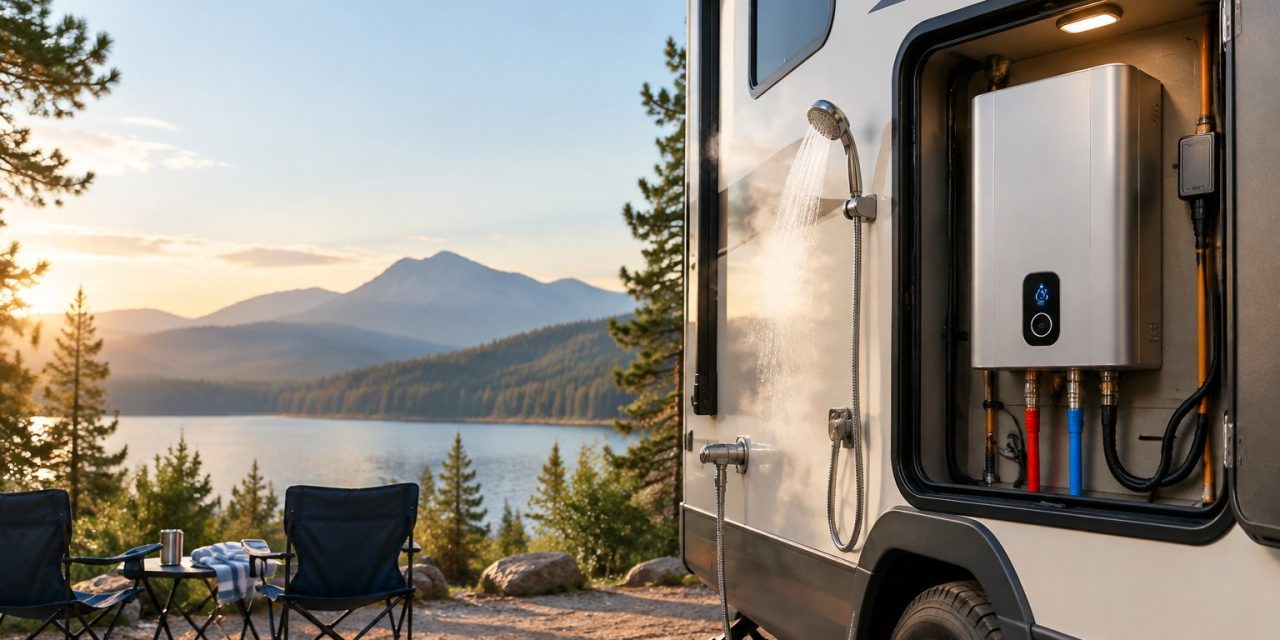
Hot water at the sink or shower is one of the bigger comfort trade-offs in RV living, and a tankless electric heater is one of the more practical fixes when you’re plugged into shore power. Unlike propane tank heaters, these units skip the pilot light and holding tank entirely, heating water only as it passes through. That makes them compact enough to tuck into a cabinet or bay, which matters when every cubic inch of an RV is already spoken for.
The core trade-off with electric tankless heaters is that they need real electrical capacity to produce real heat. A propane heater draws fuel from a tank; an electric one draws amperage from your panel or campground pedestal, and 110-120V units rated at 3,000 to 4,500 watts pull enough current to matter. Before buying, it helps to understand your RV’s wiring, breaker capacity, and what size shore power connection you typically use.
Best 110 volt Tankless Water Heater for RV buyers should pay close attention to listed wattage, required breaker size, wire gauge, and whether the installation calls for hardwiring or a standard outlet. Flow rate and temperature rise are linked: higher flow means less time for the unit to heat the water, so manufacturers list a specific gallons-per-minute rate tied to a specific temperature increase. A unit rated for a bathroom sink will behave differently at a kitchen faucet or a shower head, so matching the product to your actual use case avoids disappointment.
Best for single-sink installations with verified RV installs: CAMPLUX Tankless Water Heater Electric 120V, 4.5kW
Best for lower-amperage setups: 110V Tankless Water Heater Electric, 3000W
Best for shower-style point-of-use with included shower head: Tankless Electric Hot Water Heater, 4500W 110V
CAMPLUX Tankless Water Heater Electric 120V, 4.5kW

This is a solid pick for RVers who need hot water at a single sink and have the electrical capacity to support a 40-amp circuit.
Pros
- CSA certified with a self-modulating design that adjusts power to flow and temperature settings
- Compact wall-mount footprint fits tight cabinets or utility bays
- Multiple reviewers report years of reliable service in campers and outbuildings
Cons
- Requires a dedicated 40A breaker and 10AWG wire, a significant draw for many RV electrical systems
- Must be hardwired, not plug-in, which adds installation complexity
- Rated for one sink at a time, not a whole-RV solution
CAMPLUX markets this unit for kitchens, wet bars, and boats, and reviewers confirm successful installs in campers and cabins. The catch is the 40-amp requirement: that’s more than many RV panels or 30-amp shore connections can comfortably spare alongside other appliances. Reviewers mention tripped breakers when paired with heavy simultaneous loads, so check your panel’s available capacity before ordering. For a single sink with 120V, 40A service available, it heats water in seconds and multiple owners report it running for years without issue.
110V Tankless Water Heater Electric, 3000W

This smaller-wattage unit suits campers who want point-of-use hot water at a sink without committing to the heaviest electrical draw on this list.
Pros
- Lower 3,000W rating may suit RVs with tighter available amperage than the 4.5kW models
- Compact vertical design marketed for RVs, apartments, and camping
- Includes leakage protection and dry-boil protection
Cons
- Manufacturer explicitly states it is not suitable for showers, which require higher flow rates
- Vertical-only installation; mounting it horizontally can trigger an error code
- Still requires a 32A-rated circuit and heavier-gauge wire, not a casual outlet plug
The listing calls out RV use, but the installation notes matter more than the marketing copy. This heater requires vertical mounting only and a circuit rated above 32 amps with 2.5mm² wire, specs worth confirming against your rig’s panel before purchase. It’s built for sink-level use rather than showering, and reviewer feedback is mixed: some report smooth installs and hot water within seconds, others needed to correct installation errors before it worked as expected. Treat the included manual as mandatory reading, not an afterthought.
Tankless Electric Hot Water Heater, 4500W 110V

This unit ships with a shower head and bracket, making it the option to consider if you want a point-of-use shower setup rather than just a sink upgrade.
Pros
- Includes a shower head, outlet pipe, and mounting bracket for a more complete setup
- Adjustable temperature range with LED display for monitoring output
- Stainless steel inner liner and multiple safety protections including overheat shutoff
Cons
- Rated current of 40.9A means it needs a substantial dedicated circuit, similar to the larger CAMPLUX unit
- Listed as suitable for “whole house” and RV use without documented RV-specific installation guidance
- Limited independent review history compared to other options on this list
CNCEST markets this heater broadly, from bathtubs to whole-house use, which is a wide claim for a single 4,500W point-of-use unit. The included shower accessories make it the most shower-ready option here, but the 40.9A rated current puts real demands on your electrical system, comparable to the CAMPLUX model. Because the product has a thinner review history, lean on the manufacturer’s specification sheet rather than marketing language when deciding if your RV’s wiring can support it.
Buying Guide
Choosing a 110-120V tankless water heater for an RV starts with your electrical system, not the water heater itself. These units convert electricity directly into heat, and that process takes considerably more current than most RV appliances draw.
Check Your Electrical Capacity First
Before considering flow rate or features, confirm what your RV’s panel and shore power connection can actually supply.
| Factor | Why It Matters |
|---|---|
| Breaker size | Units in this category often need 30-40A dedicated circuits |
| Wire gauge | Undersized wire can overheat under sustained high-current loads |
| Shore power rating | A 30A campground pedestal may not have headroom for a 4,500W heater plus other appliances |
| Hardwire vs. plug | Many units require hardwiring, not a standard outlet, and may need a licensed installer |
Running a heavy water heater alongside an air conditioner or microwave can trip breakers fast. Map out your typical power usage before assuming a unit will fit.
Match Flow Rate to Your Actual Use
Specifications list a flow rate tied to a specific temperature rise, and that relationship is not flexible. A heater that handles 0.5 GPM at a comfortable temperature rise will deliver cooler water if you open the tap wider. Sink-only units are not rated for shower-level flow, so check the manufacturer’s stated use case against your intended fixture.
Verify “RV” Claims Independently
A listing mentioning RV use does not confirm compatibility with your rig’s wiring or water system. Cross-check voltage, amperage, and mounting orientation requirements against your RV’s documentation and, when in doubt, consult an RV electrician before installation.
Safety Features Worth Prioritizing
- Dry-boil or dry-combustion protection, which shuts the unit off if water flow stops
- Overheat shutoff to prevent damage or scalding
- Water-electricity isolation and leakage protection, especially important in a moving vehicle
- Clear LED temperature display so you can monitor output in real time
Installation orientation matters too: some units require vertical mounting only, and running them horizontally can trigger error codes or void the warranty.