
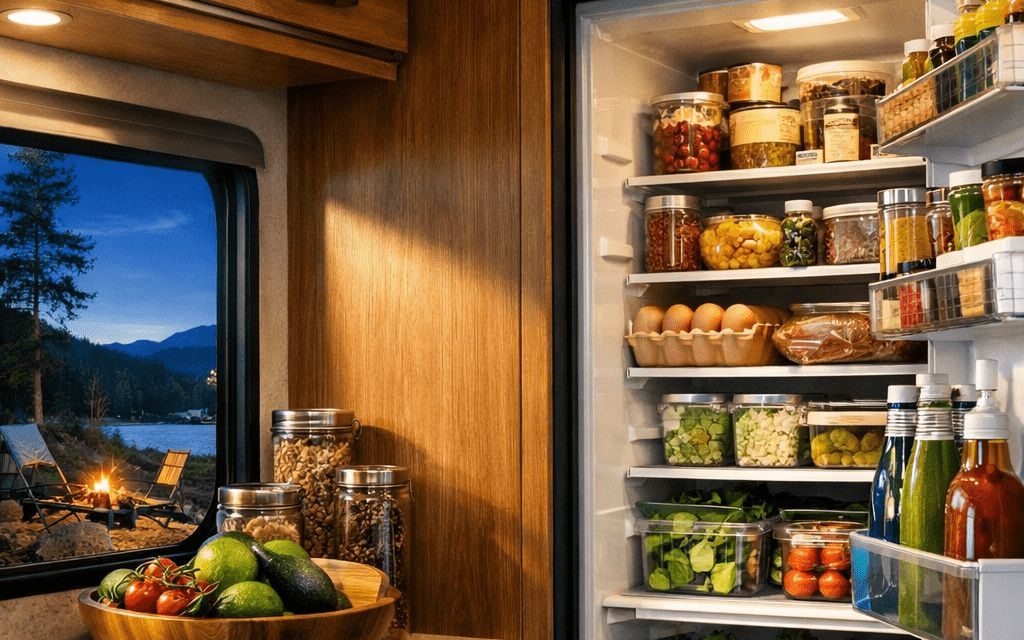
You’re parked at a stunning campsite in the mountains, ready to cook a delicious dinner, only to open your RV fridge and discover wilted lettuce, spoiled milk, and meat that’s turned questionable.
Sound familiar? Food preservation challenges plague even the most experienced RV enthusiasts, but they don’t have to ruin your adventures.
Understanding the best way to preserve food in your RV can transform your travel experience, save hundreds of dollars, and ensure you always have fresh, safe meals ready to enjoy.
Whether you’re a weekend warrior or a full-time RVer, mastering food storage techniques is essential for comfortable life on the road.
Key Takeaways
- Refrigeration remains the top choice for RV food preservation, with 50% of RVers relying on this method, but combining multiple strategies yields the best results
- Proper temperature management is critical—RV refrigerators should maintain 35-38°F, while freezers need to stay at 0°F or below for optimal food safety
- Diversifying preservation methods including vacuum sealing, dehydration, and strategic use of shelf-stable foods extends your boondocking capabilities
- Energy-efficient practices like pre-cooling food, maintaining proper ventilation, and using thermal mass help RV refrigerators work more effectively
- Smart meal planning and rotation systems prevent waste and ensure you consume food before it spoils, maximizing your grocery budget
Understanding RV Food Preservation Challenges
Would you like to save this article?
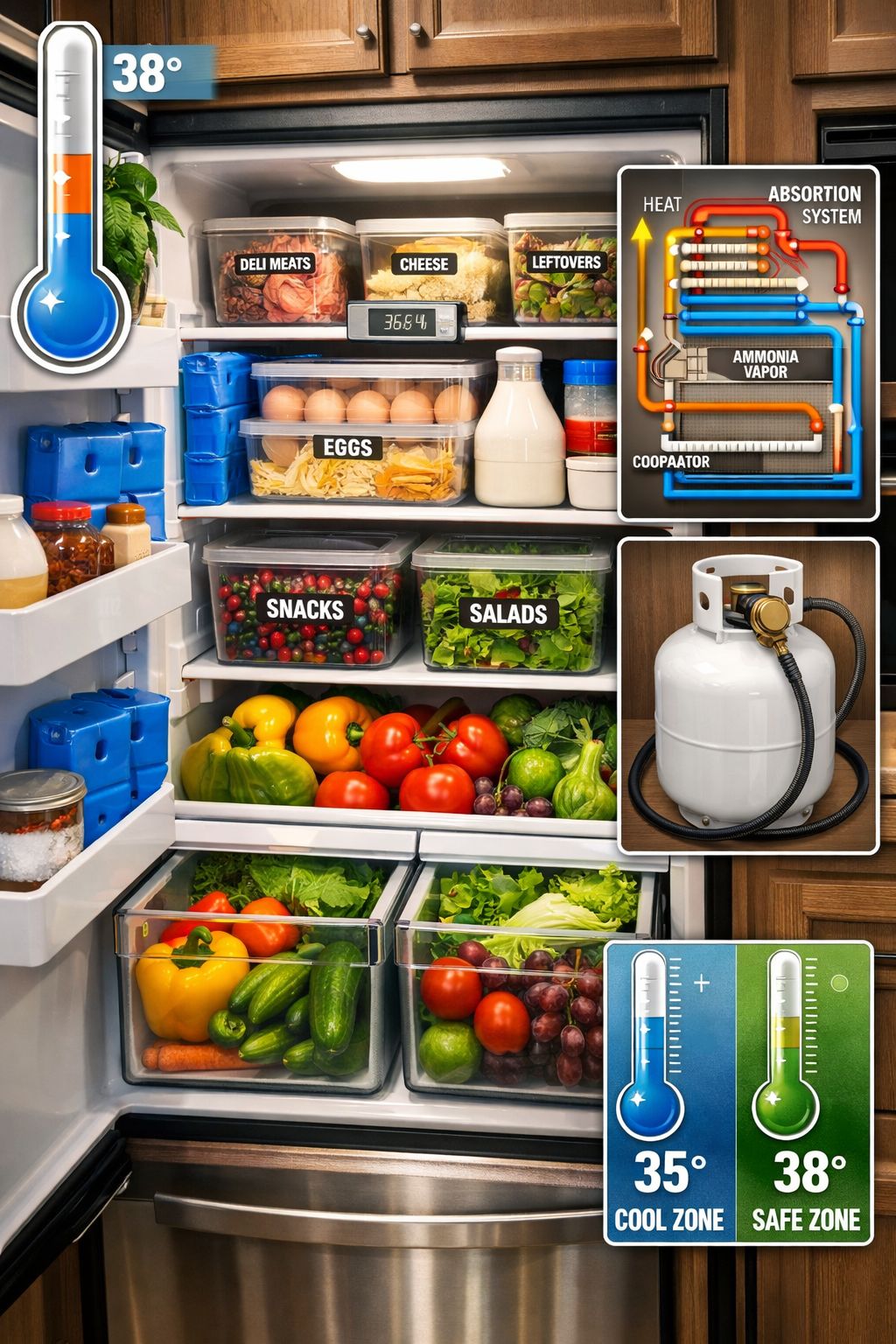
Life on the road presents unique obstacles that traditional home kitchens never face. RV refrigerators operate differently than residential models, often running on propane, electricity, or both through absorption cooling systems[1]. These units work harder in hot weather, struggle on uneven terrain, and consume significant power—making food preservation a genuine challenge.
The reality is that RV refrigerators are less efficient than home units. They typically take 24 hours to reach optimal temperature when first turned on, and they’re sensitive to outside temperatures. When parked in 90°F heat, your RV fridge might struggle to maintain safe food temperatures, especially if it’s overpacked or lacks proper ventilation.
Space constraints add another layer of complexity. The average RV refrigerator holds just 8-12 cubic feet compared to 20-25 cubic feet in residential models[2]. This limited capacity demands strategic planning about what foods to bring, how to store them, and how quickly they’ll be consumed.
What Is the Best Way To Preserve Food In Your RV? Top Methods Explored
According to recent polling data, 50% of RV enthusiasts rely primarily on refrigeration, while 41% use freezer storage, 9% depend on canned goods, and surprisingly, 0% reported using dehydrated foods as their main strategy. However, the most successful RVers don’t choose just one method—they combine several approaches for maximum flexibility.
Refrigeration: The Foundation of RV Food Storage
Refrigeration remains the cornerstone of RV food preservation for good reason. Modern RV refrigerators offer convenience and versatility, allowing you to store fresh produce, dairy, meats, and leftovers just like at home. Absorption refrigerators, the most common type in RVs, use heat rather than compressors to create cooling, making them quieter but less efficient than residential units.
To maximize refrigeration effectiveness:
- Pre-cool your fridge 24 hours before loading food
- Maintain proper leveling—RV fridges work poorly when tilted more than 3 degrees
- Ensure adequate ventilation around cooling fins and vents
- Use a thermometer to monitor internal temperature (ideal: 35-38°F)
- Avoid overloading—air circulation is essential for even cooling
- Add battery-powered fans inside to improve air distribution
Many experienced RVers swear by adding thermal mass to their refrigerators. Frozen water bottles or gel packs help maintain consistent temperatures and provide backup cooling if power fails. This simple trick can keep food safe for several additional hours during outages.
Freezer Storage: Long-Term Preservation Power
Freezer storage ranks second in popularity among RVers, and for good reason—it dramatically extends food shelf life. While some RVs come with combination fridge-freezer units, others have separate freezer compartments or dedicated chest freezers.
Portable 12V freezers have revolutionized RV food storage. These compressor-driven units are far more efficient than absorption models, drawing less power while maintaining colder temperatures. Brands like Dometic, ARB, and Alpicool offer models ranging from 20 to 100+ liters, perfect for extended boondocking trips.
Freezing strategies for RV life:
- Pre-freeze meals at home before trips to save space and energy
- Vacuum seal portions to prevent freezer burn and maximize storage
- Label everything with contents and freezing date
- Organize by meal type for easy access
- Keep a freezer inventory to track what you have
One clever technique involves freezing water bottles to use as ice blocks. As they melt, you have drinking water instead of wasted ice melt. This dual-purpose approach saves space and reduces the need for ice runs.
Canned and Shelf-Stable Foods: The Reliable Backup
While only 9% of surveyed RVers use canned goods as their primary preservation method, shelf-stable foods deserve more attention. They require no power, withstand temperature fluctuations, and provide reliable nutrition when refrigeration fails or space runs out.
Modern shelf-stable options extend far beyond traditional canned vegetables:
- Retort pouches (like tuna and chicken packets)
- Tetra Pak containers for milk, broth, and soups
- Vacuum-sealed meats (shelf-stable until opened)
- Dried pasta, rice, and grains
- Nut butters and preserves
- Shelf-stable milk alternatives (almond, oat, coconut)
The key advantage? Canned goods free up precious refrigerator space for items that truly need cooling. A well-stocked pantry of shelf-stable foods also provides peace of mind during extended dry camping when power conservation becomes critical.
Best Way To Preserve Food In Your RV: Advanced Techniques
Beyond the basic three methods, several advanced preservation techniques can revolutionize your RV food storage game.
Vacuum Sealing: The Space-Saving Champion
Vacuum sealing removes air from food packaging, dramatically extending shelf life while reducing storage space by up to 50%. This technique works for both refrigerated and frozen foods, preventing freezer burn and keeping flavors fresh.
Benefits of vacuum sealing for RVers:
- Extends refrigerated meat life from 3-5 days to 10-14 days
- Prevents freezer burn for months
- Allows portion control and pre-measured ingredients
- Reduces food waste significantly
- Creates waterproof packaging
Portable vacuum sealers like FoodSaver models run on standard AC power and store easily in RV cabinets. Many full-time RVers prep and seal meals at home, then simply reheat them on the road—saving time, reducing cooking odors, and minimizing cleanup.
Dehydration: Lightweight and Long-Lasting
Despite 0% of poll respondents using dehydration as their primary method, this preservation technique deserves serious consideration, especially for boondockers and minimalists. Dehydrated foods weigh up to 90% less than fresh equivalents and require no refrigeration[3].
Common foods to dehydrate for RV travel:
| Food Type | Shelf Life | Rehydration Time |
|---|---|---|
| Vegetables | 8-12 months | 15-30 minutes |
| Fruits | 6-12 months | 30-60 minutes |
| Meats (jerky) | 2-3 months | N/A (eat dry) |
| Herbs | 1-2 years | Instant |
| Meals (backpacking style) | 5+ years | 10-20 minutes |
Compact dehydrators designed for RV use consume minimal power and can run during travel days when generator or shore power is available. Alternatively, prepare dehydrated foods at home and store them in airtight containers or mylar bags with oxygen absorbers.
Fermentation and Pickling: Old-School Preservation
Adventurous RVers are rediscovering ancient preservation methods like fermentation and pickling. These techniques not only preserve food without refrigeration but also create probiotic-rich foods that support gut health during travel.
Simple RV-friendly fermentation projects:
- Sauerkraut and kimchi (ready in 3-7 days)
- Quick pickles (ready in 24 hours)
- Fermented hot sauces
- Kombucha (if you have space for brewing)
Small-batch fermentation works well in RVs because you can control portions and avoid overwhelming your limited space. Mason jars with airlock lids make the process nearly foolproof and prevent messy overflow.
Maximizing Your RV Refrigerator Performance
Since refrigeration tops the list of preservation methods, optimizing your RV fridge performance delivers the biggest impact on food safety and longevity.
Temperature Management Essentials
Proper temperature control is non-negotiable for food safety. The USDA recommends refrigerators maintain 40°F or below, with 35-38°F being ideal[4]. RV refrigerators struggle more than home units, making monitoring essential.
Install wireless thermometers with remote displays so you can check fridge and freezer temperatures without opening doors. Some models alert you when temperatures rise above safe levels, preventing food spoilage before it happens.
Temperature troubleshooting tips:
- Check door seals monthly—torn or loose gaskets waste energy
- Clean cooling fins annually to maintain efficiency
- Verify level—use a bubble level to ensure proper positioning
- Shade the exterior vent in extreme heat with RV-specific vent covers
- Run on electric when available—it’s more efficient than propane in hot weather
Strategic Food Placement
Where you place food inside your RV refrigerator significantly impacts how well it stays preserved. Cold air sinks, so the bottom shelves and crisper drawers are coldest, while door shelves experience the most temperature fluctuation.
Optimal RV refrigerator organization:
- Top shelf: Leftovers, drinks, ready-to-eat foods
- Middle shelves: Dairy products, eggs, deli meats
- Bottom shelves: Raw meat (in sealed containers to prevent cross-contamination)
- Crisper drawers: Fruits and vegetables (separately if possible)
- Door shelves: Condiments, pickles, shelf-stable items only
Avoid storing milk, eggs, or raw meat in door compartments—the temperature swings compromise safety and freshness. Instead, reserve door space for items like ketchup, mustard, and hot sauce that tolerate temperature variations.
Energy Conservation Strategies
RV refrigerators consume significant power, especially when boondocking. Energy-efficient practices extend your battery life and propane supply while keeping food fresh.
Power-saving techniques:
- Minimize door openings—decide what you need before opening
- Cool food before storing—never put hot items directly in the fridge
- Use containers wisely—covered foods retain moisture and temperature better
- Maintain 70% capacity—don’t overfill or underfill
- Add thermal mass—frozen water bottles help maintain temperature
- Park in shade when possible to reduce ambient heat
Some RVers install solar panels specifically to support refrigeration, ensuring their fridge runs continuously without depleting batteries. A 200-400 watt solar setup can typically power an RV refrigerator indefinitely in sunny conditions.
Best Way To Preserve Food In Your RV: Practical Meal Planning
The absolute best preservation strategy combines smart shopping, strategic meal planning, and systematic rotation. Even the best preservation methods fail if you buy too much food or forget what’s stored where.
The Weekly Menu Approach
Planning meals before shopping prevents overbuying and ensures you consume food before it spoils. Create a flexible weekly menu that accounts for eating out, changing plans, and spontaneous adventures.
Sample RV meal planning framework:
Days 1-2: Fresh, perishable meals (salads, fresh fish, delicate produce)
Days 3-4: Moderately perishable items (chicken, heartier vegetables)
Days 5-6: Frozen or preserved meals (vacuum-sealed meats, frozen vegetables)
Day 7+: Shelf-stable or canned meals (pasta, rice dishes, canned proteins)
This progression ensures you consume the most perishable items first while maintaining variety throughout the week. It also provides a natural buffer—if your fridge struggles in extreme heat, you can shift to shelf-stable meals without waste.
FIFO: First In, First Out
Commercial kitchens rely on FIFO rotation to minimize waste, and RVers should too. This simple system ensures older food gets used before newer purchases.
Implementing FIFO in your RV:
- Date everything when you buy it or open it
- Store new items behind older ones
- Keep an inventory list on your phone or cabinet door
- Check expiration dates weekly
- Plan meals around what needs eating soon
Many RVers use clear storage containers with labels showing contents and purchase dates. This visibility prevents the “mystery container” syndrome where forgotten leftovers spoil in the back of the fridge.
Pre-Trip Preparation Strategies
The work you do before hitting the road dramatically impacts food preservation success. Preparation prevents problems and maximizes your limited RV storage space.
Pre-trip food prep checklist:
✅ Turn on RV fridge 24 hours before loading
✅ Pre-cook and portion meals for easy reheating
✅ Freeze water bottles to use as ice packs
✅ Wash and prep produce (but don’t cut until ready to use)
✅ Vacuum seal meats in meal-sized portions
✅ Create a meal plan and shopping list
✅ Check pantry inventory and restock shelf-stable items
✅ Pack a cooler for overflow or day-trip foods
One experienced full-timer shared this wisdom: “I spend Sunday afternoons prepping food for the week—chopping vegetables, marinating proteins, and portioning snacks. That one hour saves me time every day and prevents waste because everything is ready to use.”
Troubleshooting Common RV Food Preservation Problems
Even with the best strategies, RV life throws curveballs. Here’s how to handle common preservation challenges.
When Your Fridge Stops Working
Refrigerator failure is every RVer’s nightmare, but quick action can save your food. If your fridge stops cooling:
- Don’t open the door—a closed fridge stays cold for 4 hours; a freezer for 24-48 hours
- Check power source—verify propane flow or electrical connection
- Verify level—re-level the RV if needed
- Add ice if you have it available
- Transfer perishables to a cooler with ice
- Cook or consume thawed meats immediately
Many RVers keep a backup cooler and ice packs specifically for emergencies. High-quality coolers like YETI or RTIC can maintain ice for 5-7 days, providing temporary refrigeration while repairs happen.
Managing Limited Space
Space constraints force creative solutions. When your RV fridge is bursting:
- Use a secondary cooler for drinks to free up fridge space
- Store condiments at room temperature (many are shelf-stable until opened)
- Buy smaller quantities more frequently
- Choose concentrated or powdered versions (powdered milk, concentrated juice)
- Utilize vertical space with stackable containers
- Hang produce in mesh bags to free up shelf space
Dealing with Extreme Temperatures
Hot weather is the enemy of RV refrigerators. When temperatures soar above 90°F:
- Park in shade whenever possible
- Use reflective window covers to reduce interior heat
- Run air conditioning to cool the entire RV
- Switch to electric mode if available (more efficient in heat)
- Add extra ventilation fans to the fridge compartment
- Reduce fridge contents to improve air circulation
- Shift to shelf-stable meals during the hottest days
Conversely, freezing temperatures can damage produce and cause refrigerators to over-cool. In winter, some RVers actually need to insulate their fridges or add small heaters to prevent freezing.
Special Considerations for Full-Time RVers
Full-time RV living demands more sophisticated food preservation strategies than weekend camping trips. When your RV is your permanent home, food storage becomes a lifestyle rather than a temporary challenge.
Bulk Buying and Long-Term Storage
Full-timers often shop at warehouse clubs like Costco or Sam’s Club, requiring creative bulk storage solutions:
- Repackage bulk items into smaller portions
- Vacuum seal and freeze meats immediately
- Use mylar bags with oxygen absorbers for long-term dry goods storage
- Invest in under-bed storage for canned goods and shelf-stable items
- Rotate stock regularly to prevent expiration waste
Some full-time RVers install additional refrigeration units—either a second RV fridge, a portable 12V freezer, or even a mini chest freezer if they have space and power capacity.
Adapting to Regional Availability
Traveling across different regions means adapting to local food availability and prices. Smart full-timers:
- Stock up in affordable areas (avoid tourist-trap grocery stores)
- Buy regional specialties to enjoy local flavors
- Preserve seasonal produce when prices are low
- Join warehouse clubs with national coverage
- Use grocery delivery apps to compare prices before shopping
Building a Resilient Food System
The most successful full-time RVers create redundant preservation systems so no single point of failure ruins their food supply:
- Primary refrigeration (RV fridge)
- Secondary cooling (portable freezer or cooler)
- Shelf-stable backup (canned goods, dried foods)
- Preservation skills (vacuum sealing, dehydrating)
- Flexible meal planning (ability to adapt to what’s available)
This multi-layered approach provides security and flexibility, essential qualities for life on the road.
Conclusion: Creating Your Perfect RV Food Preservation Strategy
The best way to preserve food in your RV isn’t a single method—it’s a customized combination that fits your travel style, power availability, and personal preferences. While 50% of RVers rely primarily on refrigeration, the most successful approach integrates multiple preservation techniques for maximum flexibility and food security.
Start by optimizing your existing refrigerator with proper temperature monitoring, strategic organization, and energy-efficient practices. Then layer in complementary methods like vacuum sealing for extended freshness, shelf-stable foods for backup, and possibly dehydration for lightweight, long-lasting options.
Remember that food preservation success depends equally on smart planning and proper technique. Create realistic meal plans, implement FIFO rotation, prep food before trips, and regularly assess what’s working and what needs adjustment.
Your Next Steps
Ready to transform your RV food preservation game? Here’s your action plan:
- Install thermometers in your fridge and freezer this week
- Inventory your current food and create a rotation system
- Invest in one new preservation tool (vacuum sealer, portable freezer, or quality cooler)
- Plan your next trip’s meals using the progression method (fresh → frozen → shelf-stable)
- Experiment with one new technique (try vacuum sealing, dehydrating, or quick pickling)
The road ahead is full of adventures, and with proper food preservation strategies, you’ll enjoy delicious, safe meals throughout every journey. Whether you’re weekend camping or full-time RVing, mastering these techniques means more time enjoying the destination and less time worrying about spoiled food.
Happy travels, and may your fridge always stay cold and your food always stay fresh! 🚐🍃
References
[1] Recreational Vehicle Industry Association. (2024). “RV Refrigeration Systems: Understanding Absorption Cooling Technology.”
[2] RV Consumer Group. (2025). “Average RV Appliance Specifications and Capacity Ratings.”
[3] National Center for Home Food Preservation. (2023). “Drying Foods: Principles and Methods.”
[4] United States Department of Agriculture Food Safety and Inspection Service. (2026). “Refrigeration and Food Safety Guidelines.”


