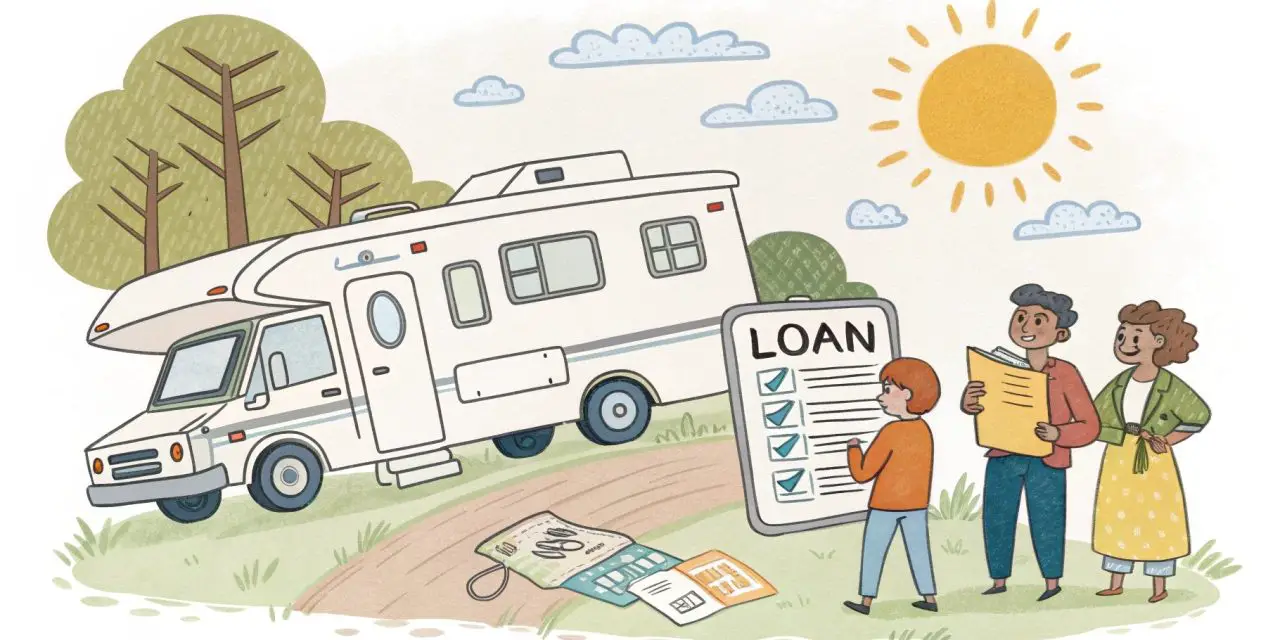
Are you struggling with your RV payments and wondering, “Can someone take over my RV loan?” You’re not alone. Thousands of RV owners face this exact question every year. Whether your financial situation has changed, you’re not using your RV as much as you planned, or life has thrown you a curveball, you’re probably looking for a way out without destroying your credit.
The good news? You do have options. The complicated news? It’s not as simple as handing over the keys and walking away.
In this complete guide, we’ll walk you through everything you need to know about RV loan transfers, payment takeovers, and your alternatives—all explained in plain English that anyone can understand.
Table of Contents
- What Does “Taking Over an RV Loan” Really Mean?
- Can Someone Legally Take Over My RV Loan?
- The Two Main Ways to Transfer an RV Loan
- The HUGE Risks of Informal Payment Arrangements
- Your Best Options When You Can’t Afford RV Payments
- Step-by-Step: How to Transfer Your RV Loan Properly
- Frequently Asked Questions
- Final Thoughts: Making the Smart Choice
What Does “Taking Over an RV Loan” Really Mean?
Before we dive in, let’s make sure we’re on the same page about what we’re talking about.
When people say “taking over an RV loan,” they usually mean one of three different things:
1. Loan Assumption (The Official Way)
This is when your lender officially approves someone else to take over your loan. The new person’s name goes on the loan documents, and they become legally responsible for the payments. This is the safest and most legitimate option.
2. Refinancing by a New Buyer
The new buyer gets their own loan to pay off your existing loan. You sell them the RV, they use their financing to buy it from you, and everyone walks away clean. This is actually more common than loan assumption.
3. Informal Payment Takeover (The Risky Way)
This is when someone agrees to make your monthly payments, but nothing changes officially. Your name stays on the loan and title. This is extremely risky and we DO NOT recommend it.
Can Someone Legally Take Over My RV Loan?
Here’s the honest answer: It depends on your lender.
Most RV loans are NOT assumable by default. This means your loan contract probably doesn’t allow you to just transfer it to someone else without your lender’s permission.
Why Aren’t RV Loans Assumable?
Think about it from the bank’s perspective:
- They approved you for the loan based on your credit score, income, and financial history
- They calculated the risk based on your ability to pay
- They don’t know anything about the person who wants to take over
Your lender wants to make sure anyone taking over the loan can actually afford it.
What Your Loan Contract Probably Says
Most RV loans include something called a “due-on-sale clause” or “acceleration clause.” This fancy legal language basically means:
“If you sell or transfer this RV, you must pay off the entire remaining loan balance immediately.”
But don’t panic! This doesn’t mean you’re stuck. It just means you need to work with your lender, not around them.
The Two Main Ways to Transfer an RV Loan Properly
If you want to get out of your RV loan responsibly, here are the two legitimate paths:
✅ Option 1: Official Loan Assumption
How It Works:
- You find a qualified buyer who wants to take over your loan
- The buyer applies with your lender (just like a new loan application)
- The lender checks the buyer’s credit score, income, and financial history
- If approved, the lender officially transfers the loan to the buyer’s name
- You’re released from the loan obligation
The Requirements:
| What the Buyer Needs | Why It Matters |
|---|---|
| Good Credit Score | Usually 650+ to qualify |
| Stable Income | Must prove they can afford payments |
| Down Payment | May need to pay you for any equity |
| Lender Approval | Not all lenders allow assumptions |
Would you like to save this article?
Pros:
- ✓ You’re completely off the hook
- ✓ Legal and transparent
- ✓ Protects everyone involved
- ✓ Clean title transfer
Cons:
- ✗ Takes time (2-6 weeks typically)
- ✗ Buyer must qualify with good credit
- ✗ Not all lenders allow it
- ✗ May involve fees
✅ Option 2: Buyer Gets New Financing (Most Common)
This is actually what happens most of the time when someone “takes over” an RV loan.
How It Works:
- You find a buyer who wants your RV
- The buyer applies for their own RV loan (with their own lender or credit union)
- The buyer’s new loan pays off your existing loan
- You transfer the title to the buyer
- You’re done!
Why This Works Better:
- The buyer can shop around for the best interest rate
- Your lender gets paid off completely (they love this!)
- The buyer might get better loan terms than your current loan
- You can sell the RV for its current market value
What If You Owe More Than the RV Is Worth?
This is called being “upside-down” or “underwater” on your loan. It’s common with RVs because they lose value quickly.
If you owe $35,000 but the RV is only worth $28,000, you have two choices:
- Pay the difference yourself ($7,000 in this example)
- Roll the difference into the buyer’s new loan (if their lender allows it)
The HUGE Risks of Informal Payment Arrangements
Let’s talk about what happens when people try to take shortcuts.
You’ve probably seen ads on Craigslist or Facebook that say “Take over my RV payments!” or “No credit check, just make my monthly payment!”
This is a TERRIBLE idea. Here’s why:
❌ Risk #1: You Still Own Everything (And All the Problems)
Even if someone else is making payments:
- Your name stays on the loan – You’re still legally responsible
- Your name stays on the title – You still legally own the RV
- Your credit is still at risk – If they stop paying, your credit gets destroyed
- You can get sued – The lender will come after YOU, not them
❌ Risk #2: You Have ZERO Legal Protection
If the person making payments:
- Damages or wrecks the RV → You’re responsible
- Gets in an accident and someone gets hurt → You could be sued
- Stops making payments → Your credit score tanks
- Decides to keep the RV → You have to take them to court
- Files for bankruptcy → You’re still on the hook
❌ Risk #3: You’re Losing Credit-Building Opportunities
Every payment builds your credit score. If someone else is making payments in your name:
- The other person gets zero credit benefit (their name isn’t on the loan)
- You get the credit benefit (but you’re not making the payments)
- If they miss payments → Your credit gets destroyed
❌ Risk #4: You Can’t Sell or Trade the RV
As long as your name is on the loan:
- You can’t legally sell the RV without the lender’s permission
- The other person can’t get proper insurance
- The other person can’t legally register it in many states
- If you need the RV back, you could face legal battles
❌ Risk #5: Insurance Nightmares
Insurance companies need to know who owns the RV. In an informal arrangement:
- The insurance might not cover an accident
- You could be personally liable for damages
- The other person might let insurance lapse (and you won’t know)
Real-Life Horror Story:
John let his friend “take over payments” on his $45,000 RV. Six months later, the friend stopped paying. John’s credit score dropped 150 points. The RV got repossessed. John still owed $12,000 after the bank sold it at auction. The friend disappeared. John’s trying to rebuild his credit 5 years later.
Don’t be John. Do it the right way.
Your Best Options When You Can’t Afford RV Payments
Okay, so informal arrangements are out. What CAN you do if you’re struggling with RV payments?
Here are your real options, ranked from best to worst:
🥇 Option 1: Refinance Your RV Loan
Best if: You want to keep your RV but need lower payments
Refinancing means getting a new loan with better terms to replace your current loan.
How It Helps:
| Before Refinancing | After Refinancing |
|---|---|
| $850/month payment | $625/month payment |
| 7.5% interest rate | 5.9% interest rate |
| 10 years left | 12 years (stretched out) |
Where to Refinance:
- Credit unions → Often have the best rates
- Online lenders → Quick approval
- Your current bank → They already know you
Can you refinance with bad credit? Sometimes! Credit unions are often more flexible than big banks, especially if you’ve been making on-time payments.
🥈 Option 2: Sell Your RV (Private Sale or Dealer)
Best if: You want out completely and can sell for more than you owe
Two Ways to Sell:
A) Private Sale (Usually gets you more money)
- List on RV Trader, Facebook Marketplace, Craigslist
- Price it competitively
- Be honest about condition
- Handle title transfer properly
B) Sell to a Dealer (Faster but less money)
- Dealers will buy even if you owe money
- They handle all the paperwork
- You get less money than private sale
- But it’s quick and simple
The Process:
- Find out your payoff amount (call your lender)
- Get your RV’s market value (check NADA Guides, KBB, RV Trader)
- If value > payoff → Sell it and pocket the difference
- If value < payoff → Pay the difference or negotiate
🥉 Option 3: Trade It In for Something Cheaper
Best if: You still want an RV but need something more affordable
Maybe you bought a $80,000 Class A motorhome but realize you’d be happy with a $30,000 travel trailer.
How It Works:
- Find a dealer with something you can afford
- Trade in your current RV
- The dealer pays off your loan
- You finance the difference (if any) plus the new RV
The Math:
Your RV payoff: $75,000
Your RV trade value: $68,000
Negative equity: -$7,000

New RV price: $28,000
Amount financed: $35,000 ($28k + $7k negative equity)
It’s not ideal, but it gets you into something affordable.
😐 Option 4: Voluntary Surrender
Best if: You’re about to default and want to minimize credit damage
If you absolutely cannot afford payments and can’t sell the RV, you can voluntarily give it back to the lender.
How It Works:
- Contact your lender and explain your situation
- Arrange to return the RV to them
- They sell it at auction
- You pay any remaining balance (called a “deficiency”)
Credit Impact:
- Repossession → Destroys your credit for 7 years, drops score 150+ points
- Voluntary surrender → Still bad, but slightly less damaging
- Both are reported as “settled for less than owed”
You May Still Owe Money:
If your RV sells for $30,000 at auction but you owed $42,000, you’re still responsible for the $12,000 difference (plus repo fees, auction fees, etc.).
😔 Option 5: Let It Get Repossessed (WORST OPTION)
Only if: You’ve given up and aren’t responding to your lender
Don’t do this. Here’s what happens:
- Your credit score plummets (can drop 200+ points)
- The repo company shows up and takes your RV
- The bank sells it at auction (usually for much less than it’s worth)
- You owe the difference between sale price and loan balance
- The bank may sue you for the deficiency
- It stays on your credit report for 7 years
- You may have to pay repo fees ($500-$2,000)
There is no situation where letting your RV get repossessed is better than voluntarily surrendering it.
Step-by-Step: How to Transfer Your RV Loan Properly
If you’ve found a qualified buyer and want to do this the right way, here’s your complete action plan:
Step 1: Contact Your Lender
Call them and ask:
- “Does our loan allow assumption by a qualified buyer?”
- “What are the requirements and fees for loan assumption?”
- “What’s our current payoff amount?”
- “Is there a due-on-sale clause in our contract?”
Get everything in writing.
Step 2: Review Your Loan Documents
Look for these sections:
- Assumption Policy – Does it allow transfers?
- Due-on-Sale Clause – Do you need to pay off when selling?
- Prepayment Penalty – Any fees for paying off early?
- Transfer Fees – Cost to assume the loan?
Step 3: Find a Qualified Buyer
Where to List Your RV:
- RV Trader
- Facebook Marketplace
- Craigslist
- RV forums and groups
- Word of mouth
Be Honest in Your Listing:
2020 Thor Motor Coach - $65,000
Current loan: $58,000
Monthly payment: $785
Interest rate: 6.5%
Years remaining: 8

Buyer must qualify for loan assumption with our lender.
Good credit required. Serious inquiries only.
Step 4: Pre-Qualify Your Buyer (Save Time)
Before going through the formal process, make sure your buyer:
✓ Has a credit score above 650 (check with lender for minimum)
✓ Has stable income to afford the payments
✓ Has money for down payment (to cover any equity)
✓ Is serious and committed
Step 5: Submit Loan Assumption Application
The buyer will need to provide:
- Completed loan application
- Proof of income (pay stubs, tax returns, bank statements)
- Credit authorization
- Employment verification
- Identification
You will need to provide:
- Current loan information
- Title or registration
- Insurance information
- Maintenance records (helpful but not always required)
Step 6: Wait for Lender Approval
Timeline: Usually 2-6 weeks
The lender will:
- Run the buyer’s credit
- Verify their income and employment
- Assess their debt-to-income ratio
- Determine if they meet qualification requirements
They may approve, deny, or request more information.
Step 7: Close the Deal
If approved, you’ll have a closing where:
✓ Buyer signs new loan documents
✓ You sign title transfer documents
✓ Buyer pays any equity or down payment to you
✓ Lender releases you from the loan
✓ Title transfers to buyer’s name
✓ Insurance transfers
Make sure you get written confirmation that you’re released from the loan!
Step 8: Follow Up
After closing:
- Confirm your loan shows “paid” on your credit report (in 30-60 days)
- Keep all paperwork for your records
- Cancel your RV insurance (once buyer has their own)
- Update your DMV registration if needed
Frequently Asked Questions
❓ Can I transfer my RV loan to a family member?
Yes, but they still need to qualify. Even if it’s your mom, brother, or best friend, the lender will run their credit and verify their income. Family loans often cause problems if things go wrong, so do it officially through the lender.
❓ How long does an RV loan assumption take?
Usually 2-6 weeks. It depends on:
- How quickly the buyer provides documents
- How backed up your lender is
- Whether there are any issues with the application
- State requirements for title transfers
❓ Will assuming a loan hurt my credit?
For the seller: Once the loan is officially assumed and you’re released, it should show as “paid” on your credit. This is good!
For the buyer: The loan assumption will show as a new loan on their credit. If they make on-time payments, it will help their credit score.
❓ What if someone just makes my payments without telling the lender?
DON’T DO THIS. You’re still 100% legally responsible. If they stop paying or have an accident, you’re on the hook. Your credit is at risk. You could get sued. Always involve the lender.
❓ Can I get out of an RV loan with bad credit?
Options with bad credit:
- Refinance with a credit union (they’re often more flexible)
- Sell the RV privately (if it’s worth more than you owe)
- Voluntarily surrender (damages credit but less than repossession)
- Contact your lender about hardship options (they may offer deferment)
❓ What’s the difference between loan assumption and refinancing?
Loan Assumption:
- Buyer takes over your exact loan
- Same interest rate, same terms
- Buyer can’t negotiate better terms
- Your lender must allow it
Refinancing:
- Buyer gets a completely new loan
- Can shop for better interest rates
- Can negotiate new terms
- Works with any lender
Refinancing by the buyer is usually easier and more common.
❓ How much does it cost to assume an RV loan?
Typical fees:
| Fee Type | Typical Cost |
|---|---|
| Loan assumption fee | $200 – $500 |
| Credit check | $25 – $75 |
| Title transfer | $50 – $150 (varies by state) |
| Registration | Varies by state |
| Notary fees | $10 – $50 |
Total: Usually $300-$800
❓ Can I transfer my RV loan if I’m behind on payments?
Probably not. Most lenders require the loan to be current before allowing assumption. However:
- Some lenders may work with you if the buyer is well-qualified
- You could try to negotiate a settlement
- The buyer could potentially pay the past-due amount as part of the deal
Call your lender and explain the situation honestly.
❓ What happens to my down payment if someone assumes my loan?
You get it back as equity!
Example:
- Original RV price: $60,000
- Your down payment: $10,000
- Loan amount: $50,000
- Current loan balance: $42,000
If the buyer assumes your loan for $42,000, they typically pay you $18,000 ($60,000 current value – $42,000 loan = $18,000 equity).
Note: This assumes the RV held its value. Most RVs depreciate quickly.
Final Thoughts: Making the Smart Choice
So, can someone take over my RV loan?
The answer is: Yes, but only the RIGHT way.
Here’s what you need to remember:
✅ DO:
- Contact your lender first
- Get buyer pre-qualified
- Use official loan assumption process
- Have buyer get their own financing
- Keep everything documented in writing
- Protect your credit at all costs
❌ DON’T:
- Let someone make payments informally
- Transfer title without lender permission
- Ignore your loan agreement
- Skip background checks on buyers
- Trust verbal agreements
- Wait until you’re in default
The Bottom Line
Getting out of an RV loan is possible, but there are no shortcuts. Whether you:
- Find a buyer to assume your loan officially
- Help a buyer get new financing to purchase your RV
- Refinance to lower your payment
- Sell the RV and pay off the loan
- Voluntarily surrender as a last resort
Always involve your lender and do everything officially. Your credit, your finances, and your peace of mind are worth it.
Need More Help?
If you’re struggling with RV payments:
- Call your lender TODAY – Explain your situation. They may offer hardship programs, deferment, or loan modification.
- Talk to a credit union – They often have more flexible refinancing options than big banks.
- Consult a financial advisor – They can help you understand all your options and make the best choice for your situation.
- Don’t ignore the problem – The longer you wait, the fewer options you’ll have.
Your RV should bring you joy and freedom, not financial stress. If it’s become a burden, it’s okay to make a change.
Sources
- https://www.fastrvfinancing.com/how-to-transfer-an-rv-loan-to-a-new-buyer
- https://rvdepottx.com/blog/taking-over-rv-payments-vs-financing/
- https://www.creditninja.com/blog/how-can-i-get-out-of-my-rv-loan-fast-easy/
- https://www.valleycu.org/Blog/Financial-Tips/June-2025/cant-afford-camper-payment
- https://www.reddit.com/r/GoRVing/comments/1apsia0/anyone_ever_taken_over_someones_payments_on_an_rv/
- https://www.forestriverforums.com/threads/assumable-rv-loan.293695/
- https://www.justanswer.com/fl-real-estate/o8clp-rv-name-not-pay-rv-loan.html
- https://www.rvforum.net/threads/financing-an-rv-take-over-payments.848332/
- https://community.goodsam.com/discussions/rvtipstricks/how-to-sell-rv-when-you-have-a-bank-loan/1009363
- https://ustravelersleague.com/how-do-you-take-over-payments-on-an-rv.html