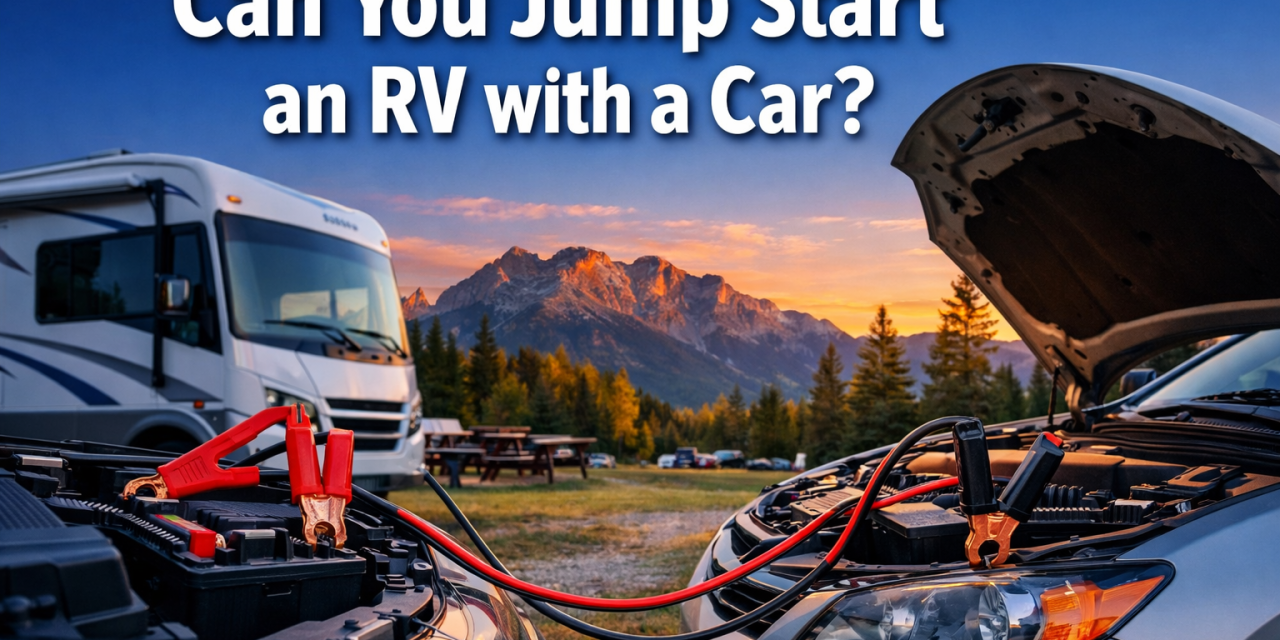
Picture this: you’re at your favorite campground, ready to hit the road for another adventure, when you turn the key and hear that dreaded clicking sound. Your RV won’t start, and you’re wondering if the family car sitting nearby could be your salvation. The question “can you jump start an RV with a car” is more common than you might think, and the answer isn’t as straightforward as you’d hope.
Key Takeaways
• Yes, you can jump start an RV with a car, but only under specific conditions and with proper safety precautions
• RV electrical systems are more complex than standard vehicles, often featuring both chassis and house batteries with different voltage requirements
• Safety is paramount – incorrect jump starting procedures can damage expensive RV electrical components or cause injury
• Alternative solutions like portable jump starters or professional assistance may be safer and more effective
• Prevention is key – regular battery maintenance and monitoring can help avoid dead battery situations entirely
Understanding RV Electrical Systems Before Jump Starting
Would you like to save this article?
Before exploring whether can you jump start an RV with a car, it’s crucial to understand how RV electrical systems differ from standard automotive setups. Most RVs operate on dual battery systems that serve distinct purposes.
RV Battery Types and Configurations
Chassis Battery (Engine Battery) 🔋
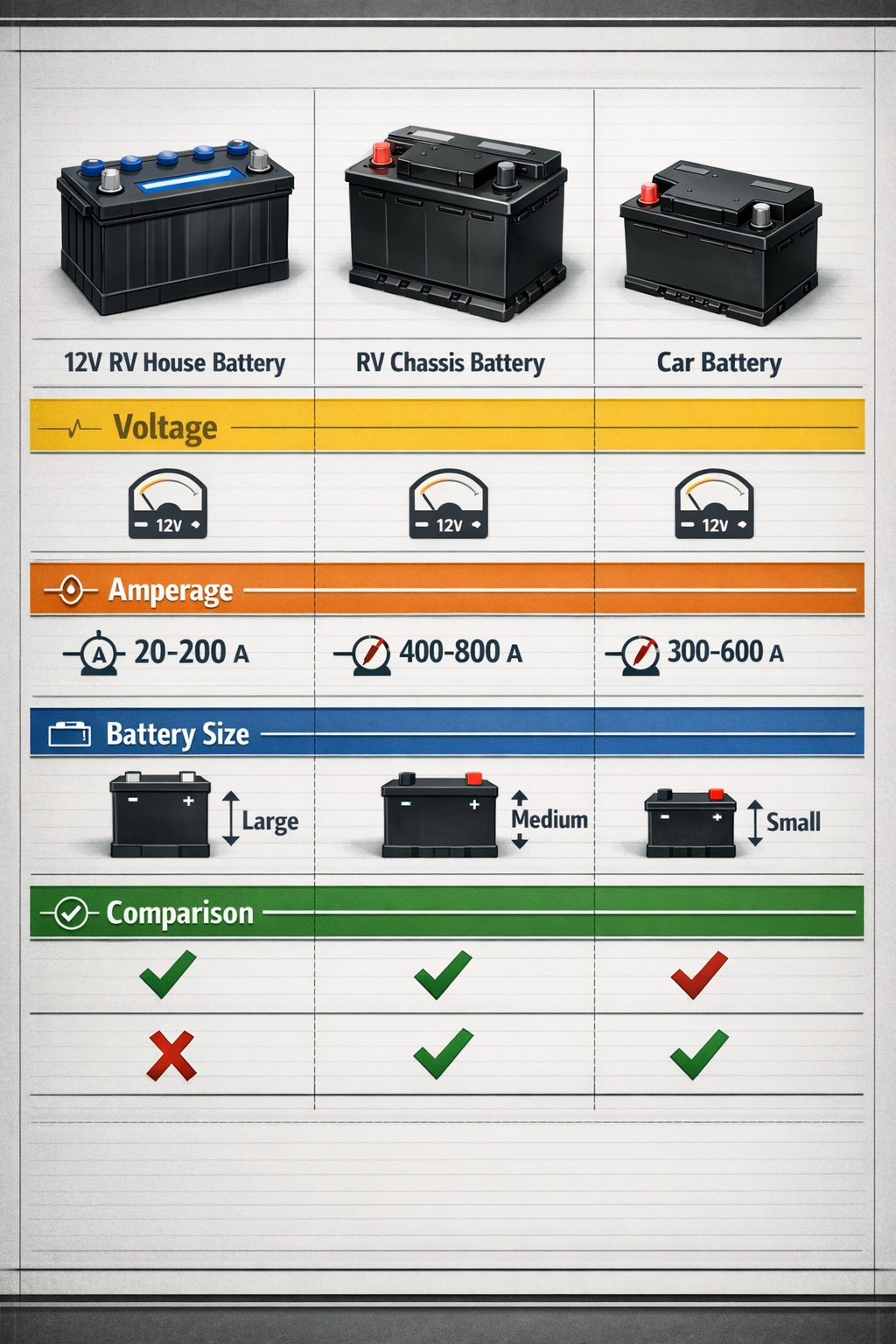
The chassis battery powers the RV’s engine, lights, and basic driving functions. This 12-volt battery is similar to what you’d find in a regular car and is typically the battery you’ll need to jump start when your RV won’t start.
House Battery System 🏠
The house batteries power interior lights, appliances, and amenities when you’re parked. These can be 12-volt or sometimes configured in series for higher voltage systems. House batteries are usually deep-cycle batteries designed for sustained power delivery.
| Battery Type | Voltage | Primary Function | Jump Start Target |
|---|---|---|---|
| Chassis | 12V | Engine starting | ✅ Yes |
| House | 12V/24V | Interior power | ❌ Usually not needed |
| Auxiliary | 12V | Additional systems | 🔄 Depends on setup |
Why RV Jump Starting Differs from Cars
RV electrical systems present unique challenges when considering whether you can jump start an RV with a car. The primary differences include:
Higher Power Requirements ⚡
RV engines, especially diesel models, often require more cranking power than typical car engines. The starter motors are larger and demand higher amperage to turn over successfully.
Complex Wiring Systems 🔌
RVs feature sophisticated electrical management systems, including inverters, converters, and battery isolators. These components can be sensitive to voltage fluctuations during jump starting procedures.
Multiple Battery Configurations 🔄
Some RVs have battery disconnect switches, automatic transfer switches, or battery combiners that can complicate the jump starting process.
Step-by-Step Guide: Can You Jump Start an RV with a Car?
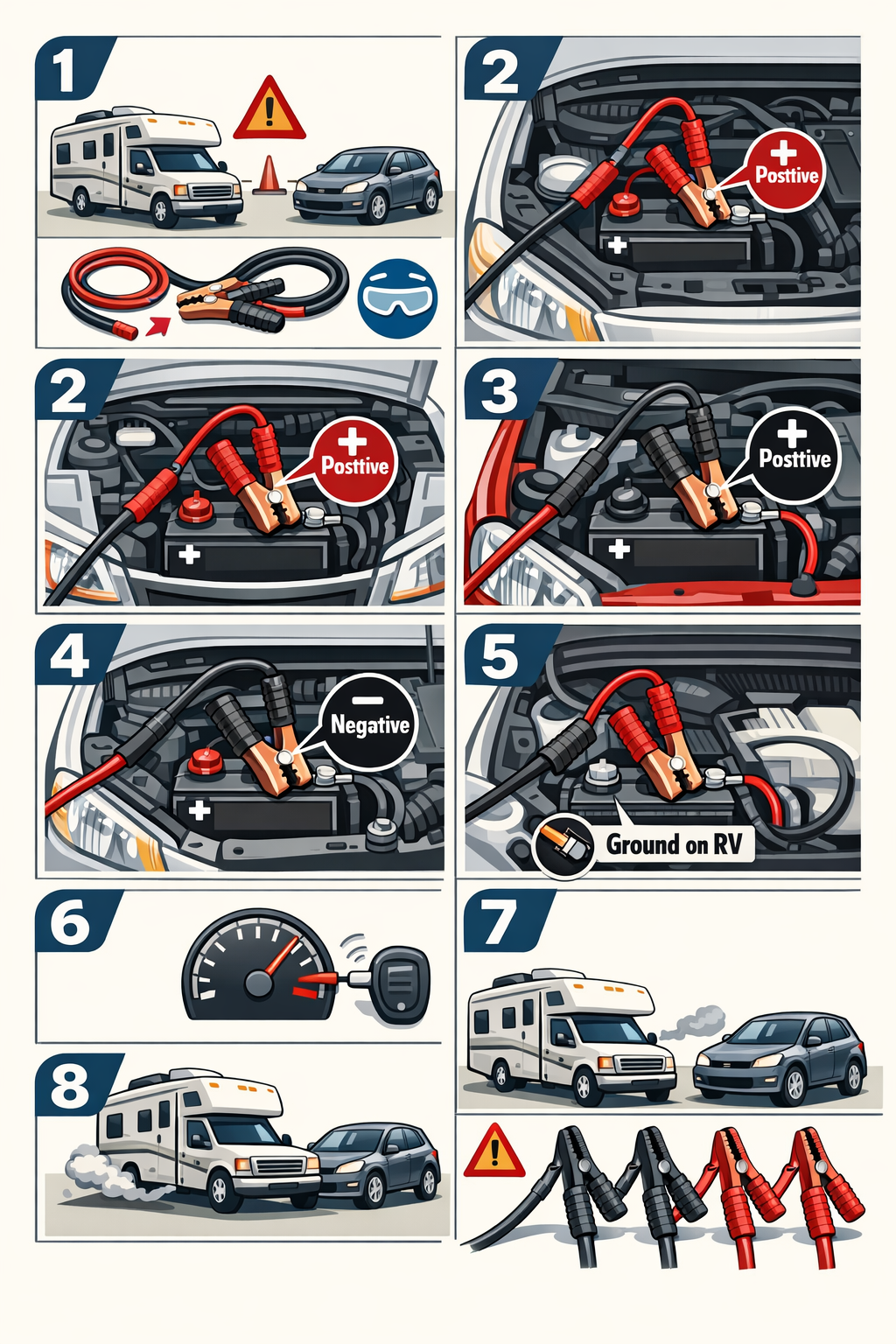
When faced with a dead RV battery, following proper procedures is essential for safety and success. Here’s the comprehensive process for determining if and how you can jump start an RV with a car.
Pre-Jump Start Assessment
Safety First ⚠️
Before attempting any jump start procedure, ensure both vehicles are parked on level ground with parking brakes engaged. Turn off all electrical accessories in both the RV and car.
Battery Inspection 🔍
- Check for visible damage, corrosion, or leaking
- Ensure battery terminals are clean and accessible
- Verify the RV’s chassis battery is indeed 12-volt
- Look for any warning labels or manufacturer restrictions
Equipment Check 🛠️
- Heavy-duty jumper cables (minimum 4-gauge wire)
- Safety gloves and eye protection
- Flashlight or headlamp for visibility
- Multimeter (if available) to check voltage
The Jump Starting Process
Step 1: Position Vehicles 🚗
Park the car close enough to the RV so jumper cables can reach both batteries comfortably. Avoid letting the vehicles touch each other.
Step 2: Identify Battery Terminals 🔋
Locate the positive (+) and negative (-) terminals on both the RV’s chassis battery and the car’s battery. Clean any corrosion with a wire brush if necessary.
Step 3: Connect Cables in Proper Sequence ⚡
- Red cable to RV positive terminal – Connect first
- Red cable to car positive terminal – Connect second
- Black cable to car negative terminal – Connect third
- Black cable to RV ground point – Connect to unpainted metal surface away from battery
Important Note: Never connect the final negative cable directly to the dead battery’s negative terminal. This reduces spark risk near the battery.
Step 4: Start the Donor Vehicle 🚗
Start the car and let it run for 2-3 minutes to build up charge. Rev the engine slightly to increase alternator output.
Step 5: Attempt RV Start 🔑
Try starting the RV. If it doesn’t start immediately, wait 5 minutes before trying again. Avoid continuous cranking, which can damage the starter.
Step 6: Remove Cables 🔌
Once the RV starts, remove cables in reverse order:
- Black cable from RV ground
- Black cable from car negative
- Red cable from car positive
- Red cable from RV positive
Troubleshooting Common Issues
RV Still Won’t Start 🔧
- Check cable connections for tightness
- Verify you’re connected to the chassis battery, not house batteries
- Consider that the battery may be too damaged to accept a charge
- Look for blown fuses or tripped breakers
Electrical System Problems ⚠️
If you notice sparking, smoking, or burning smells, immediately disconnect all cables and seek professional help.
Safety Considerations and Potential Risks

Understanding the risks involved when you jump start an RV with a car is crucial for protecting both your safety and your valuable equipment.
Electrical System Damage Risks
Voltage Spike Damage ⚡
Modern RVs contain sensitive electronic components that can be damaged by voltage spikes during jump starting. These include:
- Engine control modules (ECMs)
- Transmission controllers
- Entertainment systems
- Slide-out motors
Alternator Overload 🔄
Car alternators aren’t designed to charge large RV batteries. Extended jump starting attempts can overheat and damage the car’s charging system.
Physical Safety Concerns
Battery Explosion Risk 💥
Lead-acid batteries produce hydrogen gas, which is highly explosive. Improper connections or sparks near the battery can cause dangerous explosions.
Electrical Shock ⚡
High-amperage jump starting procedures can cause severe electrical shock if proper precautions aren’t followed.
Chemical Burns 🧪
Battery acid can cause severe burns. Always wear protective equipment and avoid contact with battery terminals or fluid.
When NOT to Attempt Jump Starting
Damaged Battery Cases ❌
Never attempt to jump start if either battery shows cracks, leaks, or swelling.
Frozen Batteries 🧊
Frozen batteries can explode when jump started. Allow batteries to thaw completely before attempting any procedures.
Incompatible Voltage Systems ⚠️
Some larger RVs use 24-volt starting systems that cannot be safely jump started with a 12-volt car.
Professional Alternatives
Mobile Mechanic Services 🔧
Many areas have mobile RV mechanics who can safely diagnose and resolve starting issues without risking damage to your systems.
Roadside Assistance 📞
RV-specific roadside assistance programs often have equipment and expertise better suited for RV electrical systems.
Portable Jump Starters 🔋
High-capacity portable jump starters designed for RVs eliminate the need for another vehicle and reduce risk of electrical damage.
Alternative Solutions and Prevention Strategies
While knowing can you jump start an RV with a car is valuable, exploring alternatives and prevention methods can save time, money, and potential damage.
Portable Jump Starter Options
Heavy-Duty Jump Packs 🔋
Modern lithium jump starters can deliver the high amperage needed for RV engines while being compact and safe to use.
| Jump Starter Type | Peak Amps | Best For | Price Range |
|---|---|---|---|
| Lithium Compact | 1000-2000A | Gas engines | $100-$300 |
| Heavy-Duty Lead | 3000-4000A | Diesel engines | $200-$500 |
| Professional | 5000A+ | Large diesels | $500+ |
Solar Battery Maintainers ☀️
Solar panels can keep RV batteries topped off during storage, preventing the deep discharge that leads to starting problems.
Battery Maintenance Best Practices
Regular Testing 📊
- Test battery voltage monthly with a multimeter
- Perform load testing annually
- Monitor specific gravity in serviceable batteries
Proper Storage 🏠
- Disconnect batteries during long-term storage
- Store in temperature-controlled environments when possible
- Use battery maintainers for extended storage periods
Cleaning and Inspection 🧽
- Clean terminals monthly with baking soda solution
- Apply terminal protectant to prevent corrosion
- Check mounting hardware for tightness
Upgrading Your RV’s Electrical System
Battery Isolators 🔄
Installing a battery isolator allows the engine alternator to charge house batteries while preventing them from draining the chassis battery.
Battery Monitoring Systems 📱
Digital monitoring systems provide real-time battery status information, helping prevent unexpected dead battery situations.
Auxiliary Starting Systems ⚡
Some RVers install auxiliary starting batteries or emergency start switches that can bypass a dead chassis battery.
Emergency Preparedness
Essential Tools 🛠️
Every RV should carry:
- Heavy-duty jumper cables (4-gauge minimum)
- Portable jump starter
- Basic electrical tools
- Emergency contact information
Communication Plans 📞
- Program roadside assistance numbers into your phone
- Carry backup communication devices for remote areas
- Inform others of your travel plans and schedule
Knowledge and Training 📚
- Take an RV electrical systems course
- Practice jump starting procedures in a safe environment
- Learn to recognize early warning signs of battery failure
Conclusion
The question “can you jump start an RV with a car” has a qualified yes as an answer, but it comes with important caveats and considerations. While it’s technically possible under the right conditions, the complexity of RV electrical systems, safety risks, and potential for expensive damage make it a procedure that requires careful thought and preparation.
Key Action Steps:
- Assess your specific RV’s electrical system and consult your owner’s manual for manufacturer recommendations
- Invest in a quality portable jump starter designed for RVs to eliminate the need for another vehicle
- Implement a regular battery maintenance routine to prevent dead battery situations
- Consider professional roadside assistance for peace of mind during your travels
- Practice safe jump starting procedures in a controlled environment before you need them in an emergency
Remember that prevention is always better than emergency repairs. Regular battery maintenance, proper storage procedures, and quality equipment will keep you on the road and enjoying your RV adventures without the stress of unexpected electrical problems.
Whether you’re a weekend warrior or a full-time RVer, understanding your electrical system and having backup plans will ensure that a dead battery doesn’t derail your travel plans. Stay safe, stay prepared, and keep exploring! 🚐✨