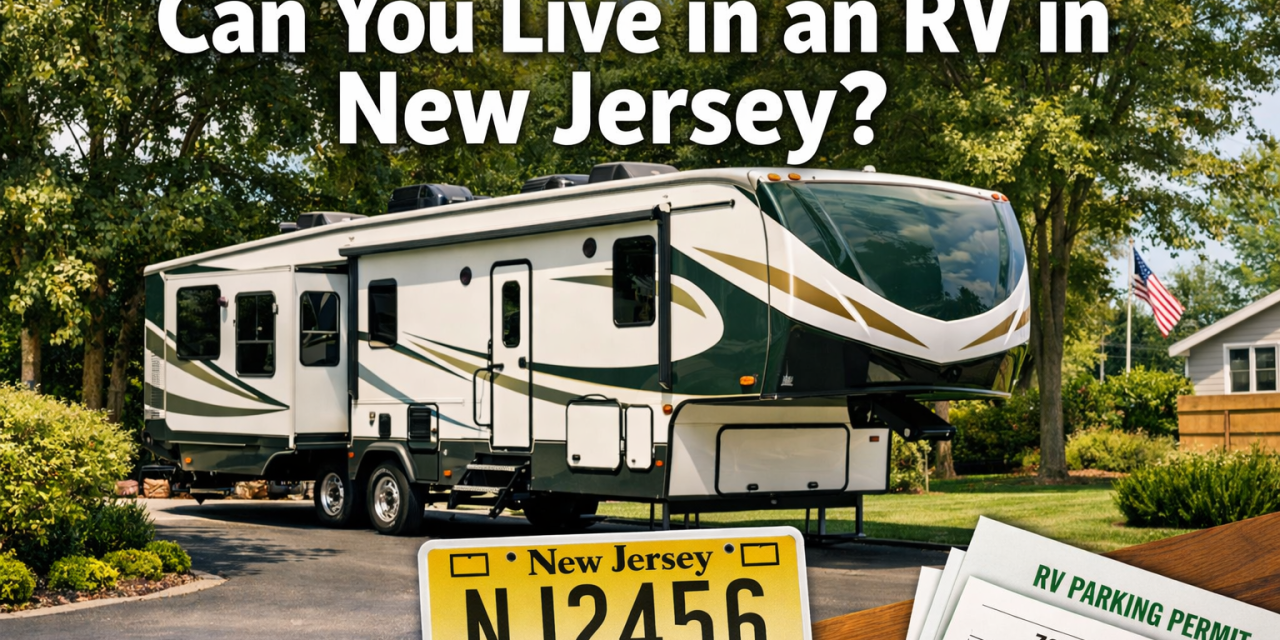
The Garden State’s proximity to major metropolitan areas and beautiful coastline makes it an attractive destination for RV enthusiasts, but can you live in an RV in New Jersey? The answer isn’t as straightforward as parking your home on wheels and settling in. New Jersey has specific regulations, permit requirements, and zoning laws that govern full-time RV living, making it essential to understand the legal landscape before making the move.
Key Takeaways
• Full-time RV living is legal on private property in most New Jersey municipalities, but requires obtaining proper permits from local authorities
• Permits are mandatory – you cannot legally live in an RV without local government approval, regardless of property ownership
• Insurance and registration requirements include minimum liability coverage and recreational vehicle registration within 14 days
• Local zoning laws vary significantly between municipalities, requiring research into specific area regulations
• Boondocking is generally discouraged statewide, though some overnight parking may be permitted at rest areas and fairgrounds
Legal Requirements: Can You Live in an RV in New Jersey Legally?
Would you like to save this article?
Understanding the legal framework is crucial when considering whether you can live in an RV in New Jersey. The state permits full-time RV living under specific conditions, but compliance with local regulations is non-negotiable [1].
Permit Requirements and Local Authority Approval
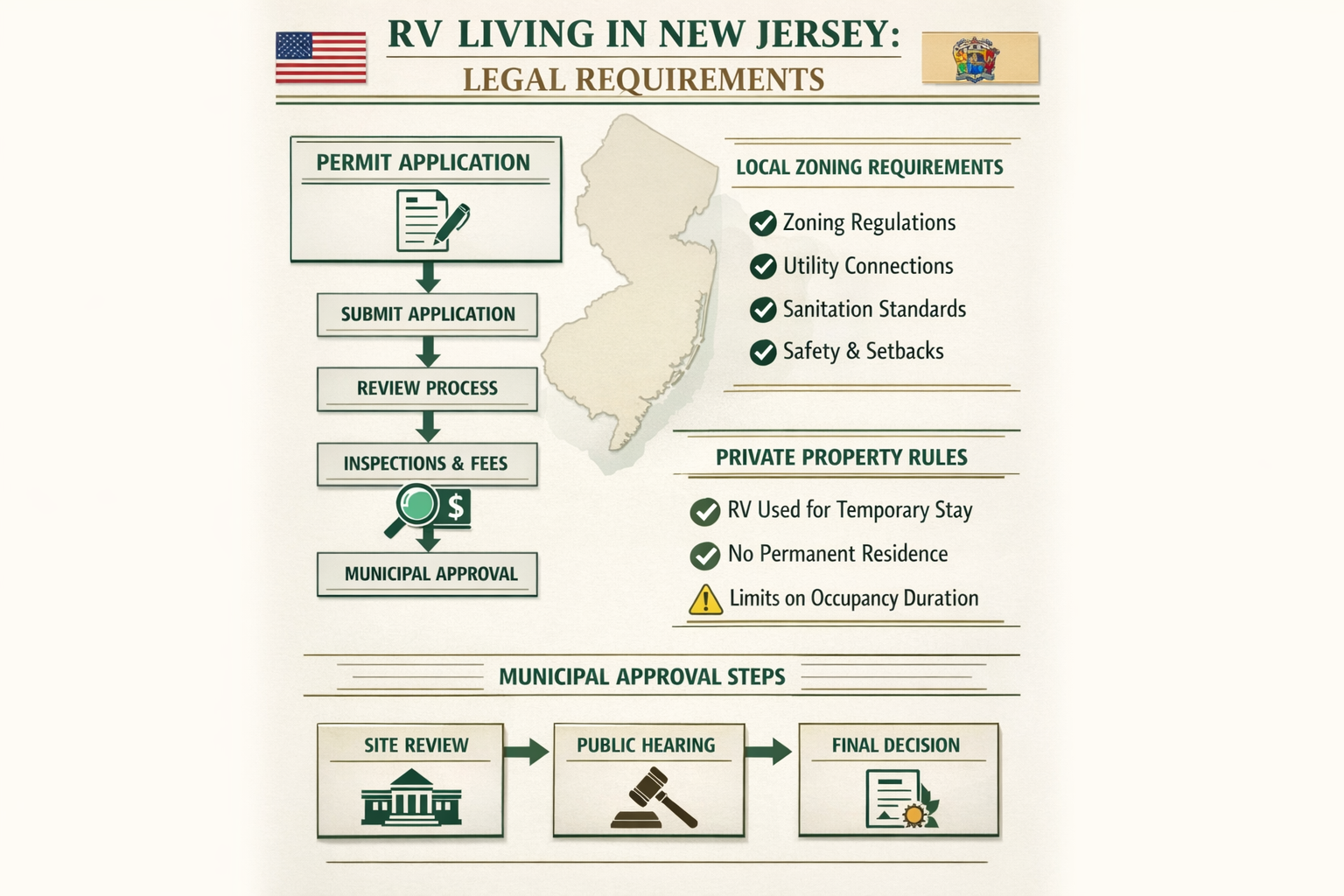
Every municipality requires permits for full-time RV living on private property. This isn’t optional – attempting to live in an RV without proper permits can result in fines, eviction orders, or legal complications [1]. The permit process typically involves:
- Application submission to local zoning or building departments
- Property inspection to ensure compliance with health and safety standards
- Neighbor notification in some jurisdictions
- Annual renewal requirements in many areas
- Fee payment varying by municipality
💡 Important Note: Permit requirements exist even if you own the property outright. Property ownership doesn’t exempt you from local RV living regulations.
RV Condition and Safety Standards
New Jersey requires that RVs used for full-time living must be “well-maintained and in good condition” to avoid creating health or safety hazards [1]. This means:
- Functional plumbing systems with proper waste disposal
- Electrical systems meeting safety codes
- Structural integrity without leaks or damage
- Proper ventilation to prevent moisture and air quality issues
- Working safety equipment including smoke and carbon monoxide detectors
Zoning Compliance and Municipal Variations
Local zoning laws create the most complex aspect of RV living legality. Zoning regulations vary significantly, even within the same city, making it essential to verify specific regulations with local authorities before settling [1]. Some municipalities are more RV-friendly than others, with varying restrictions on:
- Duration of stay (temporary vs. permanent)
- Property location requirements
- Utility connections and septic systems
- Setback requirements from property lines
- Screening and visibility from public areas
Where Can You Park Your RV for Full-Time Living in New Jersey?
Location options for RV living in New Jersey are more limited than in western states, but several legal parking arrangements exist for those wondering can you live in an RV in New Jersey long-term.
Private Property Options
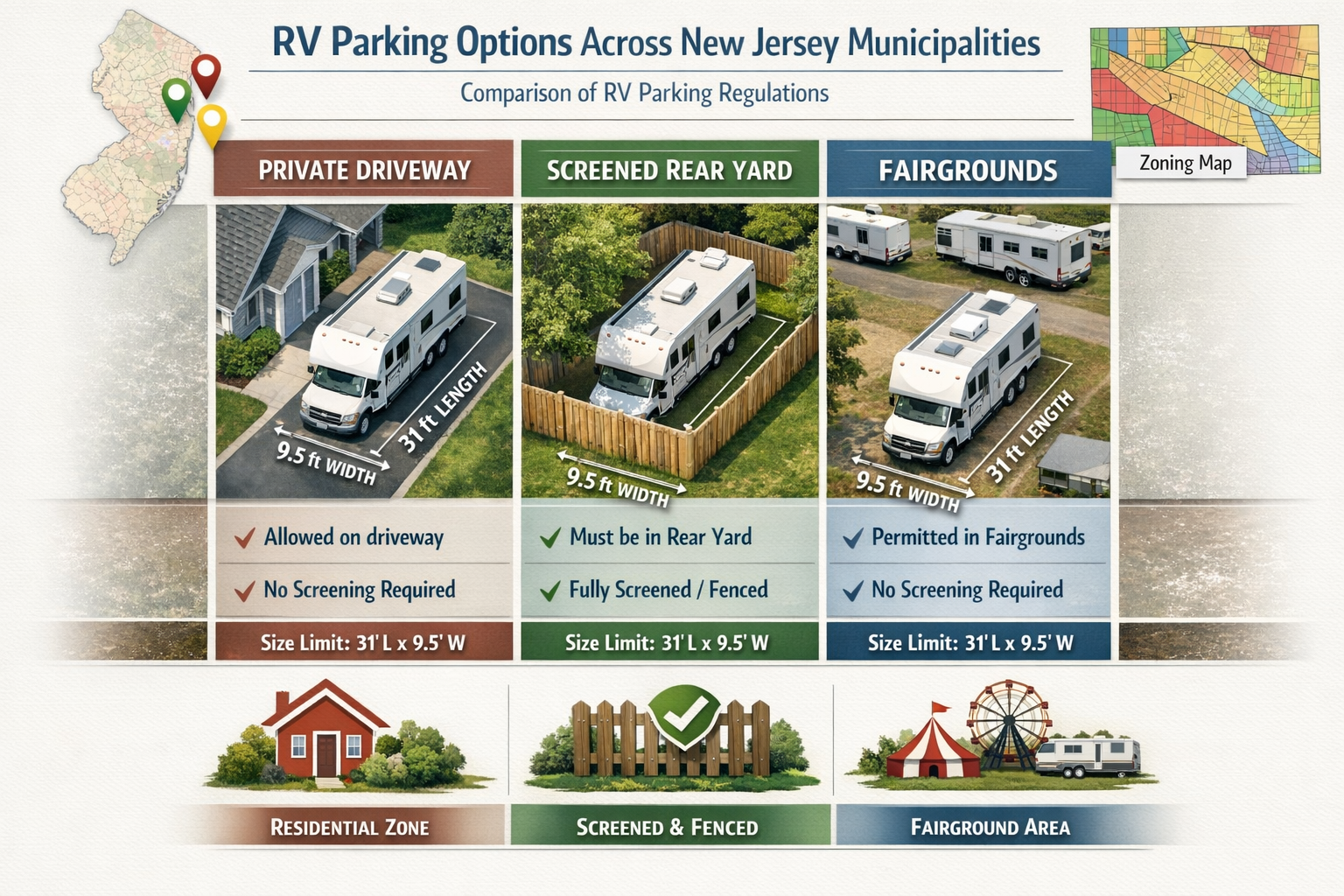
Private driveways are allowed in most New Jersey cities, making this the most common option for full-time RV living [1]. However, specific requirements include:
Driveway Parking Requirements
- Paved or improved surfaces in many municipalities
- Adequate width for RV dimensions
- Proper drainage to prevent water runoff issues
- Utility access for electrical, water, and sewer connections
- Neighbor consideration regarding noise and visual impact
Rear and Side Yard Placement
Some municipalities allow RVs in rear or side yards if screened from public view. For example, Tenafly permits RVs up to 31 feet long and 9.5 feet wide when properly screened [1]. Screening requirements typically include:
- Fence installation of specific heights (usually 6-8 feet)
- Landscaping buffers with trees or shrubs
- Setback compliance from neighboring properties
- Access pathway maintenance for emergency services
RV Parks and Campgrounds
While New Jersey has fewer long-term RV parks than other states, several options exist:
| Park Type | Typical Stay Length | Amenities | Cost Range |
|---|---|---|---|
| Private RV Parks | Monthly/Seasonal | Full hookups, amenities | $800-1,500/month |
| State Parks | 14-day limits | Basic facilities | $30-50/night |
| County Parks | Varies | Moderate amenities | $40-70/night |
| Private Campgrounds | Extended stays possible | Full services | $600-1,200/month |
Fairgrounds and Temporary Locations
RV parking is permitted at state and county fairgrounds, though permission may be required [1]. These locations often offer:
- Seasonal arrangements during off-peak periods
- Basic utility hookups (electricity and water)
- Affordable rates compared to private parks
- Community atmosphere with other RV residents
Boondocking and Overnight Parking
Boondocking is discouraged statewide, though some rest areas may allow overnight parking [1]. Legal overnight options include:
- Walmart parking lots (with store permission)
- Truck stops along major highways
- Some rest areas (check current regulations)
- 24-hour businesses (always ask permission first)
⚠️ Warning: Never assume overnight parking is permitted. Always verify current policies, as regulations change frequently.
Registration, Insurance, and Legal Compliance for RV Living
Meeting New Jersey’s registration and insurance requirements is essential for anyone asking can you live in an RV in New Jersey legally. The state has specific requirements that differ from standard vehicle regulations.
RV Registration Requirements
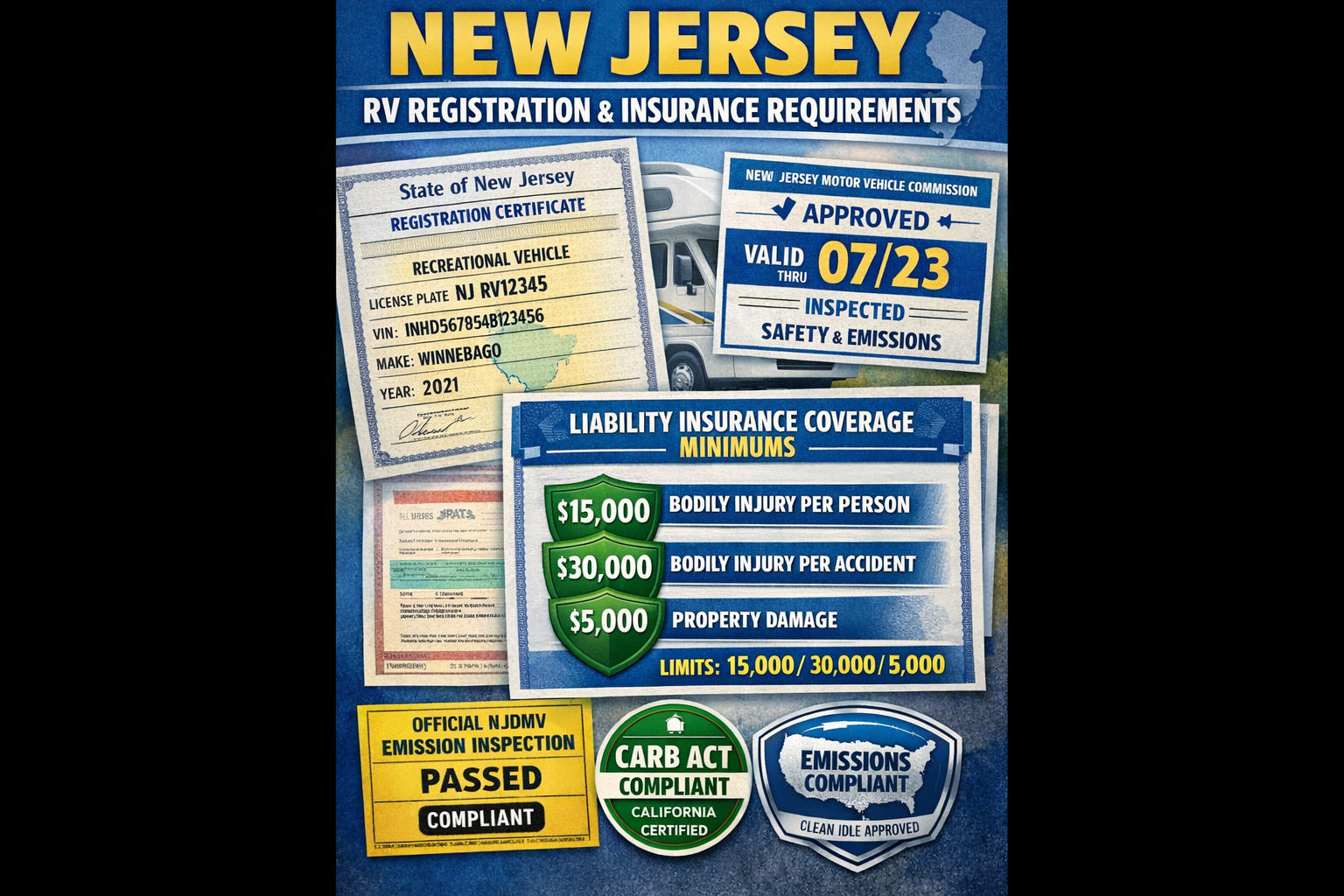
RVs must be registered as recreational passenger vehicles and inspected within 14 days of registration [1]. The registration process includes:
Initial Registration Steps
- Title verification or manufacturer’s certificate of origin
- Proof of insurance meeting state minimums
- Sales tax payment (6.625% of purchase price)
- Registration fee payment based on vehicle weight
- License plate issuance for recreational vehicles
Ongoing Registration Obligations
- Annual renewal by the owner’s birthday month
- Address updates within 10 days of moving
- Inspection compliance every two years
- Fee payment for registration maintenance
Insurance Requirements and Recommendations
Minimum liability insurance is mandatory with specific coverage amounts: $15,000 per person bodily injury, $30,000 total bodily injury per accident, and $5,000 property damage [1]. However, these minimums are often insufficient for full-time RV living.
Recommended Insurance Coverage
A separate policy is recommended for travel trailers and personal property coverage [1]. Comprehensive RV insurance should include:
- Liability coverage exceeding state minimums ($100,000/$300,000/$100,000)
- Comprehensive and collision for vehicle damage
- Personal property coverage for belongings inside the RV
- Emergency expense coverage for temporary housing
- Roadside assistance for breakdowns and towing
Specialized RV Insurance Considerations
| Coverage Type | Standard Auto | RV-Specific | Why It Matters |
|---|---|---|---|
| Personal Property | Limited/None | Up to $25,000+ | Protects belongings |
| Emergency Expenses | Not included | $500-2,000/day | Temporary housing costs |
| Vacation Liability | Not covered | Included | Protection when parked |
| Roadside Assistance | Basic | Specialized RV | Proper equipment for large vehicles |
Environmental Regulations and CARB ACT Compliance
New Jersey is one of five states adopting CARB ACT emission rules, which may affect motorhome sales and registration, though the exact implementation date had not been finalized at the time of reporting [4]. This regulation impacts:
Current and Future RV Owners
- Emission testing requirements for newer motorhomes
- Registration restrictions for non-compliant vehicles
- Retrofit requirements for older RVs
- Resale value impacts for non-compliant units
Compliance Strategies
- Purchase newer RVs meeting emission standards
- Consider diesel vs. gasoline engine compliance differences
- Plan for potential retrofits or upgrades
- Monitor regulatory updates for implementation timelines
Municipal Permit Maintenance
Beyond state requirements, maintaining local permits requires ongoing attention:
Annual Requirements
- Permit renewal applications with updated information
- Property inspections to verify continued compliance
- Fee payments for permit maintenance
- Neighbor relations to prevent complaints
Compliance Monitoring
- Regular RV maintenance to meet condition standards
- Utility system upkeep for safety compliance
- Screening maintenance for visibility requirements
- Documentation organization for permit renewals
Practical Considerations for RV Living in New Jersey
Beyond legal requirements, several practical factors affect the feasibility of full-time RV living in the Garden State.
Climate and Seasonal Challenges
New Jersey’s four-season climate presents unique challenges for year-round RV living:
Winter Considerations
- Heating costs can be substantial in older RVs
- Pipe freezing requires proper insulation and heating
- Snow removal from RV roofs and access areas
- Propane consumption increases significantly
Summer Challenges
- High humidity requires adequate ventilation and dehumidification
- Air conditioning costs impact electrical usage
- Storm preparation for severe weather events
- Insect control in densely wooded areas
Utility Connections and Infrastructure
Establishing reliable utilities is crucial for comfortable RV living:
Electrical Connections
- 30-amp vs. 50-amp service requirements
- GFCI protection for outdoor connections
- Electrical permits for permanent installations
- Professional installation recommended for safety
Water and Sewer Systems
- Municipal water connections where available
- Well water testing for private properties
- Septic system compatibility with RV waste
- Greywater disposal regulations and options
Cost Analysis for New Jersey RV Living
Understanding the total cost of RV living helps determine financial feasibility:
| Expense Category | Monthly Range | Annual Total |
|---|---|---|
| RV Park/Property Rent | $600-1,500 | $7,200-18,000 |
| Utilities (Electric/Water/Sewer) | $150-400 | $1,800-4,800 |
| Insurance (RV + Health) | $200-500 | $2,400-6,000 |
| Maintenance/Repairs | $100-300 | $1,200-3,600 |
| Registration/Permits | $50-150 | $600-1,800 |
| Total Estimated Costs | $1,100-2,850 | $13,200-34,200 |
Community and Social Aspects
RV living in New Jersey offers unique community experiences:
RV Communities and Clubs
- New Jersey RV clubs for social connections
- Seasonal resident communities at campgrounds
- Online forums for local RV living advice
- Meetup groups for activities and support
Access to Services
- Healthcare proximity to major medical centers
- Shopping convenience near urban areas
- Internet connectivity for remote work
- Transportation options for non-driving needs
Tips for Successfully Living in an RV in New Jersey
Making RV living work in New Jersey requires careful planning and ongoing attention to regulations and practical needs.
Research and Planning Phase
Before committing to RV living, thorough research is essential:
Municipal Research Steps
- Contact local zoning departments directly for current regulations
- Visit potential locations to assess neighborhood compatibility
- Speak with current RV residents in the area
- Review permit applications and fee structures
- Understand appeal processes if permits are denied
Property Evaluation Criteria
- Utility availability and connection costs
- Neighbor proximity and potential concerns
- Emergency access for fire and medical services
- Internet and cell service quality
- Proximity to essential services (grocery, medical, etc.)
Legal Compliance Strategies
Maintaining legal compliance requires ongoing attention:
Documentation Organization
- Permit copies easily accessible
- Insurance documentation current and complete
- Registration materials properly maintained
- Inspection records for compliance verification
- Municipal contact information for quick reference
Relationship Building
- Maintain positive neighbor relations to prevent complaints
- Communicate with local officials proactively
- Join local community groups for integration
- Address concerns promptly when they arise
Practical Living Solutions
Successful RV living requires adapting to space and infrastructure limitations:
Space Optimization
- Multi-functional furniture for small spaces
- Vertical storage solutions to maximize capacity
- Outdoor living areas for additional space
- Seasonal item rotation to manage belongings
Utility Management
- Energy-efficient appliances to reduce consumption
- Water conservation practices for sustainability
- Backup power solutions for outages
- Internet connectivity options for work and communication
Financial Planning and Budgeting
Effective financial management ensures long-term sustainability:
Emergency Fund Planning
- RV repair reserves for unexpected maintenance
- Permit and legal costs for compliance issues
- Temporary housing funds if relocation becomes necessary
- Medical emergency reserves for healthcare needs
Long-term Financial Considerations
- RV depreciation and replacement planning
- Property investment opportunities for permanent parking
- Retirement planning with RV living considerations
- Healthcare coverage for aging in place
Conclusion
Can you live in an RV in New Jersey? Yes, but success requires careful attention to legal requirements, practical considerations, and ongoing compliance with local regulations. The Garden State offers opportunities for full-time RV living through private property arrangements, RV parks, and seasonal locations, but each option comes with specific requirements and challenges.
The key to successful RV living in New Jersey lies in thorough preparation, legal compliance, and building positive relationships with local authorities and neighbors. From obtaining mandatory permits to maintaining proper insurance coverage and meeting emission standards, every aspect requires careful attention to detail.
Next Steps for Prospective RV Residents
- Research specific municipalities where you’re considering RV living
- Contact local zoning departments to understand current permit requirements
- Evaluate potential properties for utility access and neighborhood compatibility
- Secure appropriate insurance coverage exceeding state minimums
- Prepare for permit applications with necessary documentation
- Plan for seasonal challenges specific to New Jersey’s climate
- Budget for all associated costs including permits, utilities, and maintenance
Whether you’re seeking a temporary lifestyle change or permanent downsizing solution, RV living in New Jersey can be rewarding with proper planning and commitment to legal compliance. The state’s proximity to major cities, beautiful coastline, and established RV communities make it an attractive option for those willing to navigate the regulatory requirements successfully.
Remember that regulations and requirements can change, so maintaining current information and positive relationships with local authorities will serve you well throughout your RV living journey in the Garden State.
SEO Meta Title: Can You Live in an RV in New Jersey? Complete 2026 Guide
SEO Meta Description: Discover if you can live in an RV in New Jersey legally. Complete guide covering permits, insurance, parking options, and compliance requirements for 2026.
References
[1] A Guide To Full Time Rv Living In New Jersey – https://rvshare.com/blog/a-guide-to-full-time-rv-living-in-new-jersey/
[2] Why Is Living In An Rv Illegal Everything You Need To Know – https://www.jackery.com/blogs/knowledge/why-is-living-in-an-rv-illegal-everything-you-need-to-know
[3] New Rv Regulations – https://rvshare.com/blog/new-rv-regulations/
[4] Effective Ban Rvs 2025 – https://www.surfaceandpanel.com/effective-ban-rvs-2025/
[5] Bill Text – https://www.njleg.state.nj.us/bill-search/2026/S716/bill-text?f=S1000&n=716_I1
[6] Watch – https://www.youtube.com/watch?v=iflreSDw_Wc
[7] Live In An Rv A Complete Guide 2025 – https://zoupw.com/blogs/guide/live-in-an-rv-a-complete-guide-2025
[8] Motorhomes – https://www.nj.gov/mvc/vehicles/motorhomes.htm