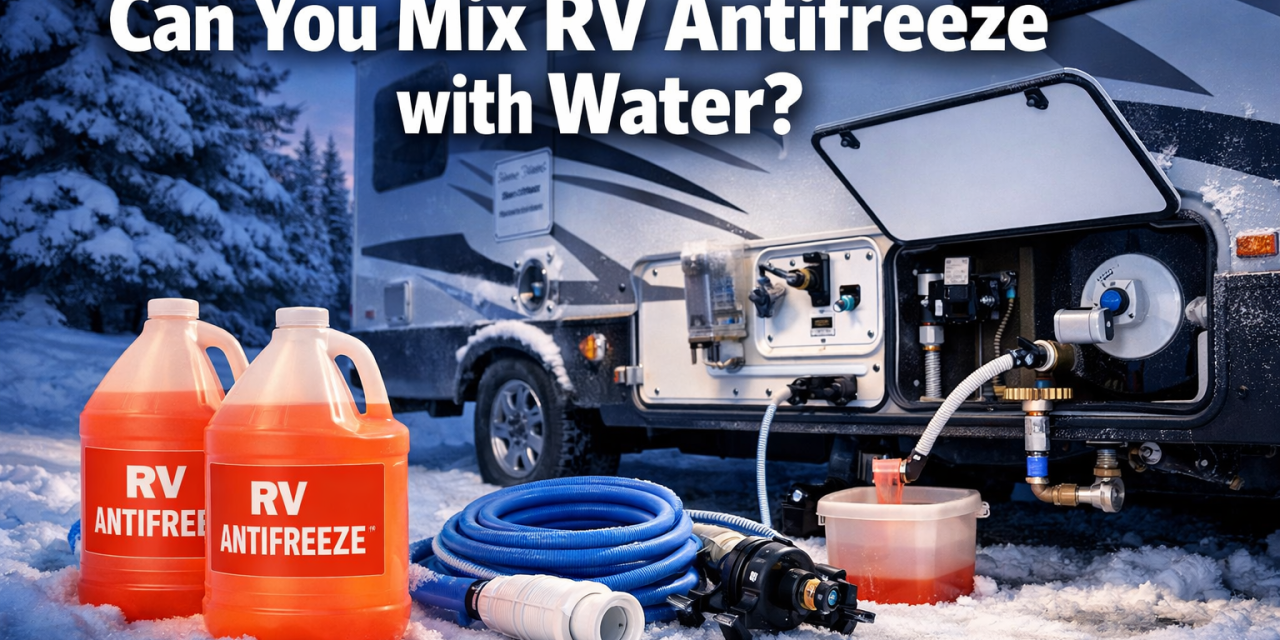
Winter is approaching, and millions of RV owners across North America face the same critical question: how do you properly protect your recreational vehicle’s plumbing system from freezing temperatures? The answer often leads to confusion about whether can you mix RV antifreeze with water safely and effectively. This comprehensive guide will explore everything RV enthusiasts need to know about antifreeze mixing, safety considerations, and best practices for winterization in 2026.
Key Takeaways
• Mixing is safe but inefficient – RV antifreeze can be mixed with water without safety concerns, but this approach wastes product and requires more antifreeze overall
• Propylene glycol-based antifreeze is non-toxic – FDA-approved formulations are safe for potable water systems when used correctly
• Dilution reduces effectiveness – Water mixed with antifreeze creates weaker protection that may not prevent freezing in extreme temperatures
• Professional bypass method is preferred – Most experienced RVers drain freshwater tanks and bypass them rather than mixing antifreeze with existing water
• Proper concentration is critical – Achieving adequate freeze protection requires understanding dilution ratios and system capacity
Understanding RV Antifreeze Basics
Would you like to save this article?
What Is RV Antifreeze?
RV antifreeze serves as a specialized fluid designed to protect recreational vehicle plumbing systems during cold weather. Unlike automotive antifreeze, which contains toxic ethylene glycol, RV antifreeze typically uses propylene glycol as its active ingredient. This distinction makes it safe for potable water systems.
The propylene glycol-based formulation has earned FDA approval as “generally regarded as safe” for human consumption when used as directed [5]. This safety profile allows RV antifreeze to flow through the same pipes that carry drinking water without creating health hazards.
Types of RV Antifreeze
Modern RV antifreeze comes in several formulations:
- Standard propylene glycol (most common)
- Ethanol-based alternatives (less frequent)
- Hybrid formulations with additives
Each type offers different freeze protection levels, typically rated for temperatures ranging from -20°F to -100°F. The concentration determines the actual protection level your system receives.
Can You Mix RV Antifreeze with Water? Safety Considerations
The Short Answer: Yes, But…
Can you mix RV antifreeze with water? The answer is definitively yes from a safety standpoint. Propylene glycol-based RV antifreeze poses no immediate health risks when combined with potable water [3]. However, this mixing creates practical challenges that many RV owners overlook.
Safety Profile of Mixed Solutions
When RV antifreeze mixes with water in your system, the resulting solution maintains its non-toxic properties. The FDA’s safety designation for propylene glycol extends to diluted mixtures, meaning accidental consumption won’t cause poisoning [5].
Key safety points include:
- ✅ Non-toxic to humans and pets
- ✅ Safe for potable water systems
- ✅ Biodegradable formulations available
- ✅ No harmful chemical reactions with water
Potential Concerns
While mixing proves safe, certain considerations deserve attention:
- Taste and odor may persist in water lines
- Concentration levels become difficult to monitor
- System flushing requires more time and effort
- Effectiveness diminishes with excessive dilution
The Science Behind Mixing RV Antifreeze with Water
How Dilution Affects Performance
Understanding can you mix RV antifreeze with water requires grasping basic chemistry principles. When antifreeze mixes with water, the freeze protection level decreases proportionally to the dilution ratio.
Example Dilution Effects:
- 100% RV antifreeze: -50°F protection
- 75% antifreeze/25% water: -35°F protection
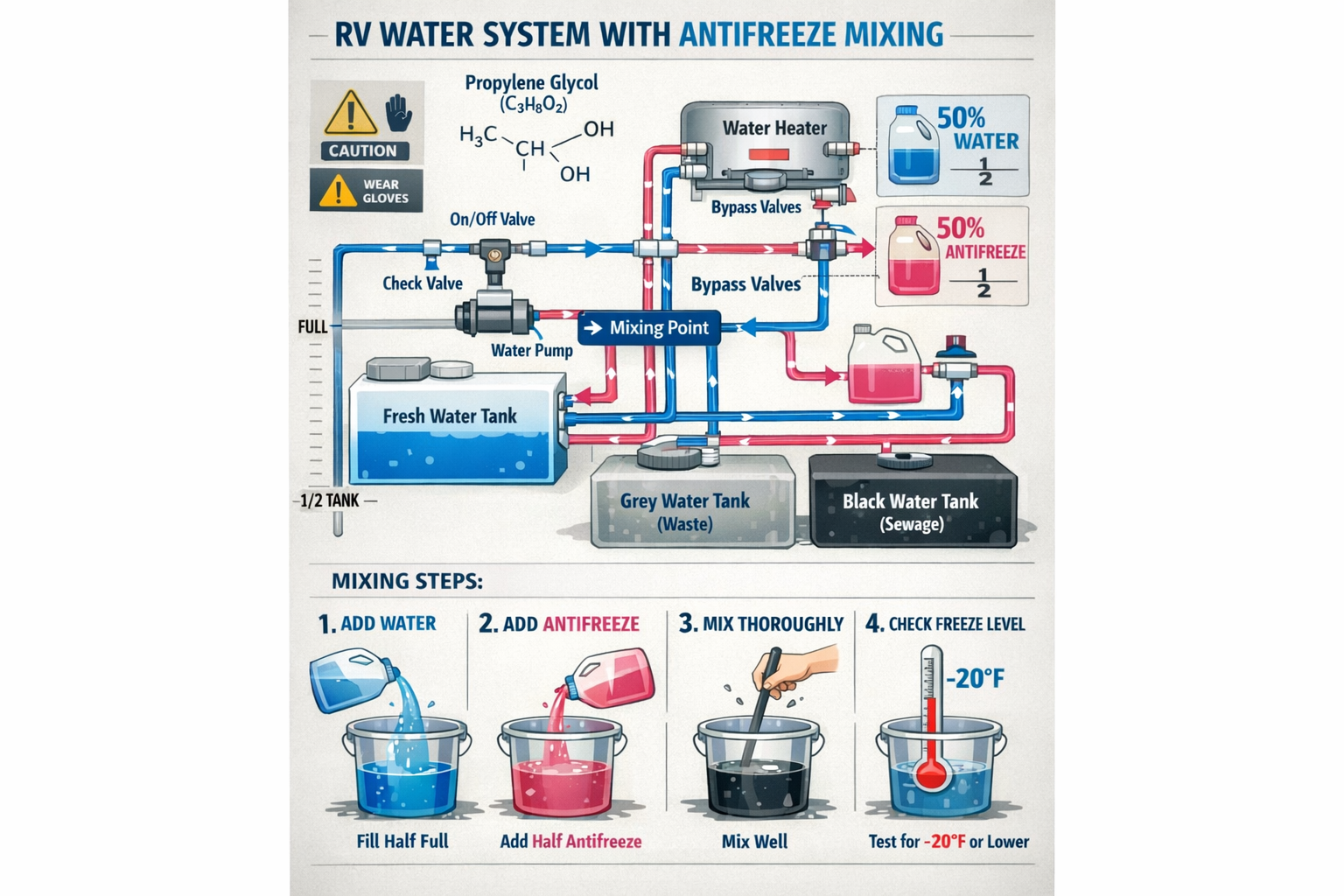
- 50% antifreeze/50% water: -20°F protection
- 25% antifreeze/75% water: -5°F protection
Real-World System Dynamics
Consider a typical RV water system containing a 6-gallon water heater filled with regular water. When antifreeze enters this system, immediate dilution occurs [2]. The initial mixture flows through plumbing lines at reduced concentration, requiring substantial additional antifreeze to achieve proper protection levels.
This dilution effect means:
“Early antifreeze/water mixtures will drain into holding tanks, creating a minimum 10 gallons of diluted mixture and requiring more antifreeze overall” [2]
Mathematical Reality
System Volume Calculations:
| Component | Typical Capacity | Impact on Dilution |
|---|---|---|
| Water Heater | 6-10 gallons | High initial dilution |
| Fresh Water Lines | 2-3 gallons | Moderate mixing |
| Holding Tanks | 20-40 gallons | Receives diluted mixture |
| Total System | 28-53 gallons | Requires significant antifreeze |
Practical Implications: Can You Mix RV Antifreeze with Water Effectively?
The Efficiency Problem
While answering can you mix RV antifreeze with water from a safety perspective proves straightforward, efficiency concerns complicate the practical application. Mixing creates inefficiency since you’re wasting product when sending it through the tank first [5].
Step-by-Step Mixing Process
When RV owners choose to mix antifreeze with water, the process typically unfolds as follows:
- Initial Introduction – Antifreeze enters freshwater tank
- Pump Activation – Mixed solution flows through lines
- Progressive Dilution – Water heater dilutes concentration further
- System Circulation – Weakened mixture reaches all components
- Continued Addition – More antifreeze needed for proper protection
Cost Implications
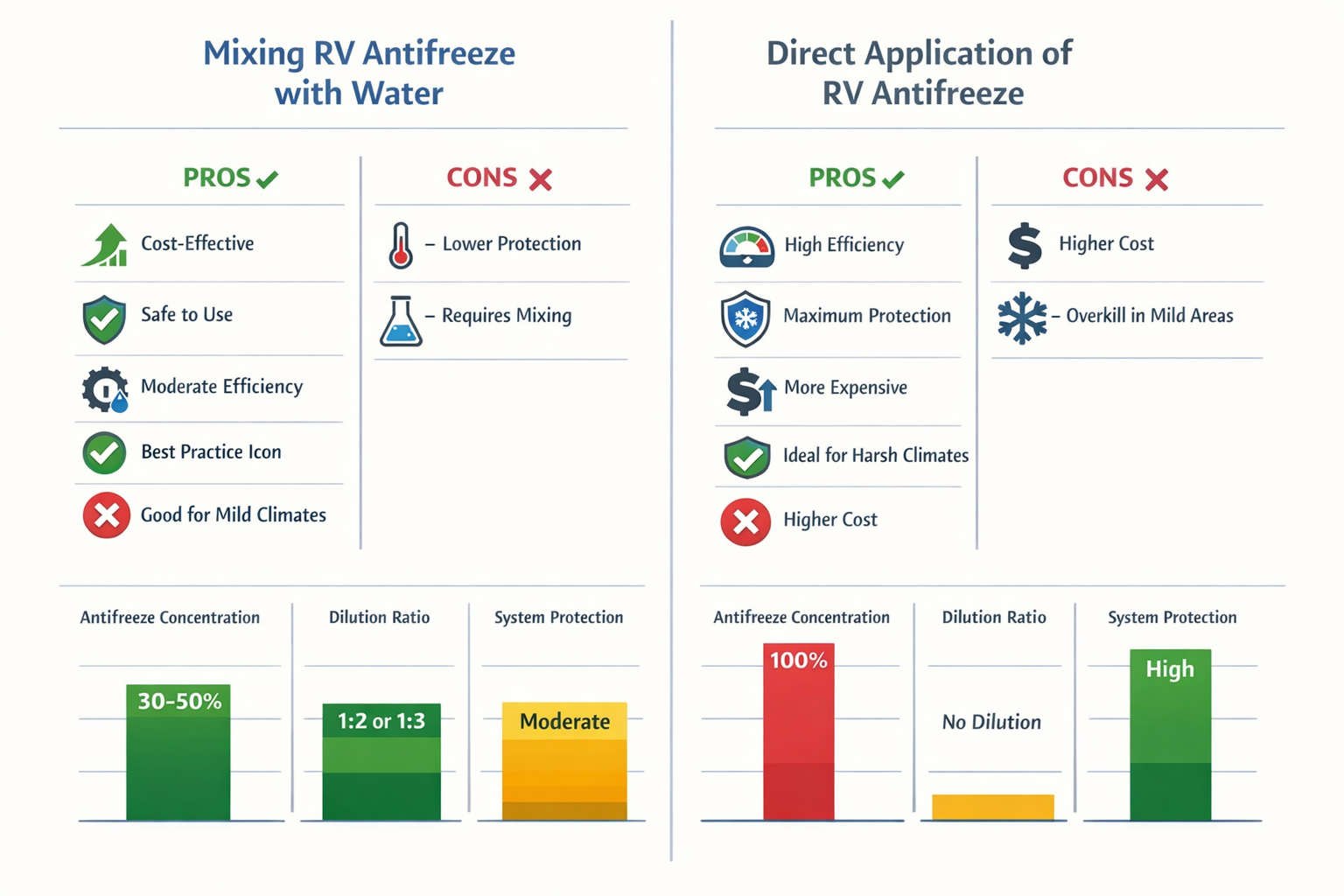
The financial impact of mixing versus direct application becomes significant:
Mixing Method Costs:
- Initial antifreeze purchase: $40-60
- Additional antifreeze for dilution: $20-40
- Total cost: $60-100
Direct Application Costs:
- Bypass system antifreeze: $30-50
- Total cost: $30-50
Best Practices for RV Antifreeze Application
Professional Recommendations
Industry experts consistently recommend bypassing the freshwater tank rather than mixing antifreeze with existing water [5]. This approach offers several advantages:
- Reduced antifreeze consumption
- Predictable concentration levels
- Easier spring cleanup
- More reliable freeze protection
Alternative Methods to Consider
Instead of asking can you mix RV antifreeze with water, consider these proven approaches:
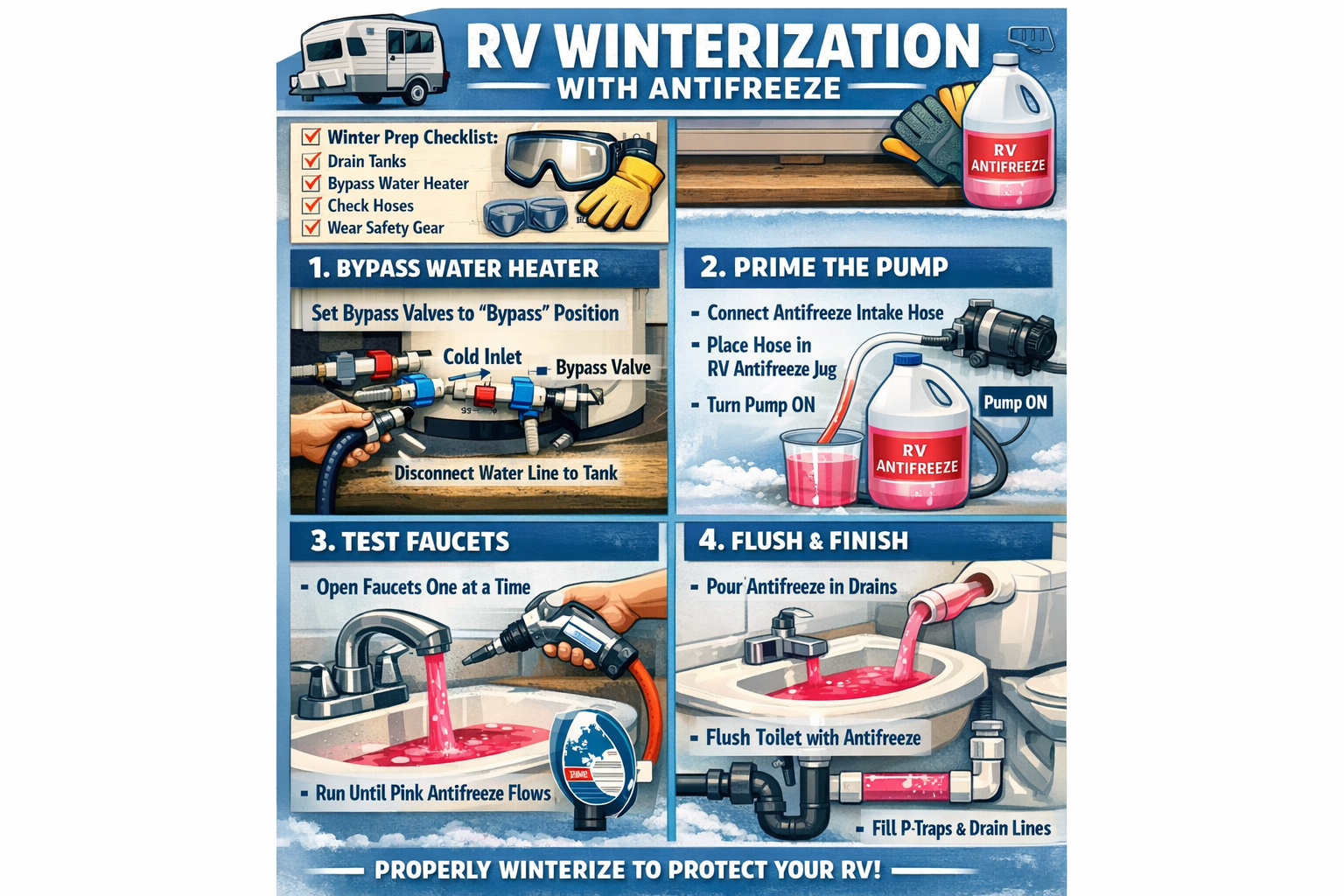
Method 1: Complete System Drain
- Drain all water from tanks and lines
- Bypass water heater and freshwater tank
- Connect antifreeze directly to pump inlet
- Circulate pure antifreeze through system
Method 2: Compressed Air Method
- Use compressed air to blow out water lines
- Add small amounts of antifreeze to traps
- Minimize antifreeze usage while maintaining protection
Method 3: Heated Storage
- Store RV in heated facility
- Eliminate need for antifreeze entirely
- Maintain minimal heat to prevent freezing
Seasonal Preparation Timeline
Fall Winterization Schedule:
🍂 September: Research storage options and antifreeze types
🍂 October: Perform system inspection and repairs
🍂 November: Execute winterization before first freeze
🍂 December: Verify protection with system checks
Common Mistakes When Mixing RV Antifreeze with Water
Insufficient Antifreeze Volume
Many RV owners underestimate the antifreeze quantity needed when mixing with water. The water heater alone can contain 6 gallons of regular water, requiring substantial antifreeze to achieve proper dilution ratios [2].
Inadequate System Flushing
Failing to run antifreeze through all system components leaves vulnerable areas unprotected. Complete circulation requires:
- All faucets (hot and cold)
- Shower heads and sprayers
- Toilet flush systems
- Exterior wash stations
- Ice maker connections
Temperature Miscalculation
Assuming mixed solutions provide the same protection as pure antifreeze leads to freeze damage. Always calculate actual protection levels based on dilution ratios.
Premature Spring Startup
Starting the season without proper system flushing leaves antifreeze residue in potable water lines, creating taste and odor issues.
Environmental and Health Considerations
Eco-Friendly Disposal
When addressing can you mix RV antifreeze with water from an environmental perspective, proper disposal becomes crucial. Propylene glycol-based antifreeze is biodegradable, but concentration levels affect breakdown rates [3].
Disposal Guidelines:
- ✅ Diluted mixtures: Generally safe for septic systems
- ✅ Concentrated antifreeze: Dispose at hazardous waste facilities
- ❌ Never dump in storm drains or natural waterways
- ❌ Avoid disposal in areas with groundwater concerns
Health Precautions
Despite its non-toxic designation, RV antifreeze requires handling precautions:
- Wear gloves during application
- Ensure adequate ventilation in enclosed spaces
- Avoid prolonged skin contact
- Keep away from children and pets during application
- Flush systems thoroughly before resuming normal use
Advanced Winterization Strategies
Climate-Specific Approaches
Can you mix RV antifreeze with water effectively depends partly on your local climate conditions:
Mild Winter Regions (Above 20°F)
- Light antifreeze concentrations may suffice
- Mixing becomes more viable option
- Monitor weather forecasts for unexpected cold snaps
Moderate Winter Regions (0°F to 20°F)
- Standard antifreeze concentrations required
- Mixing reduces reliability
- Consider bypass methods for better protection
Severe Winter Regions (Below 0°F)
- Maximum antifreeze concentrations essential
- Mixing not recommended
- Professional winterization advisable
System-Specific Considerations
Different RV configurations require tailored approaches:
Class A Motorhomes:
- Large water systems (50+ gallons)
- Complex plumbing configurations
- Multiple appliances requiring protection
Travel Trailers:
- Moderate system capacity (20-40 gallons)
- Simpler plumbing layouts
- Easier access for winterization
Pop-up Campers:
- Minimal water systems
- Basic protection requirements
- Quick winterization possible
Technology and Innovation in RV Antifreeze
2026 Product Developments
The RV antifreeze industry continues evolving with new formulations and application methods:
- Concentrated formulas requiring less storage space
- Color-coded systems for easier monitoring
- Biodegradable additives for environmental protection
- Temperature indicators showing protection levels
Smart Monitoring Systems
Modern RVs increasingly feature digital monitoring systems that track:
- Antifreeze concentration levels
- System temperature readings
- Freeze protection status
- Maintenance scheduling reminders
Troubleshooting Common Issues
Problem: Antifreeze Won’t Flow Through System
Possible Causes:
- Clogged pump or lines
- Insufficient pump pressure
- Air locks in system
- Frozen components
Solutions:
- Check pump operation and prime if necessary
- Clear air locks by running water briefly
- Inspect for blockages in intake lines
- Warm frozen components before proceeding
Problem: Inconsistent Antifreeze Color at Faucets
Possible Causes:
- Incomplete mixing in system
- Residual water in lines
- Dilution in water heater
Solutions:
- Continue running antifreeze until consistent color appears
- Bypass water heater during initial circulation
- Add additional antifreeze to compensate for dilution
Problem: Strong Antifreeze Taste in Spring
Possible Causes:
- Insufficient system flushing
- Antifreeze residue in lines
- Contaminated water tank
Solutions:
- Perform multiple flush cycles with fresh water
- Use baking soda solution to neutralize taste
- Replace water filters after winterization
Cost-Benefit Analysis
Financial Comparison: Mixing vs. Direct Application
Mixing Method Total Costs:
- Antifreeze: $60-100
- Labor time: 4-6 hours
- Spring cleanup: 2-3 hours
- Total investment: $60-100 + 6-9 hours
Direct Application Total Costs:
- Antifreeze: $30-50
- Labor time: 2-3 hours
- Spring cleanup: 1-2 hours
- Total investment: $30-50 + 3-5 hours
Long-term Considerations
System Longevity Factors:
- Proper winterization extends component life
- Freeze damage repairs cost $500-2000+
- Annual winterization investment: $50-100
- ROI on proper winterization: 500-2000%
Regional Considerations Across North America
United States Climate Zones
Northern States (Minnesota, Wisconsin, Maine):
- Extended freezing periods (4-6 months)
- Temperatures below -20°F common
- Maximum antifreeze protection essential
Mountain States (Colorado, Wyoming, Montana):
- Extreme temperature variations
- Sudden weather changes possible
- Flexible winterization strategies needed
Southern States (Texas, Florida, Arizona):
- Minimal freezing risk
- Occasional cold snaps require preparation
- Light protection often sufficient
Canadian Considerations
Prairie Provinces:
- Extreme cold conditions (-40°F possible)
- Extended winter seasons
- Professional winterization recommended
Maritime Provinces:
- Moderate coastal temperatures
- High humidity affects system components
- Corrosion protection important
Professional vs. DIY Winterization
When to Hire Professionals
Consider professional winterization services when:
- Complex coach systems exceed DIY comfort level
- Time constraints prevent proper preparation
- Warranty requirements specify professional service
- Extreme climate conditions demand expertise
DIY Success Factors
Successful DIY winterization requires:
- Comprehensive system knowledge
- Proper tools and equipment
- Adequate time allocation
- Safety equipment and precautions
Future Trends in RV Winterization
Emerging Technologies
Smart Antifreeze Systems:
- Automated concentration monitoring
- Remote system status checking
- Predictive maintenance alerts
- Integration with RV management apps
Advanced Formulations:
- Extended protection periods
- Improved biodegradability
- Enhanced system compatibility
- Reduced environmental impact
Industry Developments
The RV industry continues advancing winterization technology through:
- Improved heating systems reducing antifreeze dependency
- Better insulation extending usable seasons
- Smart monitoring preventing freeze damage
- Eco-friendly alternatives to traditional antifreeze
Conclusion
Understanding can you mix RV antifreeze with water requires balancing safety, efficiency, and effectiveness considerations. While mixing proves safe from a health perspective, it creates practical challenges that often outweigh the convenience benefits.
Key recommendations for 2026:
- Prioritize bypass methods over mixing for optimal efficiency
- Calculate system capacity before purchasing antifreeze
- Monitor weather conditions to ensure adequate protection
- Plan for proper disposal of antifreeze mixtures
- Consider professional services for complex systems
The most successful RV winterization strategies focus on prevention rather than convenience. By understanding your system’s specific requirements and choosing appropriate protection methods, you can ensure reliable freeze protection while minimizing costs and environmental impact.
Next Steps:
- Assess your RV’s specific winterization needs
- Research local climate requirements and regulations
- Gather necessary tools and antifreeze supplies
- Schedule winterization before first freeze warning
- Plan spring de-winterization and system sanitization
Remember that proper winterization represents an investment in your RV’s longevity and your future camping adventures. Whether you choose mixing or direct application methods, the key lies in thorough preparation and attention to detail.
References
[1] 5 Steps To Use Rv Antifreeze Safely – https://thervsmith.com/5-steps-to-use-rv-antifreeze-safely/
[2] Rv Winterization Qa – https://johnmarucci.com/2021/10/11/rv-winterization-qa/
[3] Non Toxic Rv Antifreeze Safest Brands Chemical Precautions – https://www.mychemicalfreehouse.net/2023/03/non-toxic-rv-antifreeze-safest-brands-chemical-precautions.html
[4] Winterize Rvwatersystem – https://rvsafety.com/rveducation/maintenance/winterize-rvwatersystem
[5] Winterization Tips Rv Antifreeze – https://roadtrippers.com/magazine/winterization-tips-rv-antifreeze/
[6] Watch – https://www.youtube.com/watch?v=dfPunZxp1Wk
[7] Biotherm Fluids%c2%ae Rv Antifreeze Heat Transfer Fluid – https://orisonmarketing.com/products/biotherm-fluids%C2%AE-rv-antifreeze-heat-transfer-fluid
[8] How To De Winterize And Sanitize The Rv Water System – https://rollinontv.com/how-to-de-winterize-and-sanitize-the-rv-water-system/