Would you like to save this article?
Every year, thousands of RV travelers look north and wonder — can you take an RV into Canada? The answer is a big YES! 🎉 Canada is one of the most beautiful RV destinations in the world. From the Rocky Mountains to the Atlantic coast, it offers stunning roads and campgrounds. But crossing the border in an RV takes some planning. Get the wrong documents, and you could be turned away. This guide covers everything you need to know to make your Canadian RV adventure smooth and stress-free.
Key Takeaways
- ✅ Yes, you can take an RV into Canada — but every person on board needs valid ID like a passport or NEXUS card.
- 📄 Bring your RV registration, proof of insurance, and a special “yellow card” from your US insurer.
- 🐾 Pets need a signed rabies vaccination certificate from a vet (if they are 3 months or older).
- 🪵 Do NOT bring firewood — it is banned at the Canadian border.
- 🗂️ Prepare your documents in advance to avoid delays or being turned away.
Can You Take an RV Into Canada? What You Need to Know First
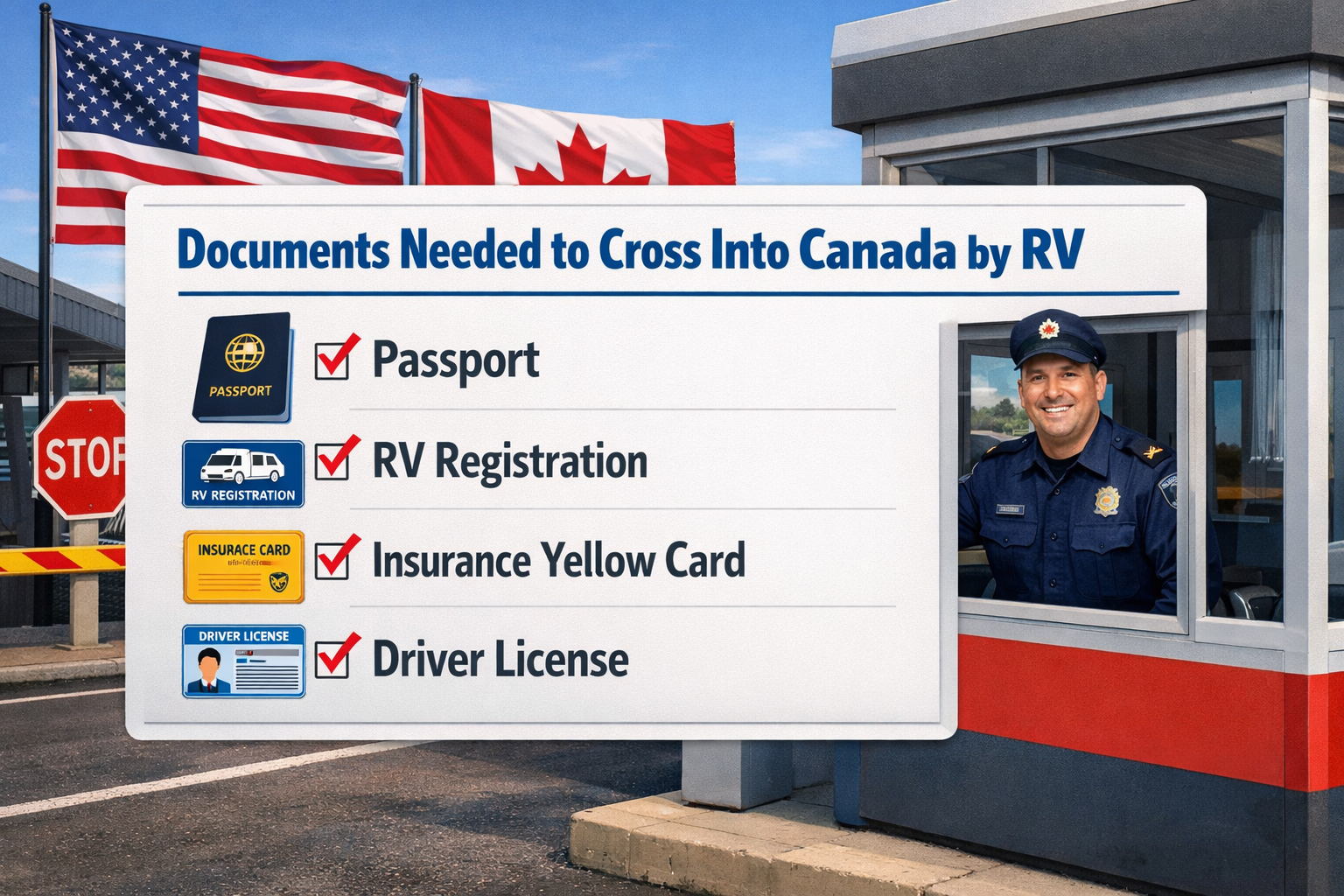
The short answer is yes — taking an RV into Canada is totally allowed. Millions of American RVers do it every year. But Canada has rules, and border officers take them seriously. Knowing what to bring makes all the difference.
Valid ID for Every Person on Board
This is the most important rule. Every single person in the RV must have valid identification. That means:
- A valid US passport or passport card
- A NEXUS card (great for frequent border crossers)
- An Enhanced Driver’s License (EDL) — accepted in some states as a passport alternative [3]
Children also need their own ID. If a child is traveling with only one parent, bring a signed letter from the other parent giving permission. Border officers may ask for it [4].
💡 Pro tip: Put all IDs in one folder before you reach the border. This saves time and reduces stress.
RV Registration and Proof of Ownership
Think of your RV registration as its “birth certificate.” You must have it ready at the border. If you are towing a vehicle, bring registration for that too [4].
Also make sure:
- Your RV title is clear and in your name [1]
- You have a bill of sale as proof of purchase [1]
- The Vehicle Identification Number (VIN) on your RV matches all your documents [1]
Border officers may check the VIN on the actual RV and compare it to your paperwork. Any mismatch can cause big problems.
The Yellow Card and Insurance Rules for Taking an RV Into Canada
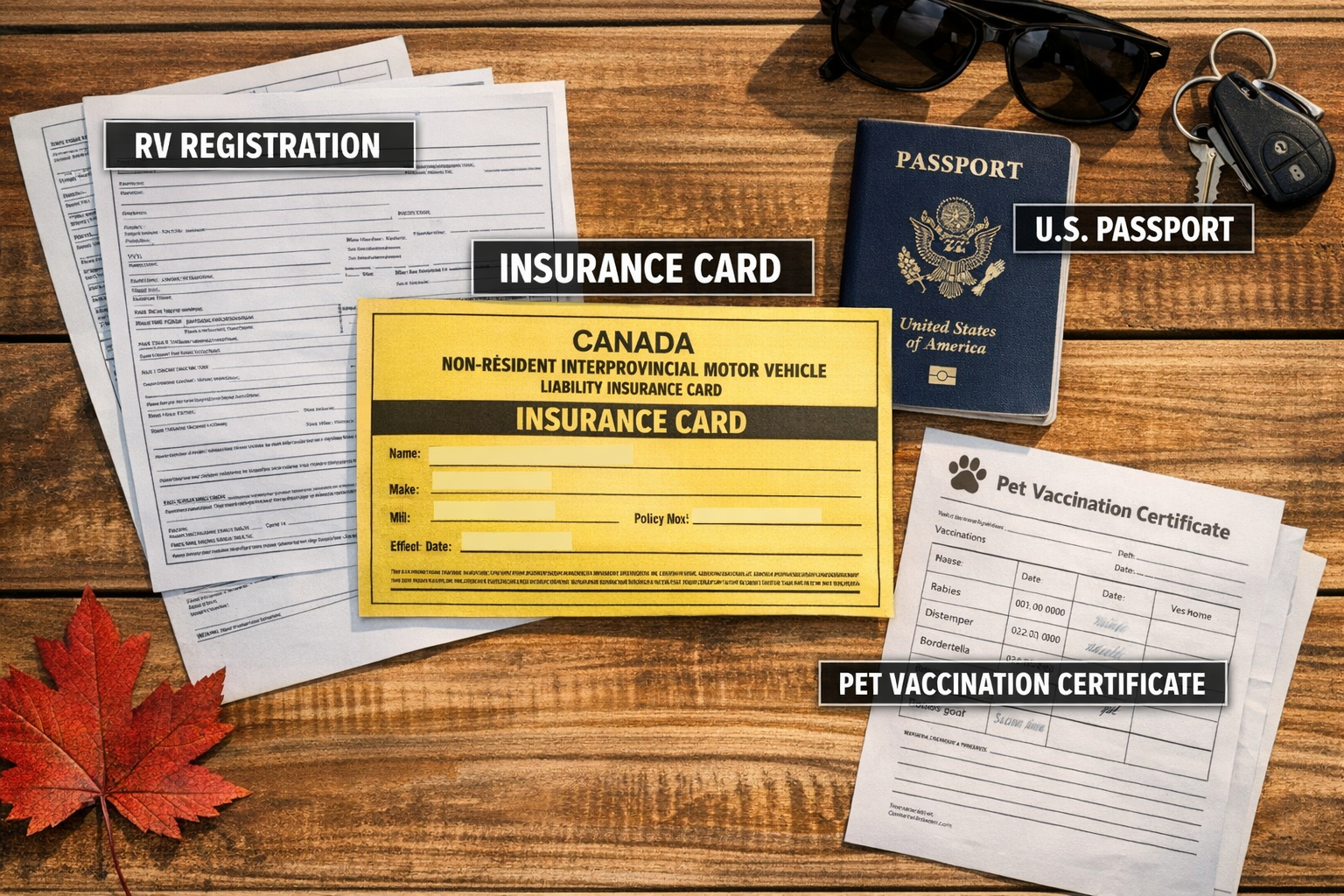
One of the most overlooked documents when taking an RV into Canada is the Canada Non-Resident Interprovincial Motor Vehicle Liability Card — also called the “yellow card.”
What Is the Yellow Card?
This card proves that your US auto insurance meets Canada’s minimum liability requirements. Without it, you could face:
- Heavy fines
- Vehicle impoundment
- Being turned away at the border
The good news? It’s free. Just call your US insurance provider before your trip and ask for it [4].
Driver’s License Requirements
Most RV travelers will be happy to know that a regular driver’s license is enough to drive an RV in Canada. You do not need a special commercial license for most motorhomes [5].
However, rules can vary by province. Always check with the specific provinces you plan to visit before your trip [5].
Insurance Checklist
| Document | Where to Get It | Cost |
|---|---|---|
| Yellow Card | Your US insurance company | Free |
| Proof of Insurance | Your insurance provider | Free |
| RV Registration | Your state DMV | Already have it |
🚨 Important: Some provinces may have additional registration requirements for imported RVs. Contact the provincial authority where you plan to travel [1].
Pets, Food, and Prohibited Items When Crossing Into Canada by RV
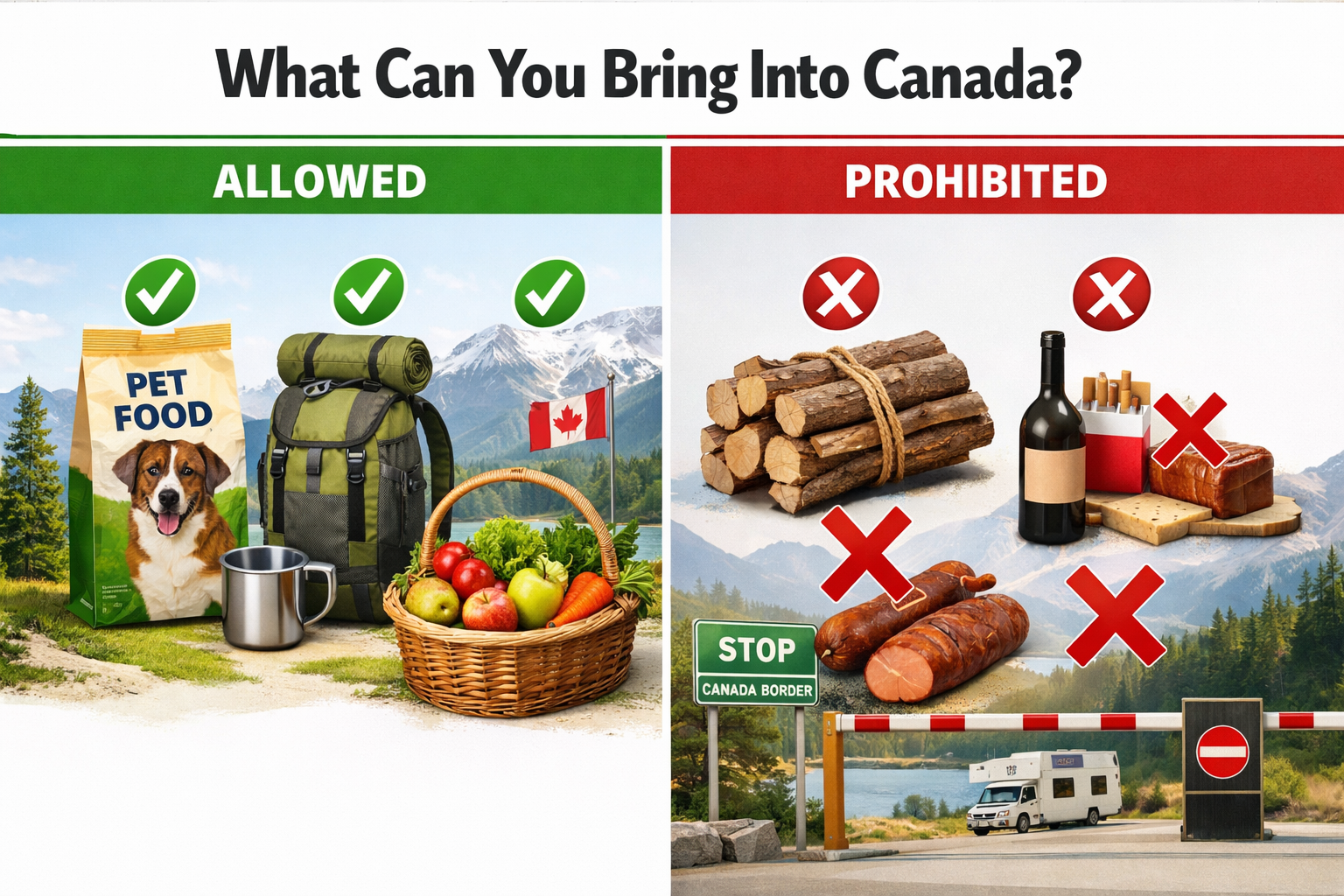
Planning to bring your furry friends or stock up on supplies? Here is what you need to know before crossing into Canada in your RV.
Bringing Pets Into Canada 🐶🐱
Canada loves pets — but they have strict rules to keep animals safe.
For pets 3 months and older:
- You MUST have a signed rabies vaccination certificate from a licensed veterinarian [4]
- Bring both a hard copy AND a digital copy — border officers may require the physical paper [4]
For puppies and kittens under 3 months:
- No rabies certificate is needed [4]
Pet food rules:
- You can bring up to 44 pounds of pet food per animal into Canada [4]
🐾 Tip: Get your pet’s paperwork done at least a week before your trip. Vet offices can get busy!
What Food Can You Bring?
Canada allows most personal food items. Fresh fruits, vegetables, and meats may be inspected. Always declare everything at the border. Hiding food items can lead to fines.
What Is Banned? 🚫
One big surprise for many RVers — firewood is prohibited. Canada bans wood products to protect its forests and ecosystems from invasive pests and diseases [4].
Do NOT bring:
- 🪵 Firewood (any kind)
- Certain fresh produce (check CBSA guidelines) [8]
- Firearms without proper permits
- Cannabis (even if legal in your state)
Quick Prohibited Items List:
- Firewood
- Unpermitted firearms
- Certain fresh fruits and vegetables
- Cannabis products
Always check the Canada Border Services Agency (CBSA) website for the most current list of restricted items [8].
Tips for a Smooth RV Border Crossing Into Canada
Getting ready ahead of time is the key to a great experience. Here are some simple steps to follow:
Before You Leave Home
- 📋 Gather all documents — IDs, registration, yellow card, pet certificates
- 📞 Call your insurance company to get the yellow card
- 🏥 Visit the vet to update pet vaccinations and get signed paperwork
- 🗺️ Research the provinces you will visit for any extra rules [1]
- 🚫 Leave firewood at home — buy it when you get to Canada
At the Border
- Be polite and honest with border officers
- Declare everything — food, gifts, cash over $10,000 CAD
- Have all documents in one place and easy to reach
- Answer questions clearly and briefly
After Crossing
- Keep all documents inside the RV for the whole trip
- Know the rules of each province you visit
- Buy firewood locally at Canadian campgrounds [4]
Conclusion
So, can you take an RV into Canada? Absolutely — and it is one of the best road trips you can take! 🍁 Canada offers breathtaking scenery, friendly campgrounds, and open roads that RV lovers dream about. The key is preparation.
Here are your next steps:
- ✅ Check that every traveler has a valid passport, passport card, or EDL
- ✅ Call your insurer and request the free yellow card
- ✅ Visit your vet and get signed pet vaccination certificates
- ✅ Gather your RV title, registration, bill of sale, and VIN documents
- ✅ Leave firewood at home and plan to buy it in Canada
- ✅ Check the CBSA website for the latest border rules
Do these things, and your Canadian RV adventure will start on the right foot. The border crossing will be quick, easy, and stress-free. Canada is waiting — time to hit the road! 🚐🇨🇦
References
[1] Importing An Rv In Canada – https://www.petesrvindy.com/importing-an-rv-in-canada
[2] Canadream Cares Know Before You Go – https://www.canadream.com/blog/august-2025/canadream-cares-know-before-you-go/
[3] Tips For An Easier Crossing Into Canada – https://nucamprv.com/blog/tips-for-an-easier-crossing-into-canada/
[4] Watch – https://www.youtube.com/watch?v=nfDAEHpJsBQ
[5] gorving.ca – https://gorving.ca/faq/
[6] Crossing The Border In An Rv – https://landyachting.ca/crossing-the-border-in-an-rv/
[7] Dos And Donts Of A Canadian Border Crossing In Your Rv – https://johnsonrv.com/blog/dos-and-donts-of-a-canadian-border-crossing-in-your-rv
[8] Menu Eng – https://www.cbsa-asfc.gc.ca/travel-voyage/menu-eng.html