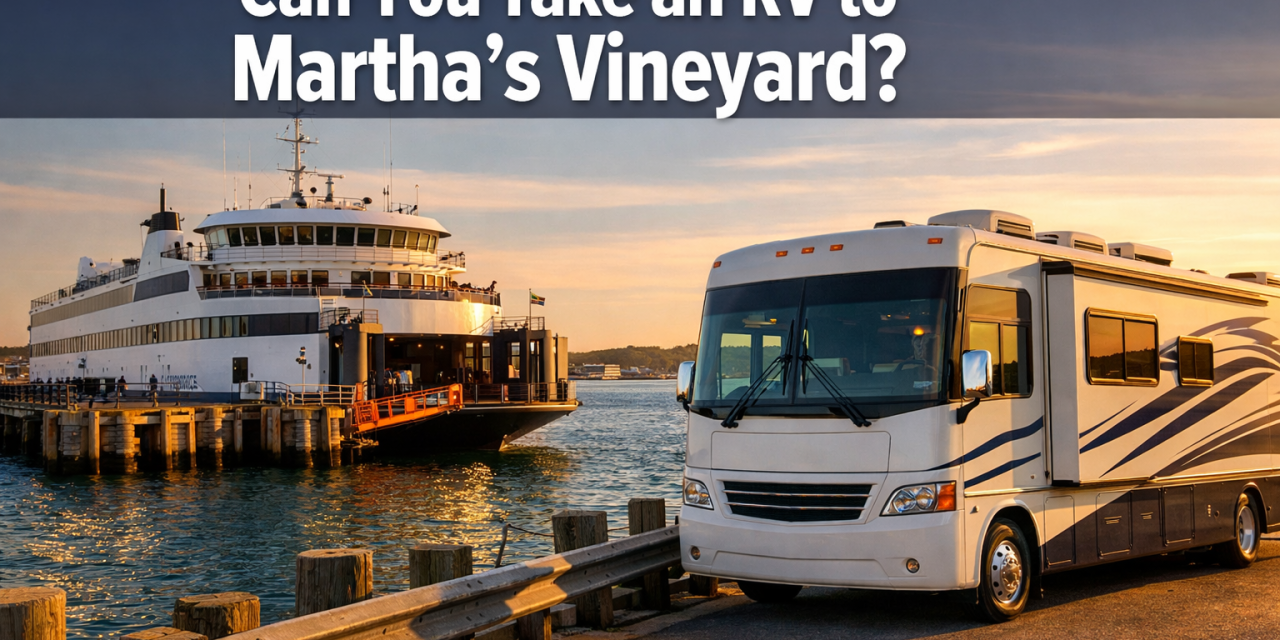
Every RV lover dreams of waking up to ocean breezes and island charm — but can you take an RV to Martha’s Vineyard and actually make that dream happen? The answer is yes, but it comes with a unique set of rules, logistics, and planning requirements that every road tripper needs to know before hitching up and heading to the Massachusetts coast.
Martha’s Vineyard is not your typical RV destination. It’s an island, which means getting there requires a ferry crossing, careful reservation planning, and a solid understanding of local regulations. This guide breaks down everything RV enthusiasts need to know.
Key Takeaways
- ✅ RVs can reach Martha’s Vineyard via the Steamship Authority vehicle ferry from Woods Hole, MA
- 🏕️ Martha’s Vineyard Family Campground is the primary RV-friendly campsite on the island
- 📅 Peak season (July–August) requires a 3-night minimum stay; shoulder season requires 2 nights [4]
- 🚫 Land Bank properties ban camping, with very limited exceptions [1]
- 🐕 Dogs are welcome at RV sites during shoulder season only, not during peak summer [4]
Getting Your RV to Martha’s Vineyard: The Ferry Reality
Would you like to save this article?
The most important thing to understand about bringing an RV to Martha’s Vineyard is this: there is no bridge. The island sits roughly 7 miles off the coast of Cape Cod, so every vehicle — including your motorhome or travel trailer — must travel by ferry.
💡 “Planning your ferry crossing is just as important as planning your campsite. Book both early — Martha’s Vineyard fills up fast.”
The Steamship Authority: Your Only Vehicle Ferry Option
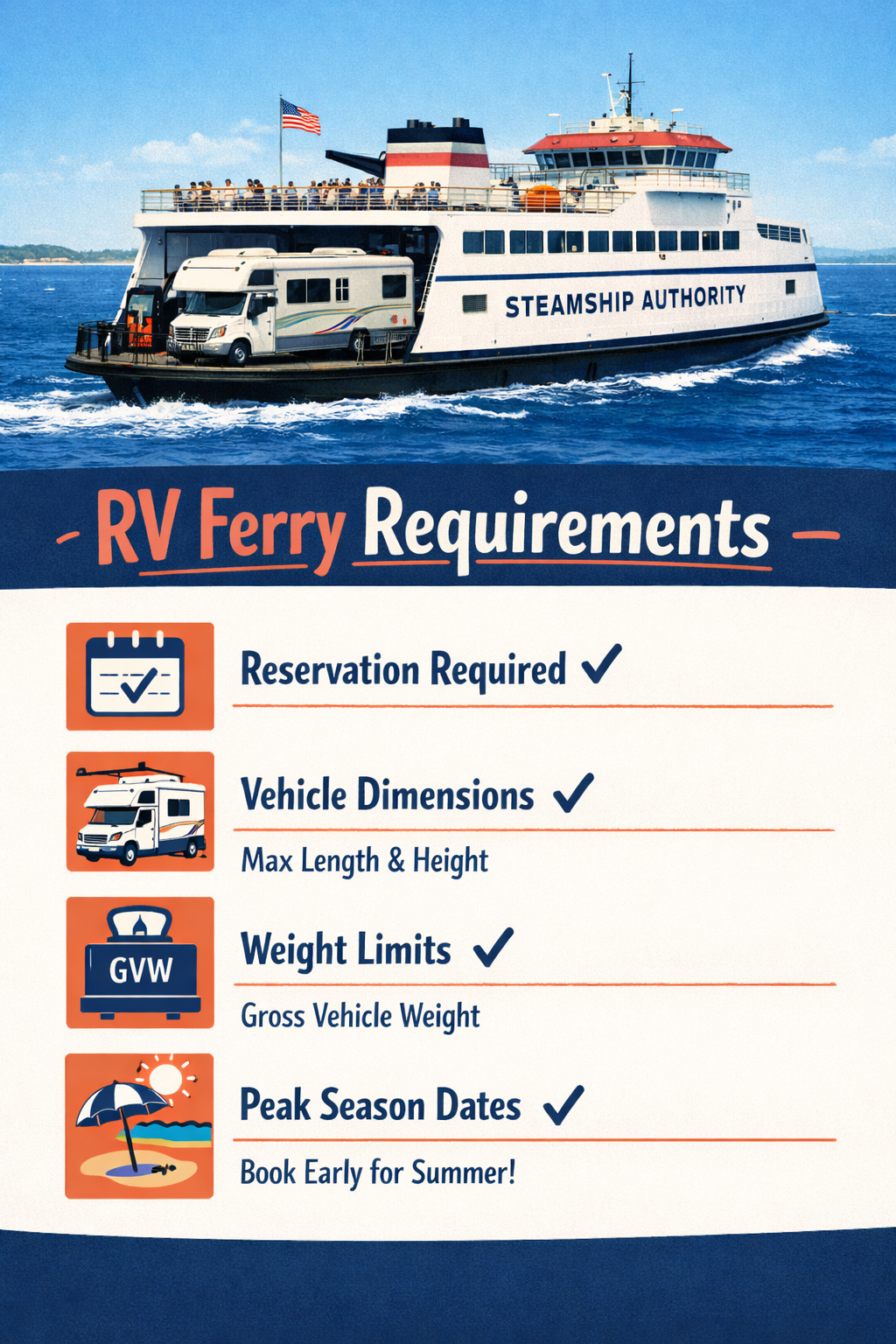
The Steamship Authority operates the only vehicle ferry service that can transport RVs to Martha’s Vineyard. The primary departure point is Woods Hole, MA, with the ferry arriving at Vineyard Haven. This is a working ferry system, not a tourist cruise, and it has strict rules about vehicle size, weight, and reservations.
Key ferry planning tips for RV travelers:
- 📏 Know your dimensions — Length, height, and weight all matter for vehicle ferry pricing and eligibility
- 📆 Book far in advance — Summer reservations can sell out months ahead
- 💳 Expect higher costs — Vehicle ferry rates for large RVs are significantly more expensive than a standard car
- ⏰ Arrive early — The Steamship Authority recommends arriving well before departure
The Trustees of Reservations also manage OSV (Over-Sand Vehicle) permits for certain beach areas on the island [2][3], though these are primarily relevant for 4WD vehicles accessing sand trails, not standard RV camping.
RV Size Considerations for the Ferry
Not all RVs are created equal when it comes to island ferry travel. Larger Class A motorhomes and fifth wheels may face more restrictions and higher fees than compact Class B campervans. Before booking, contact the Steamship Authority directly to confirm:
- Maximum vehicle length allowed on your sailing
- Height clearance on the vehicle deck
- Weight limits for the ferry ramp and deck
A smaller, more maneuverable RV (like a Class B or short Class C) will generally have a much easier time navigating both the ferry and the island’s famously narrow roads.
Can You Take an RV to Martha’s Vineyard and Actually Camp There?
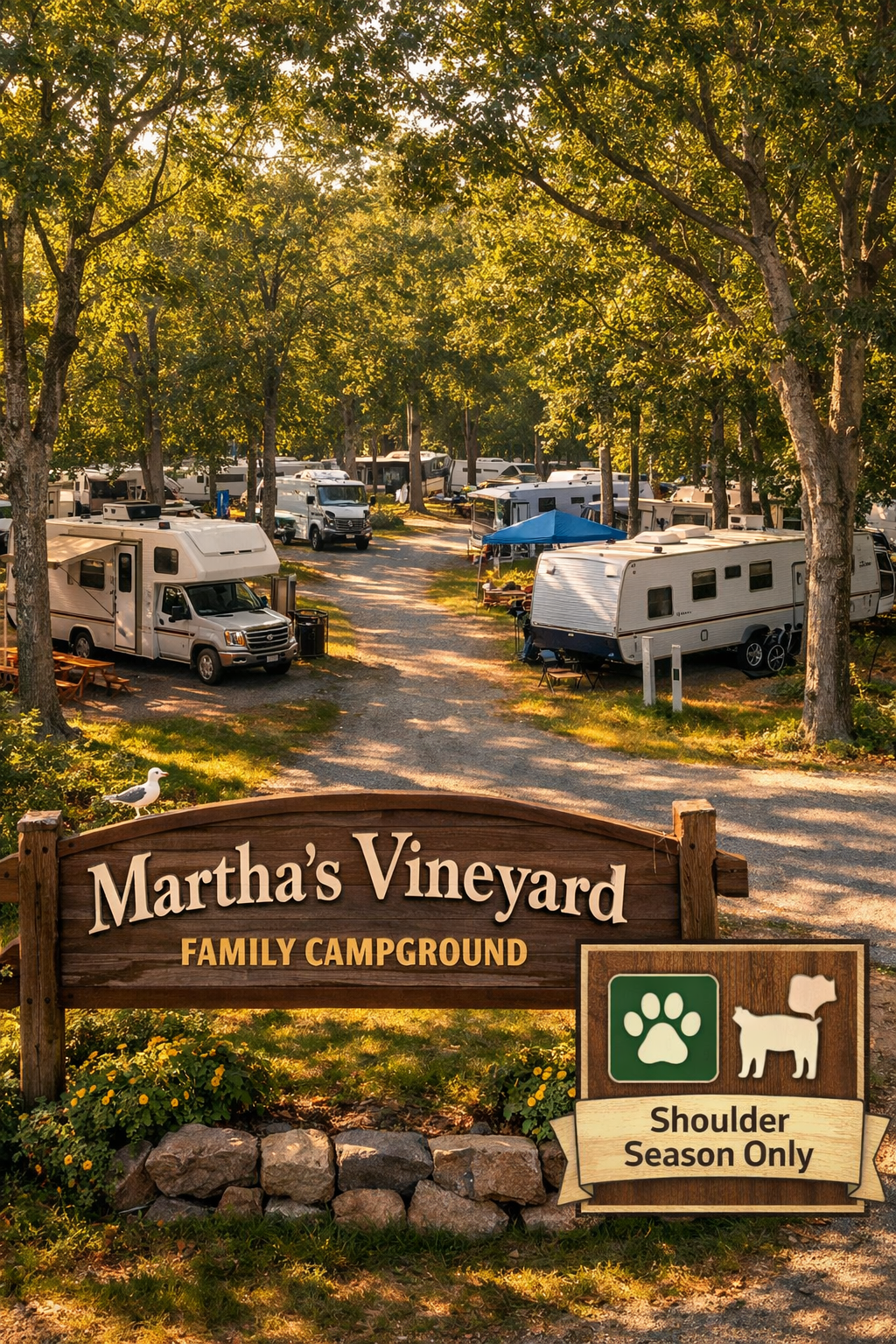
Once your rig arrives on the island, the camping options are more limited than on the mainland. Understanding where you can and cannot camp is essential.
Martha’s Vineyard Family Campground: The Primary Option
The good news: there is a dedicated campground that welcomes RVs. Martha’s Vineyard Family Campground (campmv.com) is the go-to destination for RV travelers on the island [4].
Here’s a quick breakdown of what to expect:
| Season | Dates | Minimum Stay | Dogs Allowed? |
|---|---|---|---|
| Peak Season | July 1 – August 31 | 3 nights | ❌ No |
| Shoulder Season | May 21 – June 30 | 2 nights | ✅ Yes |
| Shoulder Season | Sept 1 – October 1 | 2 nights | ✅ Yes |
Important booking rules to know [4]:
- 💰 Full payment is required at the time of booking — no partial deposits
- 📅 Peak season stays are capped at a two-week maximum
- 🐕 Dog-friendly RV sites are available only during shoulder season
- Reservations fill quickly, especially for summer dates
For RV travelers who love bringing their four-legged companions, shoulder season is the ideal window. The weather is still pleasant, crowds are thinner, and pets are welcome at RV sites.
Where You Cannot Camp: Land Bank Properties
Martha’s Vineyard has a significant amount of protected conservation land managed by the Martha’s Vineyard Land Bank. In late 2022, the Land Bank unanimously voted to prohibit camping on all of its properties [1]. The only exceptions are very limited — Scout groups and school programs may apply for infrequent stays of fewer than three consecutive nights.
This means RV travelers should not assume any open land or conservation area is fair game for overnight parking or boondocking. Dispersed camping is not an option on Martha’s Vineyard.
Zoning Rules and RV Residency
The Martha’s Vineyard Commission’s model bylaws specifically include house trailers and recreational vehicles in their definitions of temporary seasonal guest quarters [8]. This signals that local zoning actively considers and regulates where RVs can be placed on the island.
Additionally, Massachusetts state law applies here: RV full-time living is only legal when parked on private property zoned as residential [6]. Parking your RV on a friend’s driveway for an extended stay may run into local zoning complications, so always verify with the relevant town before making any arrangements.
Massachusetts state parks also offer camping options on the mainland [7], which can serve as a great base for day trips to the island via passenger ferry if bringing a large RV to Martha’s Vineyard feels too complex.
Practical Tips for a Smooth Martha’s Vineyard RV Trip
Making the most of an RV trip to Martha’s Vineyard takes preparation. Here are the top strategies for a stress-free experience:
🗓️ Book Everything Early Both ferry reservations and campground sites should be secured as far in advance as possible — ideally 6 months or more for peak summer dates.
🚗 Consider Going Smaller A compact Class B campervan or short Class C motorhome is far easier to maneuver on the island’s narrow, winding roads and costs less on the ferry.
🏕️ Embrace Shoulder Season May–June and September offer cooler temps, smaller crowds, lower campground rates, and the added bonus of dog-friendly RV sites.
🚲 Bring or Rent Bikes Once on the island, bikes are often the best way to explore. Martha’s Vineyard has excellent bike paths, and leaving the RV parked at camp is a smart move.
📋 Confirm All Details Directly Rules change. Always call or check the Steamship Authority and Martha’s Vineyard Family Campground websites directly before your trip to confirm current policies, rates, and availability.
Conclusion
So, can you take an RV to Martha’s Vineyard? Absolutely — but it demands more planning than a typical RV road trip. The ferry crossing, limited campground availability, strict booking policies, and island-wide camping restrictions mean that preparation is everything.
Here are your actionable next steps:
- ✅ Check ferry availability at the Steamship Authority website and confirm your RV’s dimensions qualify
- ✅ Reserve your site at Martha’s Vineyard Family Campground [4] as early as possible — and pay in full at booking
- ✅ Choose shoulder season if traveling with pets or seeking a quieter, more affordable experience
- ✅ Plan your island activities around leaving the RV parked — bikes, shuttles, and walking make island life easy
- ✅ Review local zoning rules if considering any private property stays
Martha’s Vineyard rewards the well-prepared RV traveler with stunning scenery, charming towns, and a truly unique island camping experience. Start planning now, and 2026 could be the year your rig rolls onto one of America’s most iconic islands. 🏝️
References
[1] Land Bank Bans Camping Now – https://www.mvtimes.com/2022/12/21/land-bank-bans-camping-now/ [2] Mv Osv Permits – https://thetrustees.org/program/mv-osv-permits/ [3] Osv Permits – https://thetrustees.org/osv-permits/ [4] Reservations – https://campmv.com/reservations/ [6] A Guide To Full Time Rv Living In Massachusetts – https://rvshare.com/blog/a-guide-to-full-time-rv-living-in-massachusetts/ [7] Camping At Massachusetts State Parks – https://www.mass.gov/camping-at-massachusetts-state-parks [8] Compiled Model Bylaws For Zoning Analysis – https://www.mvcommission.org/sites/default/files/docs/COMPILED%20MODEL%20BYLAWS%20%20FOR%20ZONING%20ANALYSIS.pdf