
Picture this: it’s the last morning of a long weekend camping trip, the dump station is a 45-minute detour away, and your black tank gauge is reading 100%. Do you make the detour, or just hit the road and deal with it later? If you’ve ever faced this dilemma, you’re not alone — and the answer matters more than most RVers realize.
The question can you travel with RV black tank full is one of the most searched topics in the RV community, and for good reason. Making the wrong call can lead to costly damage, unpleasant odors, and even legal trouble. This guide breaks down everything RV enthusiasts need to know before making that decision.
Key Takeaways
- ✅ Technically, yes — you can drive with a full black tank, but it comes with real risks.
- ⚠️ Reduce your speed when traveling with waste in holding tanks to minimize slosh and pressure.
- 🚫 Dumping on the road or in non-approved areas is illegal in most U.S. states and carries heavy fines.
- 🔧 A full black tank can damage seals, valves, and sensors if driven over rough terrain.
- 🗺️ Plan ahead — always locate dump stations along your route before departure.
Would you like to save this article?
The Real Risks of Asking “Can You Travel With RV Black Tank Full?”
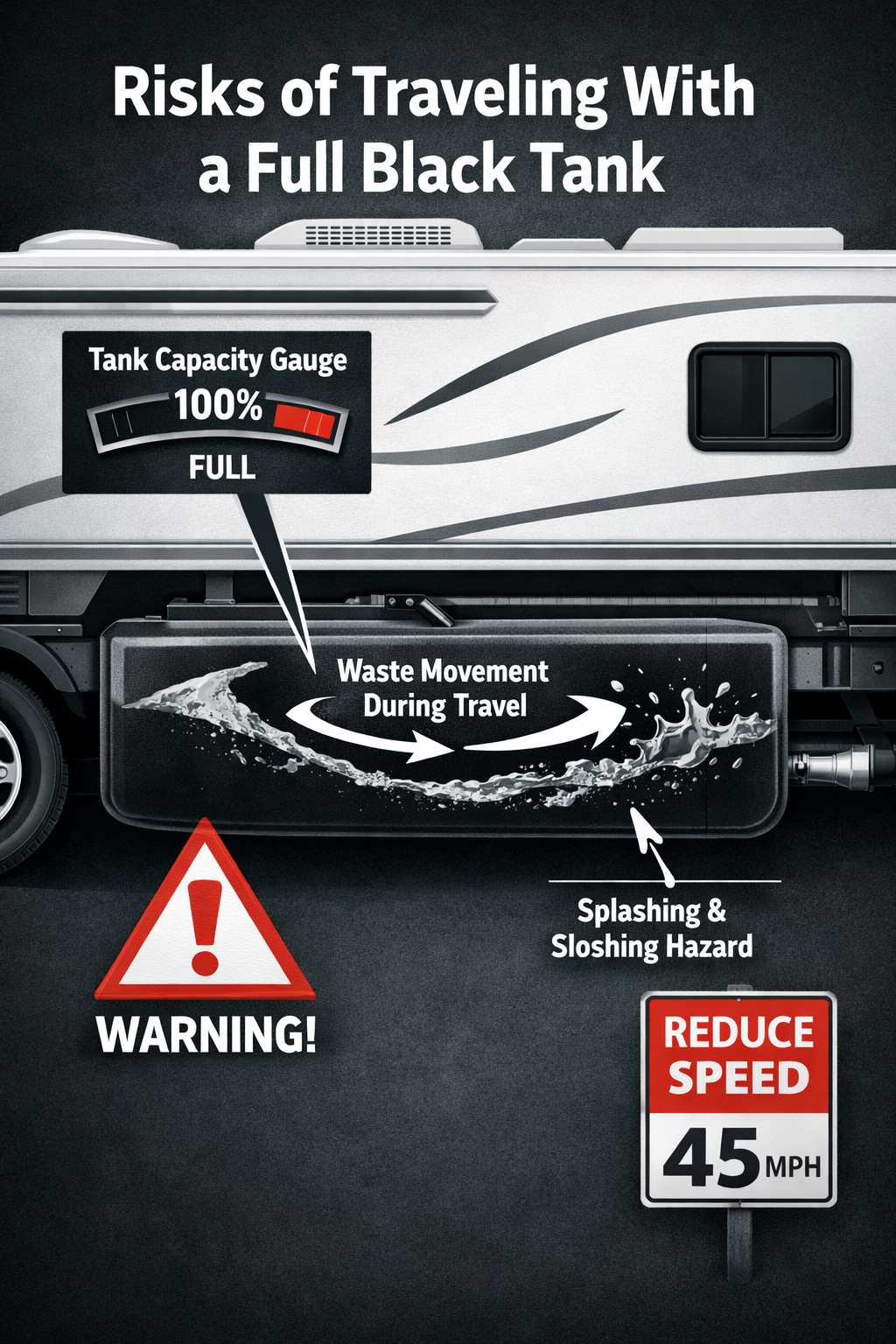
Most RV manufacturers design holding tanks to be stationary during use, not to slosh around at highway speeds. When a black tank is completely full and the RV is moving, several problems can arise.
Structural and Mechanical Risks
A full black tank adds significant weight directly beneath the RV’s chassis. Black tanks typically range from 15 to 50+ gallons depending on the RV size [3]. At roughly 8.3 pounds per gallon, a 40-gallon tank that’s completely full adds over 330 pounds of unplanned, low-slung weight.
💬 “If you are dry camping and cannot immediately empty your holding tanks, reduce your vehicle speed until you reach a dumping station.” [7]
This expert recommendation exists for good reason. At highway speeds, liquid waste sloshes violently inside the tank. That movement can:
- Stress tank mounting brackets and cause cracks or leaks
- Damage the dump valve or gate valve mechanism
- Trigger false sensor readings, making the gauge unreliable [5]
- Push waste back into the toilet seal, causing odors inside the cabin
Odor and Comfort Issues
A full black tank is already working hard to contain odors. Road vibration can disturb the liquid surface and force gases past seals that would otherwise hold fine when stationary. Proper tank treatments and enzyme-based additives help manage odors [3], but they work best when the tank isn’t being agitated constantly.
Terrain Makes It Worse
Driving over bumpy roads, potholes, or mountain passes with a full black tank dramatically increases risk. The combination of full capacity and rough terrain is where most physical damage occurs. If the route involves anything other than smooth highway driving, emptying the tank first is strongly recommended [4].
Legal Considerations: Can You Travel With RV Black Tank Full Across State Lines?
This is where things get serious. Transporting untreated sewage on public roads is regulated at both the state and federal level in the United States. While simply driving with a full holding tank is not inherently illegal, any spill or leak of black water onto a public road is a violation of environmental and sanitation laws in virtually every state.
Key legal points to understand:
| Situation | Legal Status |
|---|---|
| Driving with a full, sealed black tank | Generally legal |
| Accidental spill on public road | Illegal — fines and cleanup liability |
| Dumping black water in non-approved areas | Illegal — federal and state violations |
| Dumping at a campsite without a sewer hookup | Illegal |
The EPA classifies untreated sewage as a pollutant under the Clean Water Act. State-level penalties for illegal dumping can range from $500 to $10,000+ depending on severity and location. Always use a certified dump station [2].
Best Practices When You Must Travel With a Full Black Tank
Sometimes there’s no choice. The campground has no dump station, the nearest one is miles away, and the trip must continue. Here’s how to do it as safely as possible.
Before You Hit the Road
- Add water and tank treatment — Enzyme-based treatments break down solids and reduce odor during transit [5].
- Confirm the dump valve is fully closed — A partially open valve is a recipe for disaster.
- Check for any visible leaks underneath the RV before departing.
- Locate dump stations along your route using apps like Campendium, iOverlander, or the RV LIFE app.
While Driving
- Reduce speed — This is the single most important step. Lower speeds mean less slosh and less stress on the tank and fittings [7].
- Avoid rough roads when possible — Take the smoother route even if it adds time.
- Avoid sudden braking — Smooth, gradual stops reduce liquid movement inside the tank.
- Keep windows cracked if odors become noticeable inside the cabin.
At the Dump Station
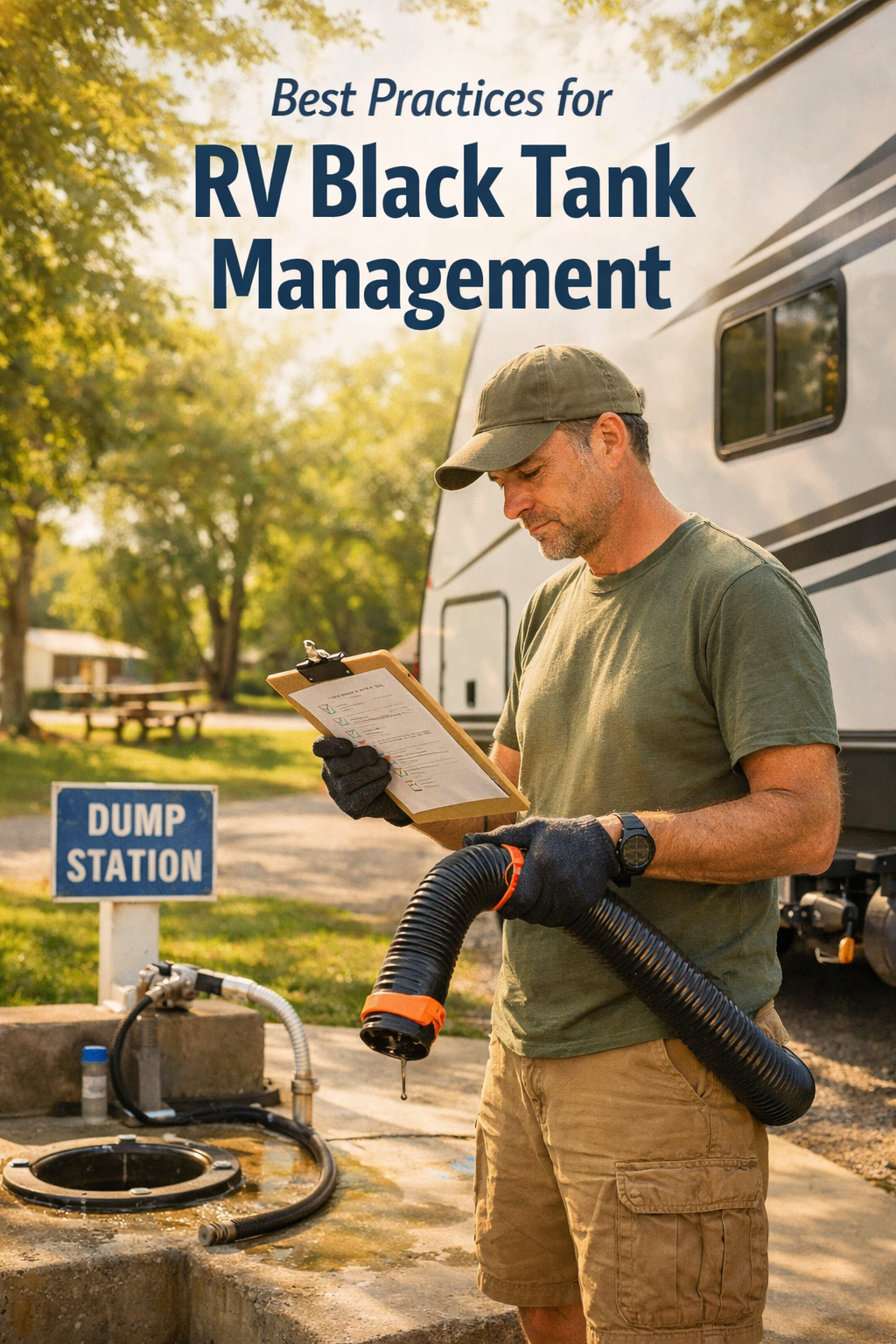
Proper dumping technique matters just as much as the drive. Always dump the black tank before the gray tank. The gray water acts as a rinse for the sewer hose [3]. Use gloves, a proper sewer hose connection, and follow campground or dump station protocols [2].
💡 Pro Tip: Many Flying J/Pilot truck stops, Loves Travel Stops, and Camping World locations offer dump station access for a small fee — often $10–$20. These are easy to find along major interstate routes.
How Full Is Too Full? Understanding Tank Capacity
Most RV experts and manufacturers recommend never letting the black tank exceed 75% capacity before dumping [4][5]. This leaves room for water needed to break down solids and prevents the issues described above.
Here’s a quick reference guide:
| Tank Level | Status | Recommended Action |
|---|---|---|
| 0–50% | ✅ Ideal | Continue normal use |
| 51–75% | ⚠️ Monitor | Plan to dump soon |
| 76–90% | 🔶 Caution | Dump at next opportunity |
| 91–100% | 🚨 Full | Dump before traveling if possible |
Many RVs use sensor probes to measure tank levels, but these sensors are notoriously inaccurate when coated with waste residue [5]. A good tank treatment routine and regular flushing keeps sensors more reliable over time [6].
How to Avoid This Situation in the Future
The best answer to can you travel with RV black tank full is: plan so it never becomes a question. Here’s how experienced RVers stay ahead of the problem:
- Dump before every departure, not just when the tank is full
- Use a black tank flush system at full hookup sites to thoroughly rinse the tank [2][6]
- Track tank levels daily during multi-night trips
- Carry a portable waste tank (like a Tote-N-Stor) as a backup for dry camping situations
- Choose campgrounds with sewer hookups for longer stays to avoid buildup [2]
Consistent maintenance — including proper chemical treatments and regular flushing — extends tank life and keeps sensors accurate [5].
Conclusion
So, can you travel with RV black tank full? Technically, yes — but it’s a last resort, not a habit. The risks to your RV’s plumbing, your comfort, and potentially the environment are real. When there’s no choice, slow down, drive carefully, and get to a dump station as quickly as possible.
Actionable next steps for every RVer:
- 📱 Download a dump station locator app before your next trip
- 🗓️ Make “dump before departure” a non-negotiable part of your pre-trip checklist
- 🧴 Stock enzyme-based tank treatments to manage waste safely during transit
- 🚗 Reduce speed if you ever find yourself driving with a full black tank
- 🔧 Inspect tank fittings and valves at least once per season
A little planning goes a long way. The open road is best enjoyed without worrying about what’s sloshing around underneath.
References
[2] RV Black Tank Management At Full Hookup Campsites – https://johnmarucci.com/2023/08/22/rv-black-tank-management-at-full-hookup-campsites/ [3] RV Black Water Tank – https://rvshare.com/blog/rv-black-water-tank/ [4] RV Tanks Guide – https://www.campanda.com/magazine/rv-tanks-guide/ [5] Holding Tanks Usage Maintenance And Tips – https://www.keystonerv.com/owners/holding-tanks-usage-maintenance-and-tips [6] Brinkley Owners – Black Tank Flush Discussion – https://brinkleyowners.com/t/2026-z2900-black-tank-flush/8943 [7] Driving With Waste In The Gray Black Tanks – https://www.mygrandrv.com/threads/driving-with-waste-in-the-gray-black-tanks.38293/