

Every seasoned RVer has asked the same question before pulling out of a campsite: should the fridge stay on during the drive? The answer isn’t always straightforward — and getting it wrong can mean spoiled food, wasted fuel, or even a safety hazard on the road. Understanding whether you can travel with an RV fridge on is one of the most practical skills any RV enthusiast can master in 2026.
Would you like to save this article?
Key Takeaways 📌
- Yes, you can travel with your RV fridge on — but the method matters depending on your fridge type.
- Running the fridge on AC power via a generator is the most common and safest approach while driving.
- The generator draws from the same fuel tank as the engine, so expect higher fuel consumption.
- Always turn off appliances before shutting down the generator to avoid electrical issues.
- Propane operation while driving carries specific risks and is restricted in some locations.
How RV Refrigerators Work While Traveling
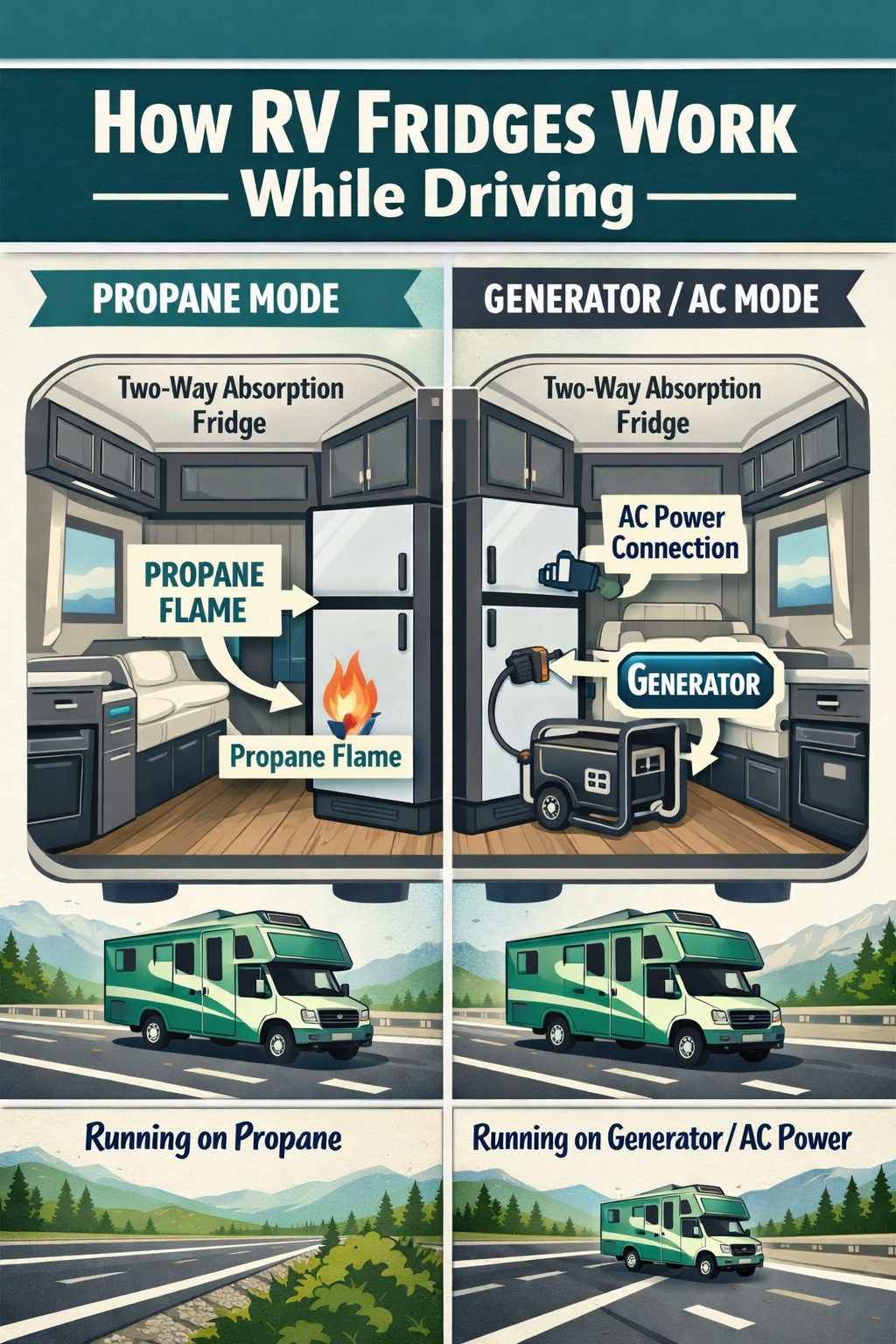
Before deciding whether to keep the fridge running on the road, it helps to understand how RV refrigerators actually work. Most RVs use one of two types:
Absorption (Two-Way or Three-Way) Refrigerators
These are the most common type found in motorhomes and travel trailers. They can run on:
- Propane (LP gas)
- 120V AC power (from shore power or a generator)
- 12V DC power (in three-way models)
Absorption fridges use a heat-exchange process rather than a compressor. They are quiet and versatile — but they do have limitations when it comes to traveling.
Compressor (12V) Refrigerators
Compressor fridges run entirely on 12V DC power, drawing from the RV’s battery system or a DC-to-AC inverter. They cool faster, handle temperature fluctuations better, and are increasingly popular in newer RV builds. These are generally the easiest to run while driving.
Can You Travel With RV Fridge On Using a Generator?
The short answer: absolutely yes — and for most motorhome owners, running the fridge on AC power via the onboard generator is the standard approach while driving.
💡 “When your refrigerator is on AC mode, the RV generator can supply the necessary power while you’re driving.” [1]
This setup mirrors the same operating principle as running the RV’s air conditioning while in motion — a common practice for many travelers. [1] The generator keeps the fridge cold, the food stays fresh, and the process is straightforward.
Generator Fuel Consumption: What to Expect
Here’s the catch: running the generator costs fuel. Because the RV generator uses the same fuel tank as the engine, operating both simultaneously will increase your overall fuel consumption. [1] This is an important budgeting consideration, especially on long hauls.
| Scenario | Estimated Extra Fuel Use |
|---|---|
| Generator off, fridge off | Baseline |
| Generator running fridge only | +0.5–1.0 GPH (approx.) |
| Generator running fridge + AC | +1.0–2.0 GPH (approx.) |
Note: Actual consumption varies by generator size and RV model.
Plan fuel stops accordingly, and keep an eye on the fuel gauge more frequently than you might on a typical drive.
The Power-Down Protocol 🔌
One critical rule to follow: always turn off electrical appliances like the refrigerator before shutting down the generator. Cutting generator power while appliances are still running can cause power surges or damage sensitive electronics. [1] Make it a habit to power down the fridge first, then switch off the generator when you stop.
Can You Travel With RV Fridge On Propane? ⚠️
This is where things get more nuanced. Running an absorption fridge on propane while driving is technically possible, but it comes with important safety and legal considerations.

Safety Risks of Propane While Driving
- Open flame hazard: Propane fridges use a small flame to generate heat. If the flame goes out (due to wind or road vibration), unburned propane can accumulate — a serious risk.
- Tunnel and ferry restrictions: Many tunnels, bridges, and ferry crossings prohibit propane use while in transit. Always check local regulations before your route.
- Refueling stations: Most gas stations require propane to be turned off before fueling — a step that’s easy to forget.
When Propane Makes Sense
Some RVers do travel with propane fridges running, particularly on short trips through open roads with no tunnel restrictions. If you choose this route:
✅ Ensure the propane system is well-maintained and leak-free
✅ Use a fridge with an automatic re-ignition feature
✅ Turn propane OFF before entering tunnels, ferries, or gas stations
✅ Never leave propane running unattended for extended periods
Bottom line: For most travelers, switching to AC/generator mode during transit is the safer, more reliable choice.
Tips for Keeping Your RV Fridge Cold on the Road 🧊
Whether running on generator power or transitioning between modes, these practical tips help maintain optimal fridge performance during travel:
Before You Hit the Road
- Pre-cool the fridge at least 8–12 hours before loading food. Absorption fridges take longer to reach temperature than household units.
- Load food cold — never put warm items directly into the fridge expecting it to cool them quickly while driving.
- Organize for airflow — don’t overstuff the fridge. Air needs to circulate to maintain even cooling.
During the Drive
- Keep the fridge level — absorption fridges work best when level. Prolonged tilting (on steep grades) can affect performance temporarily.
- Minimize door openings — every time the fridge opens, cold air escapes. Plan rest stops strategically.
- Monitor the temperature — a small wireless thermometer inside the fridge lets you check temps without opening the door.
At Your Destination
- Switch to shore power as soon as you’re plugged in at a campsite.
- Follow the power-down protocol in reverse: connect shore power first, then switch the fridge from generator to AC mode.
RV Fridge Mode Comparison: Which Is Best for Travel?
| Mode | Best For | Pros | Cons |
|---|---|---|---|
| Generator (AC) | Motorhomes in transit | Safe, effective, reliable | Uses extra fuel |
| Propane | Remote areas, short trips | No generator needed | Safety risks, restrictions |
| 12V Compressor | All RV types | Efficient, level-independent | Higher upfront cost |
| Shore Power | Parked at campsite | Free/low cost | Not available while driving |
Regulations and RV Rules to Know in 2026 📋
RV regulations continue to evolve. In 2026, it’s worth staying current on any state or regional rules that affect how appliances can be operated while in motion. Some states have specific guidelines about propane use on highways, and emissions standards for transport refrigeration equipment are also being updated in certain regions. [3]
Always check the rules for your specific route — especially if traveling through states with stricter environmental or safety regulations. [5]
Conclusion: Keep It Cool and Keep It Safe
So, can you travel with an RV fridge on? Absolutely — and doing it right makes every road trip more enjoyable. The key is choosing the right power source for your situation.
For motorhome owners, running the fridge on AC power through the onboard generator is the safest and most practical approach. [1] Just remember that the generator shares your fuel supply, so budget for extra stops. [1] Always power down appliances before switching off the generator. [1]
For propane users, exercise caution: know your route, follow local regulations, and switch off propane at tunnels, ferries, and fuel stops.
Actionable Next Steps:
- 🔍 Check your RV fridge type and confirm which power modes it supports
- ⛽ Calculate your expected fuel increase before long trips with the generator running
- 📋 Research propane restrictions on your planned route
- 🌡️ Install a wireless fridge thermometer for real-time monitoring while driving
- 🔌 Practice the power-down protocol before your next departure
A little preparation goes a long way toward keeping your food fresh, your family safe, and your adventure on track. Happy travels! 🚐
References
[1] Rv Rules While Driving – https://www.cruiseamerica.com/trip-inspiration/rv-rules-while-driving
[3] California Approves New Transport Refrigeration Emissions Rules – https://www.truckinginfo.com/news/california-approves-new-transport-refrigeration-emissions-rules
[5] New Rv Regulations – https://rvshare.com/blog/new-rv-regulations/