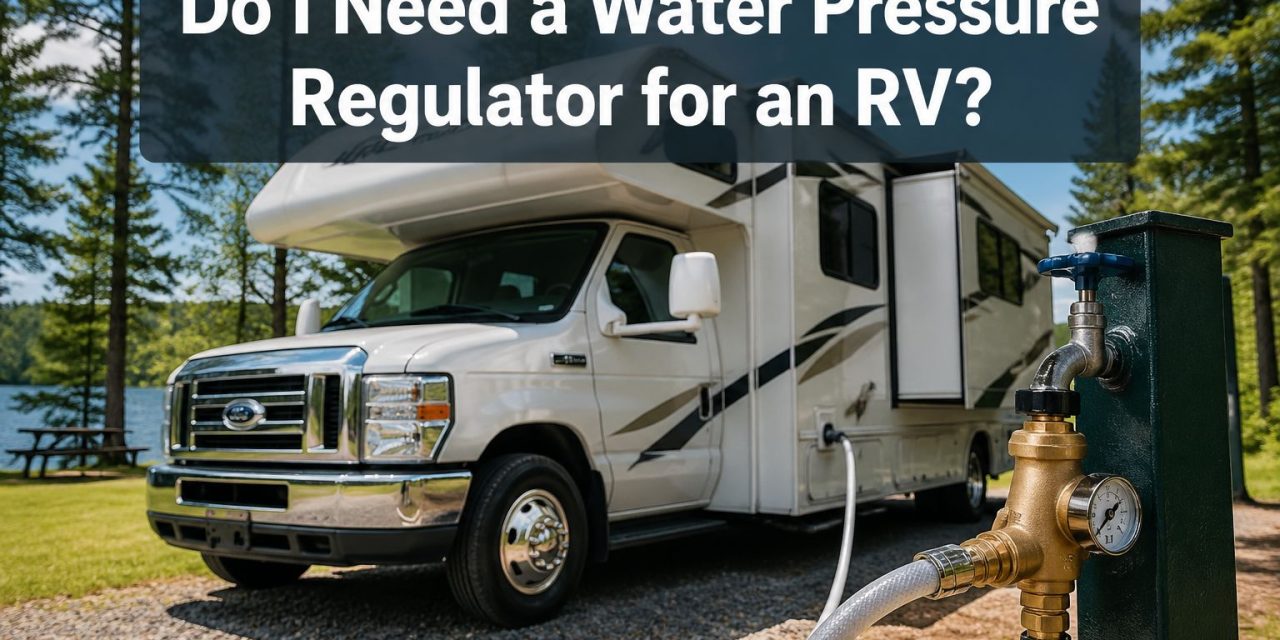
A single unregulated water hookup can send water pressure surging past 100 PSI into an RV plumbing system designed to handle only 40–50 PSI — and the resulting burst pipes, soaked walls, and ruined appliances can cost thousands of dollars in repairs. So, do you need a water pressure regulator for an RV? The short answer is an emphatic yes, and every RV owner connecting to city water at a campground should have one installed before turning on the spigot. [1][2]
Would you like to save this article?
Key Takeaways 📋
- Always use a water pressure regulator when connecting your RV to any external city water source.
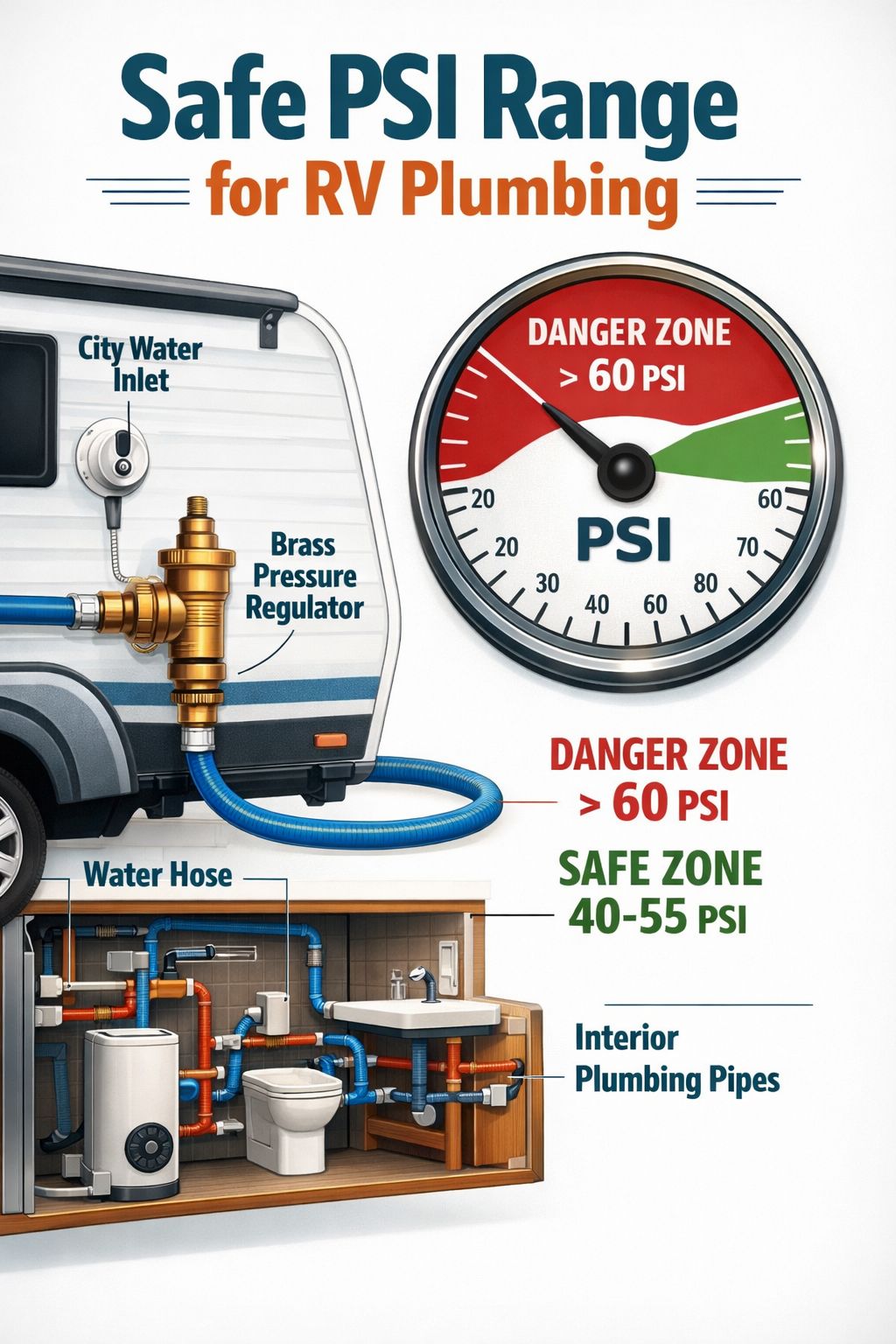
- The ideal water pressure for RVs is 40–55 PSI, with 60 PSI as the absolute maximum. [1][2]
- Most RV plumbing systems use plastic and copper fittings rated for only 40–50 PSI — far below what many campground spigots can deliver. [2]
- Two main types exist: non-adjustable (preset) and adjustable regulators — both offer solid protection. [1][4]
- A water pressure regulator and a water filter serve different purposes — you may need both. [3]
Why Water Pressure Is a Bigger Threat Than Most RVers Realize
Water pressure is invisible, silent, and easy to ignore — until something breaks. Campground water sources are notoriously inconsistent. Pressure can vary dramatically from one site to the next, and it can spike unexpectedly when neighboring campers disconnect from the system. [1][4]
💡 Pull Quote: “Campground water pressure can fluctuate without warning — a regulator is your RV’s first line of defense.”
Here’s the core problem: while some modern RVs can technically withstand pressure up to 100 PSI, the internal plumbing — fittings, hoses, valves, and connections — is typically built for just 40–50 PSI. [2] Pushing high-pressure water through those components is like over-inflating a balloon. Eventually, something gives.
Common damage caused by high water pressure includes:
- 💧 Leaking or burst water hoses
- 🔧 Cracked pipe fittings and joints
- 🚿 Damaged faucets and shower fixtures
- 🧺 Failed washing machine connections
- 🌊 Water damage to walls, floors, and cabinetry
Heat and outdoor exposure make RV materials even more vulnerable, meaning the risk of pressure-related damage is higher than in a traditional home. [2][3]
When Is a Regulator NOT Needed?
There is one exception worth noting: when filling a fresh water tank directly, a regulator is not necessary. The tank simply fills and stops — there’s no pressurized system at risk. The regulator only becomes essential when connecting directly to city water for a live hookup. [2]
Do I Need a Water Pressure Regulator for an RV? Understanding PSI and How to Test It
Before connecting at any campground, it’s smart to test the water pressure at the source. Attach a water pressure gauge directly to the campground spigot before hooking up your hose. This gives a clear reading of what’s coming out of the tap. [4]
What the Numbers Mean
| PSI Range | Status | Action Needed |
|---|---|---|
| Below 40 PSI | Low pressure | No regulator needed, but check for flow issues |
| 40–55 PSI | Ideal range ✅ | Safe — regulator still recommended |
| 56–60 PSI | Borderline | Regulator strongly recommended |
| Above 60 PSI | Dangerous ⚠️ | Regulator absolutely required |
If the gauge reads at or above 40 PSI — which is the case at the vast majority of campgrounds — a pressure regulator should be in place before connecting. [4] Since pressure can rise unpredictably when other campers disconnect from the system, even a reading that looks safe at first can change. [1]
⚠️ Pro Tip: Never assume the pressure will stay consistent throughout your stay. Always use a regulator as standard practice.
Where to Install the Regulator
Installation placement matters. The regulator should always go at the water source — screwed directly onto the campground spigot — before attaching the hose. This protects the entire length of the hose and all downstream components inside the RV. [4]
Do I Need a Water Pressure Regulator for an RV? Choosing the Right Type
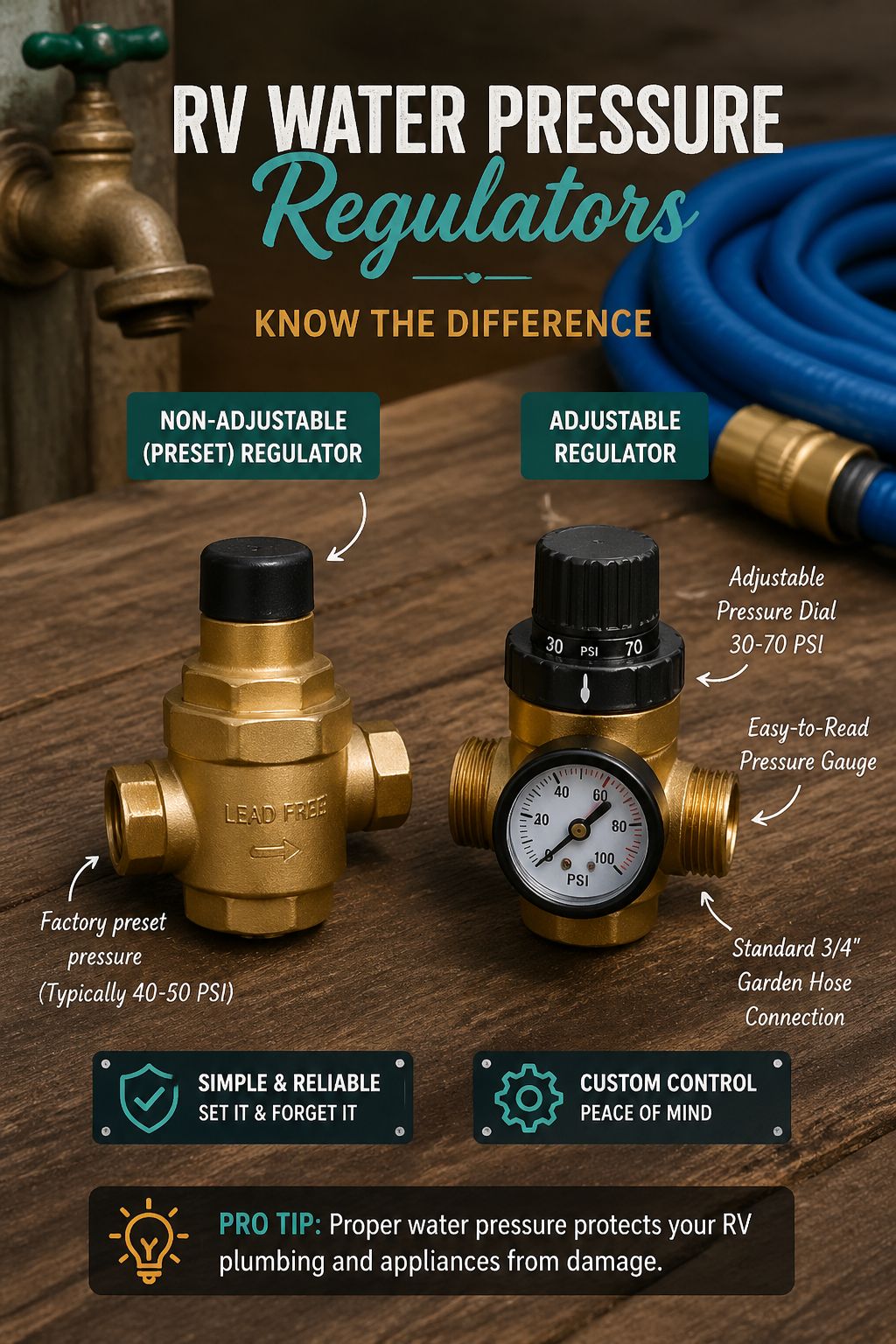
Not all regulators are the same. There are two main categories, and each has its place depending on your needs and comfort level.
🔩 Non-Adjustable (Preset) Regulators
These are the most popular choice for everyday RV use. They come pre-set to a safe pressure — typically around 40–50 PSI — and require zero adjustment. Just screw it on and go. [1]
Best for:
- New RV owners who want simple, reliable protection
- Campers who move frequently between sites
- Anyone who prefers a “set it and forget it” approach
🎛️ Adjustable Regulators
Adjustable regulators feature a dial that lets users fine-tune the output pressure. This can be helpful when the incoming pressure is very high or when specific appliances have particular requirements. However, the dial should never be set above 60 PSI. [4]
Best for:
- Experienced RVers who want precise control
- Full-timers who stay at sites with widely varying pressure
- Those with sensitive appliances requiring specific pressure settings
Do I Also Need a Water Filter?
This is a common question — and the answer is that a filter and a regulator do completely different jobs. A water filter addresses water quality (removing sediment, chlorine, and contaminants). A water pressure regulator controls the force of the water entering the system. Both can be used together, and in fact, pairing them is a smart move for clean, safe water at the right pressure. [3]
Quick-Start Checklist: Using a Water Pressure Regulator the Right Way ✅
Follow these steps every time you hook up at a campground:
- Test the spigot pressure with a water pressure gauge before connecting anything.
- Attach the regulator directly to the campground spigot first.
- Connect the hose to the regulator output.
- Run the other end to your RV’s city water inlet.
- Turn on the spigot slowly and check for leaks at all connections.
- Monitor pressure periodically, especially if neighboring campers disconnect.
Conclusion: Don’t Hook Up Without One
The question “do I need a water pressure regulator for an RV?” has a clear, non-negotiable answer: yes, always. The cost of a quality regulator is a fraction of what a single plumbing repair can run — and the peace of mind is priceless. Whether choosing a simple preset model or an adjustable version with a gauge, the important thing is to make it a standard part of every hookup routine.
Actionable next steps:
- 🛒 Purchase a brass non-adjustable regulator rated for 40–50 PSI if just getting started
- 🔍 Add a water pressure gauge to the toolkit to test campground sources before connecting
- 🧰 Consider pairing the regulator with an inline water filter for full protection
- 📦 Store the regulator in an easily accessible spot so it’s never left behind on a trip
A small investment in the right gear today protects the entire plumbing system for years of worry-free camping ahead. 🏕️
References
[1] Everything You Need To Know About Rv Water Pressure Regulators – https://www.transwest.com/rv/blog/everything-you-need-to-know-about-rv-water-pressure-regulators/
[2] Why You Need A Water Pressure Regulator For Your Rv – https://blog.campingworld.com/learn-to-rv/why-you-need-a-water-pressure-regulator-for-your-rv/
[3] Do I Need An Rv Water Pressure Regulator – https://www.happycampers.store/blog/do-i-need-an-rv-water-pressure-regulator/
[4] When And Why To Use A Water Pressure Regulator For Rv 007782 – https://www.rvrepairclub.com/video/when-and-why-to-use-a-water-pressure-regulator-for-rv-007782
[5] Watch – https://www.youtube.com/watch?v=N5lpOtAnc0s
Tags: water pressure regulator, RV plumbing, RV water hookup, campground water pressure, RV maintenance, adjustable pressure regulator, RV water filter, PSI for RV, RV tips, city water hookup, RV accessories, fresh water tank