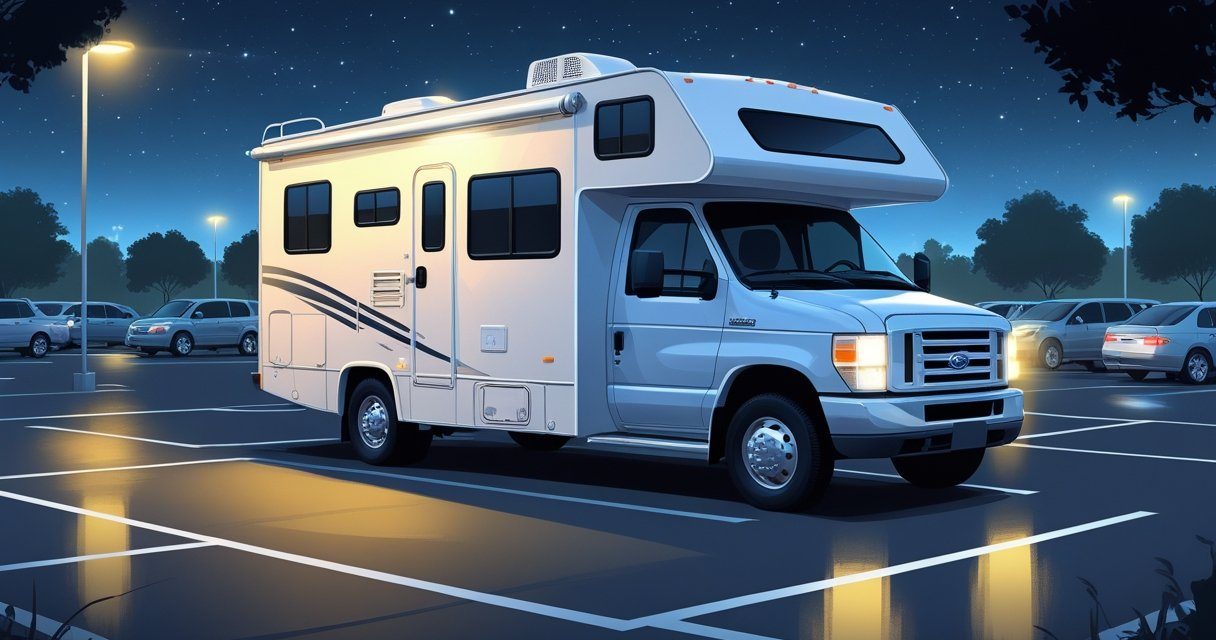
Planning an RV adventure across America but worried about camping costs eating up your travel budget? You’re not alone. Boondocking—the art of finding free, safe overnight parking spots—has become the ultimate money-saving hack for smart RV travelers crisscrossing the country. Whether you’re a first-time RVer or a seasoned road warrior, knowing where you can legally and safely park for the night can transform your trip from stressful to spectacular.
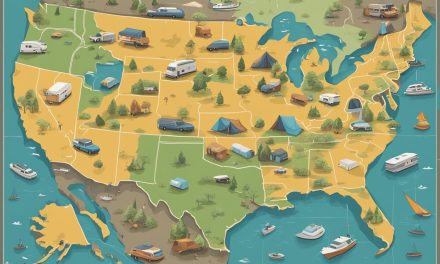
One adventurous traveler recently completed a three-month, 10,000-mile journey from Los Angeles to Miami, passing through 14 states and discovering the best (and worst) free camping spots along the way. According to the RV Industry Association, nearly 11 million American households own an RV, and with campground fees ranging from $30-$80 per night, finding free parking can save travelers $900-$2,400 per month. That’s serious money that could go toward fuel, attractions, and unforgettable experiences instead.
In this article, you’ll discover five proven spots where RVers consistently find welcome parking, plus one shocking location that might not be as RV-friendly as you’ve heard. These aren’t just random parking lots—they’re tried-and-tested havens that offer safety, convenience, and most importantly, zero cost. Ready to unlock the secrets of successful boondocking?
Would you like to save this article?
1. Cracker Barrel: Southern Hospitality Meets Free Parking
Cracker Barrel restaurants have become legendary in the RV community for their welcoming attitude toward overnight guests. These iconic restaurants, primarily located throughout the southern United States, feature spacious parking lots specifically designed to accommodate larger vehicles. You’ll find the distinctive brown-and-yellow storefronts dotting highways from Texas to Virginia, each one potentially offering you a safe night’s rest.
The magic of Cracker Barrel goes beyond just parking. Each location features a full-service restaurant with extensive menu options and an attached country store filled with unique gifts and nostalgia-inducing merchandise. According to Cracker Barrel’s corporate policy, they generally welcome RV travelers for overnight stays, though it’s always courteous to check with the manager and patronize the restaurant.
**What makes Cracker Barrel ideal:**
- Large parking lots with space to tuck your RV around back corners
- Well-lit, safe locations typically near major highways
- Access to clean restrooms and hot meals
- Other RVers often present, creating a sense of community
- Strategic locations for breaking up long travel days
Your wallet will thank you, and your stomach will too—because let’s be honest, after you smell that bacon and see those homemade biscuits, you’re not driving away without breakfast. The only real challenge? Trying to leave the gift shop without buying at least three rocking chairs and a barrel full of old-fashioned candy.
| Feature | Rating | Notes |
|---|---|---|
| Safety | ⭐⭐⭐⭐⭐ | Well-lit, family-friendly atmosphere |
| Space | ⭐⭐⭐⭐ | Varies by location; larger lots in suburban areas |
| Amenities | ⭐⭐⭐⭐⭐ | Restaurant, restrooms, gift shop, WiFi |
| Availability | ⭐⭐⭐⭐ | Mostly southern states; check individual locations |
2. Love’s Truck Stops: The 24/7 Road Warrior’s Haven
Love’s Travel Stops represent the backbone of America’s highway infrastructure, with over 600 locations spread across 42 states. These aren’t your average gas stations—they’re full-service travel plazas designed for long-haul truckers, making them naturally accommodating to RVers seeking overnight parking. You’ll find hot showers, laundry facilities, fresh food, and 24-hour security at most locations.
The key to a comfortable overnight stay at Love’s is strategic positioning. Rather than wedging your RV between idling semi-trucks, savvy travelers scout the perimeter for corner spots where you won’t be boxed in. These locations offer the security of being in a bustling, well-monitored area without the noise and diesel fumes of the truck lanes.
**Love’s advantages for RVers:**
- Coast-to-coast coverage makes trip planning easier
- 24/7 operations mean you’re never locked out
- Security cameras and constant activity deter crime
- Full facilities including showers, WiFi, and food options
- Diesel and gas available for morning fill-ups
You might wake up feeling like you spent the night at a truck driver convention, complete with the soothing sounds of air brakes and diesel engines. But hey, nothing says “adventure” quite like sleeping 20 feet from a guy named Big Jim who’s hauling refrigerated cheese to Wisconsin. At least you know you’re in good company.
According to data from the National Association of Truck Stop Operators (NATSO), truck stops like Love’s have seen a 35% increase in RV visitors over the past five years, prompting many locations to designate specific RV parking zones separate from commercial truck parking.
3. Bass Pro Shops: The Outdoor Enthusiast’s Overnight Oasis
Bass Pro Shops might seem like an unconventional choice, but these massive outdoor retail destinations have become secret favorites among the boondocking community. With stores spanning 100,000 to 535,000 square feet, these locations feature parking lots large enough to accommodate multiple RVs with room to spare. The Orlando and Miami locations are particularly RV-friendly, offering vast spaces where you can park discreetly.
What makes Bass Pro Shops unique is the experience factor. These aren’t just stores—they’re destinations. Many locations feature aquariums, wildlife displays, archery ranges, and boat showrooms. After parking for the night, you can explore indoor waterfalls, massive fish tanks, and enough hunting and fishing gear to outfit a small expedition.
**Why Bass Pro Shops work for overnight parking:**
- Enormous parking lots with plenty of secluded corners
- Well-maintained, clean facilities
- Safe, family-oriented environment
- Shopping and entertainment options
- Located near major highways and travel routes
You’ll park next to a place where you can buy a $3,000 kayak, a camouflage wedding dress, and a life-sized animatronic bear—all in one trip. If you’re not careful, you’ll blow your entire boondocking savings on fishing lures and jerky. But at least you’ll sleep peacefully knowing there are literal boats bigger than your RV inside the building.
| Bass Pro Location | Parking Lot Size | RV-Friendly Rating |
|---|---|---|
| Orlando, FL | Extra Large | ⭐⭐⭐⭐⭐ |
| Miami, FL | Massive | ⭐⭐⭐⭐⭐ |
| Springfield, MO (Flagship) | Extra Large | ⭐⭐⭐⭐⭐ |
| Various Locations | Large to Extra Large | ⭐⭐⭐⭐ |
4. Whole Foods: Healthy Eating Meets Convenient Parking
Whole Foods Market might not be the first place that comes to mind for RV parking, but select locations with large parking lots can accommodate overnight stays. With over 500 stores across the United States and Canada, these upscale grocery chains offer an unexpected boondocking opportunity—especially in suburban areas where parking lots are more spacious.
The strategy here requires careful selection and discretion. Urban Whole Foods locations typically have compact parking structures unsuitable for RVs, but suburban stores often feature expansive surface lots. The bonus? You can stock up on fresh, organic groceries in the morning before hitting the road. Just be mindful not to block access routes or park near loading zones.
**Whole Foods parking considerations:**
- Location matters—suburban stores work best
- Avoid peak shopping hours when positioning your RV
- Stay away from service/delivery areas (flood lights and noise)
- Access to quality groceries and prepared foods
- Generally safe, well-maintained properties
Nothing says “bougie boondocking” quite like parking your rig at Whole Foods and buying $47 worth of kombucha and quinoa salad. You came for free parking, but you’ll leave with organic avocados, artisanal cheese, and a strong suspicion that you just paid more for groceries than a campsite would’ve cost. But hey, at least your overnight parking came with kale.
**Important tip:** The skylights in your RV can become a liability at Whole Foods. Those bright parking lot flood lights will pour through your roof vents like you’re hosting a midnight sun party. Pro move? Pack cardboard or blackout covers to keep your sleeping area dark, or embrace the free wake-up call courtesy of 5 AM delivery trucks.
5. Strategic Parking Tips: Finding Your Perfect Spot
Successful boondocking isn’t just about choosing the right chain—it’s about mastering the art of positioning and preparation. Experienced RVers know that where you park within a parking lot can make the difference between a peaceful night and a miserable experience. Location strategy separates the rookies from the road-tested veterans.
The golden rule of overnight parking is staying out of the way. You want to be visible enough for safety but discreet enough not to obstruct business operations. Corner spots and perimeter locations work best, allowing you easy exit routes and reducing the likelihood of being boxed in by other vehicles.
**Pro positioning strategies:**
- Scout before you settle—drive through the entire lot first
- Avoid center spots where you’ll be surrounded
- Choose corners with open space on at least one side
- Stay away from service entrances, dumpsters, and loading zones
- Position for a quick morning departure
- Park near other RVs when possible for community and security
You’ll spend more time finding the perfect parking spot than some people spend choosing a house. You’ll circle that lot like a shark, evaluating every angle, considering sun position at sunrise, calculating noise trajectories, and judging which direction offers optimal curtain privacy. Your co-pilot thinks you’re insane, but you know the truth: tonight’s sleep quality depends on this decision.
**Managing light pollution:** Your RV’s skylights are wonderful during daytime travel but become light-sucking portals at night. Parking lot flood lights can turn your sleeping quarters into an interrogation room. Smart RVers carry cardboard cutouts, blackout shades, or even aluminum foil to cover overhead vents. Focus especially on the skylight above your bed—that’s the sleep-killer.
| Parking Challenge | Solution | Why It Matters |
|---|---|---|
| Light Pollution | Cardboard skylight covers | Essential for quality sleep |
| Noise | Park away from truck lanes/service areas | Reduces disturbances from deliveries |
| Safety | Choose well-lit areas with security cameras | Deters crime, ensures peace of mind |
| Being Boxed In | Select corner/perimeter spots | Allows easy morning departure |
The Walmart Surprise: Why This “Sure Thing” Often Isn’t
Walmart has long been considered the gold standard for free RV parking, with countless articles and forums touting it as the ultimate boondocking destination. The reality? Many Walmart locations no longer allow overnight RV parking, and the ones that do often have specific restrictions. This represents one of the biggest misconceptions in the RV community today.
The confusion stems from Walmart’s inconsistent corporate policy. While the company generally leaves overnight parking decisions to individual store managers, increasing numbers of locations are posting “No Overnight Parking” signs or actively asking RVers to leave. Municipal ordinances, property lease restrictions, and liability concerns have all contributed to this shift.
**Why Walmart is less reliable now:**
- Store managers have individual discretion to allow or prohibit overnight parking
- Local ordinances increasingly ban overnight parking at retail stores
- Some locations cite liability concerns
- Urban Walmarts are more likely to prohibit RV parking than rural ones
- Even when “allowed,” you may be asked to move
A revealing encounter in Redondo Beach, California perfectly illustrates the problem: when asked for permission to park overnight, a Walmart employee rudely refused, stating, “We don’t want to be responsible for you.” Other RVers later explained, “You don’t ask permission—you just park.” But this creates an awkward situation where you’re essentially hoping not to get caught rather than enjoying truly welcomed parking.
Walmart went from RV hero to “it’s complicated” faster than your friend’s relationship status changes on Facebook. You’ll read online that Walmart loves RVers, drive two hours out of your way to reach one, and then spot the “No RV Parking” sign right next to the shopping cart return. At that point, you’re tired, it’s getting dark, and you’re Googling “Cracker Barrel near me” while muttering about false advertising.
According to RV Travel, approximately 40-50% of Walmart locations still allow overnight parking, but the number continues to decline. The smart move? Have a backup plan and don’t rely on Walmart as your primary strategy.
Boondocking Etiquette: The Unwritten Rules
Free parking is a privilege, not a right, and maintaining good relationships between RVers and businesses requires following certain unwritten rules. The boondocking community depends on collective good behavior—one bad apple can ruin overnight parking for everyone at a particular location. Respecting these guidelines ensures these opportunities remain available for future travelers.
**Essential boondocking etiquette:**
- Patronize the business—buy dinner, gas, or supplies
- Arrive late, leave early (typically after 8 PM, before 8 AM)
- Don’t set up camp (no chairs, awnings, or grills)
- Keep noise to a minimum
- Don’t dump tanks or drain gray water
- Leave no trace—pack out all garbage
- When in doubt, ask the manager politely
The National RV Training Academy emphasizes that proper etiquette includes staying self-contained. That means using your RV’s bathroom, water, and power systems rather than relying on the business’s facilities. Never extend your slide-outs in parking lots, as this signals you’re setting up a longer-term camp.
You’re basically a camping ninja—arrive silently in darkness, exist without being noticed, and vanish before the morning commuters show up. Your RV should be so discreet that employees wonder if you were a beautiful dream or an actual vehicle. Leave only a faint tire impression, take only memories (and maybe a breakfast burrito from the gas station).
Money-Saving Impact: The Real Numbers
The financial benefits of boondocking extend far beyond simple math. Over a three-month journey covering 10,000 miles, strategic free parking can save thousands of dollars—money that transforms a budget-stretching trip into a comfortable adventure with room for memorable experiences, quality dining, and unexpected detours.
**Cost comparison breakdown:**
| Accommodation Type | Average Cost/Night | 90-Night Trip Total |
|---|---|---|
| Private RV Parks | $45-$80 | $4,050-$7,200 |
| State/National Parks | $25-$45 | $2,250-$4,050 |
| Harvest Hosts/Boondockers Welcome | $0-$50 | $0-$4,500 |
| Strategic Boondocking (Free) | $0 | $0 |
By utilizing free boondocking spots at Cracker Barrel, Love’s, Bass Pro Shops, and Whole Foods, travelers can save $2,250 to $7,200 over a three-month trip. That’s enough money to cover fuel costs for the entire journey, upgrade to a better RV rental, or extend your trip by several weeks.
The RV Industry Association reports that the average RV trip costs $200-$300 per day when factoring in campground fees, fuel, food, and activities. Eliminating camping fees can reduce daily costs by 15-40%, making extended travel accessible to more families and retirees.
You’ll save so much money boondocking that you might actually convince yourself those $200 hiking boots at Bass Pro Shops are a “necessary travel expense.” After all, you saved $7,000 on camping fees, so technically you’re still $6,800 ahead even after buying the boots, the fishing rod, and that really cool collapsible camping chair. It’s just math.
Safety Considerations for Overnight Parking
While the locations mentioned offer generally safe environments, safety should always be your top priority when boondocking. Free parking means accepting more risk than a secured RV park with gates and on-site management. Smart travelers take proactive measures to protect themselves, their travel companions, and their rigs.
**Safety best practices:**
- Trust your instincts—if something feels wrong, move on
- Park in well-lit areas visible to security cameras
- Lock all doors and windows before sleeping
- Keep valuables out of sight
- Let someone know your planned location
- Have multiple backup locations identified
- Keep your RV ready for quick departure if needed
Many experienced boondockers use apps like AllStays and iOverlander to read reviews from other travelers about specific locations. These crowdsourced reports provide real-time information about safety concerns, management attitudes, and site conditions. The RV community’s collective wisdom serves as your best resource for identifying genuinely safe spots.
Consider investing in basic security measures like motion-sensor lights, door/window alarms, and dash cameras that record while parked. According to the National Highway Traffic Safety Administration, theft from RVs in commercial parking lots is relatively rare but not unheard of. Prevention and awareness remain your best defenses.
You’ll develop the superhero ability to wake up at every single noise, from cats fighting three parking spaces away to someone’s car door closing with slightly more force than necessary. That mysterious rustling at 2 AM? Probably just a plastic bag blowing across the lot. But you’ll still peek through the curtains like you’re in a horror movie, holding your breath and clutching your phone, ready to speed-dial 911 or start the engine.
Planning Your Boondocking Route
Successful RV trips require strategic planning that balances daily mileage with available parking options. Rather than driving until exhaustion sets in, smart travelers identify boondocking locations along their route and plan their days around reaching these spots before dark. This approach reduces stress and ensures you’re not desperately searching for parking at midnight.
**Route planning tools and apps:**
- AllStays—Comprehensive database of RV parking, including Walmart and other retailers
- iOverlander—User-generated reviews of boondocking locations worldwide
- FreeRoam—Specializes in free camping on public lands
- Trucker Path—Excellent for finding truck stops like Love’s
- Google Maps—Search for Bass Pro Shops, Cracker Barrel, etc., along your route
The key is building a flexible itinerary with multiple backup options. If your first-choice Cracker Barrel is full or has a “No RV Parking” sign, you’ll want a Love’s or Bass Pro Shops within 30 minutes as a backup. According to RV Travel magazine, successful boondockers typically identify 2-3 potential spots per night.
Consider your daily driving limits when planning. Most comfortable RV travel involves 200-300 miles per day, which translates to 4-6 hours of driving time when accounting for stops, fuel, and breaks. Position your boondocking locations to align with these realistic travel distances rather than pushing to exhaustion.
| App/Tool | Best Feature | Cost |
|---|---|---|
| AllStays | Comprehensive RV parking database | $9.99 |
| iOverlander | User reviews and ratings | Free |
| FreeRoam | Public land camping | Free |
| Trucker Path | Truck stop locations and amenities | Free (Premium available) |
Conclusion: Your Path to Affordable RV Adventures
Mastering the art of boondocking transforms RV travel from an expensive luxury into an accessible adventure. By strategically utilizing locations like Cracker Barrel, Love’s Truck Stops, Bass Pro Shops, and select Whole Foods stores, you can eliminate camping fees entirely while maintaining safety, comfort, and convenience. The savings—potentially thousands of dollars per trip—enable longer journeys, more experiences, and less financial stress.
The key takeaways? Plan ahead, practice good etiquette, prioritize safety, and maintain flexibility. Have multiple backup locations identified, arrive late and leave early, patronize the businesses that host you, and leave no trace. The RV community’s continued access to these free parking options depends on every traveler being a respectful guest.
And remember the Walmart lesson: don’t believe everything you read online. Verify current policies, trust your instincts, and always have a Plan B. The landscape of RV parking is constantly evolving, with some doors closing but others remaining wide open for courteous, prepared travelers.
Your RV adventure awaits—now you know exactly where to park it. Hit the road, save your money, and sleep soundly knowing you’ve got proven spots waiting at the end of each day’s journey. Safe travels, happy boondocking, and may all your parking lots be level and well-lit (but not too bright through those skylights)!
SOURCES
- YouTube Video – “We Slept in Parking Lots Across America (RV Road Trip Boondocking Spots)” by Marisa – https://www.youtube.com/watch?v=4rLYIZe8jCg
- RV Industry Association – RV Ownership Statistics – https://www.rvia.org/
- Cracker Barrel Corporate Policy on RV Parking – https://www.crackerbarrel.com/
- Love’s Travel Stops Locations and Services – https://www.loves.com/
- National Association of Truck Stop Operators (NATSO) – Industry Trends – https://www.natso.com/
- Bass Pro Shops Store Locations – https://www.basspro.com/
- Whole Foods Market Locations – https://www.wholefoodsmarket.com/
- RV Travel Magazine – Walmart Parking Statistics and Trends – https://www.rvtravel.com/
- National RV Training Academy – Boondocking Etiquette Guidelines – https://www.nrvta.com/
- National Highway Traffic Safety Administration – RV Safety Statistics – https://www.nhtsa.gov/
- AllStays RV Parking App – https://www.allstays.com/
- iOverlander App – User-Generated Camping Reviews – https://www.ioverlander.com/