Would you like to save this article?
Every RV trip starts and ends on four (or more) tires — yet tire safety is one of the most overlooked parts of RV ownership. A blowout at highway speed is not just scary; it can be life-changing. So, how RVers handle tires in real life is a question worth asking. We polled our community and got some eye-opening answers. Let’s dig into the results and what they mean for every RVer on the road in 2026!
Key Takeaways 📌
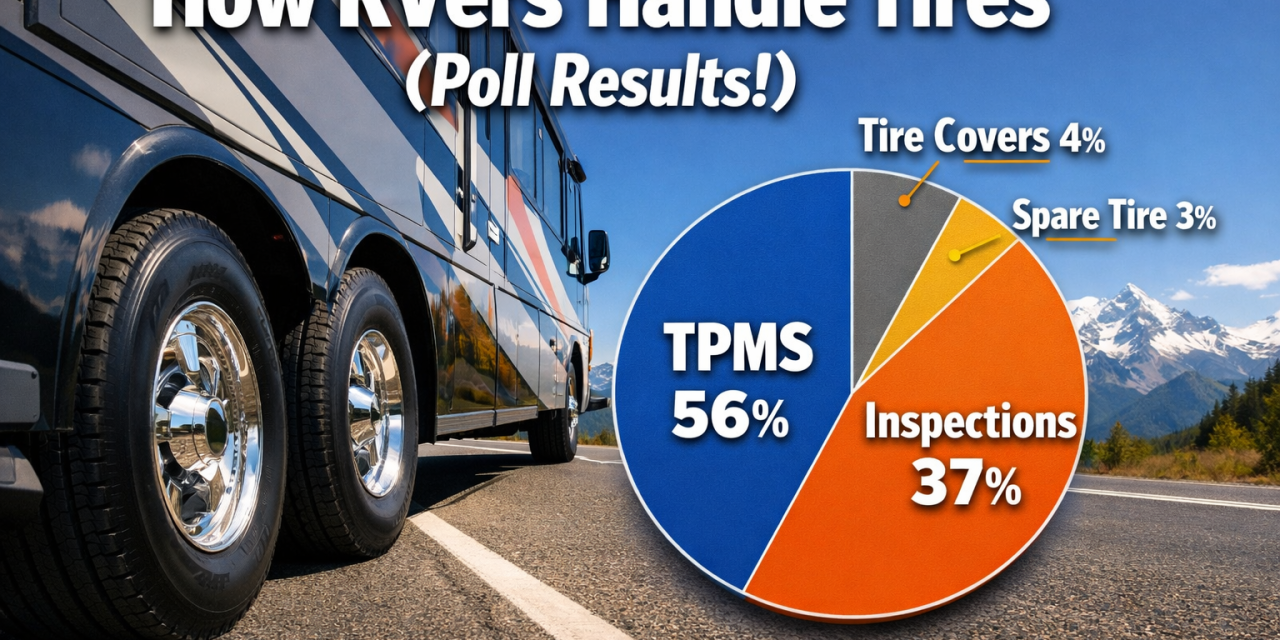
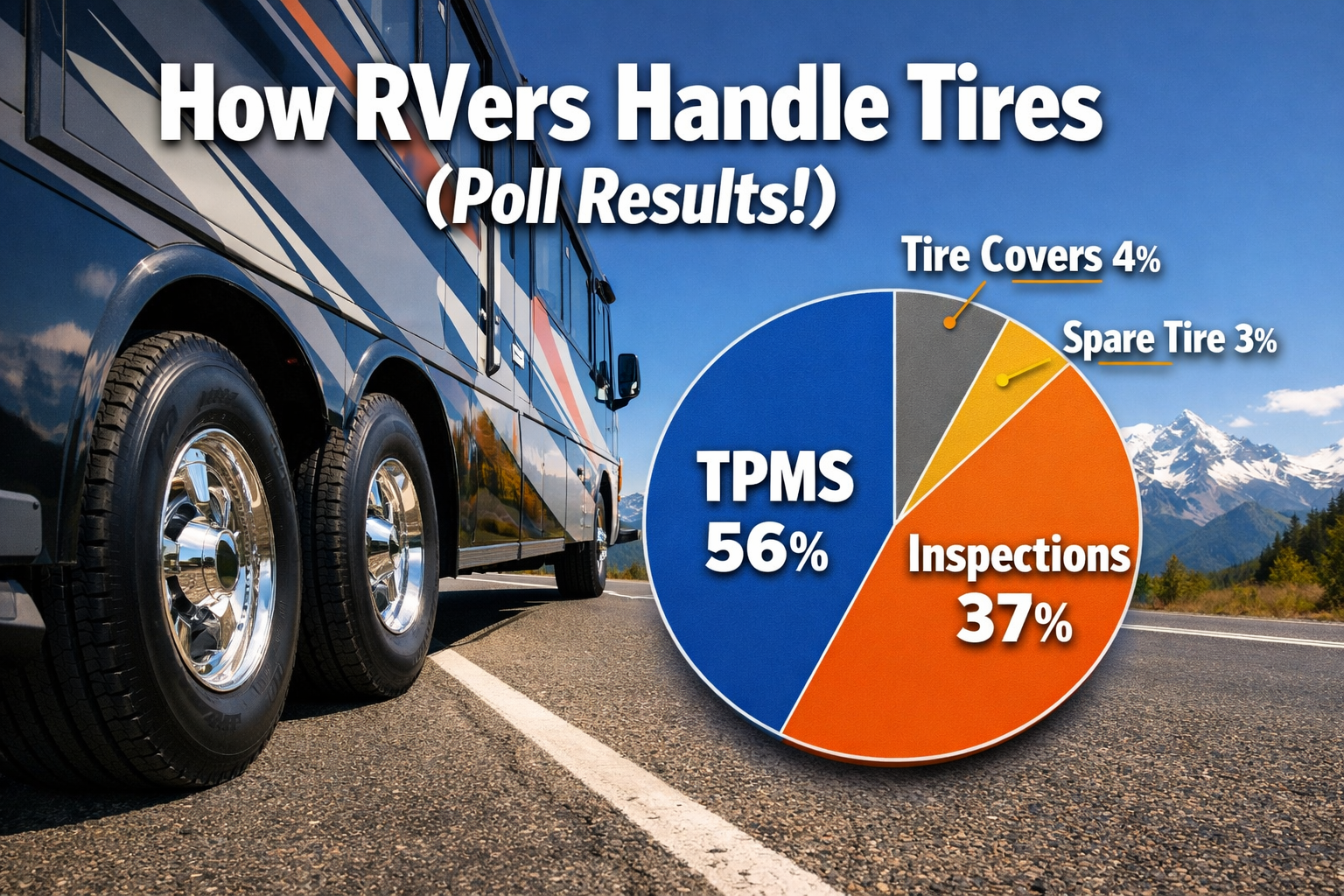
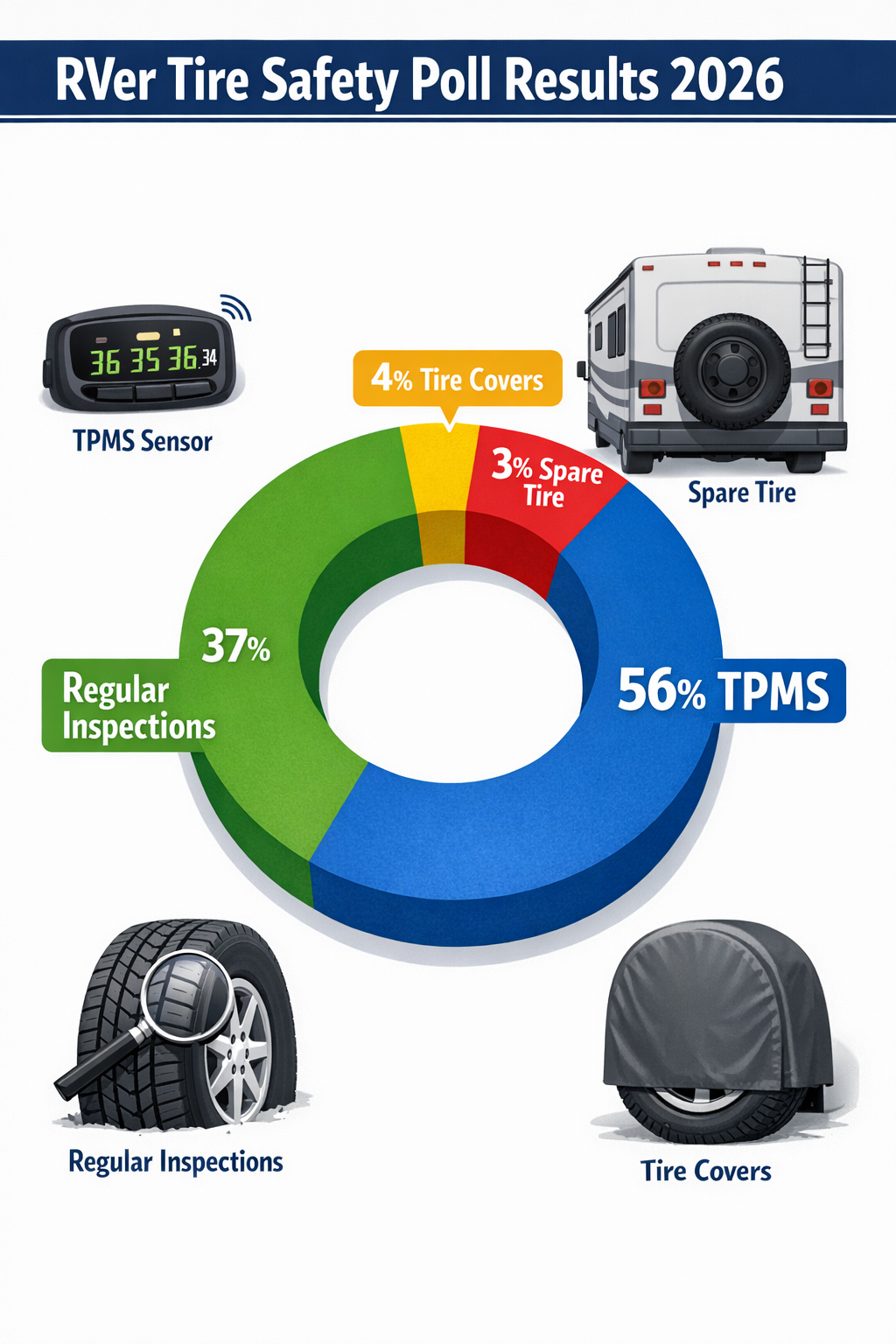
- 56% of RVers rely on a TPMS (Tire Pressure Monitoring System) as their top safety tool.
- 37% of RVers trust regular visual inspections to keep their tires safe.
- Only 4% use tire covers, and 3% rely on a spare tire as their main safety method.
- Experts recommend checking for sidewall cracks, rotating tires often, and picking the right load index. [1]
- New retail options — like Love’s selling RV tires at select locations — are making tire care easier in 2026. [2]
How RVers Handle Tires: The Poll Results Explained 📊
The numbers are in! Here is a full look at what our community said when asked: “What’s your preferred RV tire safety method?”
| Safety Method | Votes |
|---|---|
| 🔵 TPMS System | 56% |
| 🟢 Regular Inspections | 37% |
| 🟡 Tire Covers | 4% |
| 🔴 Spare Tire Ready | 3% |
🏆 TPMS Takes the Top Spot — 56%
More than half of all voters said a Tire Pressure Monitoring System (TPMS) is their go-to safety tool. And it makes total sense! A TPMS watches tire pressure in real time. It alerts the driver the moment pressure drops too low or rises too high.
💬 “A TPMS is like having a co-pilot who never sleeps and only watches your tires.”
Low tire pressure is one of the leading causes of RV blowouts. Catching it early can save lives, save tires, and save a whole lot of money. For RVers who travel long distances, a TPMS is a smart and affordable investment.
Why RVers love TPMS:
- 🚨 Real-time alerts on the dashboard
- ✅ Works while driving at highway speed
- 💰 Helps avoid costly blowouts
- 🔋 Easy to install on most RVs
🔍 Regular Inspections Come in Second — 37%
Nearly four in ten RVers still trust their own eyes. Regular tire inspections are a hands-on approach to tire safety. This means walking around the RV before every trip and looking closely at each tire.
What to look for during an inspection:
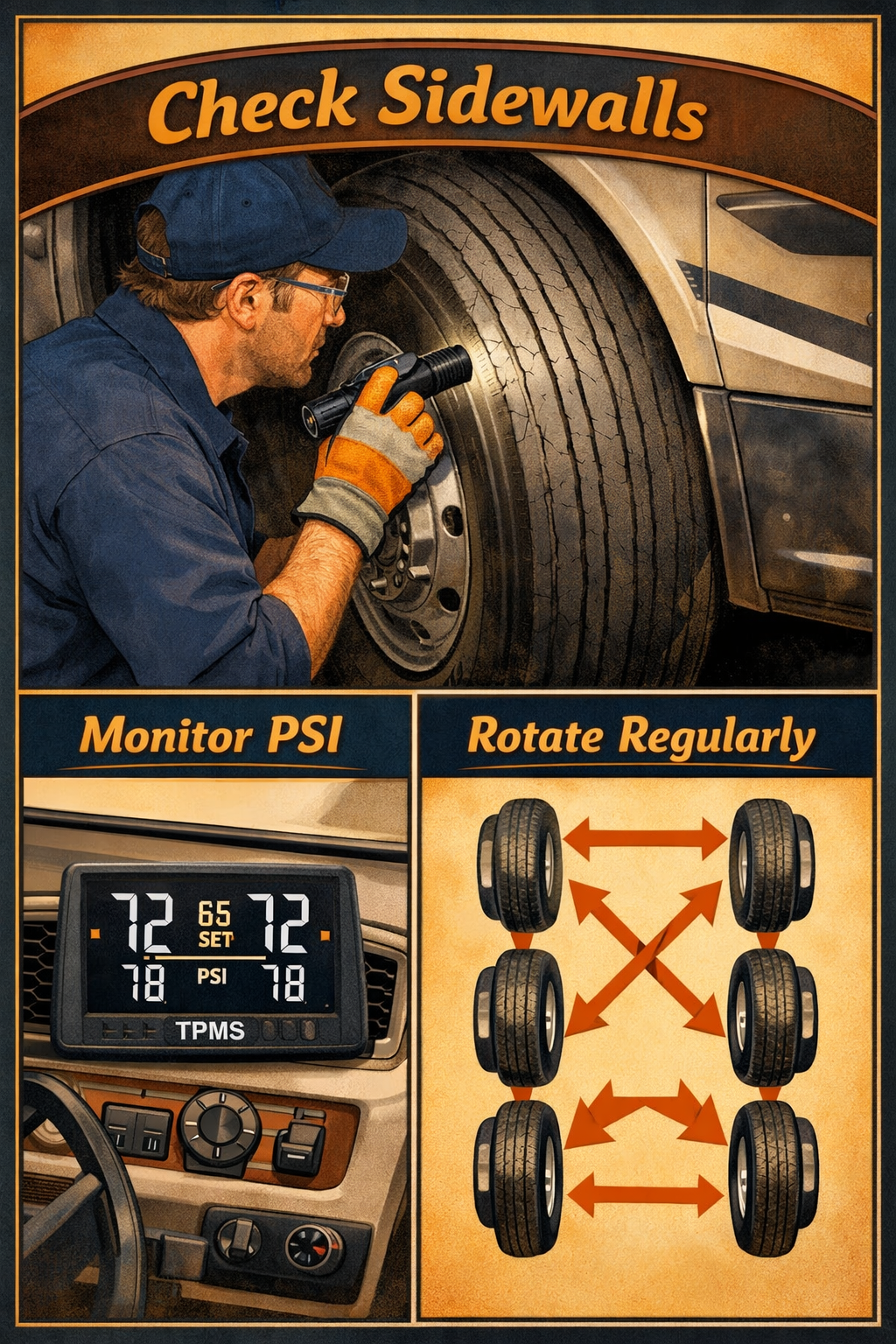
- Sidewall cracks — small cracks can grow into big problems [1]
- Punctures or nails stuck in the tread
- Uneven tread wear — this can mean alignment issues [1]
- Bulges or bubbles on the tire surface
This method costs nothing extra. It just takes a few minutes of attention. Many seasoned RVers do both — they run a TPMS and do visual checks before hitting the road.
🛡️ Tire Covers — 4%
Tire covers protect RV tires from the sun’s UV rays. UV damage causes the rubber to dry out and crack over time. While only 4% listed this as their primary safety method, tire covers are still a great add-on habit — especially for RVers who store their rig for weeks or months at a time.
🔩 Spare Tire Ready — 3%
Only 3% of voters said having a spare tire is their main safety strategy. A spare tire is a great backup, but it is not a prevention tool. Most RV experts agree: a spare is important to have, but it should not be the only plan.
How RVers Handle Tires: Expert Tips for Staying Safe 🛞
Understanding poll results is great. But knowing what to do with that information is even better. Here are the top expert-backed tips for keeping RV tires in top shape in 2026.
1. Always Check the Load Index ⚖️
Every tire has a load index — a number that tells you the maximum weight that tire can safely carry. When picking tires, always go slightly higher than the minimum. RVs carry a lot of weight: passengers, luggage, water, food, and gear. A higher load index gives a safety buffer. [1]
💡 Pro Tip: Never guess on load index. Check the RV owner’s manual or ask a tire specialist.
2. Rotate Tires Regularly 🔄
Just like a car, RV tires wear unevenly. The front tires steer, so they wear differently than the rear ones. Regular tire rotation helps spread that wear evenly across all tires. This makes tires last longer and saves money in the long run. [1]
Rotation tip by RV type:
| RV Type | Rotation Frequency |
|---|---|
| Class A Motorhome | Every 6,000–8,000 miles |
| Class B / C | Every 5,000–7,000 miles |
| Travel Trailer | Every 7,500 miles |
| Fifth Wheel | Every 7,500 miles |
3. Pick the Right Tread Pattern 🏕️
Not all tires are built for the same roads. Choosing the right tread pattern matters a lot. [1]
- Highway tires → smooth, quiet, great for paved roads
- Off-road tires → deep tread, better grip on dirt and gravel, but louder on highways
- All-terrain tires → a good mix for RVers who do both
Think about where the RV travels most. Then pick the tread that fits those roads best.
4. Use Seasonal Tires When Needed ❄️
RVers who travel in cold or snowy places should think about all-season or winter-rated tires. Regular tires get stiff and slippery in cold weather. Winter tires stay flexible and grip better on ice and snow. [1]
5. Watch for Tariff-Related Price Changes 💵
In 2026, tire prices are being affected by trade tariffs. A survey of more than 300 readers in the tire industry showed that tariffs are hitting budgets hard. [3] This means RVers may see higher prices at tire shops. Planning ahead and buying tires before a big trip — rather than in an emergency — can save real money.
6. Know Where to Buy RV Tires on the Road 🗺️
Good news for RVers! Love’s Travel Stops announced a 2026 investment plan that includes selling RV tires and batteries at select locations with truck care and RV hookups. [2] This makes it much easier to find quality tires during a long trip — no more hunting for a specialty shop in the middle of nowhere.
Quick Reference: RV Tire Safety Checklist ✅
Use this simple checklist before every trip:
- Check tire pressure (use a gauge or TPMS reading)
- Look for sidewall cracks or bulges
- Check tread depth (use a penny — Lincoln’s head should be covered)
- Make sure lug nuts are tight
- Inspect the spare tire condition
- Check load rating matches current RV weight
Conclusion: Keep Rolling Safely 🏁
The poll results make one thing very clear: RVers care deeply about tire safety. Whether it is a high-tech TPMS system, a hands-on visual inspection routine, or a combination of both, smart tire habits keep everyone safer on the road.
Here are the best next steps for every RVer:
- Install a TPMS if one is not already on the RV — it is the #1 choice for a reason.
- Do a visual inspection before every single trip, no matter how short.
- Know the load index of current tires and upgrade if needed.
- Rotate tires on a regular schedule to extend their life.
- Plan for seasonal conditions and pick the right tread for the roads ahead.
- Budget for tire costs now that tariffs are pushing prices higher in 2026.
Tires are the only thing between the RV and the road. Treat them with respect, and they will take care of the journey. Safe travels! 🚐💨
References
[1] The 2026 Guide To Rv Motorhome And Camper Tires – https://www.tires-easy.com/blog/the-2026-guide-to-rv-motorhome-and-camper-tires/
[2] March 2026 Rv Market Update Rates Fuel Costs New Rv Stops And Industry News – https://www.bishs.com/blog/march-2026-rv-market-update-rates-fuel-costs-new-rv-stops-and-industry-news/
[3] Tire Dealers Speak Tariffs Rubber Hits Budget – https://www.rvtravel.com/tire-dealers-speak-tariffs-rubber-hits-budget/