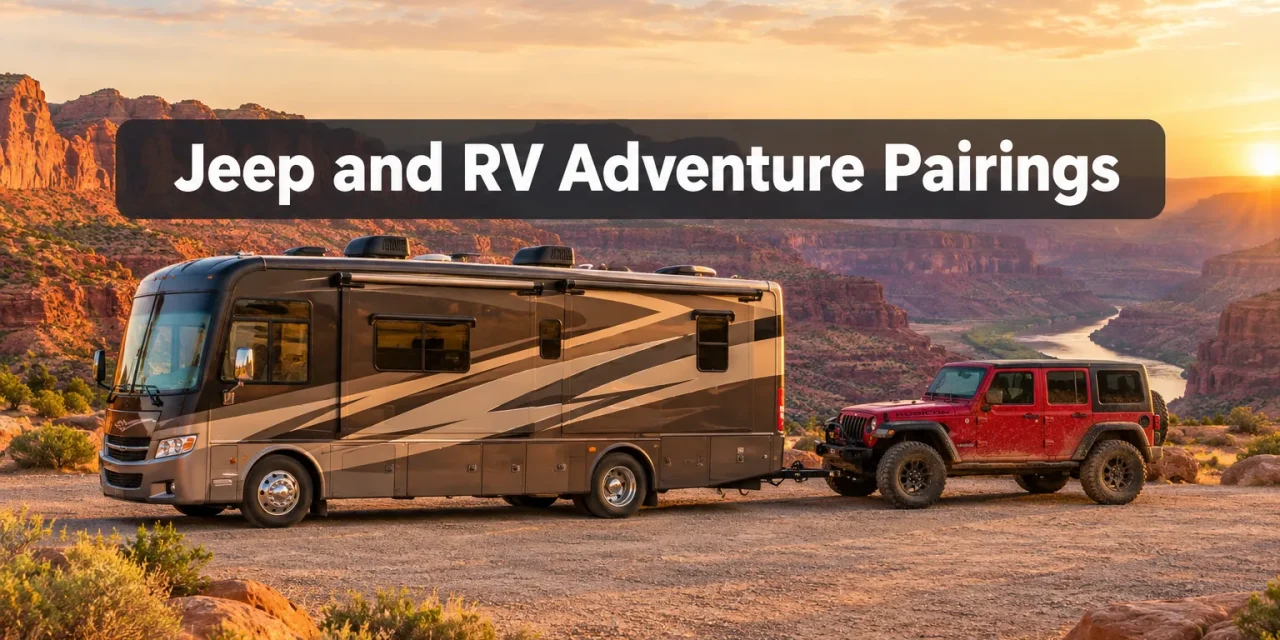
Most RVers don’t realize their motorhome can only take them so far. The moment the pavement turns to washboard gravel or a single-lane fire road, a 30-foot Class A becomes a liability instead of an asset. That’s exactly why so many experienced travelers build Jeep and RV Adventure Pairings into their rigs from day one, using a Jeep Wrangler as the tow-behind vehicle that picks up where the motorhome has to stop.
This isn’t a trend. It’s a practical solution to a real problem: big RVs are great for comfort, but terrible for trail access. A flat-towed Wrangler solves that gap, and it’s one of the reasons the Wrangler keeps showing up on “best vehicles to tow behind an RV” lists year after year [2][10].
This guide breaks down exactly how to set up, tow, and use a Jeep Wrangler as your trail explorer, from weight math to campsite strategy.
Key Takeaways
- The Jeep Wrangler remains one of the most popular flat-tow vehicles for RVers because of its dedicated Neutral transfer case position, which lets all four wheels roll freely [2].
- Four-door Wranglers with the right tow package can be towed up to 5,000 lbs behind many motorhomes, while two-door models are capped around 2,000 lbs [8][9].
- Flat towing requires following the exact procedure every time: transmission in Neutral, transfer case in Neutral, ignition in ACC [4][6].
- Always verify both sides of the pairing, your RV’s hitch rating and GCWR, and the Jeep’s specific model-year flat-tow approval [3][7].
- A properly equipped Wrangler, once disconnected at camp, becomes a genuine trail vehicle for exploring terrain your RV simply can’t reach.
Why the Jeep Wrangler Dominates Jeep and RV Adventure Pairings
There’s a reason RV forums and official guides keep pointing back to the same vehicle. CarGurus names the Wrangler among the best dinghy-tow choices for RVers, specifically calling out its dedicated Neutral position for safe four-down towing [2]. Roadmaster’s October 2026 update on the most popular flat-towed vehicles lists the Jeep Wrangler (1996 and newer) right at the top of the list, too [10].
What makes this pairing work so well isn’t just off-road capability, plenty of SUVs can handle a trail. It’s the transfer case design. Many 2018-2026 Wranglers include a dedicated “N” position on the transfer case, which lets all four wheels spin freely while being pulled. That’s a requirement for safe flat towing, and it’s something a lot of competing SUVs simply don’t offer without aftermarket modifications [2].
Add in the Wrangler’s compact footprint, strong ground clearance, and genuine trail pedigree, and you get a vehicle that does double duty: quiet highway passenger behind the RV, capable trail rig once you’re parked.
A Quick Reality Check Before You Buy
Not every Wrangler model year or trim is automatically flat-tow ready. Generational overviews show that TJ, JK, and JL Wranglers are “commonly flat towable” when equipped with the right transfer case, but specifics vary by year and configuration. Before assuming an older Wrangler in your driveway is ready to join your RV adventure pairing, confirm the exact engine, transmission, and transfer case setup against Jeep’s model-year documentation [7].
Flat-Towing Basics for Jeep and RV Adventure Pairings
Flat towing, also called “dinghy towing” or “four-down towing”, means all four of the Jeep’s wheels stay on the ground while the RV pulls it. No dolly, no trailer. It’s the cleanest, lightest way to bring a second vehicle along, and it’s a big part of why the Wrangler is such a popular match.
Here’s what makes a Wrangler flat-tow eligible:
- 4WD drivetrain with a transfer case that has a true Neutral position
- Model years 2015-2026 are generally approved for flat towing when configured correctly, according to current compatibility guides
- Gladiator and 4xe hybrid models through 2025 are also flat-towable when set up per the owner’s manual [1]
That last point matters. Electrified Wranglers are relatively new, and guides treat them as viable candidates, but only when owners follow Jeep’s latest towing instructions precisely, since future drivetrain updates could change what’s approved [1][7].
Before towing anything, pull up your Jeep’s specific owner’s manual section labeled “Recreational Towing,” “Dinghy Towing,” or “Flat Towing.” This is non-negotiable advice echoed across nearly every current towing guide, because procedures differ slightly between model years [3][7].
Matching Your RV and Wrangler: Towing Capacity and Weight Checks
A great pairing starts with math, not enthusiasm. Two numbers need to line up: what your RV can safely pull, and what your Jeep weighs once it’s loaded with gear.
What Jeep Officially Allows
Jeep’s own trailer-tow guide and Wrangler FAQ state that the 2024 Wrangler four-door can tow up to 5,000 lbs when properly equipped, while the two-door is limited to 2,000 lbs [8][9]. That’s about the Jeep towing something, but the same weight principle flips when the Jeep itself is the thing being towed.
Independent summaries for the 2025 Wrangler confirm similar numbers: up to 5,000 lbs maximum on higher trims, with lower limits around 3,500 lbs on base configurations [5]. Detailed analysis of the JL generation breaks this into three rough towing tiers:
| Tier | Approximate Capacity | Typical Trim |
|---|---|---|
| Base | ~2,000 lbs | Entry-level two-door trims |
| Mid | ~3,500 lbs | Standard four-door builds |
| Max | ~5,000 lbs | Rubicon and tow-package builds (2024+) |
Source: JL towing-package analysis
What Your RV Needs to Handle
Most motorhomes and many Class B camper vans have roughly a 5,000 lb towing capacity, which comfortably fits a stock Wrangler once weight is verified [1]. But “comfortably fits” only applies if you actually check it. RV LIFE’s January 2026 dinghy-towing guide instructs owners to consult the RV’s manual and weight stickers before assuming anything [3]. Tow Genius’ August 2026 guide says the same thing from the other direction, start with the Jeep’s model-year towing guide, not guesswork [7].
Two things you absolutely must confirm before pairing:
- Your RV’s hitch rating and GCWR (Gross Combined Weight Rating). This tells you the maximum combined weight your rig can legally and safely pull [3][7].
- Your Jeep’s actual curb weight plus gear. A loaded Wrangler with a roof rack, recovery gear, and a full tank weighs more than the base spec sheet number.
If you’re still shopping for a tow vehicle or want to compare the Wrangler against other common options, our breakdown of the best vehicles to flat tow behind an RV is a good next stop.
The Step-by-Step Flat-Tow Setup Procedure
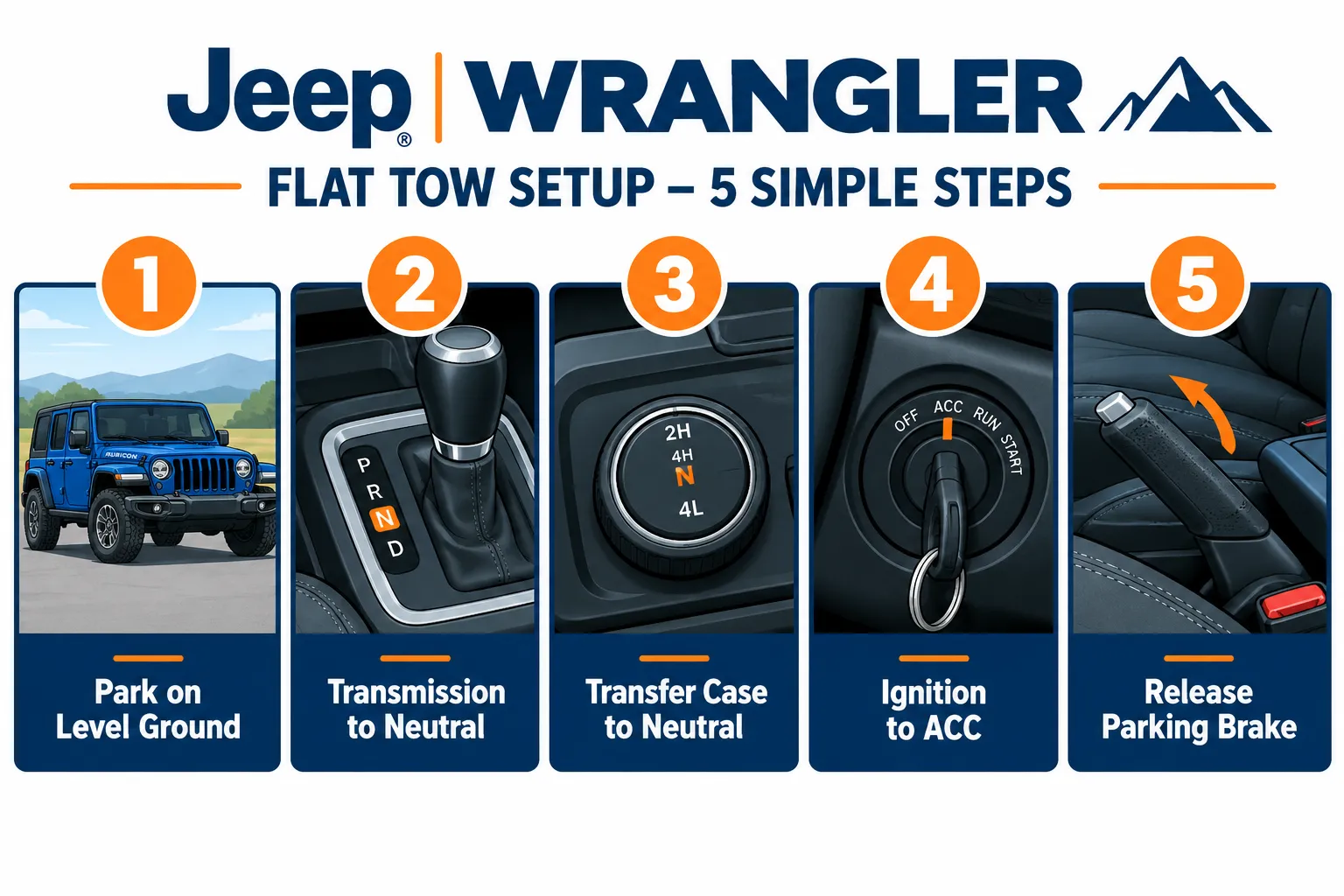
This is the part where attention to detail actually protects your drivetrain. Current 2026 guides for JL-generation Wranglers converge on the same basic setup sequence [4][6]:
- Park on level ground. This keeps the Jeep from rolling before everything is secured.
- Start the engine. Yes, even though you’re about to tow it, this step is required to properly shift gears.
- Shift the transmission to Neutral.
- Shift the transfer case to Neutral. This is the step that lets all four wheels roll freely.
- Turn the ignition to ACC (accessory) mode. This keeps the steering wheel unlocked so the Jeep can follow the RV’s turns, without running the engine or battery down excessively.
- Release the parking brake and verify the steering turns freely before pulling out.
Guides repeatedly stress one warning: skipping a step or picking the wrong transmission gear or transfer-case setting can damage the drivetrain while the Jeep is being towed [4][6]. There’s no shortcut version of this checklist, it’s the same five minutes every single time you hook up.
A smart habit borrowed from seasoned RVers: treat your hookup routine the same way you’d treat any other pre-departure RV setup checklist. Running through the same sequence every time reduces the chance of a rushed mistake.
Gear You Need for Safe Jeep and RV Adventure Pairings
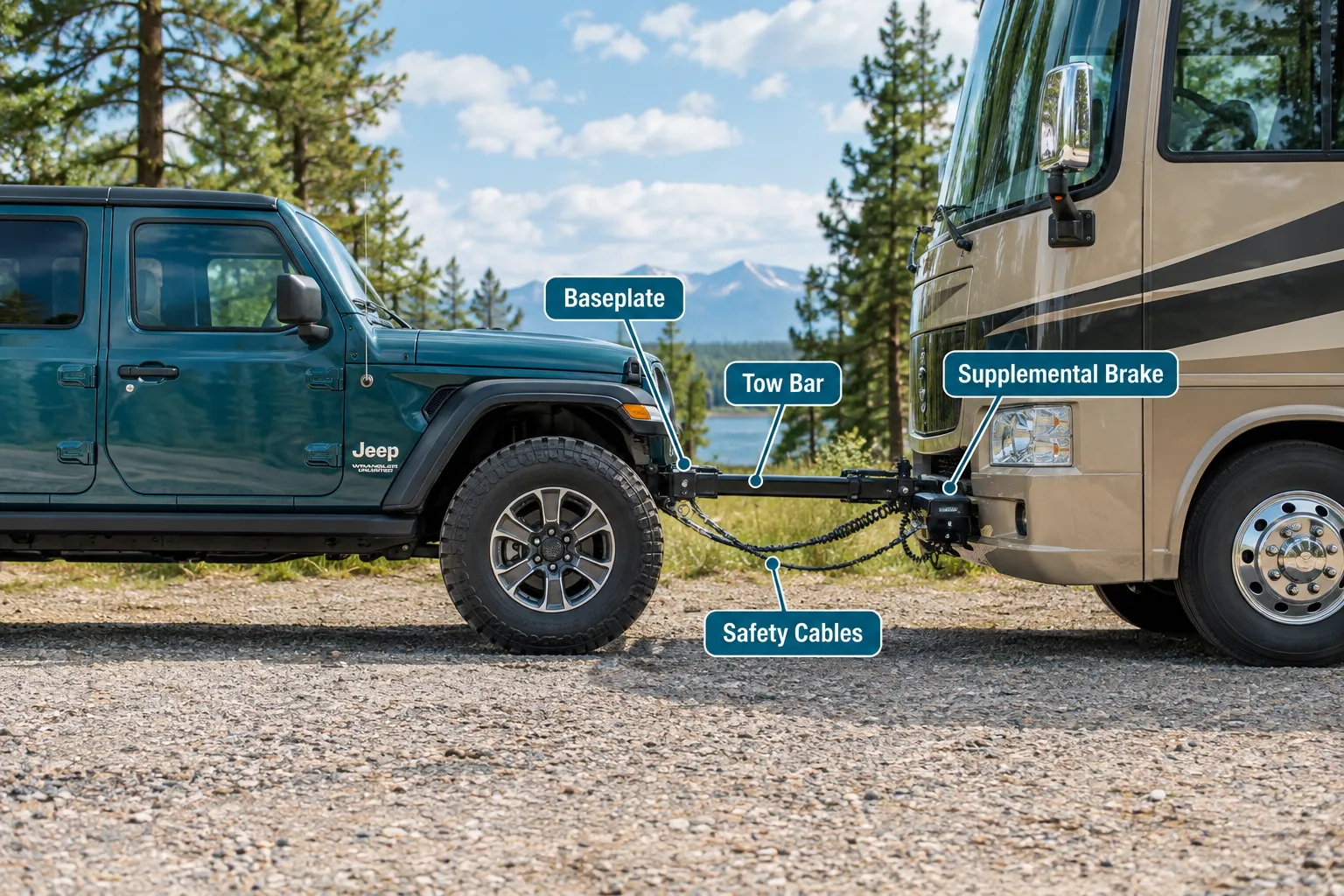
The right hardware is just as important as the right procedure. Safety-focused dinghy-towing manuals are specific about what a properly rigged Wrangler needs [4]:
- A rated tow bar connected to a baseplate bolted directly to the Jeep’s frame
- Crossed safety cables as a backup connection if the tow bar ever fails
- A supplemental braking system so the Jeep helps slow the combined rig, not just coasts along
- Correctly wired lighting that mirrors the RV’s turn signals, brake lights, and taillights
Before every single departure, checklists published in these guides recommend verifying [4]:
- ✅ Tow-bar latches are fully engaged
- ✅ Safety cables are crossed and secured
- ✅ Supplemental brake system is active and tested
- ✅ All signal, brake, and taillights function correctly
Skipping this five-minute walk-around is one of the most common, and most avoidable, mistakes RVers make. It takes less time than brewing coffee, and it’s the difference between a smooth travel day and a roadside headache.
Campsite Strategy: Using Your Wrangler as Base Camp Transport
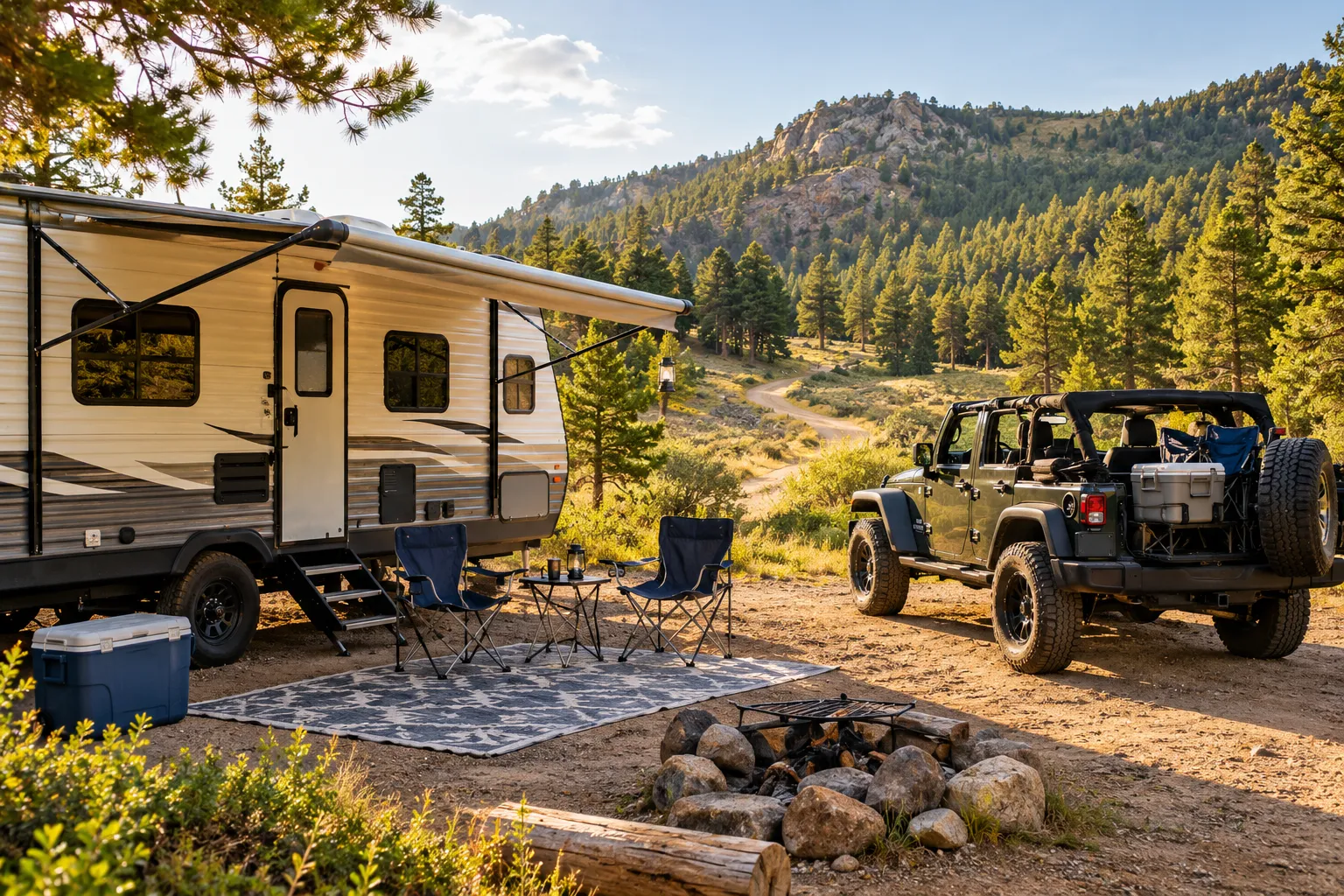
Once you’ve arrived and leveled the RV, the Wrangler earns its keep. This is where the real value of Jeep and RV Adventure Pairings shows up, not on the highway, but at the destination.
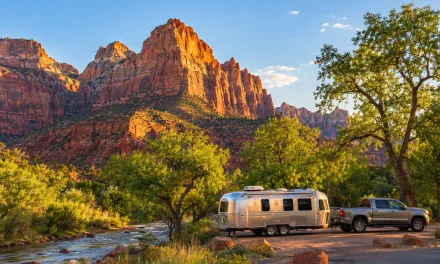
A common pattern among current RVers: tow a four-door Wrangler Unlimited behind a Class A or C motorhome with a 5,000 lb hitch, then rely on the Jeep for off-road trails and local exploration once camp is set [1][2][10]. The RV stays put as base camp, fully leveled with slides out and the kitchen running. The Jeep handles everything else, grocery runs, trailhead access, scenic overlooks, and backroad exploring that would be impossible (or just plain stressful) in a 30-foot motorhome.
Practical campsite tips for making this pairing work:
- Disconnect carefully. Reverse the setup procedure in order, transfer case and transmission back to drive-ready positions before starting the engine normally.
- Scout before you commit the RV. Use the Jeep to check narrow campground roads or dispersed sites before backing in a rig you can’t easily turn around.
- Pack the Jeep for day trips, not full camping. Keep a small kit of recovery gear, a first-aid kit, water, and basic tools in the Jeep separate from your RV supplies.
- Follow Leave No Trace principles on every trail outing, especially on dispersed public land where off-road traffic adds up fast.
This two-vehicle approach also solves one of the biggest frustrations of RV travel: breaking down camp just to drive into town for supplies. With the Jeep already disconnected and ready, those short trips take minutes instead of an hour of RV prep.
Turning Your Wrangler Into an Adventure Companion
A stock Wrangler is already trail-capable, but a few thoughtful additions make it a genuinely useful RV companion rather than just a second vehicle along for the ride.
Consider adding:
- A roof rack or bed rack for carrying bikes, kayaks, or extra gear without eating into interior space
- A basic recovery kit, tow strap, shovel, tire plug kit, for backroad confidence
- A portable air compressor for adjusting tire pressure between pavement and trail driving
- Weather-resistant seat covers if you’re removing doors or the top regularly
Many RVers treat the Jeep as their “town car” and trail rig in one, running errands, hauling firewood, and tackling the kind of terrain that would never make sense for the motorhome. If you’re building out your broader rig for long-term travel, our guide on tips every RVer should know covers more ways to stretch your setup’s usefulness.
It’s also worth building a simple maintenance rhythm for both vehicles. Flat towing adds engine hours and wear patterns that differ from normal driving, so it pays to track service intervals closely. Our piece on how often you should service your RV applies a similar logic worth adapting for the tow vehicle too, consistent, scheduled checks catch small issues before they become expensive ones.
Common Mistakes to Avoid
Even experienced RVers slip up on a few recurring issues with flat-towed Wranglers:
| Mistake | Why It’s a Problem | Fix |
|---|---|---|
| Skipping the transfer case step | Can damage the drivetrain while towing | Always follow the exact owner’s manual sequence [4][6] |
| Assuming all Wranglers are flat-tow ready | Years and trims vary significantly | Confirm exact engine/transmission/transfer case [7] |
| Ignoring GCWR | Can overload the RV’s hitch and chassis | Check RV weight stickers and manual before towing [3][7] |
| Forgetting the pre-departure check | Light or cable failures go unnoticed until it’s dangerous | Run the checklist every single time [4] |
| Loading the Jeep too heavy | Pushes actual towed weight past the rated limit | Weigh the Jeep loaded, not just the spec sheet number [1][5] |
A little discipline here goes a long way. None of these mistakes are complicated to avoid, they just require treating the hookup process as a routine, not an afterthought, the same way you’d approach your first night in RV checklist when you’re still building good habits.
Frequently Asked Questions
Can any Jeep Wrangler be flat towed behind an RV? Not automatically. Current compatibility guides specify that Wrangler model years 2015-2026 are approved when equipped with 4WD and a transfer case with a dedicated Neutral position. Older generations like the TJ and JK can often qualify too, but configurations vary, so checking your specific model year matters.
How much can my RV tow if I want to bring a Wrangler? It depends entirely on your RV’s GCWR and hitch rating, plus your Jeep’s actual loaded weight. Most motorhomes and many Class B vans carry roughly a 5,000 lb towing capacity, which comfortably fits a stock four-door Wrangler [1]. Always confirm both numbers before assuming compatibility [3][7].
Is the Jeep Wrangler 4xe hybrid flat-towable? Yes, through at least the 2025 model year, when properly equipped and configured according to Jeep’s instructions [1]. As with any Wrangler, always verify against the latest model-year owner’s manual, since drivetrain updates could change what’s approved in future years [1][7].
What’s the biggest safety risk in flat towing a Wrangler? Skipping or misordering the setup steps. Placing the transmission or transfer case in the wrong position while being towed is the most common cause of drivetrain damage, according to multiple current towing guides [4][6].
Conclusion
A well-matched Jeep Wrangler doesn’t just ride along behind your RV, it extends what your entire trip can accomplish. The motorhome handles comfort, kitchen, and sleeping arrangements. The Wrangler handles everything the pavement can’t reach: trailheads, backroads, and the kind of exploring that makes a destination feel fully discovered.
The formula isn’t complicated, but it does require discipline: confirm your RV’s towing capacity, verify your specific Wrangler’s flat-tow approval, follow the setup procedure exactly every time, and run your safety checklist before every departure. Do that consistently, and this pairing becomes one of the most reliable upgrades in the RV lifestyle.
Start by pulling your RV’s weight sticker and your Jeep’s model-year owner’s manual side by side. If the numbers line up, you’ve got the foundation for a trail-ready adventure pairing that opens up far more of the map than your motorhome could ever reach alone.
References
[1] How To Flat Tow A Jeep Wrangler – https://weretherussos.com/how-to-flat-tow-a-jeep-wrangler/ [2] Best Cars Tow Behind Rv – https://www.cargurus.com/research/articles/best-cars-tow-behind-rv [3] 2026 Dinghy Towing Guide An Rv Life Exclusive – https://rvlife.com/2026-dinghy-towing-guide-an-rv-life-exclusive/ [4] Dinghy Towing Guide Everything You Need To Know – https://towratings.net/blog/dinghy-towing-guide-everything-you-need-to-know/ [5] Jeep Wrangler Towing Capacity – https://carscounsel.com/jeep-wrangler-towing-capacity/ [6] Flat Towing Jeep Wrangler – https://towingservicehub.com/blog/flat-towing-jeep-wrangler [7] 2026 Dinghy Towing Guide By Vehicle – https://towgenius.com/guides/2026-dinghy-towing-guide-by-vehicle [8] Towing – https://www.jeep.com/towing.html [9] jeep – https://www.jeep.com/2024/wrangler/faq.html [10] Most Popular Flat Towed Vehicles – https://www.roadmasterinc.com/most-popular-flat-towed-vehicles/