Full-time RV living calls for bedroom storage that uses vertical space, keeps daily essentials close, and stays secure on travel days. You can organize your mobile bedroom with compact storage solutions that make use of under-bed space, closet doors, and unused wall areas.
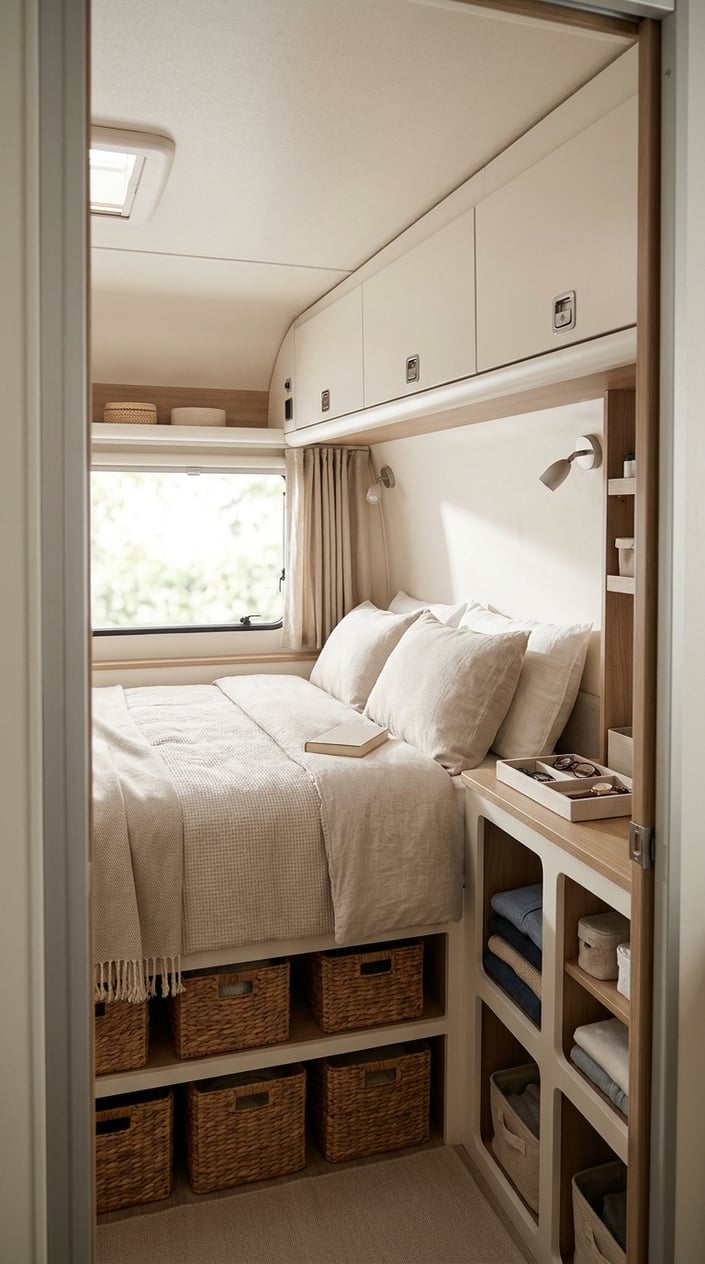
A tidy bedroom makes it easier to get dressed, find your gear, and settle in after a day on the road. Choose lightweight organizers that fit your RV’s dimensions and have a clear place for each item.
1) Add Under-Bed Storage Bins
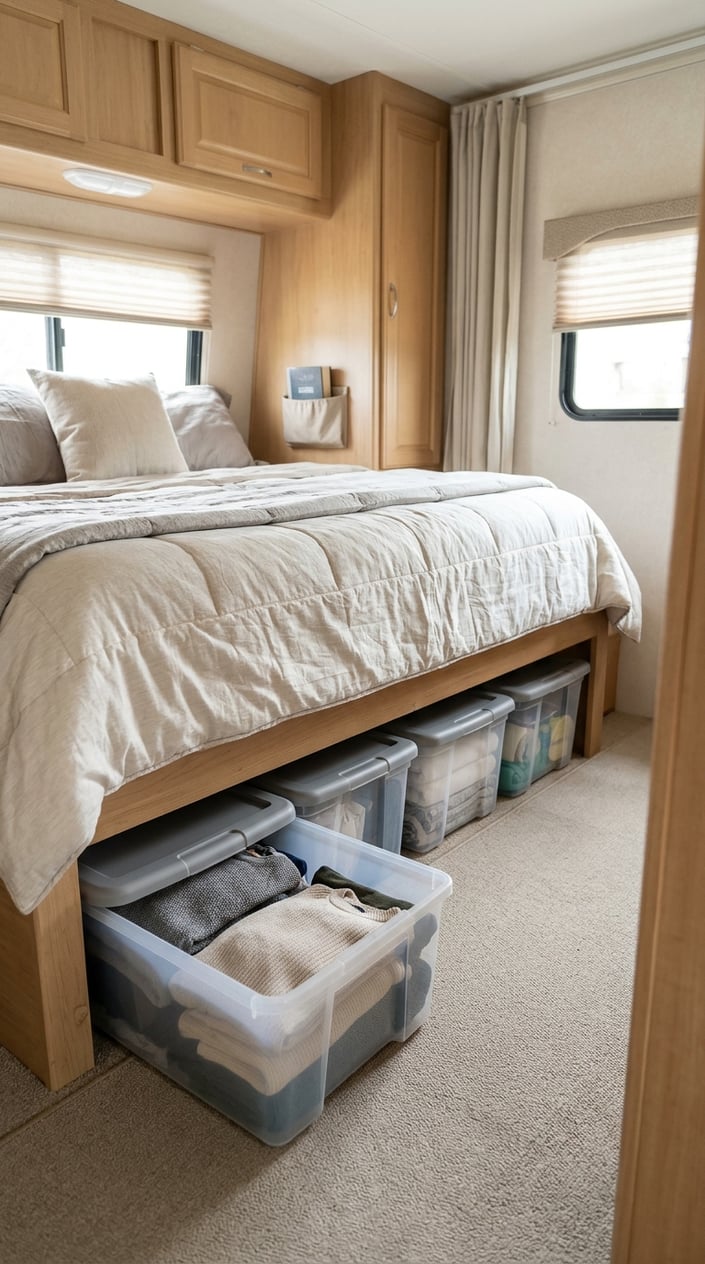
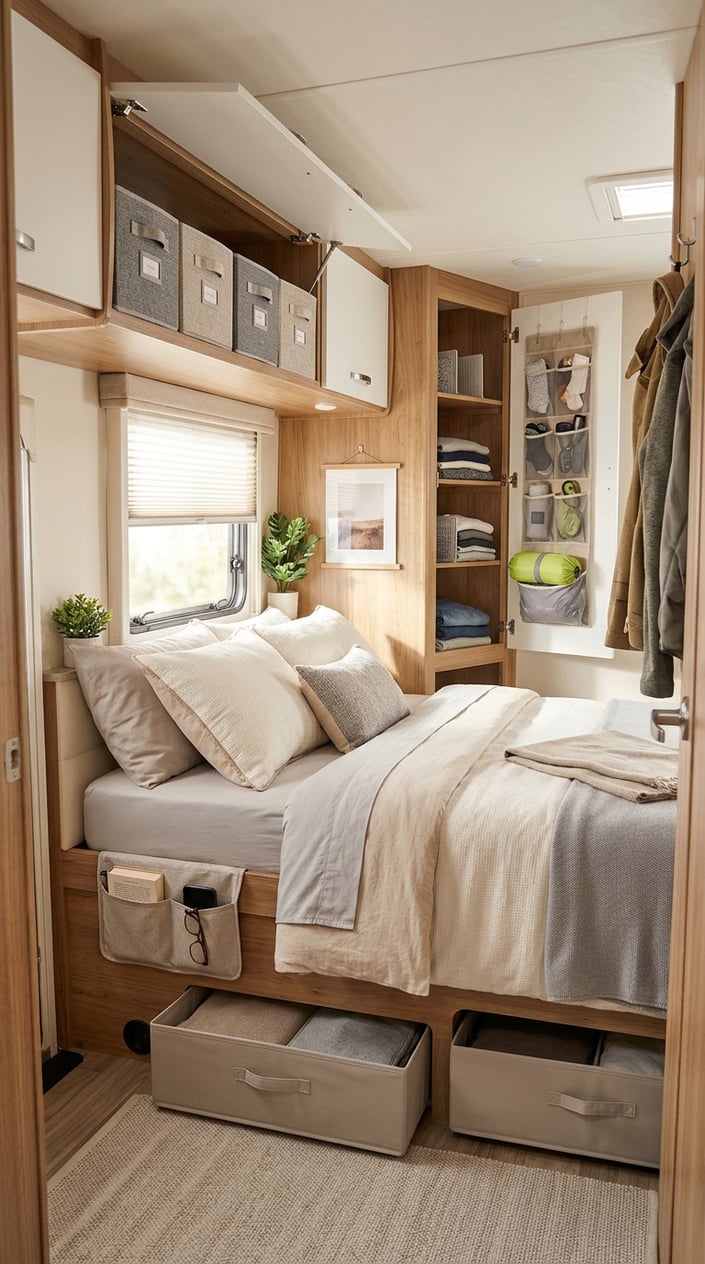
Under-bed bins turn the space beneath your mattress into useful storage for clothing, linens, and gear. Measure the opening, including its height, before buying bins. Low-profile containers with lids slide beneath many RV beds, while pull-out drawers make frequent access easier.
Sort items by category and label each bin so you can find what you need without unloading the whole space. Keep heavier items close to the bed frame and secure bins before driving so their contents stay put.
2) Use Over-the-Door Pocket Organizers
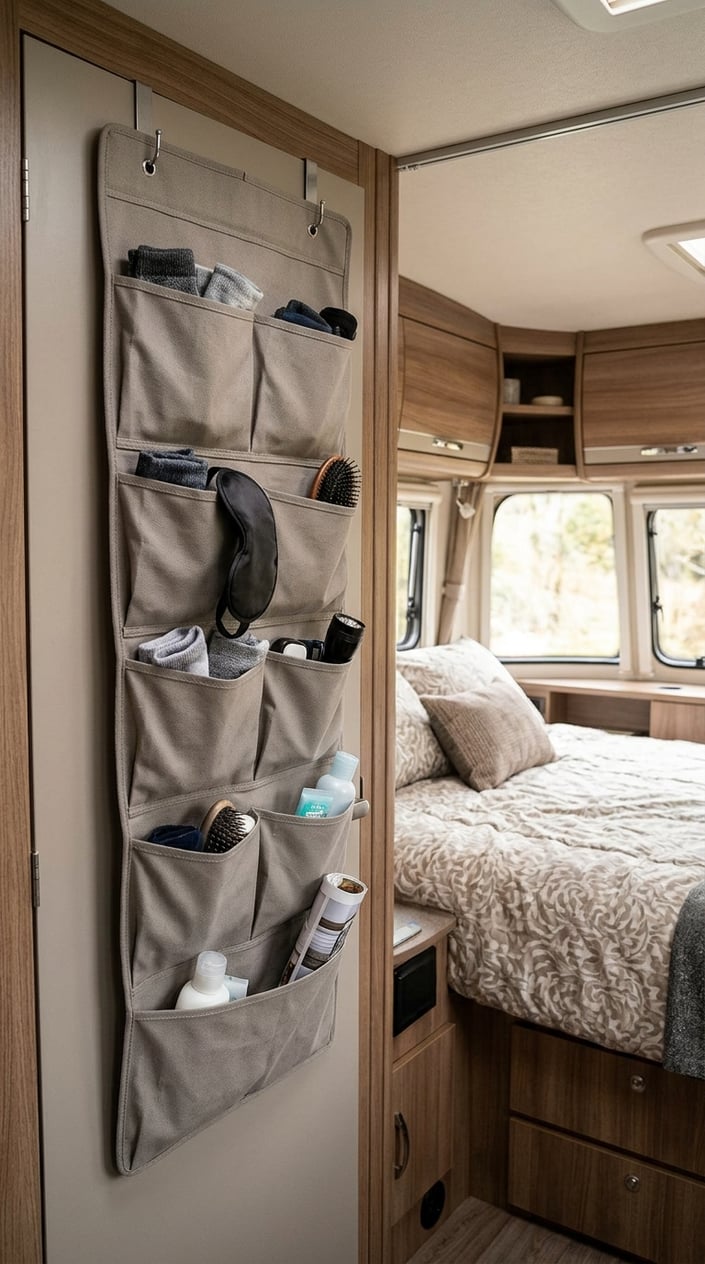
An over-the-door pocket organizer gives you vertical storage for small bedroom essentials. Use its pockets for socks, charging cables, toiletries, hats, or other lightweight items. Clear pockets help you spot what you need at a glance.
Check that the hooks fit your RV door and leave enough room for it to close. Add a removable adhesive strip near the bottom to reduce swinging, then empty or secure loose items before travel.
3) Stash Seasonal Clothes in Structured Storage Pillows
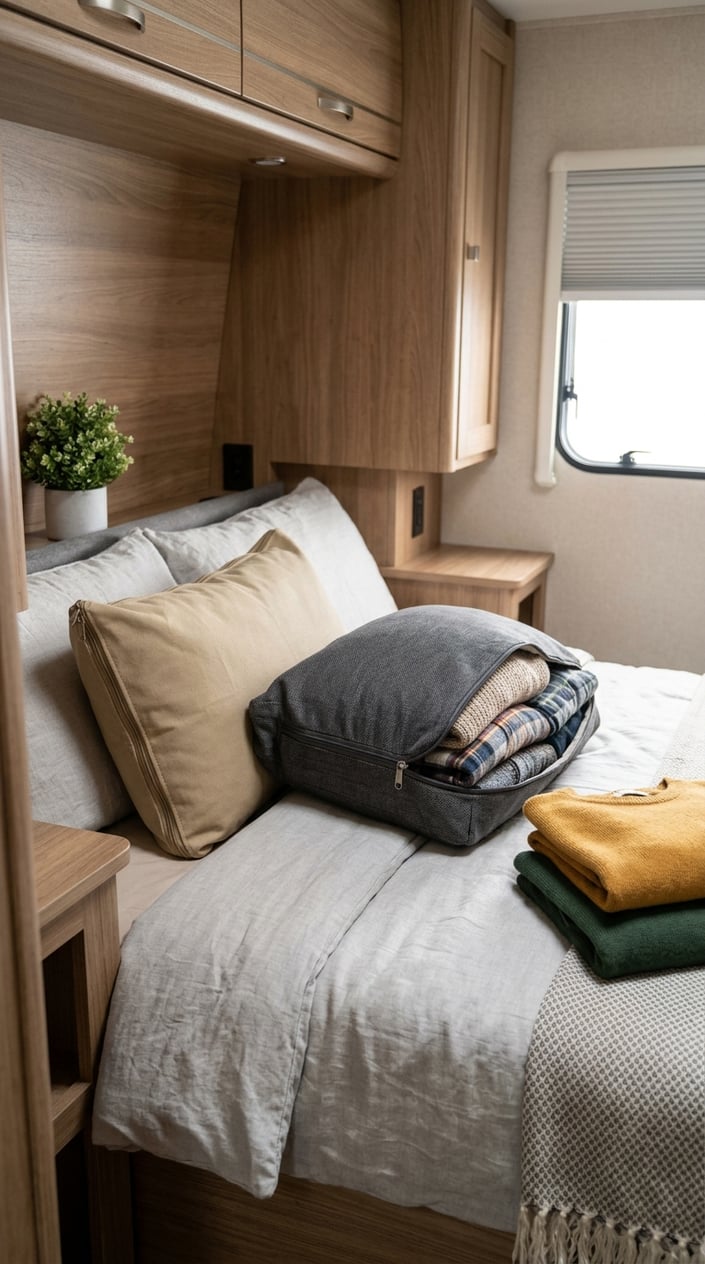
Structured storage pillows let you tuck away seasonal clothing while keeping a cushion on your bed. Store swimsuits, lightweight coverups, or off-season accessories inside a zippered pillow cover with a firm shape.
Fold clothes loosely so the pillow keeps its form, and avoid overfilling it. Check that the zipper closes without strain, then place the cushion where it won’t slide during travel.
4) Hang Clothes on Slim Velvet Hangers
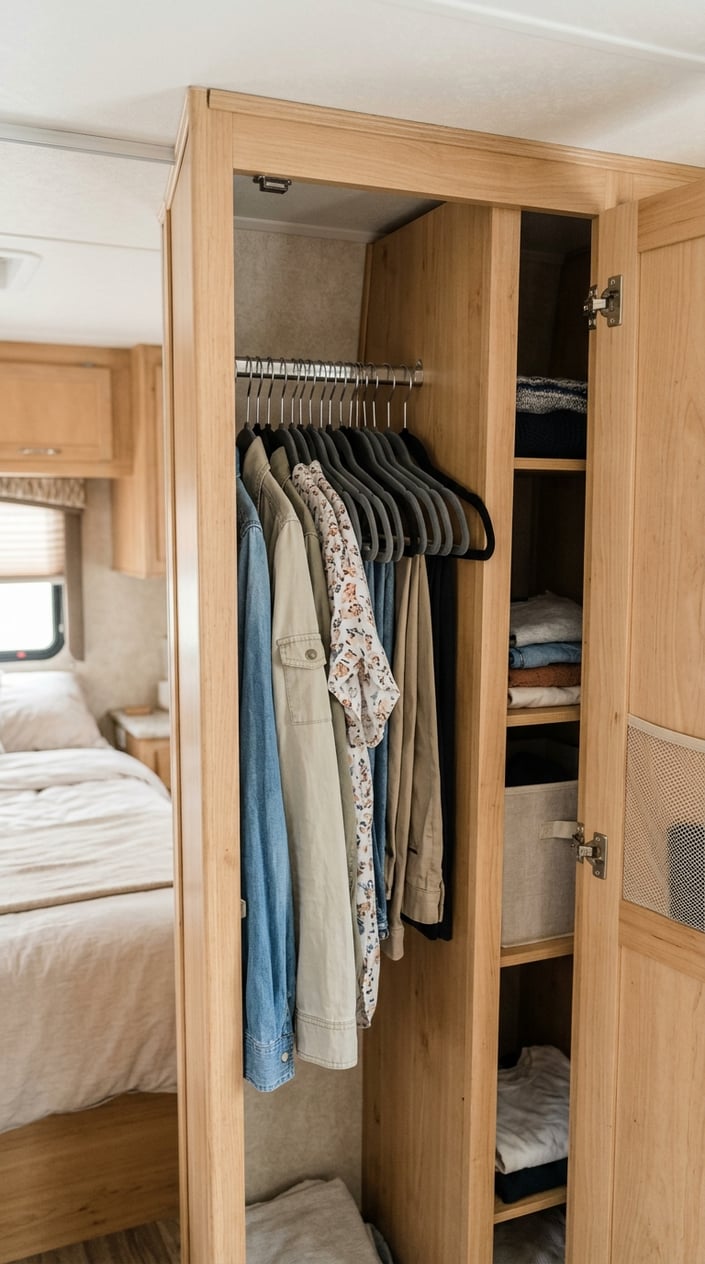
Slim velvet hangers free up closet-rod space and help keep clothes from slipping. Replace bulky hangers a few at a time, starting with shirts and lightweight layers. A uniform hanger size also makes the closet easier to scan.
Check the rod’s weight limit before loading it with extra garments. Leave enough room between clothes for airflow, and secure the closet door before driving.
5) Install a Hanging Closet Shelf Organizer
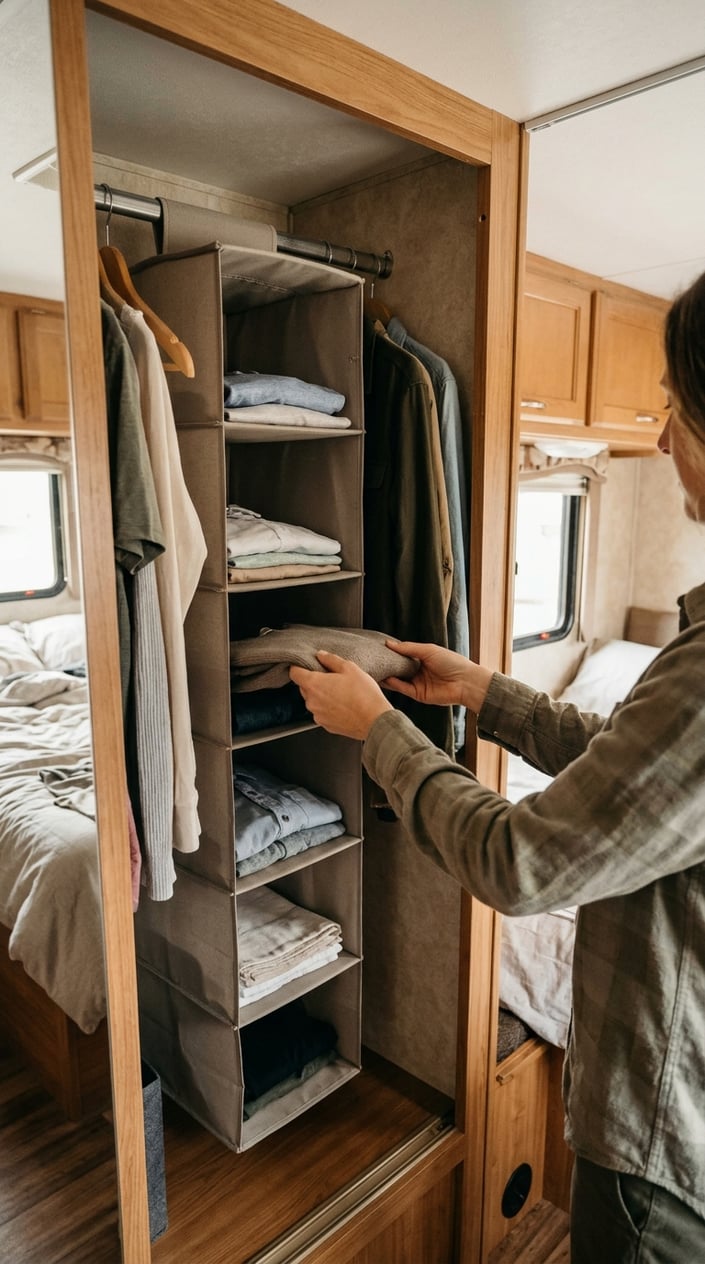
A hanging closet shelf organizer creates extra cubbies for folded clothing without taking up floor space. Use the shelves for sweaters, jeans, or small fabric bins. Reserve the lower shelves for heavier items to help the organizer hang evenly.
Measure the closet’s height and width before choosing a unit, then check that the closet door still closes. Secure the organizer and its contents for travel so shelves don’t swing or spill.
6) Divide Drawers With Adjustable Organizers
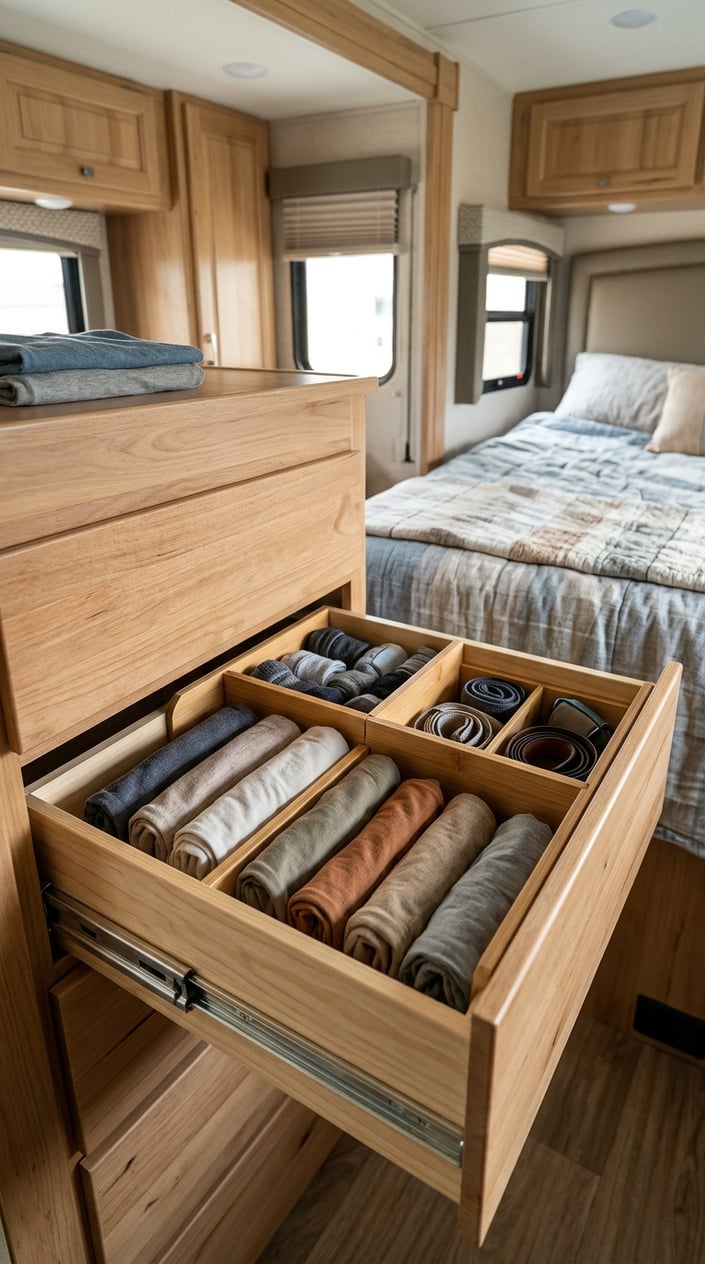
Adjustable drawer dividers give small clothing items and accessories a set place. Fit them to the drawer’s width, then create compartments for socks, underwear, belts, or sleepwear. Non-slip shelf liner beneath the dividers helps keep the setup steady.
Leave enough room for the drawer to close without pressure. Before driving, fold items below the top edge so they stay inside each compartment when the drawer moves.
7) Hang a Bedside Caddy for Nighttime Essentials
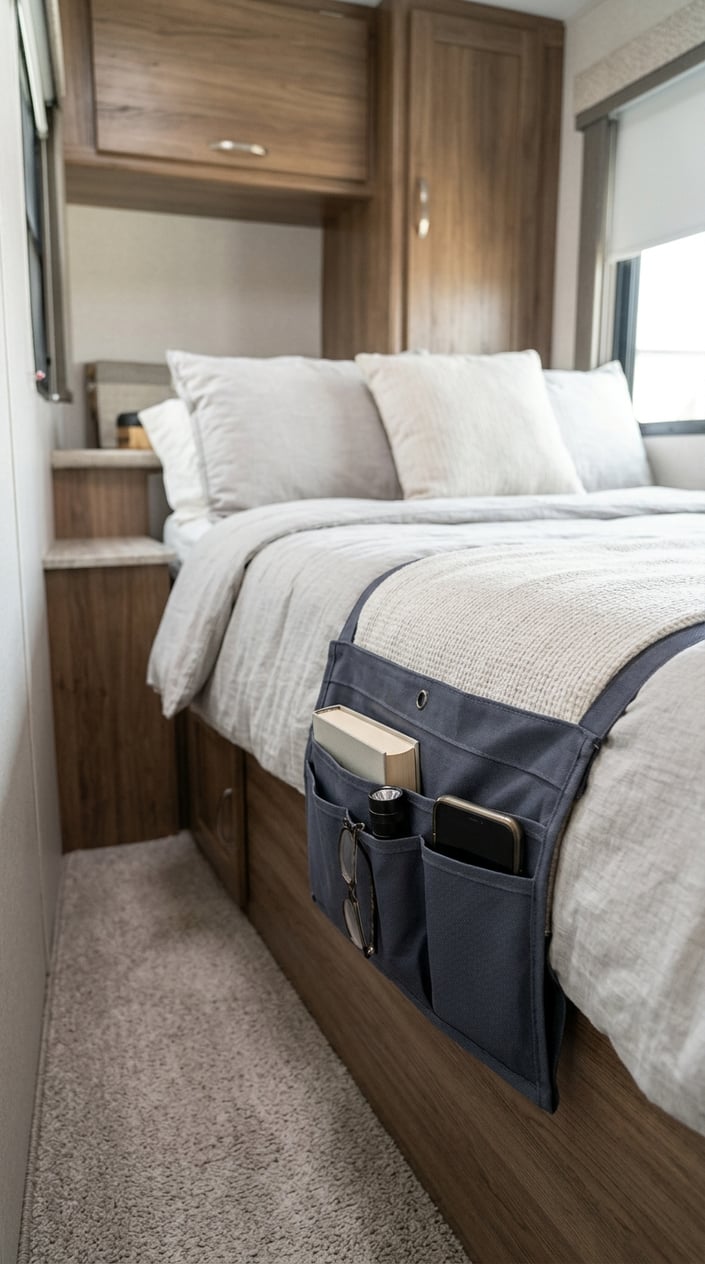
A bedside caddy keeps nighttime essentials within reach without using a nightstand. Choose a style that slips beneath the mattress or attaches securely to the bed frame. Store a book, glasses, a charging cable, or a small flashlight in its pockets.
Keep the caddy clear of walkways and any moving bed components. Put heavier objects in the pocket closest to the mattress so the organizer hangs evenly.
8) Use Removable Command Hooks for Bags and Jackets
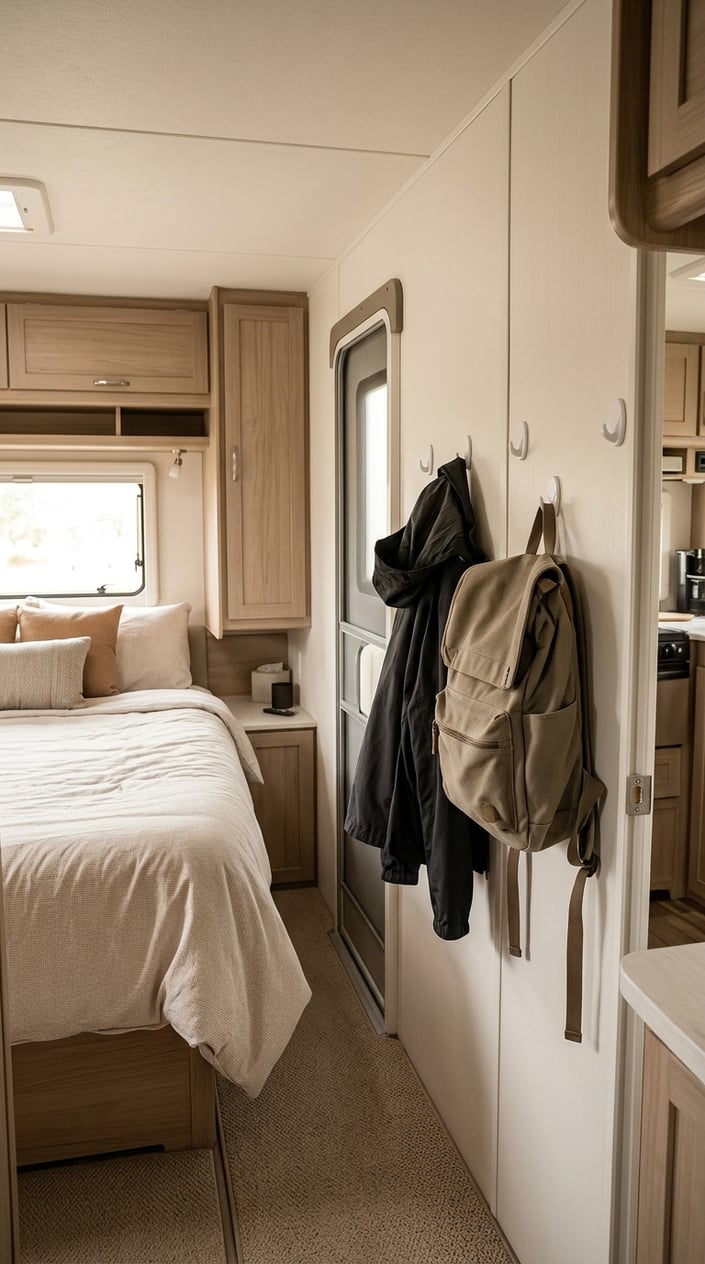
Removable Command Hooks give you a quick spot to hang a jacket, hat, or lightweight bag. Place them near the closet or bedroom entry, where you can reach them without blocking a cabinet or walkway. Choose a hook rated for the item’s weight.
Clean and dry the surface before applying each hook, then follow its package directions for setting time and removal. Take hanging items down before driving unless the hooks are rated and positioned to hold them securely on the road.
9) Store Bulky Bedding in Vacuum-Seal Bags
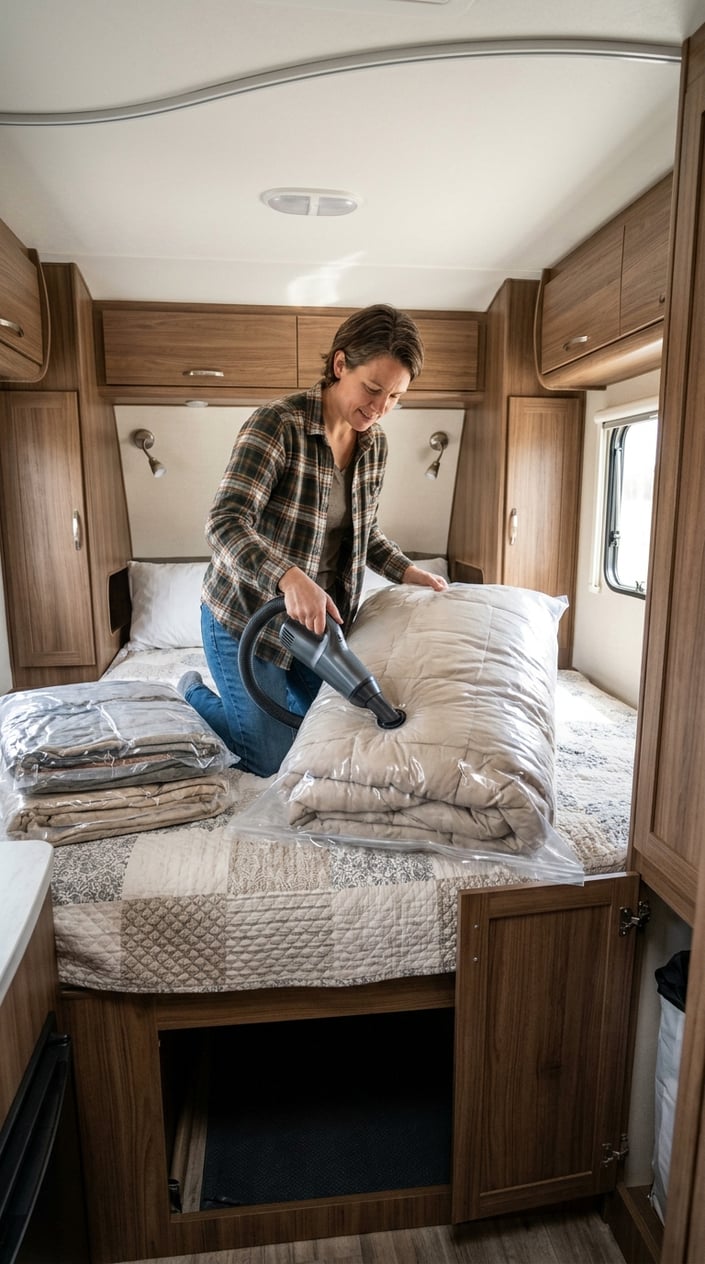
Vacuum-seal bags compress spare comforters, blankets, and seasonal bedding for compact storage. Use a reusable bag with a reliable seal, and label it with the contents before placing it under the bed or on a closet shelf.
A handheld vacuum makes it easier to remove air in a small RV. Keep the bag away from sharp edges, and leave room around stored items so you can retrieve them without shifting other gear.
10) Keep Shoes in an Under-Bed Shoe Organizer
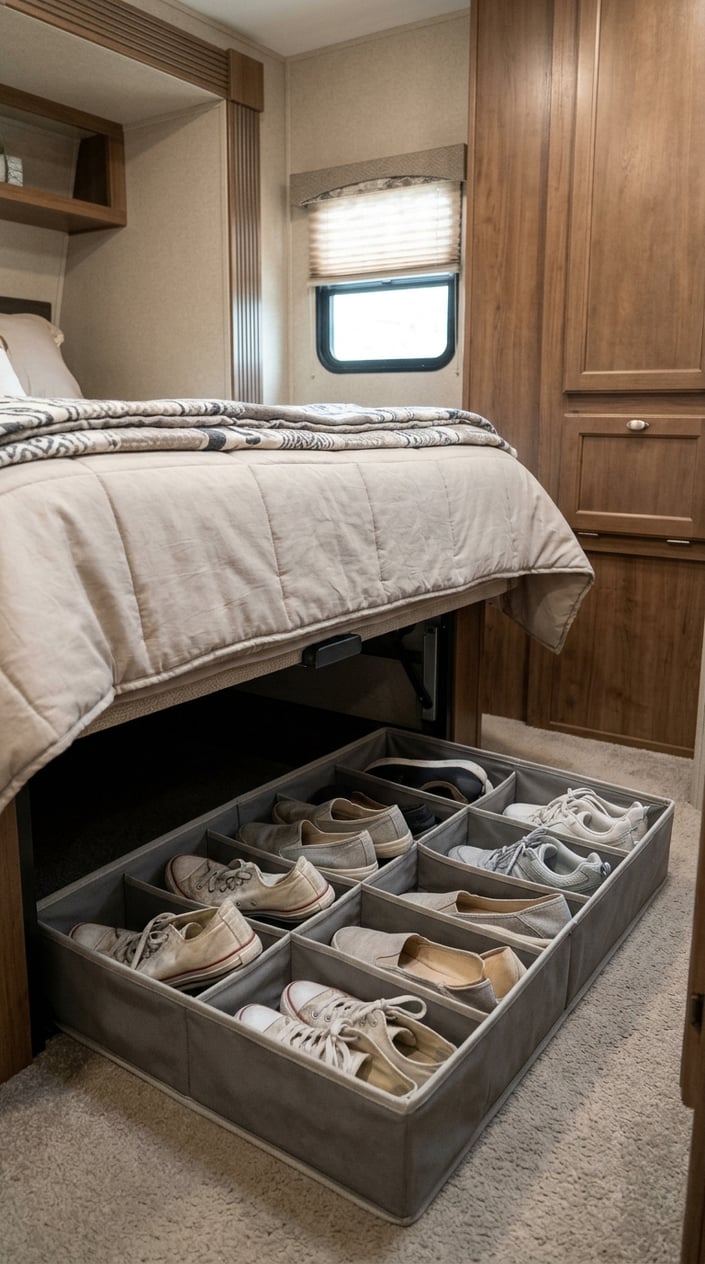
An under-bed shoe organizer keeps footwear together and clears floor space. Pick a low-profile style that fits the bed opening, with compartments sized for your shoes. A fabric organizer works well for flexible storage, while a lidded bin helps contain dust.
Store clean, dry shoes inside and keep pairs together. Secure the organizer before travel, especially if it sits on a smooth floor or has open compartments.
11) Add a Collapsible Laundry Hamper
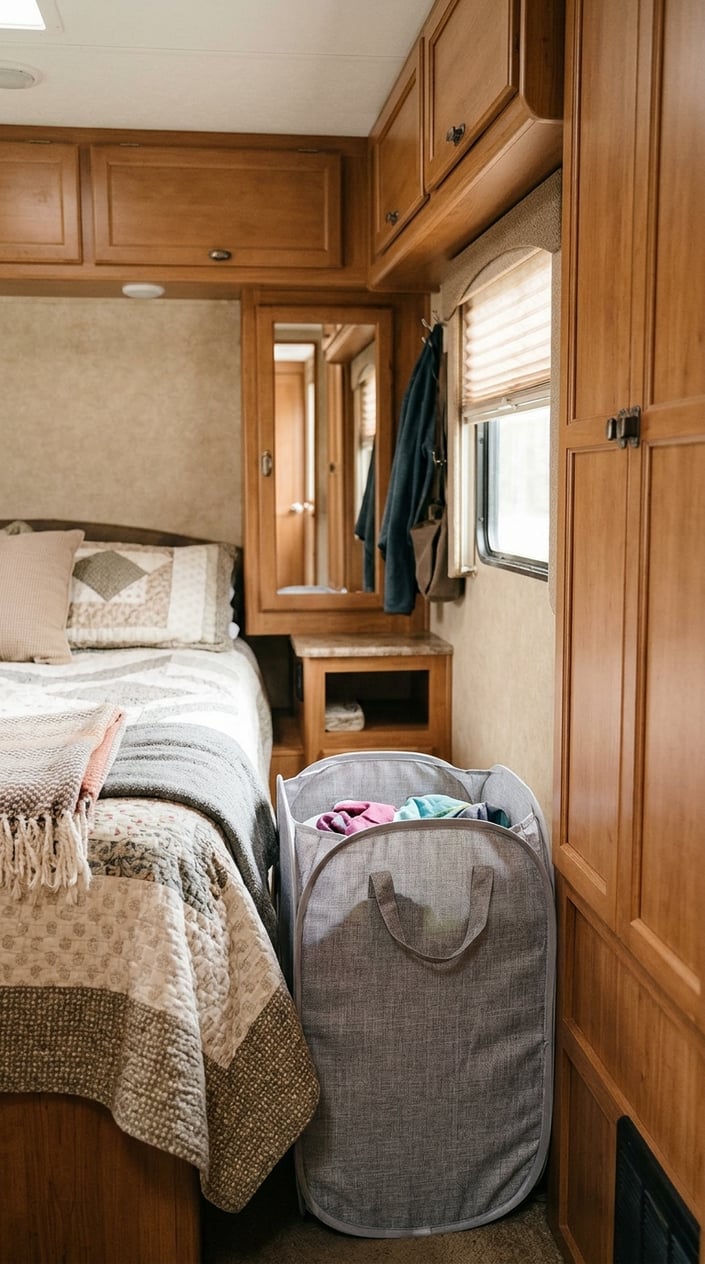
A collapsible laundry hamper holds dirty clothes and folds away when you need the floor space. Choose a lightweight mesh or fabric model with a stable frame. A narrow shape fits beside a bed or inside a closet more easily than a wide basket.
Keep the hamper away from the bed’s path and allow damp clothing to dry before placing it inside. Empty and collapse it before driving so it won’t tip or block access.
12) Use Soft-Sided Bins on High Closet Shelves
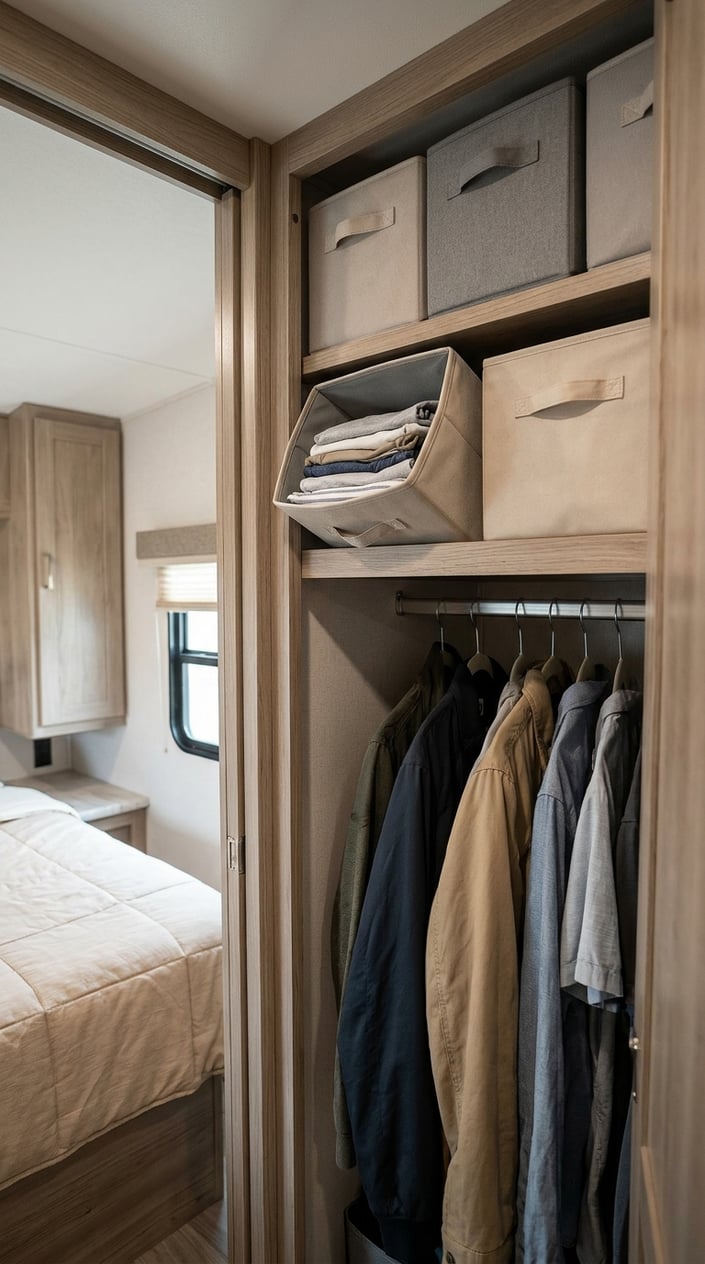
Soft-sided bins make high closet shelves easier to use for lightweight items you don’t need every day. Store extra pillowcases, seasonal accessories, or spare linens in bins with handles. Labels on the front help you identify contents from below.
Check the shelf’s load limit and keep heavier belongings lower in the closet. Choose bins that fit the shelf depth, and pull them down carefully when the RV is parked.
13) Fit a Tension Rod in the Closet for Extra Hanging Space
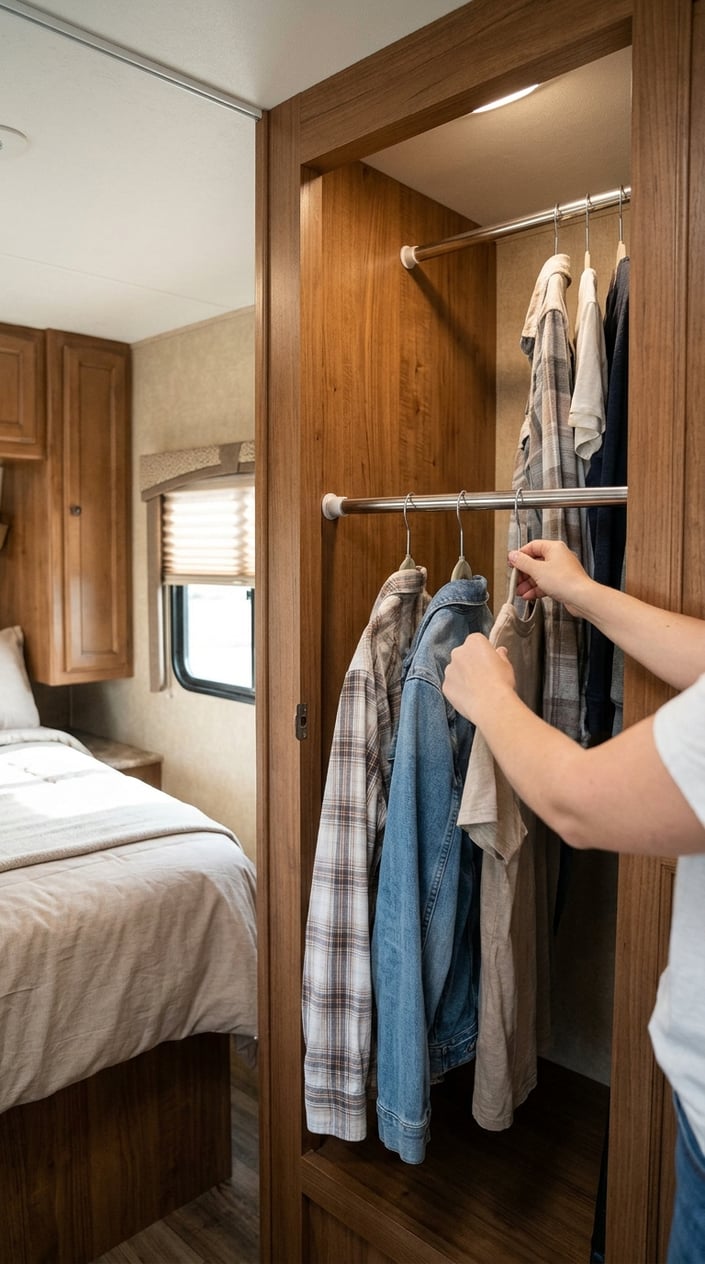
A tension rod adds a second hanging level for shorter clothing in a tall closet. Measure the interior width and choose a rod that fits snugly. Hang shirts or light jackets on the upper rod, leaving space below for shoes or a storage bin.
Test the rod while the RV is parked and keep its load light. Rubber shelf liner at the ends can improve grip and help protect the closet walls from marks.
14) Choose a Storage Bench for the Foot of the Bed
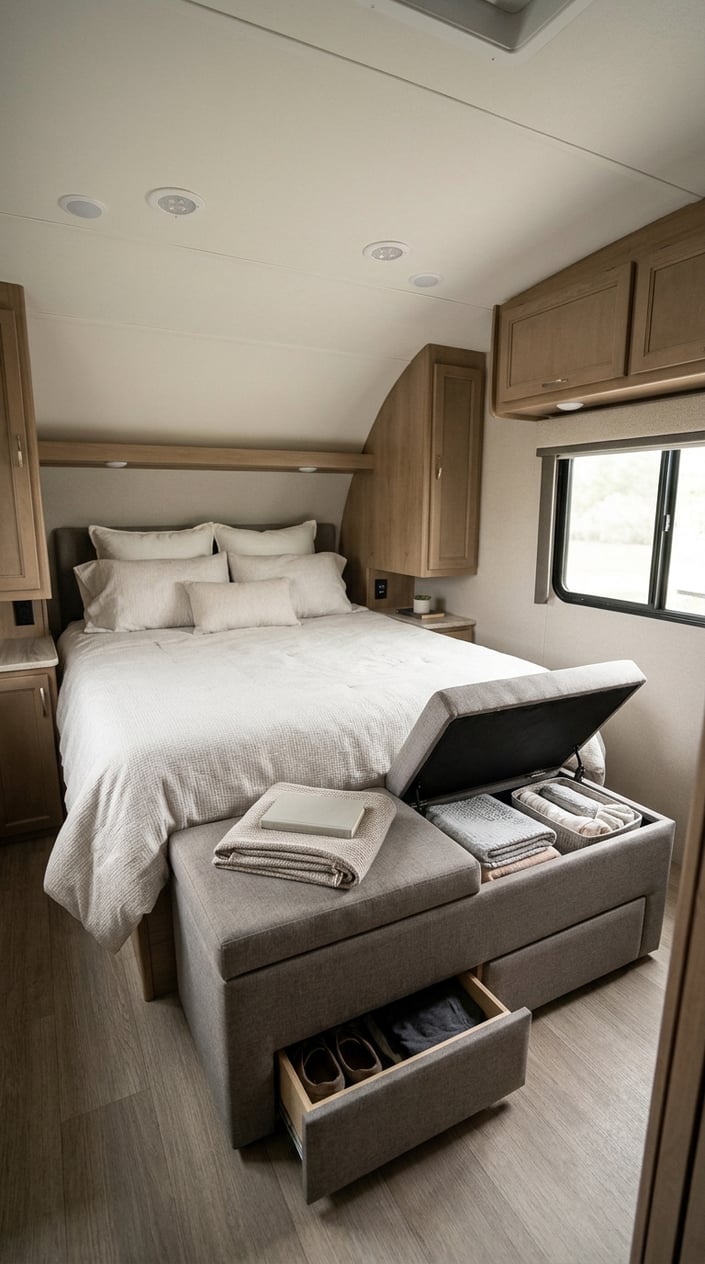
A storage bench gives you a place to sit and a concealed spot for extra bedroom items. Measure the bed-to-wall clearance before choosing one, and make sure the lid or drawers can open without blocking the walkway. Store spare blankets or pillows inside.
Choose a lightweight bench with a secure lid, and avoid loading it beyond its listed weight limit. Keep it anchored or stowed before driving so it cannot shift.
How to Keep Bedroom Storage Travel-Safe
Which items should be secured before driving?
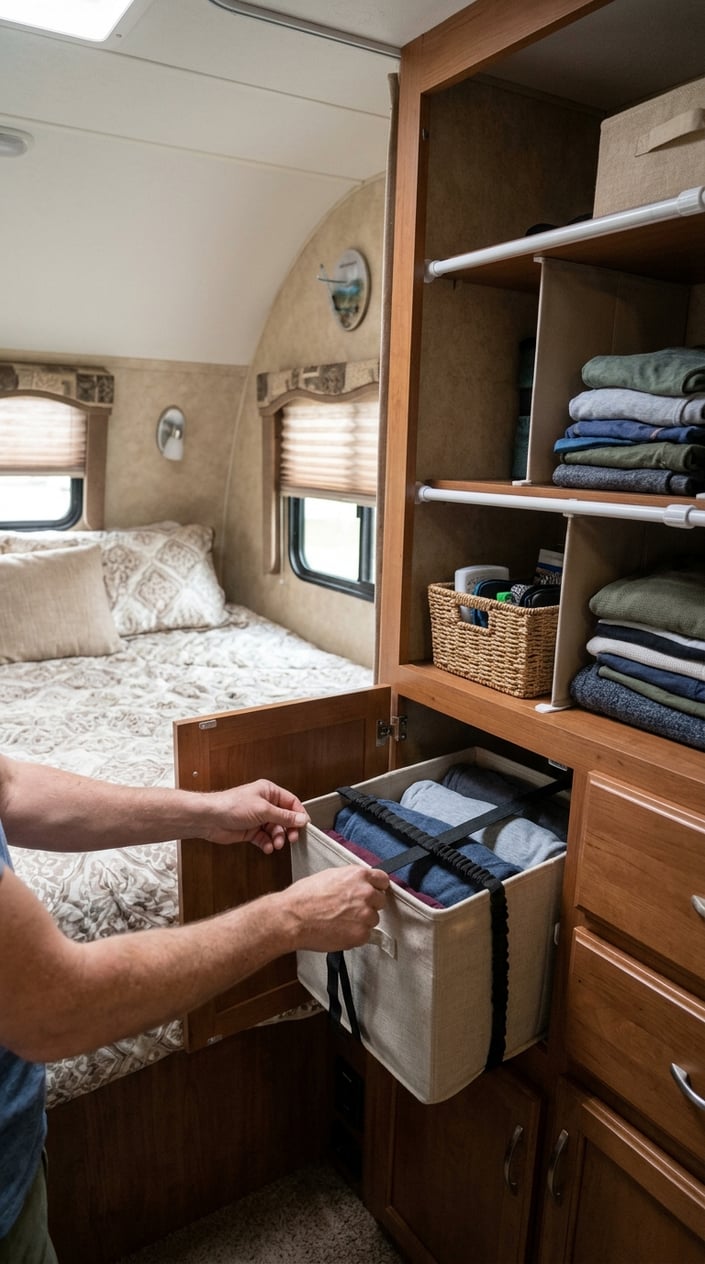
Secure anything that could fall, slide, spill, or block an exit. Close drawers and cabinet doors, latch storage bins, and move loose items off the bed and shelves. Stow heavy objects low and keep emergency gear easy to reach.
How can you prevent organizers from rattling or swinging?
Use non-slip shelf liner beneath bins and drawer dividers, and add removable adhesive strips to the lower edge of hanging organizers. Check that hooks and tension rods are firmly attached, then remove items that sway when you gently move them by hand.
What should stay within easy reach on travel days?
Keep your phone, water, medications, and flashlight in a secure spot you can reach while parked. Store travel documents and roadside essentials where they remain accessible without opening overhead cabinets or moving heavy bins.
How to Choose Bedroom Organizers for Your RV
How should you measure tight storage spaces?
Measure the opening’s width, height, and depth, then check for hinges, latches, and nearby doors that affect clearance. For under-bed storage, measure from the floor to the frame and account for any supports or plumbing. A cardboard template helps you check the fit before you buy.
Which materials are light and easy to clean?
Fabric, mesh, and thin plastic organizers keep added weight low and are easy to wipe or spot-clean. Look for smooth surfaces that won’t snag clothing, plus handles that make bins easier to pull from shelves. Let fabric organizers dry fully before storing them.
How can you avoid adding more weight and clutter?
Choose organizers that solve a specific storage problem and fit items you already own. Count the space they take up when empty, and favor collapsible designs for laundry or seasonal storage. Remove unused belongings before adding another bin, then secure every organizer for travel.