Imagine waking up to the sound of birds chirping, mountains outside your window, and a hot cup of coffee brewing just steps from your bed — all without ever checking into a hotel. That dream is exactly what millions of RV lovers enjoy every single year. But before hitting the open road, there’s one big question every new and experienced RVer needs to answer: what are the different RV types, and which one is right for me? Understanding rv types is the first step to finding the perfect home on wheels. Whether someone wants a tiny camper van or a massive luxury bus, there is an RV out there for every kind of adventure. [1][2]
Key Takeaways 📋
- There are two main RV families: motorized RVs (you drive them) and towable RVs (you pull them behind a vehicle).
- Motorized RVs come in three official classes: Class A, Class B, and Class C, each with its own size, price, and features.
- Towable RV types include fifth wheels, travel trailers, toy haulers, and more — no engine required.
- Newer categories like Class B+ and toy haulers give RVers even more choices to match their lifestyle.
- No special driver’s license is needed for standard RV classes , making it easier than ever to get started. [9]
The Two Big Families of RV Types
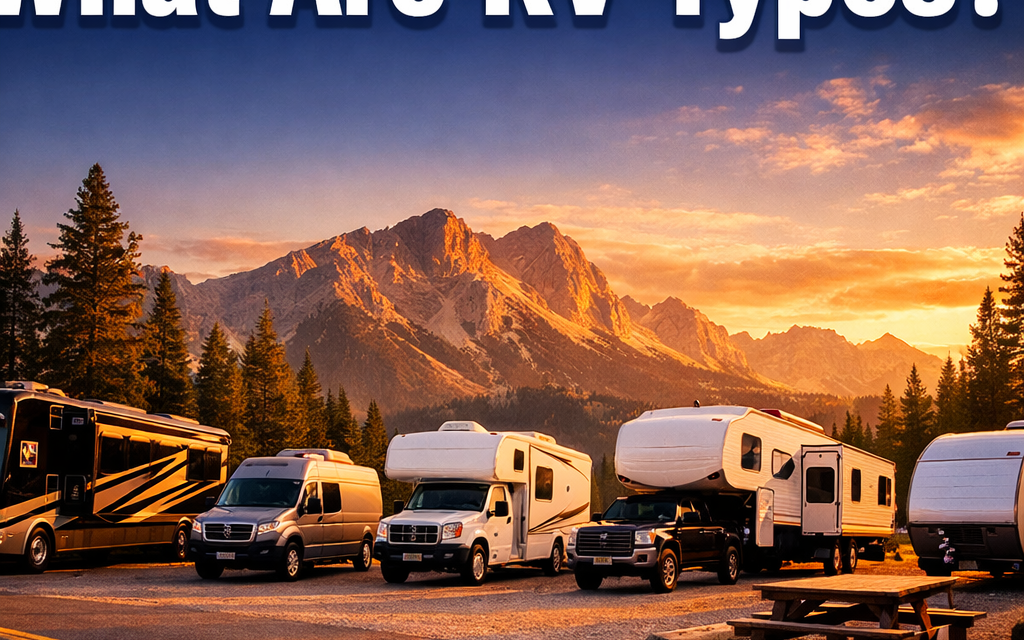
Before diving into the details, it helps to understand that all rv types fall into two main groups:
| RV Family | How It Works | Examples |
|---|---|---|
| 🚐 Motorized RVs | Has its own engine — you drive it | Class A, B, C motorhomes |
| 🚗 Towable RVs | No engine — pulled by another vehicle | Travel trailers, fifth wheels |
Think of it this way: motorized RVs are like a house and a car all in one. Towable RVs are like a house that needs a car to move it. Both options have lots of fans, and both have great benefits. [2][7]
💡 Pull Quote: “Choosing the right RV type is like choosing the right pair of shoes — it all depends on where you’re going and what you need along the way.”
Motorized RV Types: Class A, B, and C Explained
Motorized RVs are the ones that have their own engine built right in. There are three official classes of motorized RVs: Class A, Class B, and Class C. These classes are based on the vehicle’s chassis (that’s the frame and base of the vehicle) and how it is built. [2][5]
Class A Motorhomes: The Kings of the Road 👑
Class A motorhomes are the biggest and most impressive of all the rv types. They look just like a fancy bus or a coach. When one of these rolls into a campground, everyone notices!
Key Facts About Class A:
- 📏 Length: 24 to 45 feet long
- ⚖️ Weight: Up to 30,000 pounds
- 👨👩👧👦 Passengers: Up to 8 people
- 💰 Price: $50,000 to $200,000+
- ⛽ Engine: Gas or diesel options [1][3]
Class A motorhomes are built on a special heavy-duty chassis. They usually have a flat front, just like a city bus. Inside, they feel like a real home. Many have:
- Full kitchens with ovens and dishwashers
- Separate bedrooms with big beds
- Washer and dryer units
- Multiple TVs and entertainment systems
- Slide-outs that push the walls outward to make more room
Who is Class A best for?
Class A motorhomes are perfect for people who want maximum comfort and space. Full-time RVers love them. Families who take long trips love them too. They are also great for people who want to feel like they are in a luxury hotel — but on wheels!
Things to Think About:
- They use more fuel because they are so big
- Parking can be tricky in small campgrounds or city streets
- They cost more to buy and maintain
- Most Class A models run on diesel engines, especially the larger ones [3]
Class B Motorhomes: The Camper Van 🚐
Class B motorhomes are the smallest of the three official rv types. They are often called camper vans because they look just like a regular cargo van — but with a living space built inside!
Key Facts About Class B:
- 📏 Length: 18 to 24 feet long
- ⚖️ Weight: 6,000 to 11,000 pounds
- 👨👩👧👦 Passengers: Up to 4 people
- 💰 Price: $50,000 to $200,000+
- ⛽ Engine: Gas or diesel options [2][3]
Even though Class B motorhomes are small, they are very clever. Manufacturers pack a lot of features into a tiny space. Many have:
- A small kitchenette with a mini fridge and sink
- A fold-out bed or convertible sleeping area
- A compact bathroom (sometimes a wet bath where the shower and toilet share space)
- Lots of storage cubbies
Who is Class B best for?
Class B motorhomes are perfect for solo travelers or couples who want to move around easily. They fit in regular parking spots. They get better fuel mileage than bigger RVs. They are also great for people who love stealth camping — parking in city areas without looking like a big RV.
💡 Fun Fact: Class B motorhomes can be some of the most expensive RVs per square foot because of all the smart engineering packed into a small space! [2]
Things to Think About:
- Limited living space — not great for families with kids
- Less storage room than bigger RVs
- Some models can cost as much as a Class A
Class C Motorhomes: The Family Favorite 🏠
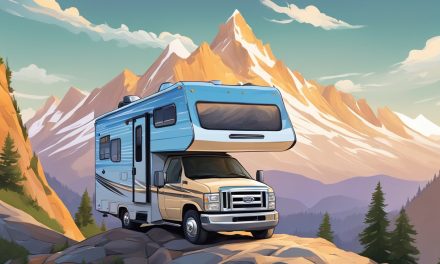
Class C motorhomes are the “middle child” of the motorized rv types — and they might just be the most popular choice for families! They are easy to spot because of their distinctive raised area over the cab (that’s the driver’s area). That raised section is usually used as a sleeping space or extra storage. [4]
Key Facts About Class C:
- 📏 Length: 20 to 31 feet (some go up to 41 feet)
- ⚖️ Weight: Varies by size
- 👨👩👧👦 Passengers: 1 to 8 people
- 💰 Price: $12,000 to $60,000
- ⛽ Engine: Gas or diesel options [2][4]
Class C motorhomes are built on a truck or van chassis. That means they drive more like a regular vehicle than a Class A bus. Many people find them easier to handle. Inside, they offer:
- A full kitchen
- A real bathroom with shower
- Sleeping for the whole family (including that cool cab-over bunk!)
- Slide-outs on larger models
- Plenty of storage
Who is Class C best for?
Class C motorhomes are a fantastic choice for families. They are big enough for a week-long road trip but still manageable for a quick weekend getaway. First-time RV drivers often feel more comfortable in a Class C than in a giant Class A. [4]
Things to Think About:
- Not as spacious as Class A
- Not as easy to park as Class B
- The cab-over bunk can be hard to climb into for older adults
Quick Comparison: The Three Motorized RV Types
| Feature | Class A | Class B | Class C |
|---|---|---|---|
| Size | Largest | Smallest | Medium |
| Price Range | $50K–$200K+ | $50K–$200K+ | $12K–$60K |
| Best For | Full-timers, luxury | Couples, solo | Families, beginners |
| Fuel Economy | Lowest | Best | Medium |
| Ease of Driving | Harder | Easiest | Easy-Medium |
| Passengers | Up to 8 | Up to 4 | Up to 8 |
[1][2][3][4]
Class B+: The Hybrid Option 🔀
There is a newer category that sits between Class B and Class C. It is called Class B+ (or Class B Plus). This is not an official class like the others, but many manufacturers and RV dealers use this term. [3]
Key Facts About Class B+:
- 📏 Length: 18 to 24 feet
- ⚖️ Weight: 3,500 to 11,000 pounds
- More space than a Class B, but smaller than a Class C
- Offers many of the same features as both [3]
Class B+ motorhomes are great for people who want more room than a camper van but do not want to drive something as big as a Class C. Think of it as the “just right” option for some RVers!
What About Conversion Buses and Vans?
Some people convert regular buses or cargo vans into living spaces. These are called skoolies (converted school buses) or van conversions. They are motorized, but they do not fit into the Class A, B, or C system. They are their own special category. [3]
These builds are often custom-made by the owner. They can be incredibly creative and unique. However, they do not come with the same warranties or standards as factory-built RVs.
Towable RV Types: No Engine Needed! 🚗
Now let’s talk about the other big family of rv types — towable RVs. These do not have their own engine. Instead, they are pulled behind a truck, SUV, or other tow vehicle. [2][7]
Towable RVs are very popular because:
- They are often less expensive than motorized RVs
- You can unhitch and drive your tow vehicle separately
- They come in many sizes to fit different needs
- They can be easier to maintain (no engine to worry about)
Travel Trailers: The Classic Choice 🏕️
Travel trailers are one of the most popular rv types in the world. They are pulled behind a vehicle using a standard ball hitch — the same kind used for pulling boats.
Key Facts About Travel Trailers:
- 📏 Length: 10 to 40+ feet
- 💰 Price: From under $10,000 to $80,000+
- 👨👩👧👦 Sleeps: 2 to 10+ people
- Tow vehicle: Needs a truck or SUV with enough tow capacity [7]
Travel trailers come in all shapes and sizes. There are tiny ones perfect for a couple and huge ones with multiple slide-outs for a big family. Features can include:
- Full kitchens
- Real bathrooms
- Bunk beds for kids
- Living rooms with sofas and TVs
- Outdoor kitchens
Who is a travel trailer best for?
Travel trailers are great for families, couples, and groups who already own a capable tow vehicle. They offer a lot of space for the money. When you arrive at camp, you can unhitch and drive your truck into town — leaving the trailer behind!
Fifth Wheel Trailers: The Heavy Hitters 💪
Fifth wheel trailers are the big siblings of travel trailers. They connect to the tow vehicle using a special kingpin hitch that sits in the bed of a pickup truck. This gives them extra stability on the road. [2][7]
Key Facts About Fifth Wheels:
- 📏 Length: 22 to 40+ feet
- 💰 Price: $30,000 to $150,000+
- 👨👩👧👦 Sleeps: 2 to 10+ people
- Tow vehicle: Requires a full-size pickup truck
Fifth wheels are known for their bi-level floor plan. The front section is raised up (that’s where it connects to the truck bed). This raised section often has the master bedroom, giving it a loft-like feel.
Inside, fifth wheels can feel like a real apartment:
- Separate bedroom with a walk-around bed
- Full kitchen with a residential refrigerator
- Spacious living room
- Full bathroom (sometimes two!)
- Multiple slide-outs
Who is a fifth wheel best for?
Fifth wheels are popular with full-time RVers and people who want a lot of living space without buying a motorized RV. They are also great for people who already own a big pickup truck.
💡 Pull Quote: “Fifth wheels offer some of the most spacious and home-like living spaces of all the towable RV types — perfect for those who want to live large on the road.”
Toy Haulers: Adventure on Wheels 🏍️
Toy haulers might be the most exciting of all the rv types for outdoor adventure lovers! A toy hauler is a special kind of RV that has a dedicated garage space in the rear (or sometimes the side). This garage has a ramp door that folds down so you can load your “toys” inside. [3]
Toys that people haul include:
- 🏍️ Motorcycles
- 🛻 ATVs and UTVs
- 🚣 Kayaks and canoes
- 🚲 Dirt bikes and mountain bikes
- 🛹 Snowmobiles
Key Facts About Toy Haulers:
- Available as fifth wheels, travel trailers, OR motorhomes
- The garage area often converts into extra sleeping space at night
- Great for people who love extreme outdoor sports
- Price varies widely based on size and type [3]
Toy haulers are called the most versatile RV category because they come in so many forms. Whether someone wants a towable or motorized version, there is a toy hauler for them.
Would you like to save this article?
Who is a toy hauler best for?
Toy haulers are perfect for adventure seekers who cannot leave their gear behind. Motocross riders, ATV enthusiasts, and kayakers all love toy haulers. The garage space also works great for families who need extra sleeping room.
Pop-Up Campers (Tent Trailers): Light and Affordable ⛺
Pop-up campers (also called tent trailers or folding campers) are the lightest and most affordable of all the towable rv types. They fold down flat for towing and then “pop up” to reveal canvas walls and sleeping areas when parked.
Key Facts About Pop-Up Campers:
- 📏 Length when towing: Very compact (often under 10 feet)
- 💰 Price: $5,000 to $25,000
- 👨👩👧👦 Sleeps: 4 to 8 people
- Tow vehicle: Can be pulled by many cars and smaller SUVs
Pop-up campers are great for people who want more comfort than a tent but do not want to spend a lot of money. They are easy to store in a garage or driveway when not in use.
Things to Think About:
- Canvas walls offer less insulation than hard-sided RVs
- Setup takes more time than other RV types
- Less weather protection in very cold or hot climates
Truck Campers: Small but Mighty 🛻
A truck camper is a unit that slides right into the bed of a pickup truck. It is not a trailer — it becomes part of the truck itself. This makes it one of the most off-road capable of all rv types.
Key Facts About Truck Campers:
- 💰 Price: $10,000 to $60,000+
- 👨👩👧👦 Sleeps: 2 to 4 people
- Vehicle needed: Full-size pickup truck
- Great for: Remote, off-road camping
Truck campers are loved by hunters, fishermen, and people who want to go deep into the backcountry where bigger RVs cannot reach.
Mini/Micro Trailers: Tiny and Trendy 🥚
Mini trailers (sometimes called teardrop trailers or micro campers) are the smallest of the towable rv types. They are shaped like a teardrop or a small egg. They are super light and can be pulled by almost any car.
Key Facts About Mini Trailers:
- 📏 Length: 4 to 12 feet
- 💰 Price: $5,000 to $30,000
- 👨👩👧👦 Sleeps: 1 to 2 people
- Tow vehicle: Almost any car or small SUV
Mini trailers are perfect for minimalist campers who want to travel light. They usually have a sleeping area and a small kitchenette in the back. They are very trendy right now among young travelers!
How to Choose the Right RV Type for You 🤔
With so many rv types to choose from, picking the right one can feel overwhelming. Here is a simple guide to help narrow it down!
Step 1: Think About Who Is Going
| Group Size | Best RV Types |
|---|---|
| Solo traveler | Class B, mini trailer, truck camper |
| Couple | Class B, Class B+, small travel trailer |
| Family with kids | Class C, large travel trailer, fifth wheel |
| Large group | Class A, large fifth wheel, toy hauler |
Step 2: Think About Your Budget
| Budget | Best RV Types |
|---|---|
| Under $15,000 | Pop-up camper, mini trailer, used travel trailer |
| $15,000–$50,000 | Travel trailer, Class C, small fifth wheel |
| $50,000–$100,000 | Class B, Class A, large fifth wheel, toy hauler |
| $100,000+ | Luxury Class A, Class B, large fifth wheel |
Step 3: Think About How You Will Use It
Ask these questions:
- 🏕️ Weekend trips or full-time living? Full-timers need more space — Class A or large fifth wheel.
- 🛣️ Lots of driving or staying put? Lots of driving = smaller and more fuel-efficient.
- 🏔️ Off-road adventures? Truck camper or off-road travel trailer.
- 🏍️ Bringing toys like ATVs? Toy hauler is the answer!
- 🅿️ Parking in tight spots? Class B or small travel trailer.
Step 4: Think About Driving Comfort
Good news for new RVers! No special driver’s license is required for standard Class A, B, or C motorhomes. [9] However, bigger RVs do take more practice to drive. Here is a quick guide:
| RV Type | Driving Difficulty |
|---|---|
| Class B | ⭐ Easy |
| Class C | ⭐⭐ Moderate |
| Class A | ⭐⭐⭐ More challenging |
| Travel trailer | ⭐⭐ Moderate (backing up takes practice) |
| Fifth wheel | ⭐⭐⭐ More challenging |
Step 5: Think About Campground Access
Some campgrounds have length limits. Very large Class A motorhomes or long fifth wheels may not fit in every site. Smaller rv types like Class B or mini trailers can go almost anywhere — including some national park sites that restrict bigger rigs.
What’s New in RV Types? 🆕
The RV world keeps getting better every year. motorized RVs are more impressive than ever. New models are coming with exciting features that make camping off the grid easier and more comfortable. [8]
Here are some of the biggest trends in rv types:
🔋 Expanded Off-Grid Power Systems
New RVs are coming with bigger battery banks and improved solar panel systems. This means RVers can camp in remote areas without needing to plug into shore power. Some models can run for days on battery power alone. [8]
📱 Smart Technology Integration
Many new rv types now include smart home technology. Owners can control lights, temperature, locks, and even the awning from a smartphone app. Some RVs even have voice control built in!
🛋️ Modern Interior Design
Gone are the days of dark wood paneling and outdated decor. New RVs feature modern, light-filled interiors with residential-style furniture, quartz countertops, and stylish finishes. [8]
♻️ Eco-Friendly Features
More RV makers are adding eco-friendly options like:
- Solar-ready roof panels
- Energy-efficient appliances
- Water-saving fixtures
- Composting toilet options
🛣️ Better Towing Technology
New towable rv types are getting smarter too. Advanced trailer sway control systems and brake controllers make towing safer and easier than ever before.
Common RV Types Questions Answered ❓
Do I need a special license to drive an RV?
In 2026, no special license is required for standard Class A, B, or C motorhomes in most U.S. states. A regular driver’s license is enough. However, some very large commercial-style RVs over a certain weight may have different rules depending on the state. Always check local regulations before hitting the road. [9]
What is the difference between a motorhome and a camper?
A motorhome is a motorized RV — it has its own engine. A camper is usually a towable unit (like a travel trailer or truck camper) that needs another vehicle to move it. However, many people use these words interchangeably in everyday conversation.
Which RV type is best for beginners?
For beginners who want a motorized RV, Class C is often recommended. It drives more like a regular vehicle and offers plenty of space. For beginners who want a towable, a small to mid-size travel trailer is a great starting point. [4][7]
Can one person drive all RV types?
Yes! All the standard rv types can be driven or towed by one person. Some larger Class A motorhomes or long fifth wheels take more practice, but with time and patience, solo drivers can handle them.
What is the most affordable RV type?
Pop-up campers and mini trailers are the most affordable new RV types, often starting under $10,000. Used travel trailers can also be found for very low prices. [7]
Are diesel or gas RVs better?
Both have benefits. Diesel engines are typically found in larger Class A and some Class B models. They offer better fuel efficiency and more towing power. Gas engines are more common and often cheaper to maintain. The best choice depends on how much driving is planned and the budget available. [3]
A Quick Look at All the RV Types 🗺️
Here is a handy summary of all the rv types covered in this guide:
Motorized RV Types:
| Type | Size | Best For | Price Range |
|---|---|---|---|
| Class A | 24–45 ft | Full-timers, luxury | $50K–$200K+ |
| Class B | 18–24 ft | Couples, solo | $50K–$200K+ |
| Class B+ | 18–24 ft | Couples, small families | Varies |
| Class C | 20–41 ft | Families, beginners | $12K–$60K |
| Conversion Bus/Van | Varies | DIY enthusiasts | Varies |
Towable RV Types:
| Type | Size | Best For | Price Range |
|---|---|---|---|
| Travel Trailer | 10–40+ ft | Families, couples | $10K–$80K+ |
| Fifth Wheel | 22–40+ ft | Full-timers, families | $30K–$150K+ |
| Toy Hauler | Varies | Adventure lovers | Varies |
| Pop-Up Camper | Compact | Budget campers | $5K–$25K |
| Truck Camper | Compact | Off-road lovers | $10K–$60K+ |
| Mini Trailer | 4–12 ft | Minimalists, couples | $5K–$30K |
[1][2][3][4][7]
Conclusion: Find Your Perfect RV Type and Hit the Road! 🚐🌄
Understanding rv types is the key to finding the perfect match for any camping style, budget, and travel dream. From the massive luxury of a Class A motorhome to the nimble freedom of a Class B camper van, from the family-friendly Class C to the adventure-ready toy hauler — there is truly an RV for everyone.
Here are the actionable next steps to take right now:
- ✅ Decide on motorized vs. towable — Do you want to drive your home or tow it?
- ✅ Set a budget — Know how much to spend before shopping.
- ✅ Think about group size — How many people will be traveling regularly?
- ✅ Visit a dealership or RV show — Seeing rv types in person makes a huge difference.
- ✅ Try before you buy — Consider renting different rv types before purchasing to find the best fit.
- ✅ Join an RV community — Connect with other RV lovers online or at campgrounds for real-world advice.
- ✅ Research 2026 models — New features like off-grid power and smart technology make 2026 a great year to buy. [8]
The open road is calling. With the right RV type, every trip becomes an unforgettable adventure. Happy camping! 🏕️🌟
References
[1] Rv Classes Explained – https://www.renogy.com/blogs/off-grid-power/rv-classes-explained
[2] Rv Classes – https://www.rvezy.com/blog/rv-classes
[3] Types Of Rvs – https://www.lippert.com/blog/types-of-rvs
[4] Big Guide To Rv Classes – https://www.outdoorsy.com/blog/big-guide-to-rv-classes
[5] Rv Class Chart – https://www.jayco.com/blog/RV-Class-Chart/
[6] Rv Class Guide – https://thevansmith.com/blogs/beginners-guide-to-the-vanlife/rv-class-guide
[7] Rv Classes Guide – https://koa.com/blog/rv-classes-guide/
[8] Whats New In Motorized Rvs For 2026 – https://explorerrvclub.com/blog/whats-new-in-motorized-rvs-for-2026/
[9] New Rv Regulations – https://rvshare.com/blog/new-rv-regulations/
[10] Watch – https://www.youtube.com/watch?v=SmecLMCnC24