Did you know that most RVs are quietly designed to fall apart? That’s right — the average stick-built travel trailer lasts only 7 to 12 years before the walls rot, the floors buckle, and your “dream camper” becomes a very expensive lawn decoration.
But here’s the secret the big RV manufacturers don’t want you to figure out: there are three specific types of RVs built to last 20, 30, and even 50 years. These aren’t mystery machines from another planet. They’re built right here in North America using smarter materials and better methods.
The channel RV Exposed dug into the data and broke down exactly which construction types separate the long-haul legends from the disposable boxes. You’re about to learn what mechanics themselves drive — and why smart RV buyers are changing the way they shop forever.
Understanding how an RV is built is more important than how many fancy features it has. A gorgeous slide-out kitchen means nothing if the walls are soaking up water like a sponge by year five.
So buckle up — this is the guide that could save you tens of thousands of dollars over your RV lifetime.
Would you like to save this article?
🥚 #1 — The Molded Fiberglass Shell: The “Egg” That Never Breaks
Brands: Scamp, Casita, Escape, Bigfoot, Burrow
You’ve probably seen those cute little egg-shaped trailers at campgrounds and wondered, “What is that thing?” That little egg is actually one of the smartest engineering decisions you can make when buying an RV.
Here’s how it works: The upper half of the trailer is molded as one single piece of fiberglass. The lower half is molded as one single piece too. They bond together at one horizontal seam using marine-grade adhesive.
That’s it. No corners. No wall-to-roof joints. No 500 different places for water to sneak in.
A normal stick-built trailer has hundreds of potential water leak spots — every seam, every window frame, every vent, every door edge. Those spots are sealed with caulk or tape that breaks down in just 3 to 5 years from sun and temperature changes.
Once the seal breaks, water gets in. Wood rots. Walls fall apart. Game over.
💡 Real-World Proof
A 45-year-old Scamp trailer only needs a new refrigerator and new upholstery.
A 7-year-old Keystone often needs new walls, new floors, and new framing because the structure rotted from water damage.
That says everything you need to know.
📊 Cost Comparison: Fiberglass Egg vs. Stick-Built Over 20 Years
| Scamp 16 (Fiberglass) | Stick-Built Trailer | |
|---|---|---|
| Initial Purchase Price | ~$24,000 | ~$18,000 |
| Replacement at Year 8 | ❌ Not needed | $22,000 |
| Replacement at Year 16 | ❌ Not needed | $28,000 |
| Maintenance & Appliances | ~$3,000 | Included in replacements |
| TOTAL COST (20 Years) | $27,000 | $68,000 |
| Money Saved | 💰 $41,000 savings | — |
Source: RV Exposed YouTube Channel
📌 Supporting Facts
- The average travel trailer lifespan is 15 years, but fiberglass trailers from the 1970s and 1980s are still actively camping today. (Kirkland RV Sales)
- Molded fiberglass eliminates 90% of all leak points through geometry alone — water can’t leak through what doesn’t exist. (RV Exposed)
- Fiberglass actually gets stronger over time as the resin continues curing for years after the trailer is built. (RV Exposed)
- Scamp has been building fiberglass trailers since 1972 — and many of those original trailers are still on the road today. (Scamp Trailers)
🤣 Buying a flimsy stick-built trailer when a fiberglass egg exists is like choosing a sandcastle over a concrete house and then acting surprised when it melts in the rain. You get what you pay for — unless you do the math first.
🔩 #2 — The Aluminum Riveted Shell: The Airstream Method Borrowed Straight From Airplane Engineering
Brands: Airstream (pre-Thor), Living Vehicle
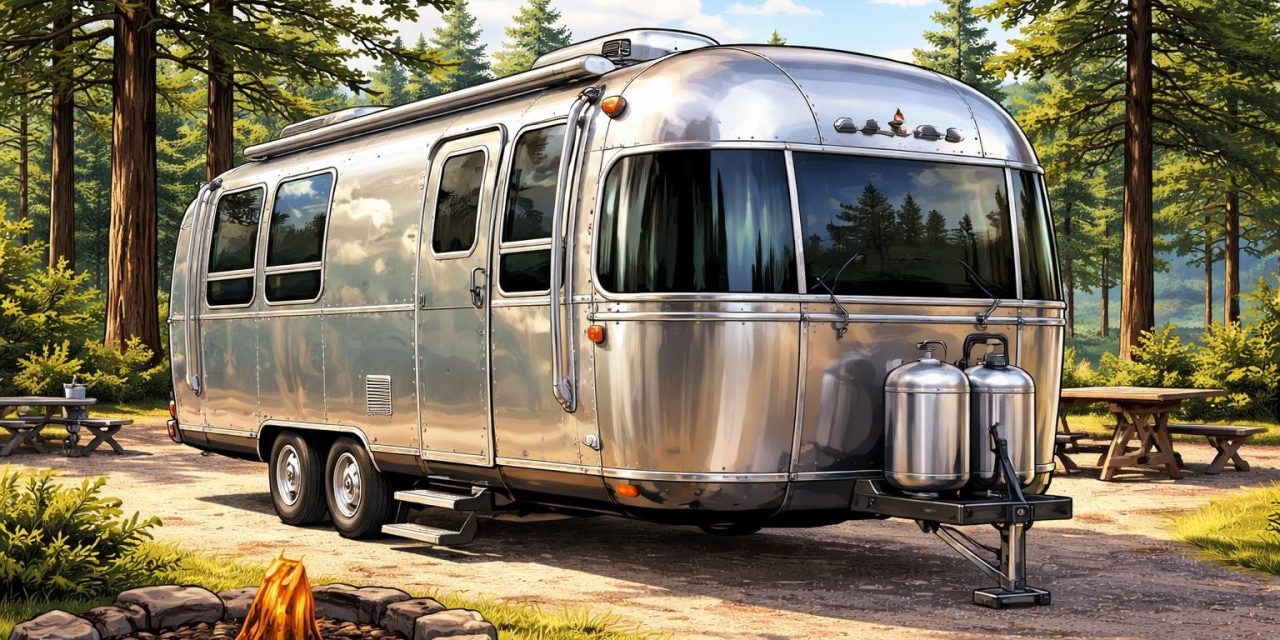
When you see a shiny silver bullet-shaped trailer rolling down the highway, you’re looking at the only mass-produced RV with a documented 50-year lifespan. The Airstream’s secret weapon is its aluminum riveted construction — a method borrowed directly from airplane engineering.
Here’s what makes it special: there is zero wood in the exterior shell. The frame is aluminum. The skin is aluminum. The roof is aluminum. Wood is the enemy of any RV because it absorbs moisture, rots, and falls apart. Airstream simply removed wood from the equation.
Each rivet isn’t just holding a panel on — it’s actually a structural fastener that makes the whole shell stronger. This is called monocoque construction, and it means the outer skin shares the load with the frame. Road bumps don’t destroy it. They just bounce off.
⚡ Airstream By the Numbers
| Feature | Airstream | Typical Box Trailer |
|---|---|---|
| Hours to Build | 350+ hours | ~50 hours |
| Frame Material | Welded aluminum | Wood / steel |
| Documented Lifespan | 50+ years | 7–12 years |
| Leak Points in Exterior | Minimal (rivets only) | Hundreds |
| Rivet Repair Cost | $5 + 10 min of labor | N/A |
| Wall Delamination Repair | N/A | $8,000–$15,000 per wall |
Source: Airstream.com, RV Exposed
📌 Supporting Facts
- Each Airstream takes over 350 hours to build, compared to fewer than 50 hours for a typical box-style trailer. (Airstream.com)
- Airstream trailers from the 1960s are still being passed down through families as multi-generational assets. (RV Exposed)
- A leaking rivet on an Airstream costs just $5 to fix. A delaminated wall on a stick-built trailer costs $8,000 to $15,000 per wall to repair. (RV Exposed)
- Thor Industries acquired Airstream, and the RV community has widely noted a decline in quality since the acquisition. If you’re buying, look for pre-Thor models for the best long-term value. (iRV2 Forums, Reddit)
⚠️ A Quick Note on Thor Industries
Thor Industries purchased Airstream, and the RV community has been very vocal about the changes. Pre-Thor Airstreams (generally before 2016–2018) are widely regarded as the gold standard.
A 2015 Airstream, according to the video, will outlast a brand-new 2025 Grand Design or Keystone by 20 years. The aluminum doesn’t care who owns the company. Physics always wins.
🤣 The Airstream has been around since the 1930s. Your current favorite stick-built trailer brand will be in a landfill before your kids finish middle school. If that doesn’t make you rethink your next RV purchase, maybe you just enjoy buying the same trailer three times.
🏆 #3 — Composite Panel + Welded Aluminum Frame: The Engineering Masterpiece
Brands: Oliver Travel Trailers, Escape Trailers
This is the top tier of RV construction. It combines the best of both worlds: a fully welded aluminum frame (no bolts that loosen over time) with fiberglass composite panels bonded to foam insulation using structural epoxy adhesive. The result is an RV that functions more like a tool than a disposable product.
Here’s why welded frames beat bolted frames: bolts eventually back out from road vibration. Joints develop wiggle room. The trailer starts flexing. Cracks appear. With a welded frame, the joint is permanent — once welded, the whole thing becomes one single continuous structure.
The composite panels are bonded using a chemical bond, not just glue. The adhesive becomes part of the material itself through a process called cross-linking. You literally cannot separate the panel skin from its foam core without destroying both. Delamination — the #1 killer of stick-built trailers — simply does not exist in this system.
🛠️ Oliver vs. The Mainstream Competition
| Category | Oliver Travel Trailer | Average Mainstream Brand |
|---|---|---|
| Frame Type | Fully welded aluminum | Bolted steel / wood |
| Wall System | Composite panel + epoxy bond | Laminated wood framing |
| Delamination Risk | ❌ Nearly zero | ✅ Very common |
| Avg. Repair Cost (10 yrs) | $400–$800 | Thousands (walls, floors, frames) |
| Wait Time (New) | 12–18 months | Usually in stock |
| Expected Lifespan | 30+ years | 7–12 years |
| Wall Thickness | Double vs. mainstream | Standard |
Source: RV Exposed, Oliver Travel Trailers, Expedition Portal
📌 Supporting Facts
- Oliver uses robotically controlled welding for consistent strength — every single weld meets exact standards. (RV Exposed)
- The frame wall thickness in Oliver composite builds is double what you’ll find in Keystone or Forest River products. (RV Exposed)
- Owner data shows composite panel trailers average just $400–$800 in repair costs over the first 10 years, almost entirely from appliance replacements — not structural problems. (RV Exposed)
- A 15-year-old Oliver looks and functions like a 3-year-old Keystone — except the Oliver is paid off and the Keystone is still underwater on financing. (RV Exposed)
🤣 Oliver has a 12 to 18-month waiting list because they build each trailer correctly — slowly and on purpose. People are literally waiting over a year for a trailer they haven’t even seen yet. Meanwhile, stick-built brands crank out 50 to 100 units per day. Quality or quantity? Your wallet already knows the right answer.
🛒 #4 — The Secret Advantage of Buying USED From These Brands
This is the move most RV buyers never think about — and it changes everything.
Here’s a mind-blowing fact: a 20-year-old Scamp is a better investment than a 2-year-old Forest River. That’s not an opinion — it’s just how fiberglass and aluminum age compared to wood and laminate panels.
When you buy a used molded fiberglass, aluminum riveted, or composite panel trailer, you’re getting a structure that does not decay with age. The fiberglass is just as strong at 20 years as it was on day one. You simply cannot say the same about wood framing and glued laminate walls.
Age actually becomes an advantage with quality-built RVs. The resin in fiberglass continues curing for years after production, making older shells stiffer and more durable than when they were brand new. Meanwhile, that shiny new stick-built trailer is already starting its countdown clock the moment it leaves the lot.
📊 New Stick-Built vs. Used Quality Build — Which Is Smarter?
| New Stick-Built Trailer | Used Quality-Built Trailer (10–15 yrs old) | |
|---|---|---|
| Purchase Price | $18,000–$50,000 | $8,000–$20,000 |
| Structural Integrity | Declining by Year 5 | Still solid — designed to last |
| Water Intrusion Risk | High within 3–5 years | Already proven leak-free |
| Long-Term Value | Drops fast | Holds value well |
| Best Pick? | ❌ | ✅ |
📌 Supporting Facts
- A used Scamp, Casita, or Escape from the early 2000s regularly sells for close to its original purchase price because demand stays high and supply stays low. (Fiberglass RV Forums)
- Fiberglass is as strong at 20 years as it was at 2 years — a claim that simply cannot be made about any wood-framed trailer. (RV Exposed)
- According to industry data, 50% of RV buyers keep their first RV less than 2 years — largely because they bought cheap and got burned fast. (Truck Camper Adventure)
🤣 People wait in line for years to buy vintage Airstreams, and grandparents pass down their Scamps to their grandkids like family heirlooms. Nobody has ever said, “Hey, I left you my 2007 Keystone in my will.” Nobody. Ever.
🏷️ #5 — Brand Spotlight: Who’s Actually Building These Long-Lasting RVs?
Not every manufacturer on this list is easy to find — and that’s exactly the point.
The brands making the good stuff are mostly small, independent companies. They don’t have massive dealer networks. They don’t run Super Bowl commercials. They build slowly, carefully, and with waiting lists — because they’re doing it right.
Here’s a breakdown of the key players in each category so you know exactly who to look for when you start shopping.
🥚 Molded Fiberglass Shell Brands
| Brand | Country | Key Feature | Approx. Price Range |
|---|---|---|---|
| Scamp | USA (Minnesota) | Classic egg design, 13–16 ft, most affordable fiberglass | ~$24,000–$37,000+ |
| Casita | USA (Texas) | Two-shell fiberglass, great resale value | ~$25,000–$40,000+ |
| Escape | Canada (BC) | Custom-built, fastest-growing fiberglass brand in North America | ~$30,000–$55,000+ |
| Bigfoot | Canada (BC) | Fiberglass with strong 4-season capability | ~$35,000–$50,000+ |
| Burrow | USA | Newer entrant, molded fiberglass design | Contact manufacturer |
🔩 Aluminum Riveted Shell Brands
| Brand | Country | Key Feature | Approx. Price Range |
|---|---|---|---|
| Airstream | USA (Ohio) | The original aluminum legend — buy pre-Thor for best value | $40,000–$150,000+ new |
| Living Vehicle | USA | Custom welded aluminum, off-grid focused, pinnacle of aluminum construction | ~$300,000 |
🏆 Composite Panel + Welded Aluminum Frame Brands
| Brand | Country | Key Feature | Approx. Price Range |
|---|---|---|---|
| Oliver Travel Trailers | USA (Tennessee) | Double fiberglass hull, robotic welds, 12–18 month wait | ~$60,000–$85,000+ |
| Escape Trailers | Canada (BC) | Composite construction in larger models, custom-built | ~$40,000–$70,000+ |
📌 Supporting Facts
- Oliver Travel Trailers has a 12 to 18-month waiting list because demand for properly-built trailers far outpaces their careful production pace of just 2–5 units per day. (RV Exposed)
- Living Vehicle represents the absolute pinnacle of aluminum construction at ~$300,000 — off-grid capable and built for decades of full-time living. (RV Exposed)
- Escape Trailers has been called “North America’s #1 fastest growing fiberglass travel trailer brand” — and owner reviews consistently praise long-term durability. (RV Life)
🤣 You won’t find most of these brands at a giant RV superstore next to 400 identical white boxes on a muddy lot. That’s actually how you know they’re worth buying.
⚠️ #6 — What the RV Industry Is Hiding From You (The Planned Obsolescence Problem)
This section might make you a little angry. That’s okay.
The recreational vehicle industry has spent decades conditioning buyers to believe that RVs are temporary products. They’ve successfully convinced millions of people that a 7-to-10-year lifespan is just normal — like it’s some unavoidable law of nature.
It is not a law of nature. It is a business decision.
Volume manufacturers use wood framing on purpose. They use cheap laminated walls on purpose. They use sealants that they know will crack in 3 to 5 years — on purpose. It’s not an engineering limitation. It’s a strategy to keep you coming back to buy a replacement every 8 to 12 years.
📊 The Planned Obsolescence Cycle in Numbers
| Action | The Volume Manufacturer’s Goal |
|---|---|
| Sell you a cheap stick-built trailer | ✅ Low sticker price = easy sale |
| Use wood framing + cheap sealant | ✅ Keeps build costs low |
| Seals fail within 3–5 years | ✅ Water damage begins |
| Walls delaminate by Year 7–10 | ✅ Repair cost exceeds trailer value |
| You buy a new trailer | ✅ Mission accomplished — again |
| Repeat every 8–12 years | ✅ Business model secured |
📌 Supporting Facts
- Planned obsolescence is a documented concern in the RV sector, with industry reports noting that short product cycles have been deliberately built into manufacturer business models. (RV Industry Death Spiral, FifthWheelST)
- The average RV repair cycle time in 2021 was 34 days — up 7 days from 2018 — showing that quality problems are getting worse, not better. (RV News)
- Forest River, one of the biggest RV brands in the world, has issued more recalls than GM or Volkswagen in recent years. (RV Exposed)
- The three quality construction types in this article prove definitively that long-lasting RVs are not impossible — they’re just not profitable enough for volume manufacturers. (RV Exposed)
🤣 Imagine if your refrigerator manufacturer designed your fridge to break down every 7 years on purpose and then acted shocked when you complained. That’s basically what the RV industry has been doing for decades — and getting away with it. At least your fridge doesn’t come with a five-year loan attached.
🚮 Why Do Most RVs Fall Apart So Fast?
Here’s the part the industry really doesn’t want you reading. The short lifespan of most RVs is not an accident. It’s a business decision.
The most common material in cheap RVs is wood framing covered by thin laminated panels. Wood absorbs moisture, especially when the cheap caulk seals around windows and vents start to crack (which happens within 3 to 5 years). Once water gets in, the wood rots, the walls bubble and peel (called delamination), and the frame weakens.
And here’s the kicker: volume manufacturers know this. They know wood rots. They know cheap sealant fails fast. They keep using it because it’s cheap to build and easy to sell at a low sticker price. The plan is that you’ll buy a new one when the old one fails — and the cycle starts all over again.
📊 The “Stick & Tin” Timeline of Doom
| Year | What’s Happening to Your Stick-Built Trailer |
|---|---|
| Year 0–3 | Everything looks great! You’re pumped. 🎉 |
| Year 3–5 | Seals around windows and vents start cracking. |
| Year 5–7 | Water sneaks in. Wood framing starts absorbing moisture. |
| Year 7–10 | Walls start bubbling (delamination). Floor feels soft. |
| Year 10–12 | Frame damage. Major structural repairs needed. |
| Year 12+ | Scrapped. Time to buy a new one. The cycle repeats. 😅 |
📌 Supporting Facts
- Delamination is the most common structural failure in stick-built RVs and is almost always caused by water intrusion through failed seals and caulk. (RV Life)
- Stick-built trailers from volume manufacturers are routinely scrapped at 7 to 12 years because of structural rot, delamination, and frame failure. (RV Exposed)
- 50% of RV buyers keep their first RV less than 2 years. Most of the time, it’s because they quickly discover the quality doesn’t match the sales pitch. (Truck Camper Adventure)
🤣 It’s basically a subscription service — except instead of Netflix, you’re subscribing to a trailer that slowly turns into a wet cardboard box on wheels. And nobody signed up for that plan on purpose.
🧠 How to Shop Smart: What to Look For BEFORE You Buy
You now know that the floor plan doesn’t matter if the walls are about to rot. Here’s how to shop like a pro.
First, ask about the frame. Is it welded aluminum, riveted aluminum, or wood? If the answer is wood, keep walking.
Second, ask about the wall system. Are the exterior walls molded fiberglass, aluminum skin, or fiberglass composite panels? Or are they just thin layers of plastic laminate over a wood frame?
Third, think long-term. A $24,000 Scamp costs more upfront than an $18,000 stick-built trailer. But over 20 years, the Scamp owner saves $41,000. The cheaper option is often the most expensive option in the long run.
✅ Quick-Reference Buying Guide
| Construction Type | Best Brands | Expected Life | Starting Price Range |
|---|---|---|---|
| Molded Fiberglass Shell | Scamp, Casita, Escape, Bigfoot | 20–40+ years | ~$24,000–$35,000+ |
| Aluminum Riveted Shell | Airstream (Pre-Thor), Living Vehicle | 30–50+ years | ~$40,000–$300,000 |
| Composite + Welded Aluminum | Oliver, Escape | 30+ years | ~$60,000–$100,000+ |
| Stick-Built (Mainstream) | Keystone, Forest River, Grand Design | 7–12 years | ~$18,000–$50,000+ |
📌 Key Shopping Rules to Remember
- Construction first. Features second. A basic fiberglass egg with a camp stove beats a luxury stick-built fifth wheel that’s worthless at year 7.
- Can’t afford new? Buy used from a quality builder. A 20-year-old Scamp still beats a 2-year-old Forest River.
- Avoid the floor plan trap. You can always modify the interior. You cannot modify a rotted frame without rebuilding the whole unit.
🤣 Shopping for an RV based on the floor plan alone is like choosing a house because of the wallpaper. Eventually, you’re going to need it to have actual walls that don’t bubble, rot, or fall off while you’re sleeping inside.
💡 Final Thoughts: Buy Once, Camp Forever
The RV industry has spent decades telling you that trailers are temporary products. They’ve trained buyers to expect 7-to-10-year lifespans like it’s just the way things are. It’s not.
Fiberglass eggs, aluminum riveted shells, and composite panel systems with welded frames all prove that 20, 30, and even 50-year RVs are completely possible. They cost more upfront — but they cost dramatically less over a lifetime of camping.
The bottom line is simple: stop shopping for floor plans. Start shopping for construction. Buy the right trailer once, and spend the next 30 years actually enjoying it — instead of replacing it every decade.
Support the manufacturers building RVs the right way with your purchase dollars. And maybe — just maybe — the volume producers will be forced to compete on quality instead of monthly payment terms.
📚 SOURCES
- RV Exposed — YouTube | The 3 RVs Consumer Reports Says Will Last 20 Years (The “Longevity” Champions)
👉 https://www.youtube.com/watch?v=FPQTtkYNVTM - Airstream Official | Quality Materials to Last a Lifetime
👉 https://www.airstream.com/blog/airstream-travel-trailers-quality-materials-to-last-a-lifetime/ - Airstream Official | Quality of Airstream — 350 Hours, Lasts a Lifetime
👉 https://www.airstream.com/heritage/why-airstream/quality-of-airstream/ - Airstream PDF Guide | An Inside Look at How Every Airstream Is Built to Last
👉 https://www.airstream.com/wp-content/uploads/2024/06/2024-TT-Quality-Guide.pdf - Kirkland RV Sales | How Long Do Travel Trailers Last: Explained
👉 https://kirklandrvsales.com/how-long-do-travel-trailer-last/ - RV Life | The Ins and Outs of RV Delamination Disasters
👉 https://rvlife.com/rv-delamination/ - RV Life | Escape The Madness With A Fiberglass RV
👉 https://rvlife.com/fiberglass-rv-campers/ - Oliver Travel Trailers | 7 Things I ‘Hate’ Yet LOVE About Oliver Travel Trailers
👉 https://olivertraveltrailers.com/blog/love-hate-relationship-oliver-review/ - RV.com | At Oliver Travel Trailers, Building RVs Is a Family Affair
👉 https://www.rv.com/rv/trending-rvs/at-oliver-travel-trailers-building-rvs-is-a-family-affair/ - Cozy Camper TX | The Truth About RV Lifespan: How Long Can You Expect Your RV to Last?
👉 https://www.cozycamperatx.com/post/the-truth-about-rv-lifespan-how-long-can-you-expect-your-rv-to-last - Expedition Portal Forum | Oliver Travel Trailers — Composite Panel Construction Discussion
👉 https://forum.expeditionportal.com/threads/oliver-travel-trailers.169197/ - Scamp Trailers Official | In-Stock Trailers & Pricing
👉 https://www.scamptrailers.com/available-now - Fiberglass RV Forums | Scamp Quality Discussion
👉 https://www.fiberglassrv.com/threads/scamp-quality.1174021/ - Truck Camper Adventure | RV Tech Discusses RV Industry Shortfalls
👉 https://www.truckcamperadventure.com/rv-tech-discusses-rv-industry-shortfalls/ - Airstream Forums | Life Expectancy of an Airstream Discussion
👉 https://www.airforums.com/threads/life-expectancy-of-an-airstream.1243081/ - RV News | Opinion: The Reason for High RV Repair Event Cycle Times
👉 https://www.rvnews.com/opinion-the-reason-for-high-rv-repair-event-cycle-times/ - RV Industry Death Spiral PDF | Planned Obsolescence in the RV Industry
👉 https://fifthwheelst.com/documents/RV-Industry-Death-Spiral-compilation.pdf - Escape Trailer | Are Fiberglass Trailers Better? 9 Reasons You Won’t Regret an Escape Trailer
👉 https://escapetrailer.com/are-fiberglass-trailers-better-9-reasons-you-wont-regret-an-escape-trailer/ - iRV2 Forums | The Truth About Oliver Travel Trailer
👉 https://www.irv2.com/threads/the-truth-about-oliver-travel-trailer.2051814/ - Ewald’s Airstream | Beyond the Ordinary: The Unmatched Durability of Airstream Trailers
👉 https://www.ewaldsairstream.com/blog/beyond-the-ordinary-the-unmatched-durability-of-airstream-trailers/