Have you ever Googled “RV tips” and ended up more confused than when you started? You’re not alone. The internet is absolutely packed with RV advice from people who camped twice, broke nothing, and suddenly think they’re wilderness survival experts.
Whether you’re dreaming about your first RV trip or you’ve already been burned by bad advice, this article is for you. The team over at The Camping Loop put together a hilarious — and brutally honest — YouTube video breaking down the 9 worst pieces of RV advice circulating online right now.
From financial mistakes that’ll haunt you for 15 years, to towing myths that could literally endanger your life, this stuff is no joke. Buckle up, because we’re going through each one — and adding some hard facts to back it all up.
Spoiler alert: if someone on the internet says “trust me,” run.
Would you like to save this article?
🏕️ Bad Advice #1: “Buy the Biggest RV You Can Afford”
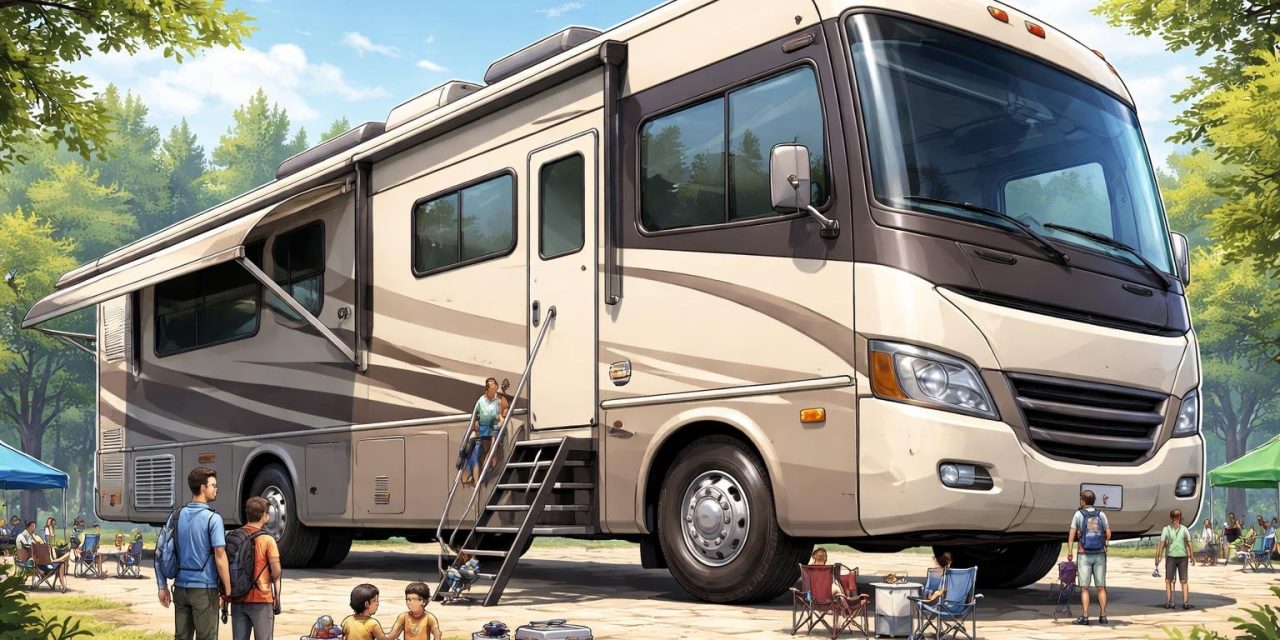
This is the advice that has sent thousands of new RV owners straight into a panic attack at a gas station. “You’re going to want the room,” they said. Nobody asked if you could actually park the thing.
The truth? Bigger RVs mean fewer campsite options, more fuel costs, and enough stress to make a grown adult cry in a Walmart parking lot.
Nothing brings a family closer together quite like the deafening silence while you’re trying to back a 42-foot fifth wheel into a campsite built in 1953.
💡 Pro Tip: Start smaller than you think you need. You can always upgrade. You cannot un-traumatize yourself from a jackknifed rig on a mountain highway.
💸 Bad Advice #2: “You’ll Save SO Much Money Owning an RV”
If you’ve heard this one, someone was either lying to you or lying to themselves. “RVing is so much cheaper than hotels!” Compared to what — a private yacht?
Here are the cold, hard numbers:
| 💰 Cost Category | 📊 Average Annual Cost |
|---|---|
| Basic Maintenance | ~$1,000/year |
| RV Insurance | $502 – $3,000/year |
| Campground Fees | $56 – $79/night |
| Fuel (Motorhome) | $2,000 – $4,000/year |
| Repairs | $300 – $400+ per repair |
| Total Estimated Annual Cost | $5,000 – $10,000+/year |
According to a 5-year RV ownership analysis, the total cost of ownership can run approximately $5,800 per year — and that’s for a conservative user. John Marucci
Nobody buys an RV to save money. They buy an RV to spend it somewhere beautiful. There’s a huge difference — and your wallet already knows it.
😂 Here’s a thought: If someone tells you RVing saves money, ask them if they’ve checked their bank account lately. Just… ask.
🚙 Bad Advice #3: “Your SUV Can Probably Tow It”
Ah yes. The classic “probably.” That word has destroyed more transmissions than any other word in the English language.
Here’s what the internet forgets to mention:
Yes, your SUV can tow 7,000 lbs — on flat ground, in perfect weather, with no passengers, and zero cargo.
Now add water, propane, firewood, camping chairs, three bikes, a cooler full of food, two kids, and a golden retriever who won’t stop barking. Suddenly that “7,000 lb rating” looks a lot smaller.
Exceeding your tow vehicle’s rated capacity puts massive stress on your suspension, brakes, and transmission — and creates dangerous sway situations that are extremely hard to correct once they start. ProPride Hitch
😂 Consider this: If your engine sounds like it’s being chased going uphill at 37 mph, nature is basically sending you a strongly worded letter.
🛒 Bad Advice #4: “Never Buy a Used RV — Always Buy New”
Some internet “experts” will tell you used RVs are nothing but problems waiting to happen. They are wrong.
Fun fact: New RVs aren’t problem-free — they just have problems that haven’t been discovered yet. Slides that don’t slide. Refrigerators that don’t refrigerate. Outlets that are purely decorative.
| ✅ Used RV Advantages | ❌ New RV Disadvantages |
|---|---|
| Someone else paid the 20–25% depreciation hit | Loses 20–25% value the moment you drive off the lot |
| Known quirks already worked out | Unknown factory defects waiting to surface |
| Lower price — less financial risk for first-timers | High financial commitment for unproven lifestyle |
| More negotiating room | Dealer markup on top of sticker price |
According to RV depreciation data, a new RV loses between 15–25% of its value in the first year alone. RVShare
😂 Here’s a reality check: If you’re brand new to RVing, maybe figure out if you even like it before spending $50,000 on a shiny box that leaks.
🔌 Bad Advice #5: “You NEED Full Hookups on Every Trip”
According to certain Facebook groups, if you’re not plugged into water, electric, sewer, Wi-Fi, cable, and possibly an oxygen tank, you’re basically camping in the Stone Age.
The truth? Dry camping and boondocking open up a whole world of stunning campsites — state parks, national forests, and dispersed areas that are:
- 🌲 Quieter
- 💵 Cheaper
- 🏞️ Way more scenic
State parks generally cost significantly less per night than private RV parks with full hookups, and they often have far more space between sites. Northwest Adventure Rentals
😂 Here’s the honest truth: Some of you don’t need 50 amps of electricity to sit outside in a lawn chair. What you actually need is fewer neighbors.
📅 Bad Advice #6: “You’ll Use It EVERY Weekend”
This advice usually comes from the same person who bought a Peloton that is now a very expensive coat rack.
“You’ll use it all the time! The kids will love it! You’ll basically live in it!”
Reality check: The median RV usage is just 20 days per year, according to the most comprehensive RV owner study ever conducted. Business Wire
In fact, 39% of RV owners are classified as “Casual Campers” who only use their RV a few weekends per year. RV Business
Life always shows up: work, weather, school, soccer, surprise obligations that nobody asked for. Buy an RV assuming you’ll miss some trips. That’s not failure — that’s just being human.
😂 Something to think about: Nothing kills the camping vibe faster than making a monthly payment and resenting the thing you’re making payments on.
💳 Bad Advice #7: “Just Finance It — RVs Hold Their Value”
Oh no. This is the one that should come with a legal disclaimer, a therapist’s number, and a cold glass of water.
“RVs are an investment! They hold their value!”
They do not. They really, really do not.
| 📉 RV Depreciation Timeline | 💸 Value Lost |
|---|---|
| Year 1 | 20–25% of purchase price |
| Years 2–5 | Additional 10% per year |
| After 5 years | Could be worth 50% or less of original price |
The second you sign that paperwork, your brand-new RV starts losing value faster than a dropped iPhone without a case. Financing isn’t evil — but stretching your RV payments out longer than you’ve been saving for your kid’s college tuition? That’s where people get into real trouble.
😂 Here’s a pro tip: If someone swears to you that an RV holds its value… ask them why they’re still making payments on theirs. Watch their face. You’re welcome.
🎒 Bad Advice #8: “Buy ALL the Gear Before Your First Trip”
The internet will have you believe that before your very first camping trip, you need six hoses, four regulators, three surge protectors, two backup generators, and a partridge in a pear tree.
Do you need some gear? Yes. Do you need $1,500 worth of stuff before your first trip? Absolutely not.
Here’s what actually happens: Half the gear people buy before their first trip ends up in storage, collecting dust, waiting for a moment that never comes. RecNation Storage
The smarter move? Go on 2–3 trips first. Figure out what you actually need. Then buy it. Revolutionary concept, we know.
😂 Just imagine this: You’ve got a $400 surge protector for a campsite that has never — not once in its history — experienced a power surge. Bold strategy.
🗺️ Bad Advice #9: “There’s Only ONE Right Way to RV”
And here it is — the most dangerous advice of them all.
“This is how you RV. This is the only setup. This is the correct way.”
Wrong. There are as many correct ways to RV as there are RVers.
| 🏕️ Type of RVer | 🔑 What Works for Them |
|---|---|
| The Full-Timer | Moves every few days, minimalist setup |
| The Weekend Warrior | Short trips, full hookups, maximum comfort |
| The Boondocker | Solar power, remote locations, no neighbors |
| The Family Camper | Kid-friendly parks, activities, space to spread out |
| The Slow Traveler | Stays in one place for weeks, explores deeply |
Every single one of these people is right. For them.
The moment someone tells you there’s only one correct way to RV — and conveniently, it’s their way — you have full permission to hit that mute button immediately.
😂 Here’s the golden rule: If their advice starts with “Trust me,” it’s already time to be suspicious.
🏁 Final Thoughts: Question Everything. Especially “Trust Me.”
The internet is an incredible resource for RV information — and also a spectacular place to pick up advice that will cost you thousands of dollars and years of regret.
The best RV journey starts with your own research, your own budget, and your own honest assessment of how you want to use an RV.
Be skeptical. Ask questions. And for the love of all things outdoors — don’t let a stranger in a Facebook group convince you to finance a 40-foot Class A because “it holds its value.”
📚 SOURCES
- The Camping Loop — “The WORST RV Advice On The Internet: Top 9 Bad Decisions” (YouTube)
- RVShare — RV Depreciation Explained
- JD Power — How Much Do Campers Depreciate?
- Kirkland RV Sales — Used RV Depreciation
- RecNation Storage — What Type of RV Holds Value?
- John Marucci — The Real $$ Cost of RV Ownership – 5-Year Analysis
- Outdoorsy — The Hidden Costs of RV Ownership
- ProPride Hitch — Towing with SUV: Essential Tips for Safe and Effective Hauling
- Business Wire — Most Comprehensive RV Owner Study Ever
- RV Business — RV Owner Demographics: A “Casual Camper” Overview
- RecNation Storage — What to Avoid When Buying an RV
- Northwest Adventure Rentals — Benefits of State Parks vs. Campgrounds
- Cruise America — Should I Buy a New or Used RV?