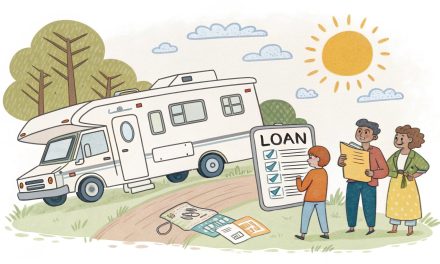
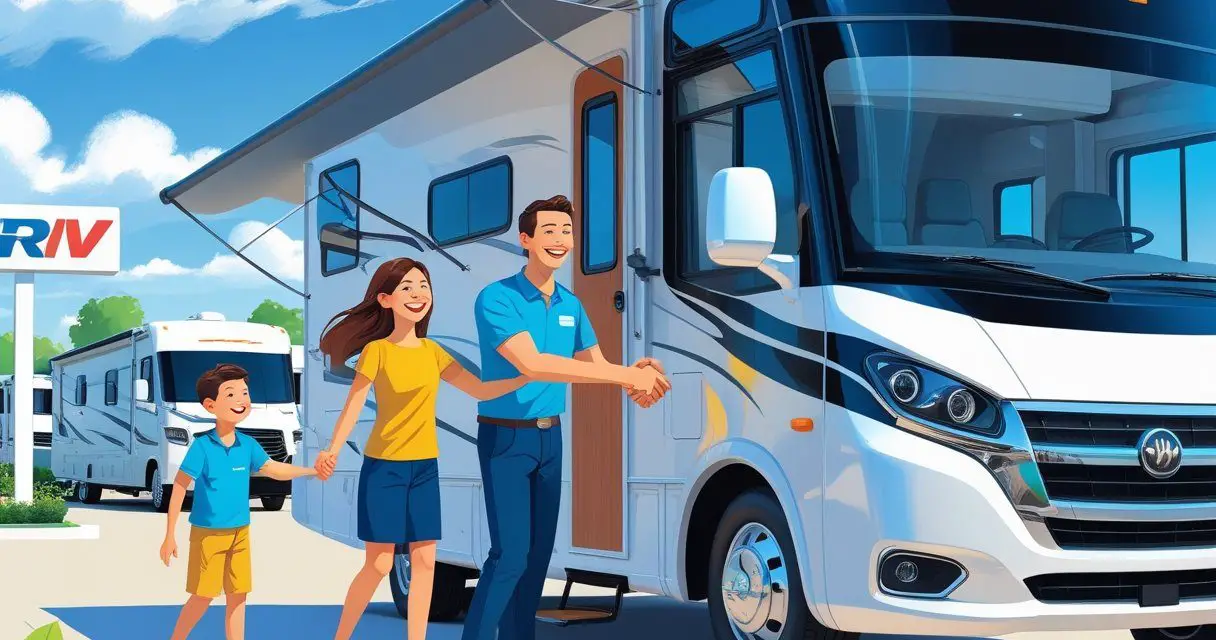
You walk into an RV dealership with stars in your eyes and a $99-per-month payment dancing in your head. That shiny new motorhome or travel trailer is calling your name, and the salesperson is telling you exactly what you want to hear. But by the time you sit down in that tiny finance office, something magical—and not in a good way—happens to that payment.
Suddenly, you’re staring at $250 per month or more, and you’re not quite sure how you got there. Welcome to the RV payment trap, where dealers use sneaky add-ons, hidden fees, and financing tricks to turn your dream purchase into a financial nightmare. In this eye-opening interview with Kevin Frazer from Cheyenne Camping Center, RV Wingman Alan Warren exposes the dealer tactics that bury families in debt for years.
If your gut is telling you something feels off about that “deal,” you need to keep reading. This article will arm you with the knowledge to spot these tricks before you sign on the dotted line.
Would you like to save this article?
1. The $99 Payment Illusion: How Dealers Make Numbers Disappear (and Reappear Bigger)
Here’s how the magic trick works: dealers advertise a ridiculously low monthly payment to get you through the door. Once you’re hooked on that specific RV, they start playing with three variables in the finance office: the loan term, the interest rate, and hidden products.
First, they stretch your payment out over 240 months or more (that’s 20 years, folks). Then they bump up your APR by 2-4% above what you actually qualified for. Finally, they slip in add-ons and warranties that jack up the total price.
By the time all these “adjustments” are made, your $99 payment has somehow ballooned to $250 or higher. According to the RV Industry Association, the average RV loan term has increased to 180-240 months, making it easier for dealers to manipulate monthly payments while hiding the true cost.
Here’s the Reality Check: You might think paying “just” $250 a month sounds reasonable, but over 20 years, you’re looking at paying for that RV two or three times over in interest alone. The RV will be worth a fraction of what you owe long before you make that final payment.
2. Extended Warranties: When “Protection” Costs You 38% Interest
Extended service contracts sound like a smart safety net, right? Wrong—at least the way most dealers sell them. In the video, Kevin Frazer exposes dealers selling extended warranties at APRs between 18% and 38%. Yes, you read that correctly: thirty-eight percent interest on a warranty.
Here’s how it works: instead of paying for the extended warranty upfront, dealers roll it into your financing at a marked-up interest rate. You might think you’re getting “peace of mind,” but you’re actually getting fleeced. The National Association of Consumer Advocates warns that dealer-financed add-ons often carry interest rates far exceeding the base loan APR.
A legitimate extended warranty can provide value—but only when purchased at a fair price from a reputable third party. You should shop warranties through your credit union or independent providers where you can pay cash or finance at reasonable rates.
The Giggle-Worthy Truth: You’ll be paying so much interest on that warranty that you could probably buy a whole new RV by the time it expires. At 38% APR, that warranty is working harder than you are—just not for your benefit.
3. The Add-On Avalanche: Death by a Thousand Upsells
Once you’re in the finance office, the dealer will start piling on add-ons like they’re building a sandwich at Subway. GAP insurance, paint protection, fabric protection, tire and wheel coverage, VIN etching, and mysterious “protection bundles” all start appearing on your contract. Each one sounds reasonable individually, but together they can add $5,000-$10,000 to your total cost.
Let’s break down the common culprits:
| Add-On | What They Say | The Reality |
|---|---|---|
| GAP Insurance | Protects you if your RV is totaled and you owe more than it’s worth | Can be useful, but dealer markup is often 200-300%. Buy from your auto insurer instead. |
| Paint/Fabric Protection | Keeps your RV looking showroom-new | A $30 bottle of protectant does the same thing. Markup is astronomical. |
| Tire & Wheel Coverage | Covers tire damage and wheel repairs | Rarely pays out, limited coverage, expensive premium. |
| VIN Etching | Deters theft by etching VIN on windows | Costs $10 to DIY, dealers charge $300-$500. |
According to Consumer Reports, dealer add-ons are marked up by an average of 300-500% compared to purchasing the same products elsewhere. The finance manager gets a commission on every add-on you accept, which is why they push so hard.
Your Wallet Called: It wants you to know that paying $500 for someone to etch your VIN number on your windows is like paying $20 for a cup of coffee. Sure, you could do it, but why would you when you can get the same thing for $2 elsewhere—or better yet, free?
4. Junk Fees: The “Because We Can” Charges
Junk fees are the dealer’s way of nickel-and-diming you to death. These are charges that have vague names like “documentation fee,” “dealer prep,” “processing fee,” or “administrative fee.” One shocking example from the video: a customer paid $1,100 for a “walk-through” that lasted five minutes and consisted of nothing more than the salesperson talking.
The Federal Trade Commission has been cracking down on junk fees across industries, noting that these fees often have no basis in actual services provided. In the RV industry, documentation fees can range from $200 to $1,500 depending on the state, and there’s rarely any real “documentation” being done that justifies the cost.
Here’s what you need to know: some fees are legitimate and unavoidable (like state registration and title fees), but many are pure profit for the dealer. You have the right to question every single line item on your contract and demand an explanation.
The Eye-Roll Moment: You’re paying over a thousand bucks for a “walk-through” where someone points at your RV and says, “That’s the door. That’s a window. Questions?” Meanwhile, your 11-month-old RV sitting on the lot hasn’t even been washed. What a deal.
5. The PDI Phantom: When Your “Inspection” Never Happened
PDI stands for Pre-Delivery Inspection, and it’s supposed to be a thorough check of your RV before you take delivery. The dealer should verify that everything works, all components are present, the unit is clean, and any factory defects are addressed. Sounds great, right?
Here’s the dirty secret Kevin Frazer reveals: most PDIs are complete theater. Your RV might have been sitting on the lot for 11 months, unwashed and uninspected. Missing parts? Never checked. Systems tested? Nope. But you’ll still be charged hundreds or even over $1,000 for this “service.”
The RV Technical Institute recommends a comprehensive PDI checklist with over 100 inspection points. Most dealers skip 90% of these and hand you the keys after a five-minute speech. Then, when you discover problems after purchase, they tell you it’s your responsibility.
The Facepalm Reality: You just paid $1,100 for someone to literally NOT do their job. It’s like paying a chef to not cook your dinner, or paying a barber to not cut your hair. Congratulations—you’ve mastered the art of paying for nothing.
6. The Loan Trap: Welcome to RV Purgatory
This is where things get really scary. Dealers structure your loan to keep you “upside down” (owing more than the RV is worth) for years—sometimes for the entire life of the loan. How? By combining long loan terms, high interest rates, hidden fees, and the natural depreciation of RVs.
Here’s a sobering example: you finance a $60,000 travel trailer at 8% APR over 20 years. With all the add-ons, you’re actually financing $75,000. Meanwhile, your RV depreciates by 20-30% in the first year alone according to NADA Guides. By year two, your RV is worth $42,000, but you still owe $68,000.
You’re trapped. You can’t sell it without writing a huge check. You can’t trade it without rolling massive negative equity into your next loan. Kevin Frazer calls this “RV purgatory“—and thousands of families are stuck there right now.
| Year | Loan Balance | RV Value | Negative Equity |
|---|---|---|---|
| 1 | $72,500 | $45,000 | -$27,500 |
| 3 | $67,000 | $38,000 | -$29,000 |
| 5 | $60,000 | $32,000 | -$28,000 |
| 10 | $45,000 | $20,000 | -$25,000 |
The Brutal Math: You’re essentially paying rent on an RV you’ll never actually own outright. By the time you finally pay it off, you’ll have spent enough money to buy three RVs—and the one you have will be ready for the junkyard. It’s like being stuck in a really expensive, slow-motion car crash.
7. The Sky-High APR Scam: When Your Rate Gets “Bumped”
Here’s a dirty secret Kevin Frazer exposes: you might qualify for a 6% APR, but the dealer quotes you 9% or 10% and pockets the difference. This is called “rate markup” or “dealer reserve,” and it’s completely legal in most states—even though it costs you thousands.
Let’s do the math: on a $60,000 loan over 15 years, the difference between 6% and 10% APR is over $22,000 in additional interest payments. That’s $22,000 going straight into the dealer’s pocket for doing absolutely nothing except not giving you the best rate you qualified for.
The Consumer Financial Protection Bureau has investigated this practice extensively, finding that consumers often have no idea they’re being charged more than necessary. Dealers have no obligation to tell you they’ve marked up your rate—and they usually don’t.
This is why getting pre-approved financing from your bank or credit union is absolutely critical. When you walk in with your own financing, the dealer can’t play these games. You know your rate, you know your terms, and you have negotiating power.
The Wallet-Punch Reality: You’re literally funding the dealer’s vacation to Hawaii with your rate markup. While you’re eating ramen noodles to make your RV payment, they’re sipping mai tais on a beach you helped pay for. But sure, that 10% APR seems “reasonable,” right?
Your Action Plan: How to Avoid the RV Dealer Trap
Now that you know the tricks, here’s your step-by-step defense strategy according to Kevin Frazer and RV Wingman:
1. Get Pre-Approved Financing BEFORE You Shop Contact your bank or credit union and get a loan pre-approval. Know your rate and terms before stepping foot in a dealership. This removes the dealer’s financing power over you.
2. Never Negotiate Monthly Payments Dealers LOVE when you focus on monthly payments because they can manipulate everything else. Instead, negotiate the out-the-door price—the total amount you’ll pay including all fees, taxes, and charges.
3. Demand a Line-Item Breakdown Before signing anything, insist on seeing every single charge itemized. Ask what each fee is for and why it’s necessary. If they can’t explain it, refuse to pay it.
4. Use the Walk-Away Script Practice saying this: “I need to sleep on this decision. I’ll come back tomorrow if I’m still interested.” This simple phrase removes all pressure and gives you time to review everything with a clear head.
5. Verify the PDI Was Actually Done Demand a full demonstration of every system in the RV. Check that it’s been washed, all components are present, and everything works. If something is missing or broken, make them fix it before you take delivery.
6. Check References and Reviews Research the dealership thoroughly. Look for patterns of complaints about hidden fees, poor service, or financing tricks. The Better Business Bureau and RV-specific forums are great resources.
7. Shop Add-Ons Externally Buy GAP insurance from your auto insurer, extended warranties from third-party providers, and skip the overpriced dealer add-ons entirely. You’ll save thousands.
The Bottom Line: You’re about to make one of the biggest purchases of your life. Taking an extra day or week to get it right could save you $10,000-$30,000. Any dealer who pressures you to “buy today” is showing you exactly why you should walk away.
Final Thoughts: Knowledge is Your Best Defense
The RV lifestyle can be absolutely incredible—but only if you’re not drowning in predatory debt. The tactics exposed in this video with Kevin Frazer are used by dealers across the country every single day. They count on you being excited, overwhelmed, and uninformed.
Don’t be that buyer. Armed with this knowledge, you can spot these tricks from a mile away. You can demand fair treatment, fair pricing, and fair financing. And most importantly, you can walk away from any deal that doesn’t feel right.
Remember what Kevin and Alan emphasized: if your gut tells you something is off, believe it. That uncomfortable feeling in the finance office isn’t nervousness about a big purchase—it’s your instincts screaming that you’re being taken advantage of.
Take your time, do your homework, and never let a dealer pressure you into a bad decision. Your dream RV adventure should start with confidence and excitement—not regret and financial stress.
SOURCES
- RV Wingman – “THE $99 PAYMENT TRAP: RV DEALER ADD-ONS & WARRANTY MARKUPS EXPOSED (WITH KEVIN FRAZER) PART 2 of 4” – https://www.youtube.com/watch?v=CH3ZlalUByQ
- RV Industry Association – RV Financing Trends and Statistics – https://www.rvia.org/
- National Association of Consumer Advocates – Dealer Add-On Markup Information – https://www.consumeradvocates.org/
- Consumer Reports – “Avoid These Dealer Add-Ons” – https://www.consumerreports.org/
- Federal Trade Commission – Consumer Protection Against Junk Fees – https://www.ftc.gov/
- RV Technical Institute – Pre-Delivery Inspection Guidelines – https://www.rvti.com/
- NADA Guides – RV Depreciation and Values – https://www.nadaguides.com/
- Consumer Financial Protection Bureau – Auto Loan Rate Markup Investigation – https://www.consumerfinance.gov/
- Better Business Bureau – RV Dealer Reviews and Ratings – https://www.bbb.org/
- Cheyenne Camping Center – Kevin Frazer Interview Source – https://www.youtube.com/@TheRVWingman