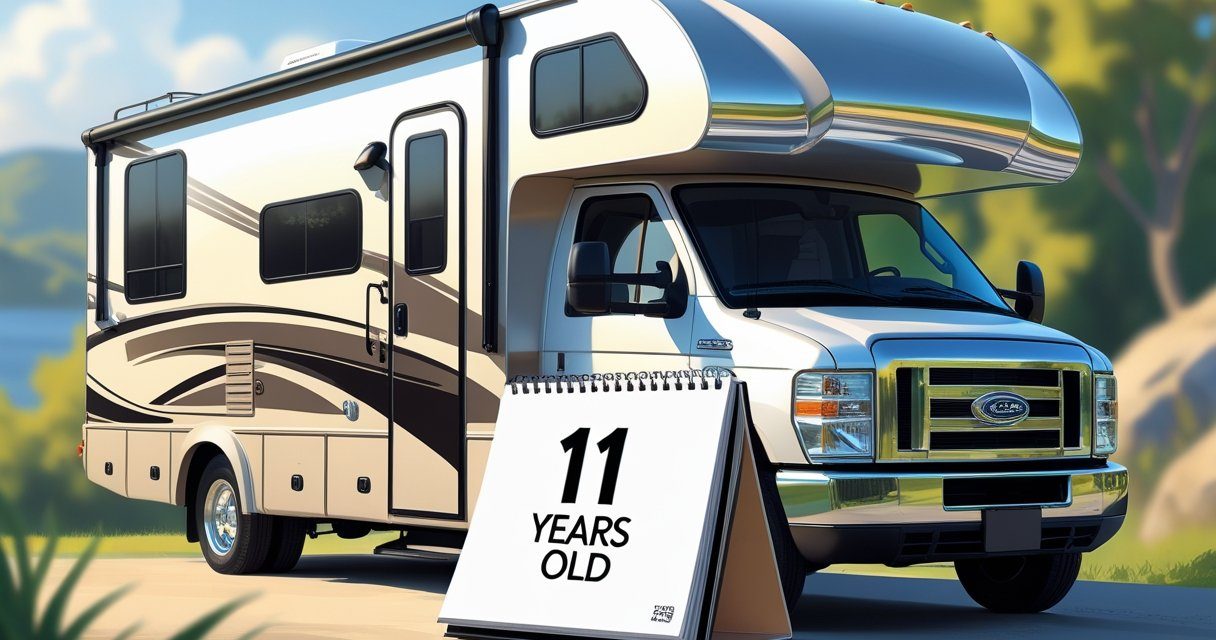
In the Endless RVing video below, you watch a simple campground booking turn into a real wake-up call. The issue is not a broken engine or a bad review. It is the age of an 11-year-old motorhome.
That is why this topic matters so much for RV owners. If you travel in an older rig, you need to know where the RV 10-year rule shows up, why some parks use it, and how you can still get through the gate. This guide breaks it down in plain English, so you can plan smarter and stress less.
Would you like to save this article?
| Quick RV Camping Facts | What It Means for You |
|---|---|
| 8.1 million U.S. households currently own an RV | More RVs on the road means more competition for campsites |
| 16.9 million households are interested in buying an RV in the next 5 years | Demand could stay strong for a long time |
| RV owners use their rigs a median of 30 days per year | RV travel is not slowing down |
| 11 million new households camped in 2024 compared with 2019 | Campgrounds are serving a bigger crowd |
| Camping spending hit $61 billion in 2024 | Parks have a strong reason to protect their image and operations |
| 1 in 4 leisure trips are camping trips | Camping is now a major part of travel |
These numbers help explain why campground policies get so much attention. The RV world is busy, valuable, and growing, so private parks often act very picky about what rolls through the entrance.
1. The RV 10-Year Rule Is Real, but It Is Not a Law
The video is built around one big surprise: your RV can be labeled “too old” even when it still runs well and looks sharp. Some private parks use a 10-year cutoff, but this is a private campground policy, not a state or federal law.
That means one park may care a lot, while another may not care at all. Public campgrounds usually do not use this rule, which gives you more options than you may think.
You can almost hear your motorhome saying, “Please judge the maintenance records, not the birthday cake.”
2. Parks Usually Care About Safety, Looks, and Liability More Than the Calendar
The age number is often just a shortcut. Many parks worry about fluid leaks, fire risk, broken systems, stranded vehicles, and rigs that look rough enough to scare the patio chairs.
That does not mean every older RV is a problem. It means some campground owners use the rule to screen out rigs they think could become a headache for staff or a bad look for guests paying premium rates.
If your RV has peeling trim, mystery drips, and enough tape to wrap a birthday present, you may already know why the manager is blinking hard.
3. Photos and Inspections Can Save Your Reservation
One of the smartest lessons from this topic is simple: condition can beat age. RV.com says parks often ask for recent photos, and Sun Outdoors Jellystone Park Luray states that RVs or trailers that are 10 years or older need to be inspected by management before entry.
That means clean paint, solid seals, tidy awnings, and a cared-for exterior can matter more than the model year on your paperwork. If your rig looks good in photos, you have a much better shot at hearing “approved” instead of “sorry.”
You want your RV photos to say “road-ready adventure machine,” not “before picture from a home makeover show.”
4. Some Campgrounds Are Far More Strict Than Others
You are more likely to run into the rule at upscale private RV resorts, especially in busy snowbird areas like Florida, Arizona, and Southern California. Long-term stay parks can also be stricter because they do not want an aging rig becoming a permanent lawn ornament.
| More Likely to Enforce the Rule | Less Likely to Enforce the Rule |
|---|---|
| Upscale private RV resorts | National, state, and city campgrounds |
| Snowbird destinations | Rural and off-the-beaten-path parks |
| Long-term stay parks | Short-stop and public camping areas |
| Parks with waitlists | Networks focused on “good condition” instead of age alone |
So yes, where you camp matters almost as much as what you drive. The same RV that gets side-eye at a luxury resort may be welcomed with zero drama at a public campground.
If a park has palm trees, polished fountains, and rates that make your wallet hiccup, your RV may need to arrive dressed for prom.
5. You Still Have Good Options, Including Thousand Trails and Public Campgrounds
Not every network is obsessed with age. Thousand Trails says it does not typically have an age limit for RVs, though units must be operable and in good condition. [Thousand Trails](https://thousandtrails.com/rv-and-site-standards-guidelines)
Cruise America also notes that public campgrounds usually do not enforce the 10-year rule, and some larger campground networks can be more flexible when your RV is clean and functional. That gives you room to plan smarter instead of panicking at the booking screen. [Cruise America](https://www.cruiseamerica.com/trip-inspiration/top-rv-parks-without-10-year-rule)
You do not need to act like your camping life is over. Your older rig may just need a different zip code.
6. Busy Campgrounds Have More Power to Be Picky
This rule gets more attention because camping demand is huge. KOA reports that 1 in 4 leisure trips are camping trips, while RVIA says 8.1 million households already own an RV and owners are using them a median of 30 days a year.
When parks are busy, they can afford to choose the easiest reservations and the lowest-risk guests. In plain terms, a packed campground does not need to gamble on a rig that looks like it might ask for a tow truck before breakfast.
When every campsite is hot property, your RV is not just checking in. It is basically auditioning.
7. A Clean Older RV Can Still Win
Here is the good news: many sources say the rule is often used more like a filter than a brick wall. RV.com, Blue Compass RV, and Cruise America all point to the same idea: a well-kept older RV is often welcomed, especially when you call ahead, explain your rig, and offer current photos.
So the smartest move is not panic. It is preparation. Keep your RV tidy, fix the obvious exterior issues, know the park policy before you book, and have good photos ready to send.
If your coach is polished, straight, and leak-free, you may stroll past the age rule like a grandparent who still outruns the kids.
Final Takeaway
The Endless RVing video works because it turns a small reservation problem into a bigger truth about RV travel. The RV 10-year rule can surprise you, but it does not have to ruin your trip. If you know which parks are strict, keep your rig looking sharp, and contact campgrounds before booking, you can stay ahead of the problem and keep rolling.
SOURCES
Endless RVing – We Just Got Hit With the RV 10-Year Rule… Because Our RV Is Too Old
Blue Compass RV – What is the Ten Year Rule? What Every RV Owner Needs to Know
RV.com – What is the RV 10-Year Rule?
Cruise America – Top RV Parks Without 10-Year Rule
RVIA – 2025 Go RVing RV Owner Demographic Profile
KOA – 2025 Camping & Outdoor Hospitality Report
Thousand Trails – RV and Site Standards & Guidelines
Sun Outdoors Jellystone Park Luray – Resort Policies