
When dark clouds gather and weather alerts start pinging on your phone, do you know exactly what to do to protect yourself and your RV? A recent survey of RV enthusiasts revealed a surprising—and potentially dangerous—gap in severe weather preparedness. While an overwhelming 84% of RV owners rely primarily on weather monitoring, virtually no one reported maintaining emergency supplies, and only a small fraction have designated shelters or evacuation plans. This comprehensive guide explores what to do in severe weather (RV survey) results and provides life-saving strategies every RV owner needs to implement today.
Key Takeaways
- 84% of RV owners depend solely on weather monitoring, but monitoring alone won’t protect you when severe weather strikes—you need actionable emergency plans
- RVs become unstable in winds as low as 50 mph, requiring specific securing techniques including hurricane straps, retracted slide-outs, and proper positioning
- Stock 7-10 days of emergency supplies including water, food, medications, and battery-powered communication devices for extended outages
- RVs are NOT safe shelters during severe weather—evacuation to designated structures is critical when authorities issue warnings
- Proper preparation combines four elements: weather monitoring, emergency supplies, designated shelter plans, and evacuation routes
Understanding the Survey: What RV Owners Are Missing 📊
Would you like to save this article?
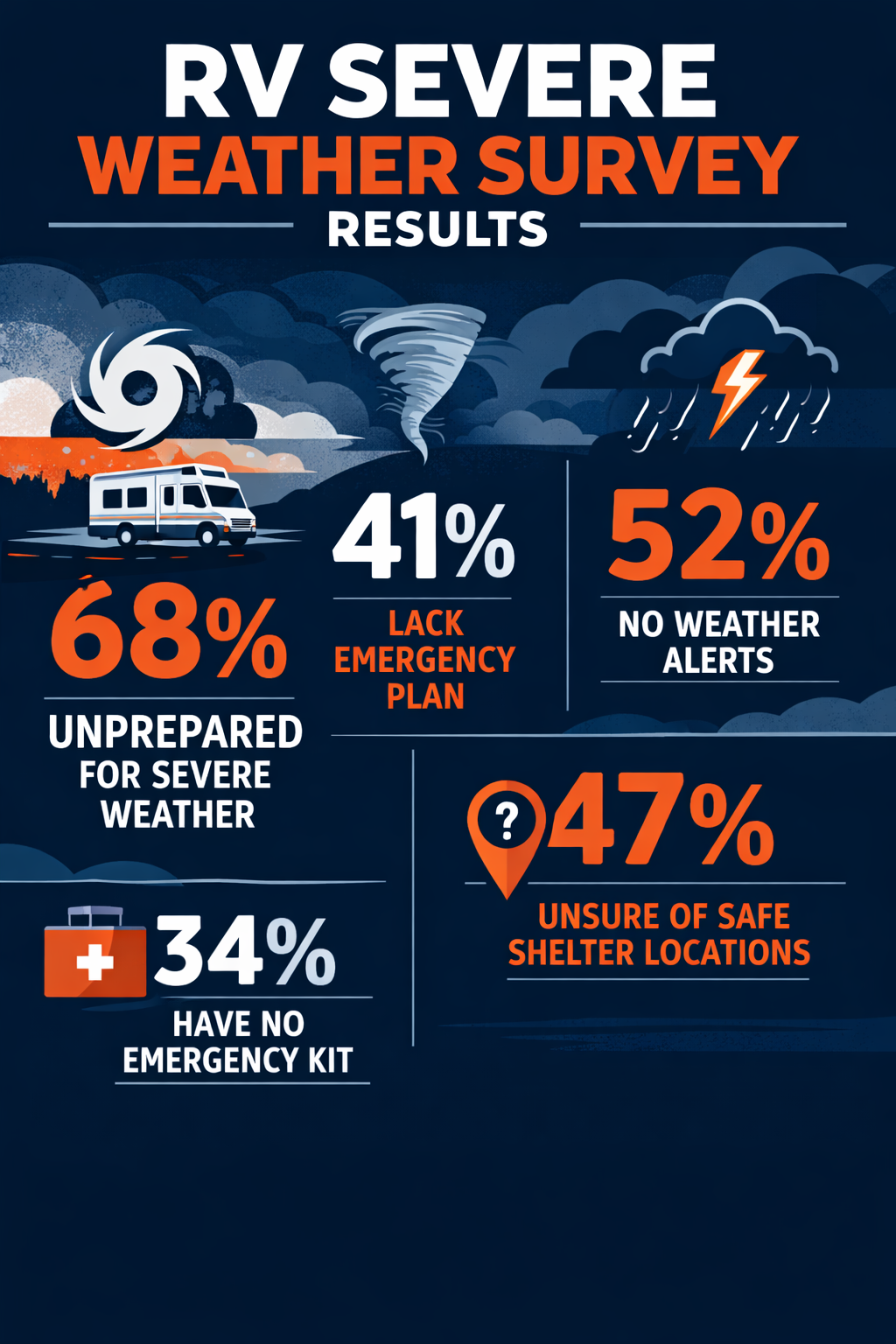
The recent survey on RV severe weather preparedness reveals a concerning trend in the RV community. Let’s break down what to do in severe weather (RV survey) data tells us:
The Numbers Don’t Lie
| Preparedness Category | Percentage of RV Owners |
|---|---|
| Weather Monitoring | 84% |
| Evacuation Plan | 11% |
| Designated Shelter | 5% |
| Emergency Supplies | 0% |
Weather monitoring dominates the preparedness landscape, which makes sense—knowing what’s coming is crucial. However, the virtual absence of emergency supplies and the minimal focus on shelter and evacuation planning creates a dangerous vulnerability. Monitoring the weather without having supplies, shelter options, or evacuation routes is like watching a train approach without stepping off the tracks.
Why This Gap Is Dangerous
The survey results suggest many RV enthusiasts believe that simply knowing about severe weather is enough. Unfortunately, severe weather events move quickly, and having advance warning means nothing without:
- ✅ Physical supplies to sustain you during and after the event
- ✅ A safe structure to shelter in (hint: your RV isn’t it)
- ✅ Pre-planned evacuation routes and destinations
- ✅ Proper RV securing techniques to minimize damage
According to safety experts, even winds as low as 50 mph can make RVs unstable and turn loose outdoor equipment into dangerous projectiles[4]. Weather monitoring tells you the storm is coming, but only comprehensive preparation keeps you safe.
The Complete Severe Weather Preparation Framework
Based on what to do in severe weather (RV survey) gaps and expert recommendations, here’s the comprehensive framework every RV owner should implement:
1. Weather Monitoring (The Foundation) 🌩️
While 84% of survey respondents already do this, let’s ensure you’re monitoring effectively:
Essential Weather Monitoring Tools:
- NOAA Weather Radio (battery-powered or hand-crank models) for official alerts even when cell service fails[1]
- Trusted weather apps with severe weather alerts and radar capabilities
- Local emergency management notifications via text or email
- Campground staff communication to understand their emergency protocols[3]
“Maintain contact with campground staff to understand emergency plans and shelter locations before storms hit.” – Emergency Preparedness Experts[3]
Best Practices:
- Check weather forecasts multiple times daily during severe weather seasons
- Understand the difference between watches (conditions are favorable) and warnings (event is occurring or imminent)
- Set up automated alerts for your specific location
- Monitor weather patterns 3-5 days in advance when possible
2. Emergency Supplies (The Critical Gap) 🎒
The survey’s 0% emergency supplies result is alarming. Here’s what you absolutely need:
The 7-10 Day Emergency Kit:
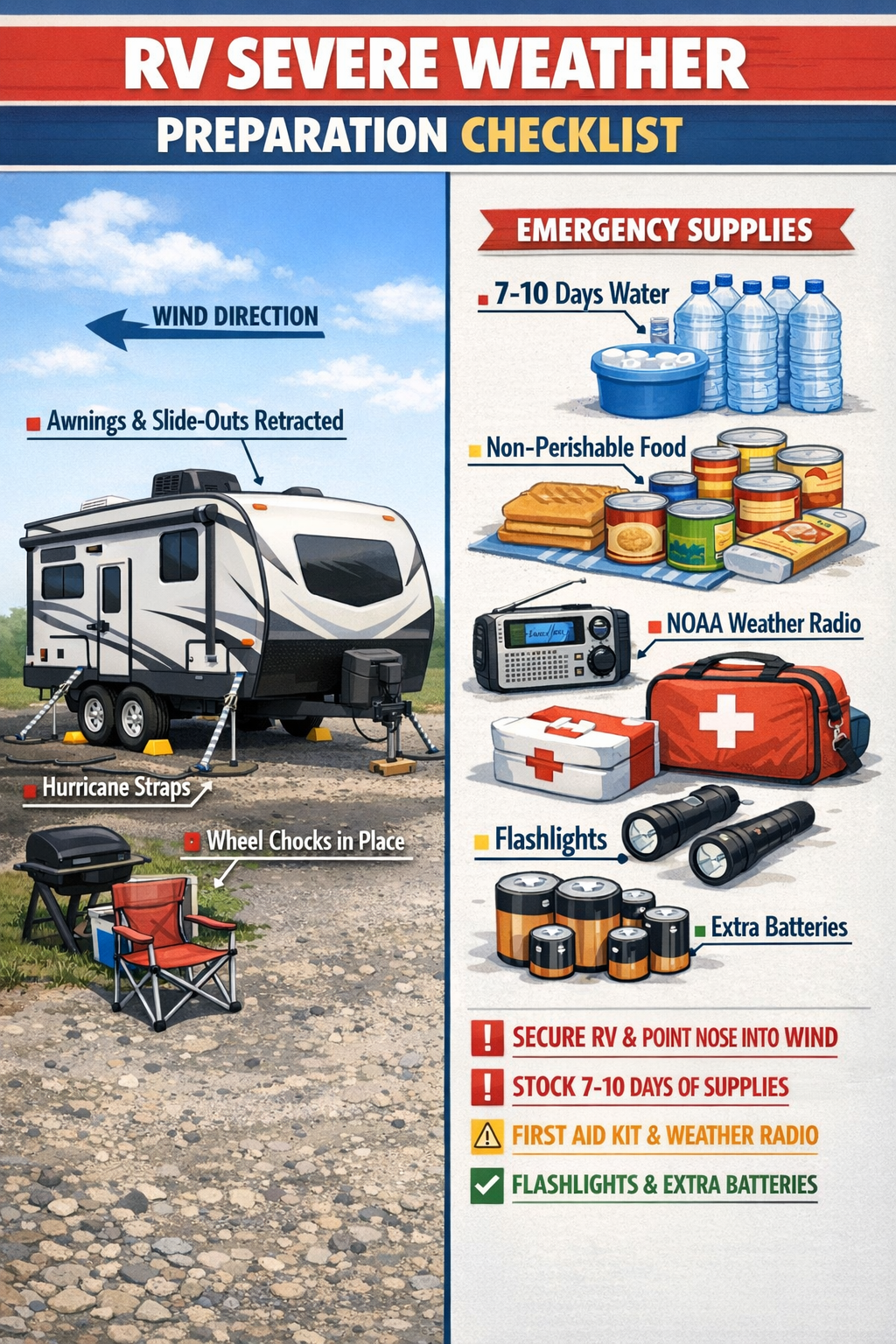
Emergency preparedness guidelines recommend stocking 7-10 days of food, water, and emergency supplies for extended outages, though minimum guidance suggests at least 3 days[1][3]. Here’s your comprehensive list:
Water & Food:
- 💧 One gallon of water per person per day (minimum 3 days, ideally 7-10 days)
- 🥫 Non-perishable food items (canned goods, protein bars, dried fruits, nuts)
- 🍽️ Manual can opener
- 🔥 Camping stove with extra fuel (if electricity fails)
Medical & Hygiene:
- 💊 Prescription medications (full supply)
- 🏥 Comprehensive first aid kit
- 🧴 Hygiene supplies and sanitizers
- 😷 Face masks and protective equipment
Communication & Power:
- 📻 Battery-powered or hand-crank NOAA weather radio
- 🔋 Extra batteries for all devices
- 🔌 Portable power banks (fully charged)
- 📱 Solar chargers for extended outages
- 📞 Emergency contact list (written, not just in phone)
Tools & Safety:
- 🔦 Flashlights and lanterns
- 🧰 Basic tool kit
- 🔪 Multi-tool or Swiss Army knife
- 🧯 Fire extinguisher
- 🚨 Whistle for signaling help
- 💵 Cash (ATMs may not work)
Important Documents:
- 📄 Copies of insurance policies
- 🆔 Identification documents
- 💳 Banking information
- 📋 RV registration and ownership papers
- 🏥 Medical records
Store these supplies in waterproof containers and know exactly where they are. Review and refresh supplies every six months.
3. Designated Shelter Planning (Only 5% Have This) 🏠
Here’s a critical truth: RVs are not safe shelters during hurricanes and should be evacuated if local authorities issue evacuation orders[3][5]. Even during less severe weather, your RV may not provide adequate protection.
Identify Shelter Options NOW:
At Campgrounds:
- Ask management about on-site storm shelters or reinforced buildings
- Locate the nearest bathhouse, office, or concrete structure
- Understand the campground’s emergency notification system
In Your Area:
- Research designated community shelters within 30 minutes of common camping locations
- Identify hotels or motels with interior rooms away from windows
- Connect with local RV clubs who may have shelter arrangements
If Sheltering Becomes Impossible:
If evacuation becomes impossible and you must remain near your RV during severe weather, stay in the most structurally secure area near the RV’s center, away from windows and slide-outs[1]. However, this is a last resort only—proper planning should prevent this scenario.
4. Evacuation Planning (Only 11% Prepared) 🚗
Having an evacuation plan is non-negotiable. Here’s how to create yours:
Pre-Plan Your Routes:
- 🗺️ Identify at least two evacuation routes from each camping location
- 📍 Know destinations along each route (hotels, shelters, alternative campgrounds)
- ⛽ Locate gas stations along evacuation routes
- 📱 Save routes offline in GPS apps
Evacuation Triggers:
Know when to leave:
- Official evacuation orders from authorities
- Hurricane warnings for your area
- Tornado warnings (seek immediate shelter)
- Sustained winds approaching 40-50 mph
- Flash flood warnings
Evacuation Checklist:
- ✅ Secure RV or prepare it for abandonment (if necessary)
- ✅ Grab emergency supply kit
- ✅ Disconnect utilities
- ✅ Take important documents
- ✅ Notify family/friends of your route and destination
- ✅ Leave early (don’t wait until roads are jammed)
Securing Your RV: Physical Preparation Techniques
Beyond the four planning pillars, you need to physically prepare your RV for severe weather:
Before the Storm Arrives ⚡
Positioning & Anchoring:
- Park nose-first into prevailing wind direction (the “airplane rule”) to minimize exposed surface area[1]
- Secure your RV with hurricane straps and professional-grade tie-down systems using steel cables or concrete anchors to prevent tipping and lift[1]
- Use wheel chocks and stabilizers for additional security
- Fill fresh water tanks to add low-center-of-gravity weight for stability[4]
Retract & Remove:
- Retract all slide-outs and awnings completely before storms, as these catch wind like sails and are primary failure points[1]
- Lower TV antennas and satellite dishes
- Remove or secure all outdoor items including furniture, grills, decorations, and loose equipment[1][3][4]
- Bring in door mats, flags, wind chimes, and hanging plants
Electrical Protection:
- Install surge protection systems to safeguard electrical components from post-storm power fluctuations[1]
- Disconnect from shore power if lightning is present
- Unplug sensitive electronics inside the RV
Interior Preparation:
- Close and secure all windows, vents, and roof hatches
- Store loose items that could become projectiles
- Close interior doors to create compartmentalization
- Move valuables to the center of the RV away from windows
Wind Speed Guidelines 🌪️
Understanding wind impacts helps you make informed decisions:
| Wind Speed | RV Impact | Action Required |
|---|---|---|
| 25-35 mph | Awnings at risk | Retract awnings |
| 40-50 mph | RV becomes unstable | Secure completely or evacuate |
| 50+ mph | High danger of tipping | Evacuate to solid structure |
| 75+ mph | Severe structural damage likely | Must be in designated shelter |
Remember: Even winds as low as 50 mph can make RVs unstable[4], so don’t underestimate “moderate” wind forecasts.
Weather-Specific Protocols
Different severe weather types require tailored responses:
Hurricanes & Tropical Storms 🌀
- Monitor forecasts 5-7 days in advance
- Evacuate when watches are issued (don’t wait for warnings)
- Never ride out a hurricane in an RV
- Follow official evacuation routes
- Expect extended power outages (7-10 day supplies essential)
Tornadoes 🌪️
- Seek immediate shelter in underground or interior rooms of solid structures
- Abandon RV immediately when warnings are issued
- Never try to outrun a tornado in your RV
- Campground bathhouses are better than RVs but still not ideal
- If caught outside, lie flat in a ditch or depression
Severe Thunderstorms ⛈️
- Disconnect from shore power during lightning
- Stay inside with windows closed
- Avoid plumbing and electrical appliances
- Monitor for tornado warnings
- Wait 30 minutes after last thunder before going outside[10]
Flash Floods 💧
- Never park in low-lying areas or near waterways
- Evacuate immediately if water begins rising
- Never drive through flooded roads
- Move to higher ground quickly
- Remember: Six inches of water can knock you down; one foot can sweep away vehicles
Winter Storms ❄️
- Ensure adequate propane supply for heating
- Prevent pipe freezing with heat tape and insulation
- Stock extra blankets and warm clothing
- Keep tanks above half-full to prevent freezing
- Have backup heating sources (safe for indoor use)
Post-Storm Recovery & Assessment
After severe weather passes:
Safety First 🚨
- Wait for official all-clear before returning to campgrounds
- Watch for downed power lines (assume all are live)
- Avoid standing water (may be electrically charged)
- Check for gas leaks before entering RV
- Document all damage with photos for insurance
RV Inspection Checklist
- ✅ Exterior damage (roof, walls, windows)
- ✅ Undercarriage and frame
- ✅ Slide-out mechanisms
- ✅ Plumbing for leaks
- ✅ Electrical systems
- ✅ Appliances and HVAC
- ✅ Tires and suspension
- ✅ Awning and exterior accessories
Insurance & Documentation
- Contact your insurance provider immediately
- Provide detailed photo documentation
- Keep receipts for emergency expenses
- Don’t make permanent repairs before adjuster inspection
- Understand your coverage limits and deductibles
Building a Comprehensive Severe Weather Culture
The survey results show that what to do in severe weather (RV survey) preparedness is heavily skewed toward monitoring. Here’s how to build a balanced approach:
Monthly Preparedness Routine
First of Each Month:
- 📅 Check emergency supply expiration dates
- 🔋 Test battery-powered devices
- 📱 Update emergency contact information
- 🗺️ Review evacuation routes for upcoming destinations
- 💧 Rotate water supplies
Seasonal Preparations
Hurricane Season (June-November):
- Review hurricane preparedness weekly
- Monitor tropical weather patterns
- Avoid coastal areas during peak season (August-October)
- Confirm evacuation routes for each location
Tornado Season (Spring):
- Identify storm shelters at each campground
- Practice rapid shelter-seeking drills
- Keep weather radio easily accessible
- Understand regional tornado patterns
Winter Storm Season:
- Winterize RV systems
- Stock cold-weather supplies
- Monitor forecasts for ice and snow
- Avoid travel during winter storm warnings
Community Preparedness
- Share preparedness tips with fellow RVers
- Participate in campground emergency drills
- Join RV clubs with safety focus
- Learn from others’ severe weather experiences
- Mentor new RVers on safety protocols
Technology & Apps for Enhanced Safety
Modern technology enhances traditional preparedness:
Recommended Weather Apps:
- NOAA Weather Radio (official alerts)
- Weather Underground (detailed forecasts)
- RadarScope (professional-grade radar)
- Red Cross Emergency App (multi-hazard alerts)
Communication Tools:
- Two-way radios for campground communication
- Satellite messengers for remote areas
- Social media for real-time updates
- Emergency alert systems (FEMA app)
RV-Specific Tools:
- RV Trip Wizard (route planning with weather)
- Campendium (campground reviews including shelter info)
- RV Weather (RV-specific forecasts)
Special Considerations for Full-Time RVers
Full-timers face unique challenges:
Mail & Important Documents
- Use digital copies stored in cloud
- Maintain physical copies in waterproof containers
- Have mail forwarding service pause during severe weather
Medical Needs
- Maintain 30-day medication supply minimum
- Know locations of medical facilities along evacuation routes
- Keep medical records accessible digitally
Pets
- Include pet supplies in emergency kit
- Know pet-friendly shelters and hotels
- Keep vaccination records current
- Have pet carriers readily accessible
Work Considerations
- Notify employers of potential weather disruptions
- Have backup internet solutions
- Protect work equipment
- Plan for potential extended outages
Conclusion: Transforming Survey Results Into Action
The survey revealing what to do in severe weather (RV survey) preparedness shows a dangerous over-reliance on weather monitoring alone. While 84% of RV owners monitor weather, the near-complete absence of emergency supplies and minimal evacuation planning creates serious vulnerability.
Your action plan starts today:
- ✅ Maintain weather monitoring (you’re likely already doing this well)
- ✅ Build your 7-10 day emergency supply kit (address the critical 0% gap)
- ✅ Identify designated shelters for every location you visit (join the 5% who have this covered)
- ✅ Create and practice evacuation plans (move beyond the 11% who are prepared)
Remember: RVs are not safe shelters during severe weather[3][5]. Your beautiful home on wheels is vulnerable to winds as low as 50 mph[4], and no amount of weather monitoring will protect you if you haven’t prepared physically and logistically.
Severe weather preparedness isn’t about fear—it’s about freedom. When you have supplies, shelter plans, evacuation routes, and proper RV securing techniques, you can enjoy RV life with confidence, knowing you’re ready for whatever Mother Nature brings.
Start this week by assembling your emergency kit. Next week, identify shelters at your current location and upcoming destinations. The week after, create your evacuation plan. Small, consistent steps transform the concerning survey results into a personal safety success story.
The RV community thrives on adventure, but the best adventures are those where everyone returns home safely. Let’s shift from 84% monitoring to 100% comprehensive preparedness. Your life—and your RV—are worth the effort. 🚐⛈️💪
References
[1] How To Prepare Rv Hurricane Complete Guide – https://battenemergency.com/briefs/how-to-prepare-rv-hurricane-complete-guide/
[2] Preparing Your Rv Resort For Severe Weather Conditions – https://crrhospitality.com/blog/preparing-your-rv-resort-for-severe-weather-conditions/
[3] Rv Hurricane Tropical Storm – https://outdooradventureretreats.com/all-posts/rv-hurricane-tropical-storm/
[4] How Severe Weather Impacts Rv Camping Safety And Emergency Preparedness For Rv Campers – https://willisrvresort.com/how-severe-weather-impacts-rv-camping-safety-and-emergency-preparedness-for-rv-campers/
[5] Pre Hurricane Rv Tips – https://www.progressiveresponds.com/resources/pre-hurricane-rv-tips/
[6] Rv Travel Newsletter Issue 1247 – https://www.rvtravel.com/rv-travel-newsletter-issue-1247/
[7] Extreme Weather – https://rvshare.com/blog/extreme-weather/
[8] Safety Tips For Rv Living And Extreme Weather – https://www.carolynsrvlife.com/safety-tips-for-rv-living-and-extreme-weather/
[9] Severesafetytips – https://www.weather.gov/ama/SEVERESAFETYTIPS
[10] Thunderstorm – https://www.redcross.org/get-help/how-to-prepare-for-emergencies/types-of-emergencies/thunderstorm.html