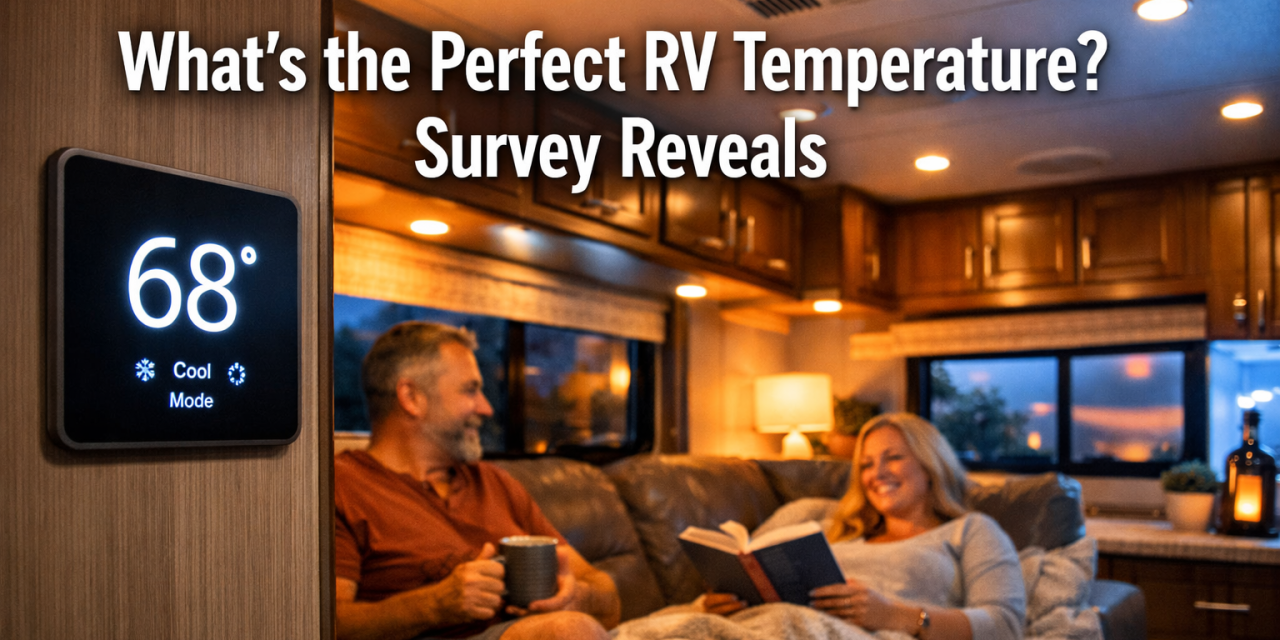
You’re parked at a beautiful campsite, the sun is setting, and you step into your RV after a day of adventure. The first thing you notice? The temperature. Is it too hot? Too cold? Or just right? For RV enthusiasts across the country, finding that perfect temperature sweet spot can make or break the camping experience. What’s the Perfect RV Temperature? (Survey Reveals) some surprising insights about where most RVers set their thermostats for maximum comfort.
The debate over ideal RV temperatures has been going on for years, but now we have real data to settle the discussion once and for all.
Key Takeaways
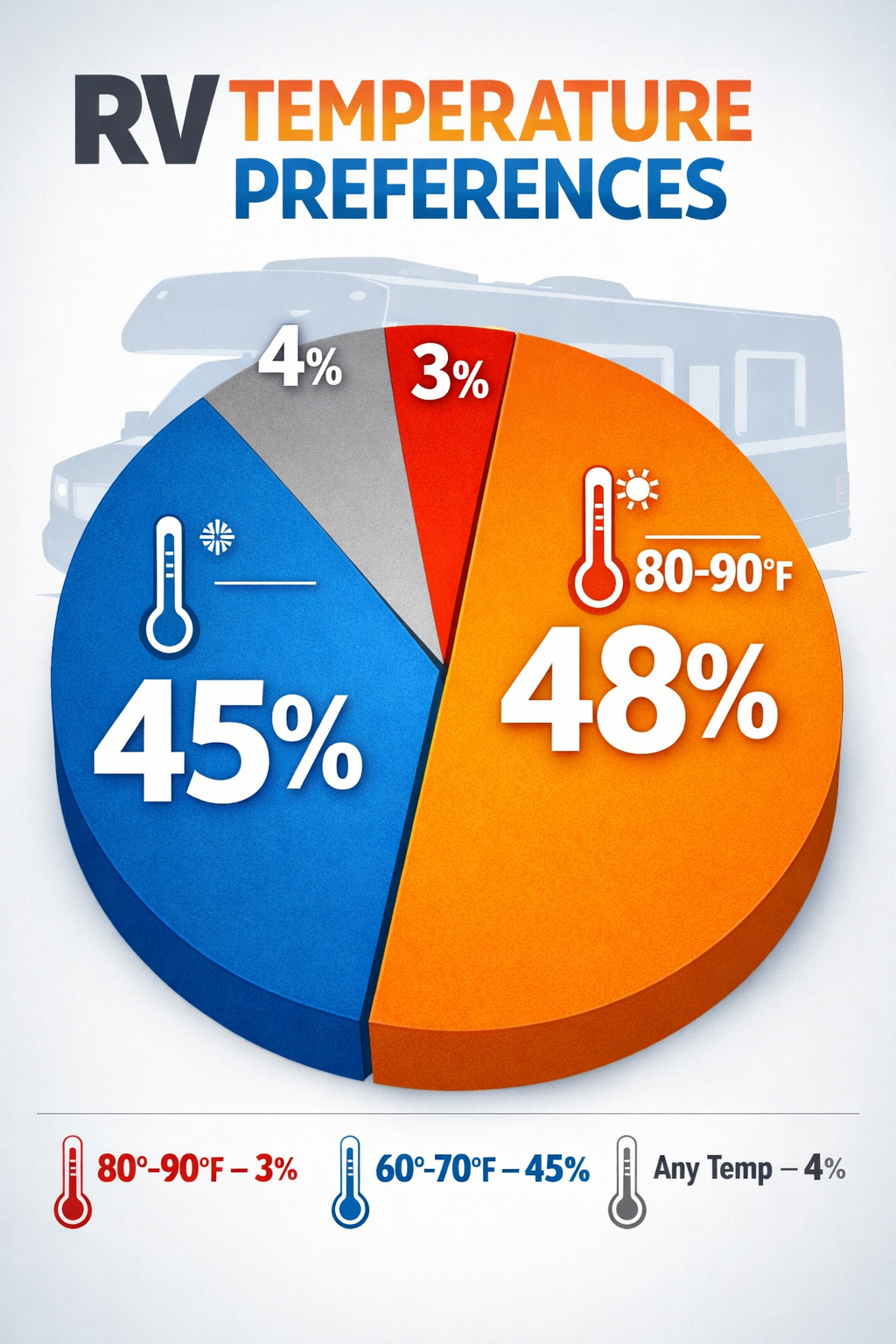
- Nearly half (48%) of RVers prefer keeping their RV between 70-80°F, making it the most popular temperature range
- 45% of RV owners favor a cooler 60-70°F range, showing almost equal preference for slightly lower temperatures
- Only 7% of RVers prefer extreme temperatures (80-90°F or don’t care about temperature at all)
- Modern RVers prioritize climate control as an essential feature, with 93% relying on air conditioning for summer comfort[1]
- Sleep quality drives temperature preferences, with most RVers choosing cooler nighttime settings
Understanding RV Temperature Preferences: What the Survey Shows
Would you like to save this article?
The numbers tell a fascinating story about RV comfort zones. When hundreds of RV enthusiasts were asked about their ideal temperature settings, the results painted a clear picture of what most people consider “just right.”
The Winning Temperature Range 🏆
70-80°F takes the crown with 48% of respondents choosing this range as their comfort zone. This moderate temperature range offers several advantages:
- Warm enough to feel cozy without excessive heating costs
- Cool enough to prevent stuffiness in small RV spaces
- Ideal for most sleeping conditions
- Comfortable for both daytime activities and nighttime rest
The Close Runner-Up
Coming in at a very close second, 45% of RVers prefer 60-70°F. This cooler range appeals to those who:
- Enjoy sleeping in cooler environments
- Want to save on air conditioning costs
- Prefer bundling up with blankets
- Find lower temperatures more refreshing
The tiny 3% difference between these two groups shows that most RVers fall somewhere between 60-80°F for their ideal comfort zone.
The Temperature Extremes
Only 3% of RVers prefer temperatures between 80-90°F, while 4% say they’re comfortable at any temperature. These small percentages show that the vast majority of RV owners have specific temperature preferences and aren’t willing to compromise on comfort.
Why Temperature Matters More in an RV
Living in an RV isn’t quite the same as living in a traditional home. The smaller space, different insulation, and mobile lifestyle create unique temperature challenges.
Space Considerations
RVs have limited square footage, which means temperature changes happen faster. A small heater can warm up the entire space quickly, but that same small space can also heat up rapidly in the summer sun. This makes precise temperature control even more important.
Sleep Quality Connection
Today’s RVers, with a median age between 35-54, expect modern climate control and value sleep quality requiring cool nighttime temperatures[1]. Poor sleep due to uncomfortable temperatures can ruin an entire camping trip.
Energy Efficiency Matters
Unlike a house connected to unlimited power, RVs often run on:
- Limited battery power when boondocking
- Propane for heating
- Shore power with potential amp limitations
- Generator fuel that costs money
Finding the right temperature balance helps conserve these precious resources.
Seasonal Temperature Strategies for RV Comfort
Summer Cooling: What Works Best
The survey data aligns perfectly with how RVers actually keep cool. A remarkable 93% of RVers rely on roof-mounted air conditioning for summer comfort[1]. This overwhelming majority shows that air conditioning isn’t a luxury—it’s essential equipment.
Popular summer cooling methods include:
- Roof-mounted AC units (the clear favorite)
- Portable fans for air circulation
- Window coverings to block heat
- Parking in shaded areas
- Running AC during the hottest parts of the day
Most RVers set their summer thermostats between 68-75°F to maintain comfort without overworking the AC system.
Winter Warmth: Finding the Sweet Spot
RVers seeking winter destinations prefer regions with daytime temperatures in the 60s-70°F range, such as Florida[2]. This preference shows that even in winter, most RV enthusiasts don’t want extreme heat—they want comfortable, moderate temperatures.
Winter heating strategies include:
- Propane furnaces for primary heat
- Electric space heaters when on shore power
- Heated mattress pads for nighttime comfort
- Insulated window covers
- Skirting to prevent heat loss underneath
Winter thermostat settings typically range from 65-72°F, with many RVers lowering temperatures at night and using extra blankets.
Regional Differences in RV Temperature Preferences
Where you park your RV significantly impacts your temperature needs and preferences.
Desert Camping 🌵
RVers in Arizona, Nevada, and Southern California face extreme heat. They often:
- Run AC almost constantly during summer months
- Prefer cooler indoor temperatures (65-70°F) to contrast outdoor heat
- Travel to higher elevations during peak summer
Mountain Retreats ⛰️
High-altitude camping brings cooler temperatures naturally. Mountain RVers typically:
- Need less AC, even in summer
- Use heating more frequently, even in warmer months
- Enjoy the 60-70°F range without much climate control
Coastal Camping 🌊
Ocean breezes and moderate climates mean coastal RVers:
- Can often open windows instead of running AC
- Experience more stable temperatures year-round
- Prefer the 65-75°F range with natural ventilation
Snowbird Destinations ☀️
Winter travelers heading south seek specific temperature ranges. The preference for destinations with daytime temperatures in the 60s-70°F range[2] shows that snowbirds want warmth, not scorching heat.
What’s the Perfect RV Temperature? (Survey Reveals) Health and Comfort Factors
Humidity’s Hidden Impact
Temperature isn’t the only factor in comfort. Humidity levels dramatically affect how temperatures feel:
- High humidity makes 75°F feel much warmer
- Low humidity makes 65°F feel cooler
- Dehumidifiers help in humid climates
- Proper ventilation prevents moisture buildup
Individual Health Considerations
Different health conditions affect temperature preferences:
- Respiratory issues: Often require cooler, less humid air
- Arthritis: May feel better in warmer temperatures
- Sleep disorders: Usually improve with cooler sleeping environments
- Age factors: Older adults may prefer slightly warmer settings
Pet Comfort 🐕
RVers traveling with pets need to consider their furry friends’ comfort too. Most dogs and cats prefer temperatures between 68-75°F, similar to human preferences.
Technology and Modern RV Climate Control
The RV industry in 2026 continues to evolve with better climate control options. Modern RVers expect sophisticated temperature management systems.
Smart Thermostats
New RV models feature:
- Programmable temperature settings
- Remote control via smartphone apps
- Energy usage monitoring
- Zone control for larger RVs
Improved Insulation
Today’s RVs offer better temperature retention through:
- Enhanced wall insulation
- Double-pane windows
- Thermal doors
- Reflective roof coatings
Efficient HVAC Systems
Modern air conditioning and heating systems provide:
- Quieter operation
- Better energy efficiency
- Faster temperature adjustment
- More precise temperature control
Cost Considerations: Balancing Comfort and Budget
Maintaining your ideal temperature comes with costs that vary based on your power source and climate.
Electricity Costs
When plugged into shore power:
- Running AC constantly can add $3-5 per day to campground electric bills
- Heating with electric space heaters uses significant power
- Off-peak cooling (early morning) saves money
Propane Expenses
For heating and some AC units:
- Furnace operation uses approximately 1 gallon of propane per day in cold weather
- Propane prices vary by region ($2.50-$4.00 per gallon in 2026)
- Tank refills become more frequent in extreme temperatures
Generator Fuel
When boondocking:
- Running generators for AC costs $5-10 per day in fuel
- Noise restrictions at many campgrounds limit generator hours
- Solar panels with battery banks offer free climate control power
Tips for Finding Your Personal Perfect Temperature
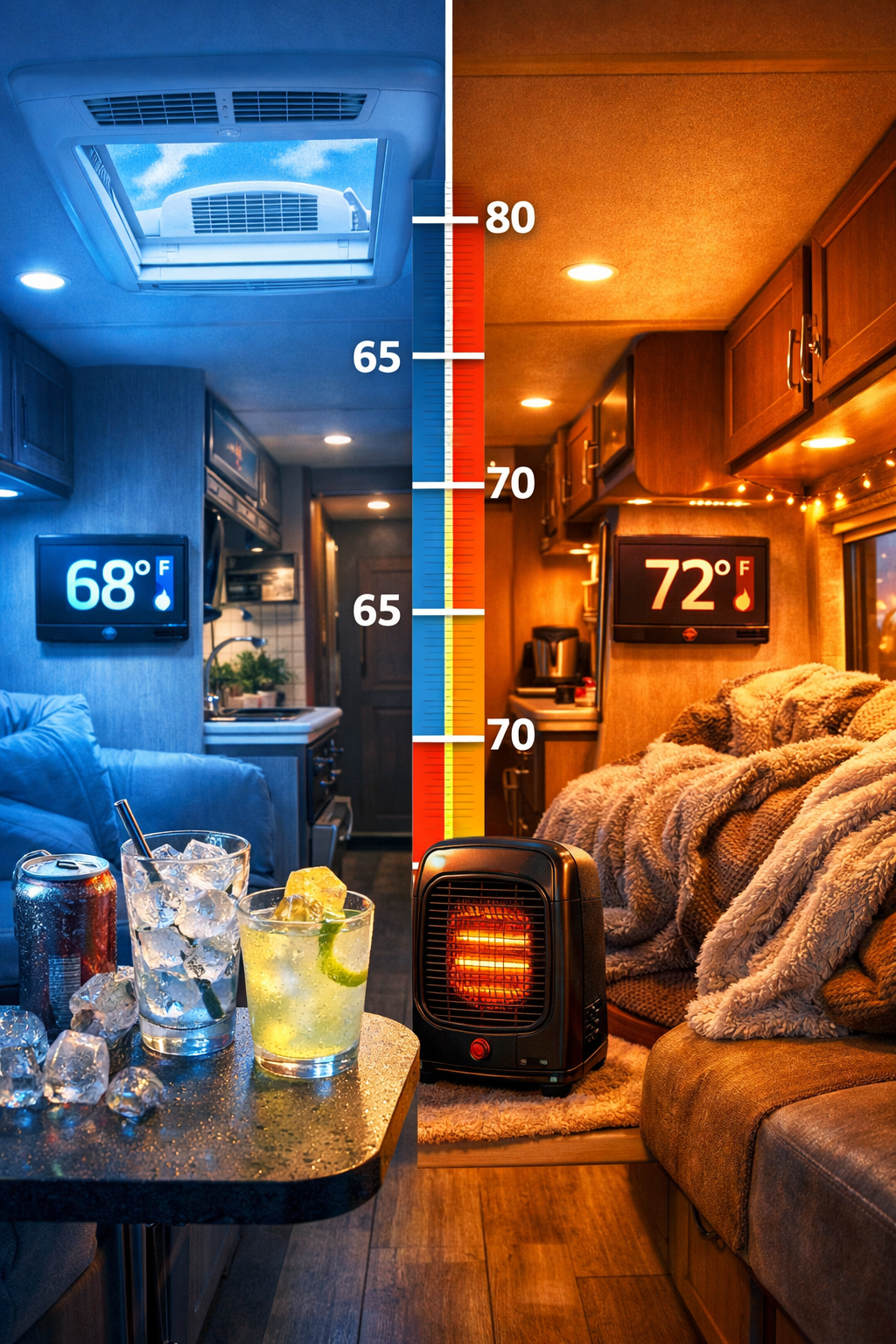
Everyone’s comfort zone differs slightly. Here’s how to discover yours:
Experiment Gradually 🌡️
- Start at 72°F (the middle ground between popular ranges)
- Adjust by 2-degree increments over several days
- Note your comfort level at different times of day
- Track sleep quality at various temperatures
Consider Activity Levels
- Lower temperatures (65-68°F) work better for active daytime hours
- Moderate temperatures (70-72°F) suit relaxing activities
- Sleeping temperatures often need to be 2-3 degrees cooler than daytime settings
Account for External Factors
- Outdoor temperature affects how indoor temps feel
- Sunlight exposure through windows adds heat
- Number of occupants (more people = more body heat)
- Cooking activities raise interior temperatures
Listen to Your Body
Pay attention to these comfort signals:
- ✅ Comfortable: Relaxed, good sleep, no sweating or shivering
- ⚠️ Too warm: Difficulty sleeping, sweating, feeling sluggish
- ⚠️ Too cold: Shivering, cold extremities, tension
Energy-Saving Strategies at Any Temperature
Regardless of your preferred temperature, these tips help maintain comfort efficiently:
Maximize Natural Climate Control
- Park strategically: Shade in summer, sun in winter
- Use awnings to block direct sunlight
- Open windows during cool mornings and evenings
- Create cross-ventilation with multiple windows or vents
Optimize Your RV Setup
- Install thermal curtains on all windows
- Use vent covers to prevent heat loss/gain
- Seal air leaks around doors and windows
- Add weatherstripping where needed
Smart Usage Habits
- Pre-cool or pre-heat before peak temperature times
- Use ceiling fans to circulate air
- Cook outside during hot weather to avoid heating the interior
- Close off unused areas in larger RVs
The Future of RV Temperature Control
As we move through 2026, RV climate control technology continues advancing. The industry is seeing:
Emerging Technologies
- Heat pump systems that both heat and cool more efficiently
- Solar-powered climate control becoming more affordable
- AI-driven temperature management that learns your preferences
- Better battery technology for longer off-grid comfort
Industry Trends
The RV market shows continued growth and innovation. Industry forecasts suggest modest but steady growth in 2026[3], with manufacturers focusing on comfort features that modern RVers demand.
Sustainability Focus
More RVers are prioritizing:
- Eco-friendly climate control options
- Reduced energy consumption
- Solar integration for sustainable temperature management
- Better insulation to minimize heating and cooling needs
Common Temperature-Related Mistakes to Avoid
Learning from others’ experiences can save you discomfort and money:
Setting Temperature Too Low in Summer ❄️
Many new RVers set their AC to 60°F thinking it will cool faster. This:
- Wastes energy
- Strains the AC system
- Creates uncomfortable temperature swings
- Doesn’t actually cool the RV faster
Better approach: Set to your target temperature (68-72°F) and let the system work steadily.
Ignoring Nighttime Temperature Drops
Forgetting to adjust for cooler evenings leads to:
- Waking up cold in the middle of the night
- Running heat unnecessarily
- Poor sleep quality
Solution: Use a programmable thermostat or adjust manually before bed.
Blocking Vents and Returns
Placing furniture or storage over vents prevents:
- Proper air circulation
- Efficient heating and cooling
- Even temperature distribution
Fix: Keep all vents and returns clear for optimal airflow.
What’s the Perfect RV Temperature? (Survey Reveals) the Bottom Line
So what’s the verdict? The perfect RV temperature falls between 60-80°F for 93% of RVers, with the sweet spot right around 70-75°F for most people. The survey clearly shows that comfort preferences cluster tightly around moderate temperatures, with very few people preferring extreme heat or having no temperature preferences at all.
The close split between the 60-70°F group (45%) and the 70-80°F group (48%) proves there’s no single “perfect” temperature for everyone. Your ideal setting depends on:
- Personal comfort preferences
- Sleep requirements
- Regional climate
- Season and weather
- Energy budget
- Health considerations
Conclusion: Finding Your Perfect Temperature Balance
The survey results reveal that most RVers agree on moderate temperatures between 60-80°F, with the majority preferring the 70-80°F range. This data validates what many experienced RV enthusiasts have known all along: comfortable RV living requires thoughtful temperature management that balances personal comfort, energy efficiency, and practical considerations.
As the RV industry continues to grow and evolve in 2026, temperature control remains a top priority for owners. Whether you’re part of the 48% who prefer 70-80°F or the 45% who like it a bit cooler at 60-70°F, the key is finding what works for your unique situation and lifestyle.
Take Action Today 🎯
Ready to optimize your RV temperature? Here’s what to do next:
- Experiment with different settings in the 60-80°F range to find your sweet spot
- Invest in a quality thermostat if your RV doesn’t have one
- Improve your insulation to maintain temperatures more efficiently
- Track your energy usage at different temperature settings
- Adjust seasonally rather than sticking to one setting year-round
Remember, the “perfect” RV temperature is the one that keeps you comfortable, helps you sleep well, and doesn’t break the bank. Start with the survey’s most popular range of 70-75°F, then adjust based on your personal preferences. Your ideal comfort zone is out there—it’s just a matter of finding it!
Happy camping, and may your RV always be the perfect temperature! 🚐✨
References
[1] How Do Rvers Keep Cool During The Summer Survey Reveals – https://rvshowoff.com/how-do-rvers-keep-cool-during-the-summer-survey-reveals/
[2] Rvers Preferred Winter Destination Survey Reveals – https://rvshowoff.com/rvers-preferred-winter-destination-survey-reveals/
[3] Survey Respondents Forecasting Modest Growth In 2026 – https://rvbusiness.com/survey-respondents-forecasting-modest-growth-in-2026/